
A will can shape how an inheritance is managed, not just who receives it. A testamentary trust is created by a will and takes effect when the will-maker dies. It is often discretionary, allowing the trustee to decide how to distribute assets among beneficiaries within the will’s terms. A testamentary trust will lawyer in Brisbane can help draft terms that reflect your family’s needs and intentions.
It’s understandable to want loved ones to receive support without handing them a large inheritance all at once. A testamentary trust may help manage how and when beneficiaries receive assets, but its suitability and terms depend on the circumstances the will is intended to address.
This guide explains how testamentary trusts work, when a professional trustee may be appointed, and why a will should be reviewed after major life changes or every three to five years. You’ll also learn what information can help a lawyer prepare a will that reflects your wishes and gives your family clearer direction.
Key Takeaways
- Learn how discretionary, unit and protective testamentary trusts differ, and what to consider when choosing a structure for your estate plan.
- Identify the family, financial and future-care circumstances that can shape testamentary trust provisions in a will.
- Understand when an independent trustee or co-trustee may be appropriate, and the record-keeping responsibilities trustees carry.
- See how testamentary trust income distributed to children may be taxed, and why the trust’s purpose matters.
What are Testamentary Trusts?
A testamentary trust is created by a will and begins when the will-maker dies. Its terms set out how estate assets are managed and distributed to beneficiaries.
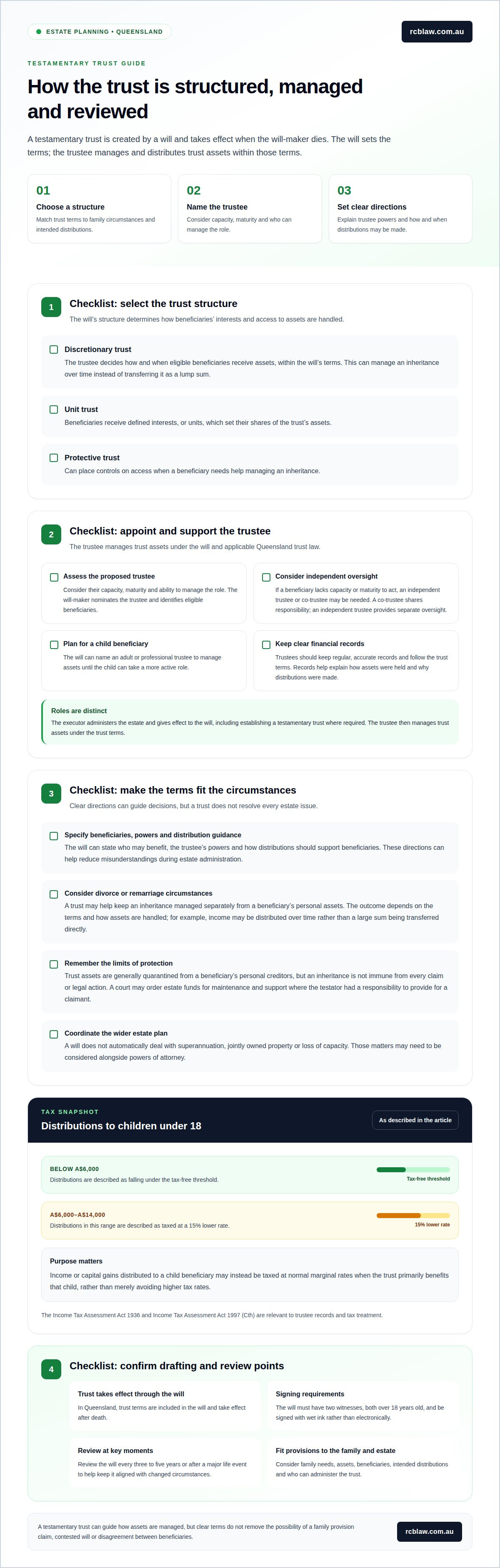
A discretionary trust lets its trustee decide how and when eligible beneficiaries receive assets, within the will’s terms. This can help manage an inheritance over time rather than transfer it as a lump sum. A unit trust allocates defined interests, or units, to beneficiaries, setting their shares of the trust’s assets. A protective trust can place controls on access when a beneficiary needs help managing an inheritance. The will’s structure determines which approach suits the estate and family circumstances.
Trust assets are generally quarantined from a beneficiary’s personal creditors, but a trust does not make every inheritance immune from claims or legal action. Clear terms can explain the trustee’s role and distribution decisions, helping reduce misunderstandings and disputes during estate administration. The executor administers the estate and gives effect to the will, including establishing a testamentary trust where required.
Protection After Divorce or Remarriage
After divorce or remarriage, a trust may help keep an inheritance managed separately from a beneficiary’s personal assets. The outcome depends on the trust terms and how assets are handled. For example, a trustee may distribute income over time rather than transfer a large sum directly. The will should address the intended beneficiaries, the trustee’s powers and how distributions should support them.
Tax and Distributions to Minors
For children under 18, the stated tax treatment allows distributions below A$6,000 to fall under the tax-free threshold. Distributions between A$6,000 and A$14,000 are described as taxed at a 15% lower rate. Income or capital gains distributed to a child beneficiary may instead be taxed at normal marginal rates when the trust primarily benefits that child, rather than merely avoiding higher tax rates. The Income Tax Assessment Act 1936 and Income Tax Assessment Act 1997 (Cth) are relevant to trustee records and tax treatment.
Testamentary trusts in wills
A testamentary trust must be created through the terms of a will, so the drafting needs to reflect your intentions and family circumstances. It should also fit into a broader estate plan rather than be treated as a stand-alone document.
Standard Wills and Trust Wills
A standard will directs how estate assets are distributed, while a testamentary trust will sets out how a trustee manages some or all of those assets for beneficiaries. The choice depends on factors such as family needs, intended distribution arrangements and who can administer the trust. A lawyer can review your financial and family circumstances to advise whether trust provisions support your intentions.
Creating a Testamentary Trust in Queensland
In Queensland, the trust terms are included in the will and take effect after death. The will must have two witnesses, both over 18 years old, and wills must be signed with wet ink rather than electronically. A lawyer can prepare the provisions, explain the roles of the executor and trustee, and ensure the signing process meets those requirements.
When choosing a Brisbane wills and estates lawyer, look for experience with will drafting, testamentary trusts and the family circumstances that affect administration. A useful first step is to discuss your assets, beneficiaries and intentions so the lawyer can explain how the proposed terms work together.
A trust clause doesn’t resolve every estate issue. Under the Succession Act 1981 (Qld), a court may order estate funds to provide maintenance and support if the testator had a responsibility to provide for the claimant. Family provision claims, contested wills and disagreements between beneficiaries can therefore still arise. Clear drafting can explain the intended arrangements, but it does not remove the possibility of a dispute.
A will also doesn’t automatically deal with superannuation, jointly owned property or what happens if you lose capacity. Estate planning may need to consider those matters alongside powers of attorney, so each document addresses its intended role. A review every three to five years or after a major life event can help keep your will aligned with changed circumstances. Professional will planning can help bring those decisions into one clear estate plan.
Appointment of a professional trustee
A trustee manages trust assets after the will-maker’s death. The will sets out who will act as trustee, which beneficiaries may benefit and the powers that guide each decision.
The trustee manages the trust within its terms and Queensland trust law. In many cases, the trustee and primary beneficiary are the same person, giving that beneficiary practical control. The will-maker chooses the beneficiaries and names a trustee. For example, a parent might name an adult child to manage assets for younger siblings.
That arrangement depends on the person’s capacity, maturity and ability to manage the role. A trustee should keep regular, accurate financial records and follow the trust terms. They must also meet their general duties under Queensland trust law. Clear records help show how assets were held and why distributions were made.
If a beneficiary lacks the capacity or maturity to act as trustee, an independent trustee or co-trustee may be needed. A co-trustee shares responsibility, while an independent trustee provides separate oversight. For a child beneficiary, the will can name an adult or professional trustee to manage assets until the child can take a more active role.
Who controls a testamentary trust, and how are trustees and beneficiaries chosen? The trustee manages the trust under the will’s terms, while the will-maker nominates the trustee and identifies eligible beneficiaries. The will can also set out when and how distributions may be made, guiding the trustee while preserving discretion where the terms allow.
Choosing a trustee is part of estate planning and succession. Consider whether the person can maintain records, make decisions impartially and manage the trust for loved ones over time. Queensland’s perpetuity period is 125 years, after which a testamentary trust must vest and distribute its assets. A professional appointment may suit an arrangement requiring independent administration, particularly where family relationships or beneficiaries’ needs make the role complex.
How is a testamentary trust taxed in Australia, including distributions to minors?
In Australia, testamentary trust tax treatment depends on the trust’s purpose and distributions. The Income Tax Assessment Act 1997 (Cth) governs this treatment. For child beneficiaries under 18, income or capital gains may be taxed at normal marginal rates when the trust primarily benefits the child. This treatment does not apply when the trust is intended merely to avoid higher tax rates.
The stated tax-free threshold for a child beneficiary is A$6,000. Trust distributions should be considered in light of each beneficiary’s circumstances and the trust’s terms. Distributions between A$6,000 and A$14,000 are described as taxed at a 15% lower rate. These figures concern distributions to children under 18, not a general tax rule for every beneficiary.
The Income Tax Assessment Act 1936 is also relevant to trustee records and tax treatment. Trustees should keep regular, accurate financial records of trust income, distributions and capital gains. Those records help show how amounts were allocated and support the administration of the trust. The will’s terms and the trust’s purpose remain important when considering how distributions are made.
A proposed 30% minimum tax on discretionary trust distributions is not yet law; genuine testamentary trusts are expected to be carved out. A trustee should therefore distinguish proposed measures from current rules and keep decisions consistent with the trust’s terms. For example, records should identify each child’s distribution and the purpose it serves. Discuss testamentary trust tax provisions as part of planning the will and its trust terms.
RCB Law: Will Drafting
RCB Law prepares wills that set out testamentary trust terms, trustee appointments and how beneficiaries may receive estate assets. This can be a practical next step if you want an inheritance managed over time, have children or other beneficiaries with differing needs, or need to revisit your will after a major life change.
Your family circumstances, assets and intentions inform the drafting. Clear terms can guide the executor and trustee through estate administration, including how the trust is established and managed. If your estate plan also involves property or business interests, these matters may shape the information considered alongside your will.
For guidance on will drafting and testamentary trust provisions, contact RCB Law.
Take the next step with a clear plan
Estate planning is also an opportunity to consider how your will fits alongside the people and assets that matter to you. A conversation with a testamentary trust will lawyer in Brisbane can help turn your priorities into clear drafting instructions, including who should manage the trust and how beneficiaries should be supported.
Bring your questions about family circumstances, property or business interests to the discussion. RCB Law’s work in Residential Conveyancing, Commercial Property Law and Business Law may also be relevant when property or business assets form part of your broader planning. The aim is to ensure the will records the decisions you want to make, with professional guidance through the drafting process.
When you’re ready to discuss your will, contact RCB Law about your will. A considered next step can make your intentions easier to put into writing.
Frequently Asked Questions
Do I need a lawyer to write my will in Queensland?
No. You can write your own will in Queensland, but professional legal assistance is highly recommended because drafting errors can have serious consequences for loved ones. A testamentary trust will lawyer in Brisbane can help shape trust clauses around your intentions and explain the applicable signing requirements. Legal guidance is especially useful when your will includes several beneficiaries or different distribution arrangements.
Can I nominate my solicitor or accountant as an executor under my Will?
Yes. You can nominate a solicitor or accountant as executor, provided the appointment is clearly expressed in your will. Consider whether that person can manage estate administration and communicate with beneficiaries. If a professional adviser is named and charges for acting, the will generally needs a clause allowing their fees to be paid from the estate. Discussing this during drafting helps make the intended appointment clear.
What assets fall outside of the estate?
Some assets pass under arrangements separate from your will. For example, property held as joint tenants passes automatically to the surviving owner. Superannuation may be paid to a nominated person under a valid binding death benefit nomination. Life insurance outside superannuation may also be paid directly to a nominated beneficiary. These arrangements affect what the executor can distribute, so include them in your broader estate planning discussion.
What do I need to consider if my estate has a high risk of challenge?
Consider who may dispute the will, what concerns they could raise and whether the document clearly explains your intended distribution. Queensland estate disputes can involve challenges to validity, disagreements between beneficiaries or claims for further provision. A court may order estate funds to support a claimant if the testator had a responsibility to provide for them. Careful drafting can clarify your intentions, though it cannot prevent every claim.
What is a testamentary trust in a will and how does it work in Australia?
A testamentary trust is established through a will and begins operating after the will-maker dies. The will sets out the trust’s terms, names or provides for a trustee and identifies eligible beneficiaries. A testamentary trust will lawyer in Brisbane can draft provisions explaining how the trustee manages assets and makes permitted distributions. For example, assets can be held for a beneficiary rather than transferred outright.
What are the benefits and drawbacks of a testamentary trust for Brisbane families?
A trust can give a trustee discretion over when and how beneficiaries receive assets, which may help families support children or beneficiaries who need assistance. Trust assets are generally quarantined from a beneficiary’s personal creditors, but this does not make every inheritance immune from claims. A Brisbane testamentary trust will lawyer can help families consider these potential benefits alongside administration, record-keeping and trustee responsibilities.


