
A partnership agreement is easier to rely on when the terms are clear before disagreements arise. A partnership agreement lawyer on the Sunshine Coast can draft or review the document and help negotiate terms covering how the business is managed, each partner’s responsibilities and what happens if someone wants to leave or sell their share. A written contract records what the partners agreed, while verbal agreements are harder and more expensive to enforce.
Starting a business with someone means balancing trust and shared goals with practical questions about money, decisions and future changes. This guide explains how to choose a partnership agreement lawyer on the Sunshine Coast, what terms an agreement can cover, and how legal drafting and negotiation can clarify expectations. It also outlines how business structure can affect tax, liability and flexibility, and what information helps a lawyer tailor the agreement to your partnership.
Key Takeaways
- Choose a lawyer who can explain the drafting process, discuss fees before work begins and tailor advice to your business structure.
- Clear terms for responsibilities, decision-making and a partner’s exit can help reduce uncertainty as the business changes.
- Partnership structure can affect tax, liability and flexibility, so consider these implications alongside your business goals.
- A verbal understanding can be harder and more expensive to enforce than a written contract, making documented terms a practical safeguard.
Finding and selecting legal professionals
Choosing a partnership agreement lawyer on the Sunshine Coast starts with finding someone whose experience fits the decisions your business needs to make. Ask how they approach partnership agreements, business structures and negotiation, and whether their explanations are clear and relevant to your interests. For example, if a partner may sell their share, the agreement should address transfer conditions and the steps that follow.
Before work begins, agree on the scope, responsibilities and communication process. Share the partners’ roles, business plans, existing contracts and details of important assets. The lawyer can then identify what needs drafting, review or negotiation, and explain who will provide instructions and approve changes. Regular updates and a clear point of contact help keep decisions moving.
Legal support can be tailored to the work involved. A business that needs one agreement may require a defined drafting engagement, while ongoing changes to contracts or business plans may call for continuing legal input. In-house legal services are a separate staffing model, where legal work is part of a business’s internal operations rather than a specific external project. The right arrangement depends on the volume and type of work.
Defined tasks, such as drafting a contract, setting up a business structure or reviewing a lease, can usually be scoped for a fixed fee. Before accepting, establish which documents and revisions are included, what assumptions shape the scope, and how additional work will be handled. A clear scope makes the fee easier to understand than an hourly estimate alone.
- Experience: Look for relevant work with partnerships and business agreements.
- Process: Confirm who manages instructions, drafts and partner feedback.
- Scope: Clarify deliverables, timing and how changes affect the engagement.
Drafting and negotiating partnership agreements
A carefully drafted agreement turns the partners’ decisions into terms they can refer to as the business develops. In Australia, it can clarify how the partnership is managed and what happens if a partner wants to sell their share.
Agreement Drafting and Review
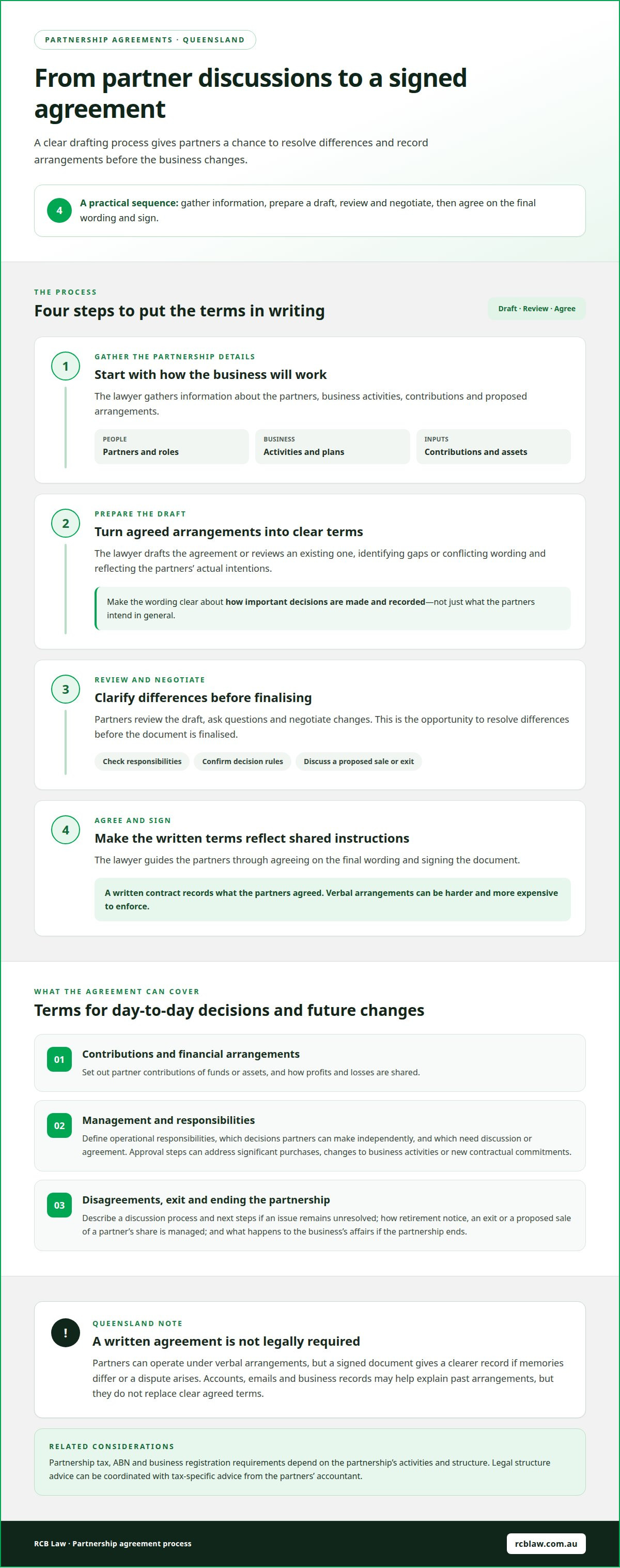
During drafting or review, a lawyer can put agreed arrangements into clear contract terms and identify gaps or conflicting wording in an existing agreement. Clauses can cover management, partner contributions, decision-making, profit allocation and the process for a proposed sale of a partner’s share. Check that the wording reflects the partners’ actual intentions, including how important decisions are made and recorded.
For Australian partnerships, tax, ABN and business registration requirements depend on the partnership’s activities and structure. A lawyer can advise on the legal structure, while tax-specific advice can be coordinated with the partners’ accountant.
Drafting and Signing Steps
The process begins with the lawyer gathering information about the partners, business activities, contributions and proposed arrangements. The lawyer prepares a draft for the partners to review, clarify and negotiate. This gives each person the chance to resolve differences before the document is finalised. The lawyer guides the partners through agreeing on the final wording and signing, so the written terms reflect their shared instructions.
Disputes, Exit and Dissolution
A useful agreement sets out how to handle disagreements, such as a discussion process and agreed next steps if the partners cannot resolve an issue. It can also explain how a partner gives notice of retirement, how a proposed exit or sale is managed, and what happens to the business’s affairs if the partnership ends. Clear procedures help partners understand their options before a dispute escalates or disrupts operations.
For support with drafting, reviewing or negotiating partnership terms, explore partnership agreement guidance.
Partnership agreements
In Queensland, an agreement helps turn partners’ expectations into clear business arrangements. Its terms should reflect the partnership’s structure, responsibilities and plans for success.
Written Agreement Requirements
A written partnership agreement is not legally required in Queensland. Partners can operate under verbal arrangements, but a signed document records what they agreed, which matters if memories differ or a dispute arises. A solicitor can draft terms that reflect the partners’ actual arrangements and provide a clearer record than an informal conversation.
Partnerships Without Written Agreements
Without written terms, partners may find a verbal agreement harder and more expensive to enforce. For example, disagreement about who contributed business assets or handled a key responsibility can leave each partner with a different recollection. Accounts, emails and business records may help explain past arrangements, but they do not replace clear agreed terms. Uncertainty can complicate decisions and affect the partnership’s ongoing work.
For an incoming partner, due diligence can clarify the business’s existing commitments before they join. Reviewing contracts, asset records and current arrangements gives the partners a practical basis for preparing an agreement that reflects how the business operates.
Profits, Decisions and Responsibilities
An agreement can specify how partners share profits and losses, contribute funds or assets, and divide operational responsibilities. It can also state which decisions each partner may make independently and which require discussion or agreement. For example, partners can define approval steps for significant purchases, changes to business activities or new contractual commitments. Clear wording helps everyone understand their role and how to raise concerns.
Make sure these terms match the intended structure, rather than assuming equal contributions mean identical responsibilities. A solicitor can review proposed documents for inconsistencies between profit-sharing arrangements, decision-making authority and each partner’s duties. This helps the agreement reflect the partnership’s practical needs and supports informed business decisions.
Is a written partnership agreement legally required in Queensland?
No. A written partnership agreement isn’t legally required in Queensland, but a clear contract records the partners’ decisions. That record can matter if partners later remember a conversation differently or need to explain an agreed arrangement.
Without written terms, partners may have to rely on verbal discussions and other records to show what they agreed. Verbal agreements are harder and more expensive to enforce than written contracts. For example, if partners disagree about who approved a business commitment, emails or meeting notes may help establish what happened but leave room for different interpretations.
A practical step is to have a solicitor record the partners’ current understanding while everyone can discuss the terms together. This includes agreeing on how the business is managed, each partner’s responsibilities and what happens when circumstances change. The written terms should reflect the partners’ decisions, not assumptions about what each person intended.
Existing partnerships can also review their arrangements when a partner’s role changes, the business takes on new commitments or someone considers leaving. A review can identify which decisions need recording and whether the current documents still reflect the partners’ intentions. Keeping written terms aligned with actual arrangements gives partners one agreed record to refer to.
A written agreement won’t prevent every disagreement, but it gives partners a clearer reference point when questions arise. For instance, they can refer to the documented decision-making process instead of relying only on recollections. Clear terms can also focus discussions about responsibilities or proposed changes.
If your partnership currently relies on verbal arrangements, consider having the terms put into a written agreement. Discuss preparing a written partnership agreement to establish a clear record of the partners’ decisions.
RCB Law
RCB Law helps business partners turn agreed arrangements into clear legal documents. Its business law services include drafting and reviewing partnership agreements, with terms shaped around how the partners intend to manage the business and address future changes. This can help when starting a partnership, revisiting existing terms or discussing a partner’s planned exit.
Legal support can clarify which decisions need to be recorded and what parts of an agreement need careful review. Partners can bring their proposed arrangements and questions to the discussion, then work through the wording with legal guidance. This is a practical next step when verbal understandings feel uncertain or partners want a written record of their decisions.
Contact RCB Law to discuss help with your partnership agreement.
Set your partnership up for its next stage
A partnership agreement is most useful when it reflects the business you’re building, not just the decisions already made. Before moving forward, consider what might change: a new partner joining, responsibilities shifting or someone choosing to leave. Thinking through these possibilities can help you set clearer priorities for drafting.
A partnership agreement lawyer on the Sunshine Coast can turn those priorities into practical terms and guide discussions when partners see things differently. RCB Law can assist with establishing a partnership, reviewing existing arrangements or creating a clearer way to manage future decisions. Start by outlining what the partners have agreed and where you need guidance.
Contact RCB Law about your agreement to discuss a practical next step for your business. Clearer terms can make it easier to move ahead together.
Frequently Asked Questions
What does a partnership agreement cover in Australia?
A partnership agreement can set out how partners will run the business and manage changes to their working relationship. It may cover authority to enter contracts, access to business records, partner contributions, dispute processes and the handling of confidential information when someone leaves. For a new venture, an agreement can also record each partner’s role and the arrangements they have accepted before operations begin.
How much does a partnership agreement lawyer cost on the Sunshine Coast?
The fee depends on the matter and is provided after a quote request. Cost factors include the agreement’s complexity, the documents requiring review and the negotiations involved. Defined legal work, such as drafting a contract, can usually be scoped for a fixed fee. A quote should state what is included and how changes to the scope may affect the final fee.
How do I find and compare partnership agreement lawyers on the Sunshine Coast?
Compare the proposed scope, relevant business law experience and how clearly each lawyer explains complex terms. Check whether the work covers drafting, review and partner negotiations, and whether you’ll receive a written outline of deliverables and communication arrangements. Consider how clearly the lawyer explains the agreement’s effect on business decisions, rather than relying on broad assurances.
Do Sunshine Coast partnership lawyers offer fixed-fee consultations or online services?
Fixed fees can usually be offered for defined legal work, such as drafting a contract, but this differs from a fixed-fee consultation. Online appointments describe how legal discussions take place, not how drafting work is priced. For example, an agreement review may have a scoped fee, while further negotiations or substantial changes may require separate work to be agreed.


