
A letter of wishes can explain the thinking behind your estate plan, but it does not replace or override your Queensland will. Including a letter of wishes with your will on the Sunshine Coast can give executors and trustees useful context about personal gifts and how you would like certain matters handled. The will remains the formal document setting out your estate instructions.
You may want to do more than list who receives what. Perhaps you want to explain why a sentimental item is going to a particular person or offer guidance to someone managing a trust. A letter can provide that context, but its wording needs care so it does not conflict with the will or appear to change its legal instructions.
This article explains what a letter of wishes can cover, how it can guide trustees without removing their discretion, and how it differs from a Queensland will. It also explains how professional will drafting in Maroochydore and across the Sunshine Coast can help keep your formal instructions and personal guidance clear.
Key Takeaways
- Use a letter of wishes to add personal context about sentimental gifts, rather than relying on it to make a gift legally binding.
- Offer trustees guidance in flexible language that respects their discretion and does not conflict with the will or trust terms.
- Keep the distinction clear: a Queensland will contains formal estate instructions, while a letter of wishes provides separate, non-binding guidance.
- Professional will drafting can help align your estate instructions with your personal wishes and the circumstances that matter to your family.
Making specific gifts of personal or sentimental items
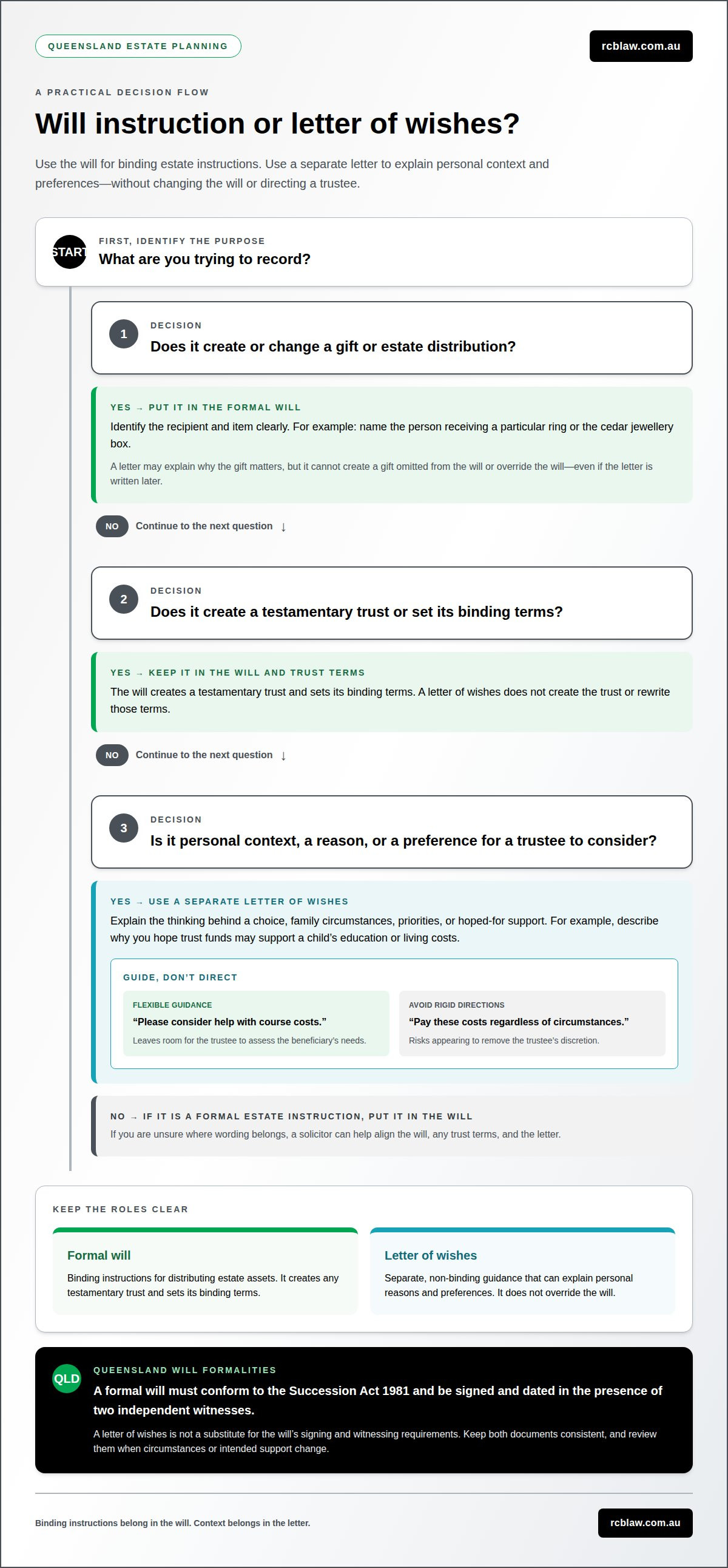
A letter of wishes can add personal context to gifts in your estate plan. You might explain why a granddaughter is to receive a family brooch or why a friend should have a collection of books. To make a gift legally binding, identify the recipient and item in the formal will. The letter can explain the meaning behind that choice and help beneficiaries understand your intentions.
Specificity matters. “Give my jewellery to the family” leaves room for disagreement; identifying a particular ring and its intended recipient is clearer. A solicitor can help describe valuable or distinctive belongings accurately, especially when similar items exist. Put the gift in the will, then use the separate letter for background without changing the formal instructions.
Unequal gifts can have personal reasons. A letter might explain that one child received financial help during your lifetime, or that another has a particular sentimental connection to an item. If you exclude a family member, a carefully worded explanation may give loved ones context. It does not guarantee that nobody will challenge the will, and it should not be used to create a gift omitted from the will.
Charitable gifts need the same clarity. Name the intended organisation and state the gift in the will; use the letter to explain why its work matters to you. A separate note may also help an executor locate relevant accounts or records or understand your funeral preferences. It should not ask an attorney or guardian to distribute estate property contrary to the will.
- Identify each personal item clearly, such as “the cedar jewellery box”.
- Name the beneficiary and explain any family context in the separate letter.
- State charitable gifts in the will, not only in the letter of wishes.
Keep the documents consistent. A letter can explain personal choices, but it is not a substitute for clear, formal instructions about gifts.
Guiding trustees without fettering their discretion
A letter of wishes can explain why you have created a testamentary trust and provide context to its trustee. For example, you might describe how you hope funds will support children’s education or living costs. The letter offers guidance, not commands: trustees retain discretion, and the trust terms in the will remain central to their role.
That distinction matters in Queensland, where the will and any trust document need to work together. The will creates the trust and sets its binding terms; a separate statement of wishes can explain the thinking behind them. If the documents conflict, the letter should not be treated as a way to rewrite the will. Clear coordination helps executors and trustees understand which document establishes their authority.
For testamentary trust wills, a letter may explain the trust’s intended purpose, the family circumstances behind it, or the approach you hope a trustee will consider. For instance, a parent could describe why support for a child should take account of education, health or changing needs. The trustee can consider that context alongside the trust terms and the beneficiary’s circumstances, rather than follow a rigid instruction in the letter.
Use language that guides rather than directs. “Please consider help with course costs” leaves room for the trustee to assess a beneficiary’s needs. “Pay these costs regardless of circumstances” risks appearing to remove discretion. A statement of wishes should guide rather than direct trustees, leaving them room to exercise their discretion.
- Keep binding instructions in the will and trust terms.
- Use the letter to explain reasons, priorities, and family context.
- Review both documents when circumstances or intended support change.
This approach gives trustees useful context while preserving their ability to apply the trust’s terms to the situation in front of them.
How a letter of wishes differs from a formal will in Queensland
A Queensland will sets out binding instructions for distributing estate assets; a letter of wishes is separate, non-binding guidance. A formal will in Queensland must conform to the Succession Act 1981, according to Queensland Government. The letter can explain personal reasons or preferences, but it cannot override the will, even if written later.
A testamentary trust is created under a will and managed according to the will’s trust terms. A letter of wishes may explain why you chose that structure or guide a trustee, but it does not create the trust. Keeping each document’s role clear helps executors identify which instructions are binding.
In Queensland, a formal will must be signed and dated in the presence of two independent witnesses. Whether prepared with a solicitor or drafted yourself, the will must meet these formal requirements. Unclear wording can create uncertainty about your intended distribution. Professional drafting can help align instructions about beneficiaries, assets and any testamentary trust.
A solicitor can advise whether signing or witnessing a letter is appropriate, taking account of its purpose and wording. The letter is not a substitute for the will’s signing and witnessing requirements, and its language should not appear to make binding gifts.
A solicitor can help you update a letter of wishes while keeping it consistent with your will and any trust terms. This is particularly important if family circumstances or preferences have changed.
Putting estate instructions only in a letter carries practical risks: executors may ignore them, and conflicting wording can cause confusion. If the letter appears to operate like an informal will, a court may need to determine your intention. Put binding gifts and distribution instructions in the formal will, and use the letter to explain their context.
Will preparation in Maroochydore and the Sunshine Coast
If you are considering including a letter of wishes with your will on the Sunshine Coast, make sure the documents have distinct purposes. The will records formal decisions about assets and beneficiaries; the separate letter provides personal context. A solicitor can help prepare them consistently, including when family relationships or intended gifts need careful explanation.
Start by considering the circumstances that shape your estate plan, including property, dependants, beneficiaries and trust arrangements. Assets held jointly or subject to binding nominations, such as superannuation, may not automatically form part of a will. A solicitor can consider these distinctions and help clarify which instructions belong in the will and which matters need separate consideration.
If you have children under 18, a Queensland will can nominate a guardian. A court ultimately decides guardianship based on the child’s best interests, even when a will names someone. A letter can provide practical context about routines or values, but it cannot make those preferences legally binding on the guardian.
Review your documents when circumstances change, such as after marriage, separation, a change in assets or wishes, or a named beneficiary’s death. Reviewing a will every 3-5 years or after a major life event can help keep the estate plan aligned with current intentions. Changes in relationships may also affect your choices of executors and beneficiaries.
- Identify assets that may pass outside the will, including jointly held property or nominated superannuation.
- Discuss guardianship if you have children under 18, and record personal guidance separately.
- Revisit your documents after significant changes to family circumstances, assets or wishes.
A solicitor can help translate your decisions into clear documents, with formal instructions in the will and personal guidance in the letter. For help including a letter of wishes with your will on the Sunshine Coast, arrange professional will drafting.
RCB Law: Will Drafting
RCB Law can prepare a will setting out your formal estate instructions and accommodate a separate letter of wishes. This can help clarify personal gifts, explain family considerations or give trustees context, without making the letter a substitute for the will.
When drafting your will, your decisions about beneficiaries, executors and any testamentary trust can be considered alongside the guidance you want to record separately. Coordinating the documents helps keep them consistent and makes their different roles easier to understand.
If you are ready to put your estate intentions into clear documents, contact RCB Law to discuss will drafting.
Make your next estate-planning decision with clarity
Your estate plan should reflect your life today, as well as the people and responsibilities you want to provide for. If you are considering including a letter of wishes with your will on the Sunshine Coast, discuss how your formal instructions and personal guidance should work together. A considered review can also bring property, business interests and family circumstances into the conversation.
RCB Law can assist with will drafting. If your planning also involves property or business matters, the firm provides residential conveyancing, commercial property law and business law services. This can help you consider related legal decisions together while keeping your will’s purpose clear.
Take the next step at a pace that feels right for you. Contact RCB Law about your will to discuss your estate-planning needs and move towards documents that reflect your intentions.
Frequently Asked Questions
What is a Letter of Wishes?
A letter of wishes is a separate document recording personal guidance for the people administering your estate. It can give an executor context about your preferences, such as who to notify after your death or how to locate information about online accounts. It does not replace formal instructions in your will, so use it for explanation and practical details rather than asset distribution.
Statement of Wishes: Useful or Useless?
A statement of wishes can give an executor or trustee context that is not in the will. For example, it may explain why a family trust was created or describe the support you hope a beneficiary receives. Its value depends on clear, relevant guidance. Do not treat it as a second will or fill it with directions that conflict with formal documents.
Can I leave personal messages for my family?
Yes. A letter of wishes can include personal reflections, words of encouragement, family stories or details about traditions you hope loved ones will continue. You could explain the history behind a keepsake or leave a message for a child’s guardian about a familiar routine. Keep these messages distinct from gifts and legal instructions, so family members understand their meaning without confusing them with the will.
What is a letter of wishes and how does it relate to a will in Australia?
In Australia, a letter of wishes is a separate document that provides non-binding guidance alongside a will. It may explain personal choices, funeral preferences, pet care wishes or how an executor can find information about digital accounts. The will remains the formal document for estate instructions. Keeping the documents together can help an executor find the letter while administering the estate.
Is a letter of wishes legally binding in Queensland?
No. In Queensland, a letter of wishes is generally not legally binding and does not override a conflicting will. An executor may consider its guidance, but the will’s formal terms govern estate distribution. For example, a request in a later letter to give an asset to someone cannot replace a different gift stated in the will. Keep binding decisions in the will itself.
What can you include in a letter of wishes for your executor or beneficiaries?
You can include practical information to help an executor or beneficiaries understand your preferences. Examples include funeral arrangements, people to notify, trusted advisers, pet care and guidance on finding digital account information. You may also explain the family context behind estate decisions or record preferences about organ and tissue donation. Avoid putting passwords in a document that may be widely accessible; instead, explain how authorised people can locate them securely.


