
Buying or selling a commercial property in Queensland is a significant milestone for any business, but it's a world away from a simple residential transaction. We understand that the complexities of commercial conveyancing can feel overwhelming. If you're concerned about hidden costs like GST, confused by legal jargon like 'due diligence', or worried about missing a critical step that could jeopardise the deal, you are not alone. These are valid concerns that can turn an exciting opportunity into a source of significant stress.
This comprehensive guide is designed to provide clarity and confidence. We will walk you through the entire process, from pre-contractual negotiations to a successful settlement. You will learn the key legal requirements, understand the risks involved, and gain a step-by-step roadmap to protect your investment. Our goal is to demystify the process, empowering you to navigate your Queensland commercial property transaction smoothly and avoid any costly mistakes along the way.
Key Takeaways
- Understand why commercial property transactions carry significantly higher risks and complexities than residential purchases, requiring a more detailed approach.
- Discover the essential due diligence steps that protect your investment by verifying all assumptions about a property's zoning, condition, and compliance.
- Learn how existing commercial leases directly impact a property's value and why a thorough review of tenant agreements is a non-negotiable part of the process.
- The commercial conveyancing process in QLD involves critical legal stages; engaging a specialist lawyer early is a crucial investment to protect your interests.
Commercial vs. Residential Conveyancing: Understanding the Key Differences
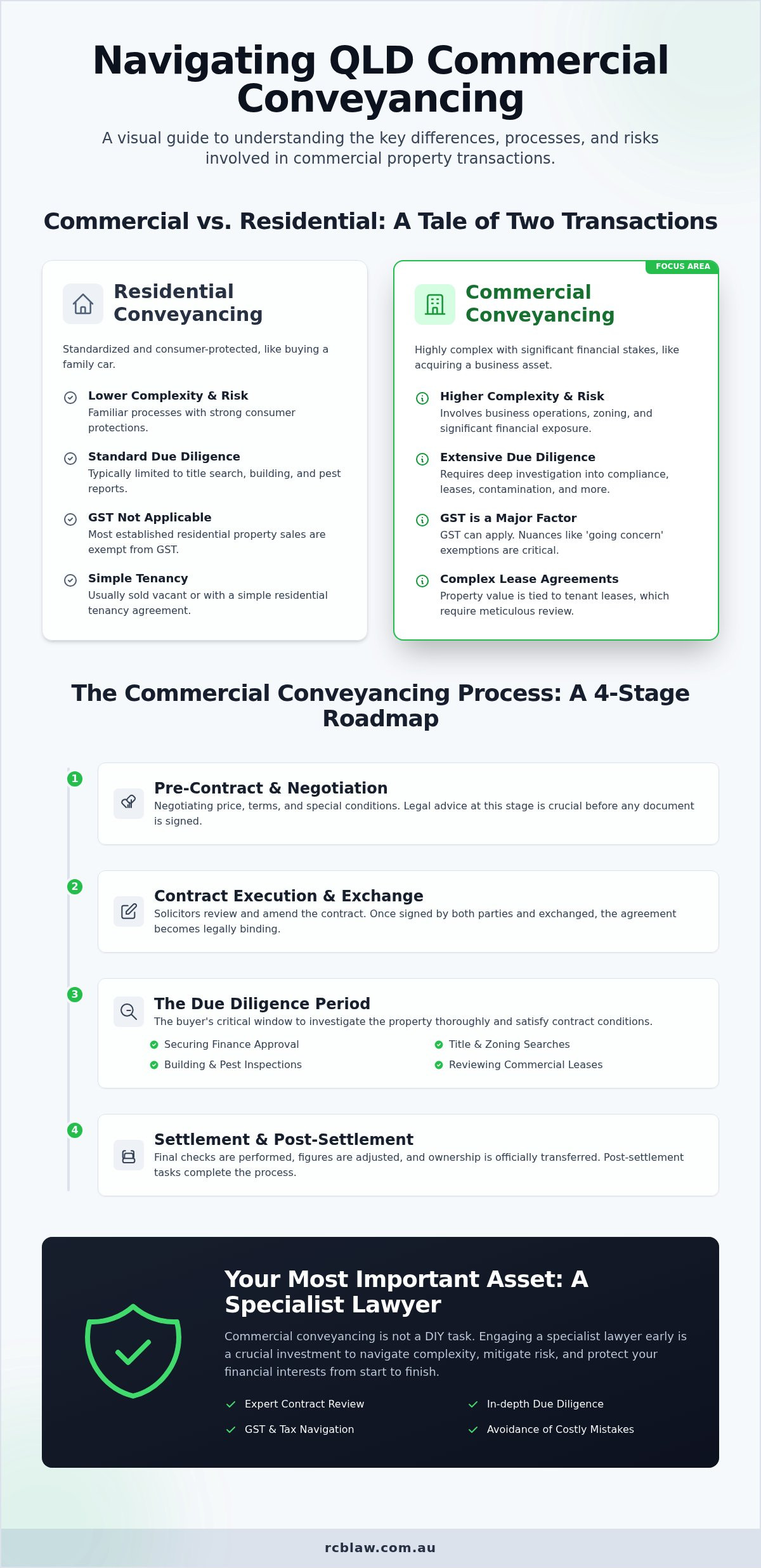
At its core, commercial conveyancing is the legal process of transferring ownership of a non-residential property from one party to another. While the goal is similar to buying a home, we understand the process can feel far more demanding. The core principles of what is conveyancing remain, but the risks, complexity, and financial stakes are significantly higher. Think of it this way: buying a house is like buying a reliable family car, whereas buying a commercial property is like acquiring a fleet of specialised trucks for your business. The latter requires far more scrutiny to ensure it’s fit for purpose and won't lead to costly breakdowns.
Greater Due Diligence Requirements
A commercial property purchase demands a much deeper level of investigation, known as due diligence. This goes beyond standard title searches to include detailed checks on zoning laws, land use restrictions, council approvals, and potential environmental contamination. We provide clear and concise guidance through this stage, as discovering a non-compliance issue after settlement can have devastating financial implications for your business operations and future development plans.
The Impact of GST and Other Taxes
One of the most significant differences is the tax landscape. Unlike most residential purchases, Goods and Services Tax (GST) is a major consideration in commercial transactions. In some cases, a property may be sold as a 'going concern' (e.g., buying a tenanted retail shop that will continue to operate), which can make the sale GST-free. Our expertise ensures you understand these nuances, alongside other financial obligations like land tax and potential Capital Gains Tax (CGT), to structure your purchase effectively.
Complex Lease Agreements
Commercial properties are often investments that generate income through existing tenants. The value of the property is therefore intrinsically linked to the strength and terms of these leases. A critical part of the commercial conveyancing process involves a meticulous review of all lease agreements, including expiry dates, rental returns, and tenant obligations. Ensuring these leases are properly transferred is essential for securing your investment and its ongoing income stream.
The Commercial Conveyancing Process in QLD: A Step-by-Step Guide
We understand that purchasing or selling a commercial property is a significant business decision. The commercial conveyancing process in Queensland is a structured journey designed to protect the interests of both the buyer and the seller, ensuring a secure and transparent transfer of ownership. While the timeline can vary depending on the complexity of the transaction, the core stages remain consistent. Our role is to provide clear guidance and expert support at every step, making the process as smooth and stress-free as possible.
Stage 1: Pre-Contract and Negotiation
This initial phase is where the groundwork for the entire transaction is laid. It involves negotiating the purchase price, settlement date, and any special conditions. Often, a Heads of Agreement is prepared to outline these key terms. It is absolutely crucial to seek professional legal advice before signing any document. Once terms are broadly agreed upon, the seller's solicitor will draft the formal Contract of Sale for review.
Stage 2: Contract Execution and Exchange
The buyer's solicitor meticulously reviews the draft contract, ensuring it aligns with the negotiated terms and complies with all legal requirements under legislation like Queensland's Property Law Act 2023. After any necessary amendments are made and agreed upon, both parties sign their respective copies. The contracts are then formally 'exchanged', the buyer pays the deposit, and the agreement becomes legally binding.
Stage 3: The Due Diligence Period
Due diligence is the buyer's opportunity to conduct thorough investigations to ensure the property is suitable for their needs. This critical period allows you to satisfy important conditions, which typically include:
- Securing unconditional finance approval from your lender.
- Conducting building, pest, and other physical inspections.
- Performing legal searches on title, zoning, and potential encumbrances.
If any of these conditions are not satisfied, the buyer may have the right to terminate the contract.
Stage 4: Settlement and Post-Settlement
As settlement day approaches, we perform final checks and work with all parties to calculate the final settlement figures, accounting for rates, taxes, and other adjustments. On the day of settlement, the transfer of ownership is completed electronically through PEXA (Property Exchange Australia). Funds are exchanged, and the title is transferred to the buyer. Post-settlement, we ensure relevant authorities, such as the local council and State Revenue Office, are notified of the change in ownership.
Mastering Due Diligence: What We Investigate to Protect You
We understand that investing in a commercial property is a significant financial commitment. The due diligence phase is the most critical stage of the entire transaction, designed to protect that investment. It’s our opportunity to methodically verify every assumption you have about the property, from legal ownership to its physical and financial standing. A thorough investigation is the key to a stress-free settlement, ensuring there are no costly surprises waiting for you down the track. This is where our expertise in the commercial conveyancing process provides you with complete peace of mind.
Title and Encumbrance Searches
Our first step is to confirm the seller is the legal owner with the right to sell the property. We conduct a detailed title search to uncover any registered interests that could affect your ownership. This includes identifying existing mortgages that must be discharged at settlement, and more complex issues like caveats or easements. An unexpected easement, for example, could grant a utility provider access rights across your land, potentially restricting future development or daily operations.
Property and Zoning Searches
A property might look perfect for your business, but is its use legally permitted? We liaise directly with the local council to investigate zoning regulations and restrictions to ensure your intended use-whether for retail, industrial, or office space-is fully compliant. As part of our comprehensive commercial conveyancing service, we also check for any outstanding development approvals, work orders, or compliance notices that could become your financial and legal responsibility after you take ownership.
Lease and Tenant Reviews (for Tenanted Properties)
When purchasing a tenanted property, the income stream is a core part of its value. Our review of all lease agreements is meticulous, protecting your return on investment from day one. We verify:
- Lease Terms: Scrutinising rent amounts, review dates, expiry, and any options for renewal.
- Tenant Status: Confirming rent payments are current and that there are no ongoing disputes or breaches.
- Security Bonds: Ensuring all bonds have been correctly lodged with the relevant state authority as required by law.
Navigating Commercial Leases During a Property Transaction
When you purchase a tenanted commercial property, you are acquiring more than just bricks and mortar; you are inheriting the existing lease agreements. We understand this can be a complex part of the transaction. A lease can be a significant asset-a strong tenant on a long-term agreement can substantially increase your property's value and appeal to lenders. Conversely, a poorly drafted or problematic lease can become a serious liability.
A crucial part of the commercial conveyancing process is conducting thorough due diligence on these leases. Our role is to provide you with a clear, practical assessment of each agreement, ensuring you understand exactly what you are taking on and protecting your investment from future disputes.
Reviewing Existing Lease Agreements
Our first step is a meticulous review of all lease documents. We are looking for any terms that could negatively impact your ownership. This includes:
- Unfavourable Clauses: We identify potential risks such as early termination rights for the tenant, demolition clauses, or renewal options that may not be in your best interest.
- Financial Obligations: We verify the rent review mechanisms (e.g., CPI or market review) and confirm who is responsible for outgoings like council rates, water, and insurance.
- Legal Validity: We ensure the lease is correctly executed, properly registered on the title where required under Australian law, and is legally enforceable.
The Importance of Estoppel Certificates
An estoppel certificate (often called a tenant acknowledgement) is a signed statement from the tenant that confirms the key terms of their lease are accurate. This is a vital risk management tool, as it prevents a tenant from later claiming that different terms, side-deals, or agreements were in place with the previous owner. It provides you with certainty by confirming critical details like the current rent amount, the security bond held, and whether any defaults exist.
Assignment of Leases and Security Bonds
The legal transfer of the leases from the seller to you, the new owner, is a formal process. This is managed through a 'Deed of Assignment of Lease', which legally transfers the landlord's rights and obligations. A critical and often-overlooked step in this process is the correct transfer of any security bonds or bank guarantees. We ensure these are properly assigned to you at settlement, giving you the financial security you are entitled to as the new landlord.
Navigating the nuances of commercial leases requires specialist support. For clear guidance through every stage of your commercial conveyancing journey, contact the experienced team at RCB Law.
Why a Specialist Commercial Lawyer is Your Most Important Asset
When purchasing or leasing a commercial property, it’s easy to view legal fees as just another line item on a long list of expenses. However, engaging a lawyer who specialises in commercial property is one of the most critical investments you can make in your business's future. The financial and legal stakes are simply too high for a generalist approach. A specialist anticipates challenges and protects your interests before problems arise, providing the peace of mind you need to focus on your operations.
We understand that the process can be complex and stressful. Our role is to provide clear guidance and secure your financial interests every step of the way.
Mitigating High-Stakes Financial Risks
Our deep experience in commercial conveyancing allows us to identify and mitigate significant financial risks that are often overlooked. We conduct thorough due diligence to protect you from costly surprises, including:
- GST Complications: Incorrectly handling the Goods and Services Tax on a property sale can result in an unexpected tax bill of tens of thousands of Australian dollars. We ensure this is structured correctly from the outset.
- Zoning and Planning Issues: We verify that the property's zoning aligns with your intended business use, preventing costly compliance battles or operational restrictions down the track.
- Undisclosed Liabilities: We work to uncover potential liabilities that a seller may not have disclosed, such as existing tenant disputes, boundary encroachments, or non-compliant building works.
Expert Negotiation on Contract Terms
Standard commercial contracts are rarely balanced and often contain clauses that heavily favour the seller or landlord. We don’t just review these documents; we actively negotiate and draft bespoke special conditions tailored to protect your unique interests. This includes securing crucial warranties from the seller regarding the state of the property, its compliance with all relevant regulations, and the accuracy of the information they have provided.
Ensuring a Smooth, Compliant Settlement
The final stages of a property transaction involve complex coordination between banks, real estate agents, and the other party's legal team. We manage this entire process meticulously, ensuring all legal and financial obligations are met on time for a seamless and compliant settlement. Our goal is to remove the burden and complexity from your shoulders, allowing for a stress-free completion of your commercial property journey. Let our experts handle the complexity for you. Contact RCB Law today.
Navigate Your Next Commercial Transaction with Confidence
As we've explored, the path of commercial conveyancing in Queensland is far more intricate than its residential counterpart. The process demands meticulous due diligence, a deep understanding of commercial leases, and a specialist's eye for potential risks. Protecting your significant investment isn't just about following steps; it's about having an expert partner who can navigate the complexities on your behalf and ensure your interests are secured at every turn.
We understand that these transactions can be stressful. At RCB Law, our dedicated team brings over 30 years of specialised property law experience to every matter, ensuring a stress-free process for businesses across the Sunshine Coast and Brisbane. We provide the clear, practical guidance you need to move forward with certainty.
Buying or selling commercial property? Get expert guidance from RCB Law. Let us handle the legal complexities, so you can focus on the future of your business.
Frequently Asked Questions About Commercial Property Law
How long does commercial conveyancing take in Queensland?
In Queensland, the timeline for commercial conveyancing typically ranges from 60 to 90 days. This period allows for essential steps such as securing finance approval and completing comprehensive due diligence, including property and council searches. We understand that every transaction is unique, and complexities can arise. Our experienced team works proactively to manage the schedule, providing clear communication to ensure a smooth and predictable process from contract signing to settlement, helping to alleviate the stress of uncertainty.
What are the typical costs involved in commercial conveyancing?
Costs for a commercial property purchase include our professional legal fees, standard search fees (e.g., title, council, planning), and government charges. The most significant government cost is transfer duty (formerly stamp duty), which is calculated on the property's value. Other potential costs include valuation and survey fees. We believe in complete transparency, providing our clients with a detailed and easy-to-understand breakdown of all anticipated costs upfront, so you can budget with confidence and avoid any surprises.
Do I have to pay GST when I buy a commercial property?
Whether you pay GST on a commercial property purchase depends on the sale's circumstances. Often, if you are buying the property as a 'going concern'-meaning it is sold with existing leases and the business continues-the sale may be GST-free. Another possibility is the use of the ATO’s margin scheme. These rules are complex, and incorrect application can lead to significant tax liabilities. We provide clear, practical advice to ensure your transaction is structured correctly for tax purposes.
What happens to the existing tenants' leases when I buy the property?
When you purchase a commercial property with existing tenants, you effectively step into the seller's shoes as the new landlord. The current lease agreements are transferred to you and remain legally binding. Tenants' rights and obligations, such as rent payments and lease terms, continue as is. A critical part of our due diligence process is to thoroughly review all lease documents to ensure you understand your responsibilities and the income stream you are acquiring, protecting your investment from the start.
Can I pull out of a commercial property contract?
Pulling out of a commercial property contract is possible, but only under specific, legally defined circumstances. Most contracts include conditions for finance approval or a satisfactory due diligence investigation, which can provide a lawful exit if not met. However, terminating a contract without a valid reason can result in serious financial consequences, including the forfeiture of your deposit. We strongly advise seeking our guidance before signing any contract to ensure your rights are fully protected from the outset.
What is the difference between a solicitor and a conveyancer for commercial property?
While both can manage the property transfer, a solicitor offers a more comprehensive service crucial for complex transactions. A licensed conveyancer focuses on the administrative process of transferring title. A solicitor, as a qualified lawyer, can provide in-depth legal advice on contract terms, lease agreements, and tax implications. For the complexities inherent in commercial conveyancing, a solicitor’s broader expertise provides an essential layer of protection and strategic guidance for your significant investment.


