
In 2026, the old rule of "buyer beware" in the Brisbane property market has finally been replaced by mandatory seller transparency, yet the legal path to settlement is more complex than ever. Understanding the specific legal requirements for buying a house in brisbane is no longer just about signing a contract; it's about managing new disclosure laws and strict identity checks that didn't exist a few years ago. While these changes offer more protection, they also bring a new set of deadlines that require careful attention.
Buying a home is likely the biggest financial commitment you'll ever make. It's completely natural to feel a sense of weight when faced with rigid settlement dates or the mechanics of a five-day cooling-off period. You want to be certain that your deposit is protected and that no hidden structural issues are lurking behind a fresh coat of paint. We understand that this transition can feel high-pressure, but with the right information, you can replace that anxiety with a sense of calm control.
This guide provides a clear roadmap through the complexities of Queensland property law. We'll explain the 2026 Seller Disclosure Scheme, verify the latest transfer duty concessions, and outline the mandatory identity verification steps required for a friction-free settlement. You'll gain the confidence to secure your Brisbane home with total legal certainty.
Key Takeaways
- Understand how the 2026 mandatory seller disclosure laws protect you from hidden property issues before you commit to a contract.
- Navigate the essential legal requirements for buying a house in brisbane, including how to use finance and building clauses to keep your deposit secure.
- Identify critical Brisbane-specific risks, such as flood overlays and character residential codes, that can impact your property's value and future use.
- Prepare for a smooth digital settlement by learning about current transfer duty concessions and the requirements of the PEXA electronic platform.
- Discover how professional conveyancing alleviates the emotional burden of the buying process, providing a clear path to a friction-free settlement.
Understanding the Queensland Property Law Landscape
Entering the Brisbane property market requires a shift in perspective, especially if you're moving from interstate. While Australian property law provides a consistent framework for land titles, the specific legal requirements for buying a house in Brisbane are governed by unique state legislation. The Property Occupations Act 2014 sets the rules for how real estate agents behave and how contracts are presented, but it also places strict limits on your rights, such as how you must waive or shorten a cooling-off period. You need a clear understanding of where the seller's responsibility ends and yours begins to avoid the "settlement jitters" and ensure a smooth transition.
The "Buyer Beware" Principle in 2026
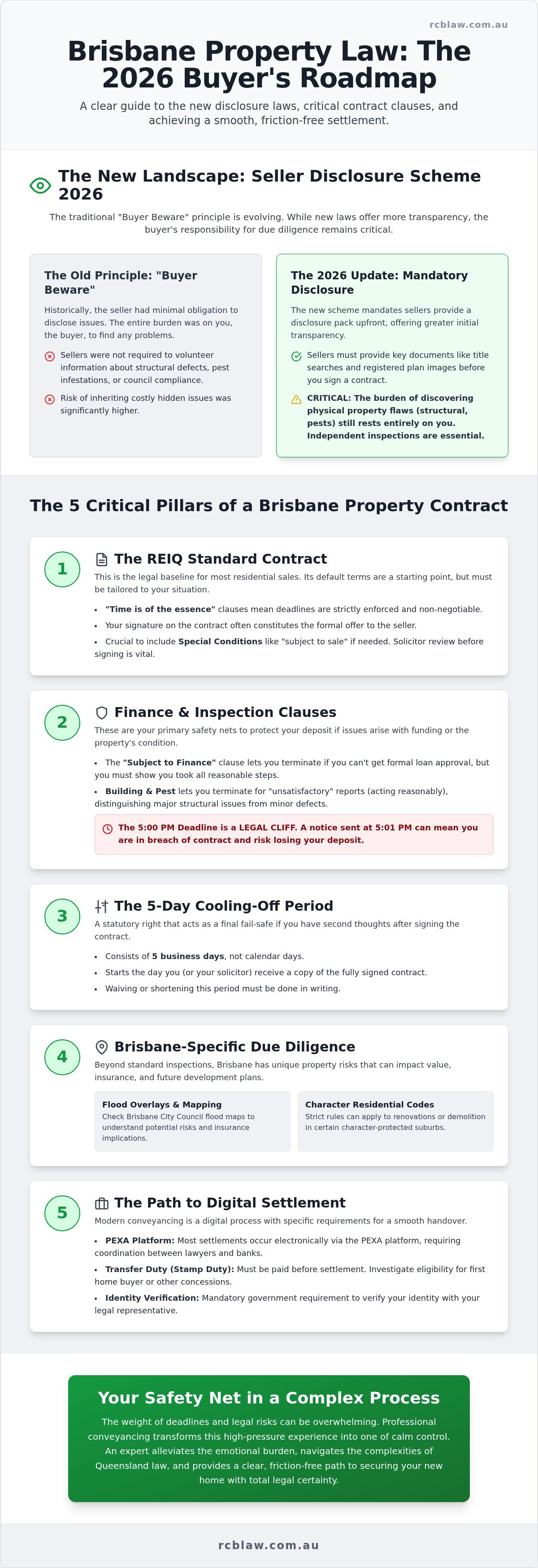
In Queensland, the principle of Caveat Emptor, or "let the buyer beware," remains a central part of the transaction process. Caveat Emptor is the foundational risk for Brisbane buyers because it means the seller generally isn't legally obligated to tell you about structural defects, pest infestations, or council compliance issues. Even with the 2025 introduction of the Seller Disclosure Scheme, which mandates certain documents like title searches and plan images, the burden of discovering physical flaws still rests on your shoulders. Conducting independent building and pest inspections isn't just a recommendation; it's a vital step to ensure you aren't inheriting a financial burden. We've seen many buyers feel overwhelmed by this responsibility, but a methodical approach to due diligence can provide the calm you need.
The REIQ Standard Contract: Your Legal Baseline
Most residential sales in Brisbane use the REIQ/QLS Standard Contract for Residential Lots. This document is a well-regarded baseline, but its default terms might not cover your specific needs. Unlike the process in New South Wales or Victoria, where "exchanging" contracts has different procedural nuances, Queensland contracts are often signed by the buyer first as a formal offer. The legal requirements for buying a house in Brisbane within this contract include "time is of the essence" clauses, meaning deadlines are strictly enforced. Essential terms include the purchase price and critical dates for finance and inspections. You might also need special conditions, such as a "subject to sale" clause or a specific sunset clause for a simultaneous settlement. Having a solicitor review the contract before you sign is the most effective way to remove friction and protect your deposit.
The 5 Critical Legal Pillars of a Brisbane Contract
Securing a property in Brisbane often feels like a high-pressure race against the clock. While the standard contract provides a structural framework, your protection depends entirely on how specific conditions are drafted and managed. One of the primary legal requirements for buying a house in brisbane involves meeting strict deadlines that leave no room for error. Understanding these pillars will help you maintain a sense of calm and confidence as you move toward settlement.
Finance and Building & Pest Conditions
A "Subject to Finance" clause is your most powerful tool for protecting your deposit if your bank doesn't provide formal approval by the agreed date. A correctly drafted clause allows you to terminate the contract and receive your full deposit back without penalty. It's not enough to simply have a pre-approval; the law requires you to take all reasonable steps to secure funding. If you don't act with due diligence, you might find your deposit at risk.
Building and pest inspections offer a similar safety net, but they come with a specific legal threshold. You have the right to terminate if the reports are "unsatisfactory" to you, provided you act reasonably. There's a significant legal difference between a major structural issue, such as a compromised foundation or active termite infestation, and a minor defect like a cracked tile or a leaking tap. Most importantly, you must remember that 5:00 PM on the due date is a non-negotiable legal cliff. In Queensland, time is of the essence. If your notice arrives at 5:01 PM, you may be in breach of contract, potentially losing your right to terminate or even your entire deposit.
The Cooling-Off Period and Termination Fees
The 5-day cooling-off period acts as a final fail-safe for buyers who may have rushed into a decision under pressure. These are 5 business days, starting the day you or your solicitor receives a copy of the contract signed by both parties. You must exclude weekends and Brisbane public holidays from this count. While this period offers flexibility, it isn't free. If you choose to walk away legally during these five days, the seller is entitled to retain a termination fee of 0.25% of the purchase price from your deposit. On a A$800,000 property, this penalty amounts to A$2,000.
In some competitive situations, you might be asked to waive or shorten this period to make your offer more attractive to the seller. This is a significant legal move that should only be done after careful consideration. Managing these timelines while coordinating your deposit payments requires professional precision. If you're feeling the weight of these deadlines, our team offers residential conveyancing services designed to remove friction from your journey. We ensure your deposit is held securely by the stakeholder and that every pillar of your contract remains standing throughout the process.
Brisbane-Specific Due Diligence and Property Searches
While standard state laws provide a general framework, the specific legal requirements for buying a house in brisbane include a layer of local due diligence that is unique to our river city. Brisbane's geography and history mean that what you don't see on a title search can often be more significant than what you do. We focus on uncovering these hidden details to ensure your transition into a new home is built on a foundation of certainty rather than guesswork. Identifying these risks early is the most effective way to alleviate the emotional burden of a complex purchase.
Flood Risk and Insurance Implications
Since the significant weather events of 2022, the Brisbane City Council (BCC) Flood Search has become an absolute legal necessity for any prudent buyer. This search provides a detailed hydrological report of the property's risk levels from river, creek, and overland flow. A Title Search alone is insufficient for Brisbane properties because it doesn't reveal the hydrological history or council-mapped flood risk of the land. This information is vital because it directly impacts your legal obligation to disclose risks to insurers. If a property sits within a high-risk overlay, your premiums may be substantially higher, or certain types of coverage might be restricted. We help you interpret these reports during the due diligence period so you aren't surprised by insurance costs after settlement.
Zoning and Character Overlays
Brisbane is famous for its iconic "Queenslander" homes, but these beautiful structures often come with strict Character Residential and Heritage Overlays. If a house was built before 1946, it's likely protected under the BCC's character codes. This rule effectively creates a legal barrier against demolition and places significant restrictions on how you can renovate or extend the property. You must understand these limitations before you sign, especially if you have plans to modernise the structure.
Beyond the house itself, we also investigate the land for unregistered easements. These are legal rights that allow utility providers to access pipes or cables located under your soil. A "Dial Before You Dig" search is a standard part of our conveyancing due diligence to ensure you don't discover a major sewer line right where you planned to build a new pool or deck. We also check the Environmental Management Register and the Contaminated Land Register. These searches confirm the land isn't flagged for previous industrial or agricultural use that could pose a health risk or limit your future use of the property.
The Path to Settlement: Duties, PEXA, and Logistics
The final weeks leading up to settlement often feel like a blur of paperwork and high-pressure deadlines. While earlier stages focus on due diligence, this phase is about financial precision and administrative compliance. Understanding the legal requirements for buying a house in brisbane during this period ensures that your transition is as friction-free as possible. We act as your steady guide through these technical steps, allowing you to focus on the excitement of your new home rather than the complexity of the law.
Transfer Duty and Concessions
Transfer duty, formerly known as stamp duty, is a significant upfront cost that must be managed with absolute accuracy. In 2026, first home buyers in Brisbane benefit from expanded concessions that can save tens of thousands of dollars. If you're purchasing an established home valued up to A$700,000, you're eligible for a full exemption, with concessional rates applying up to A$799,999. For those building a new home, the First Home Vacant Land Concession provides similar relief, provided the land is under the current thresholds.
To qualify for these benefits, you must meet the "Principal Place of Residence" requirements, which include moving into the property within one year of settlement and staying for at least six months. It's vital to lodge your duty statements with the Queensland Revenue Office (QRO) promptly. While duty is generally not payable until 30 days after the contract becomes unconditional, your financier will require proof of assessment before they allow settlement to proceed. We handle these lodgements on your behalf to ensure no last-minute delays occur.
Digital Settlement via PEXA
Digital settlements have completely transformed the legal landscape in Queensland. PEXA (Property Exchange Australia) is now mandatory for almost all property transfers, replacing the old system of physical meetings and bank cheques. This digital workspace allows all parties, including your lawyer, the seller's lawyer, and the banks, to coordinate the transfer of funds and title in real time.
The security benefits of PEXA are substantial. Because funds are transferred electronically, there's no risk of lost cheques or manual errors at the settlement table. On settlement day, we manage your digital workspace to ensure all adjustments for council rates, water charges, and land tax are calculated correctly. You also have the legal right to a final inspection of the property. If you discover new damage that wasn't there when you signed the contract, you may have grounds to request repairs or a reduction in the purchase price before the final button is pushed in PEXA. If you're ready to secure a smooth, professional settlement, our team provides the residential conveyancing expertise needed to protect your interests every step of the way.
Why Expert Conveyancing is Your Safety Net
The final steps of a property purchase often bring a unique form of anxiety known as the "settlement jitters." Even when every search has been conducted and every clause drafted, the sheer scale of the transition can feel overwhelming. Expert conveyancing acts as your safety net, ensuring that the legal requirements for buying a house in brisbane are met with professional precision while you focus on the practicalities of moving. By positioning a seasoned solicitor between you and the complexities of the law, you gain a partner who prioritises your peace of mind and removes the friction from your journey.
With over 30 years of experience in Queensland property law, RCB Law has built a legacy on making these transitions feel calm and secure. We believe that professional conduct should be softened by a supportive approach that recognises the personal significance of your new home. This is why we offer fixed-price options for transparency; knowing your legal costs upfront removes one of the most common sources of stress in a property transaction. A proactive solicitor doesn't just process paperwork; they prevent litigation before it starts by identifying risks and resolving disputes before they can threaten your settlement.
The RCB Law Difference: Local Expertise
Our deep understanding of Brisbane's suburb-specific risks, from character residential codes to flood history, allows us to provide advice that's both technically accurate and practically useful. We adopt a "Steady Guide" approach, keeping you informed at every milestone so you never feel lost in the process. You'll have direct access to experienced solicitors who understand the nuances of the local market, rather than being redirected to automated systems. This tailored service ensures that your individual circumstances are understood and your emotional journey is respected from contract to keys.
Next Steps: Securing Your Brisbane Home
The most effective time to engage a solicitor is before you sign the contract. This allows us to perform a complimentary contract review, ensuring that the special conditions we discussed earlier are drafted to protect your interests. Taking this step early is the best way to ensure a smooth path to settlement and avoid the pitfalls of a "buyer beware" market. Ensure your Brisbane property purchase is legally sound with RCB Law and move forward with the confidence that your new home is secure.
Moving Toward Your Brisbane Settlement with Confidence
Entering the Brisbane property market in 2026 requires a balance of local knowledge and technical precision. You've learned how to identify suburb-specific risks like flood overlays and character codes while managing the strict deadlines of the REIQ contract. Meeting the legal requirements for buying a house in brisbane is a complex process, but it's much simpler when you have a steady guide to remove the friction. Your peace of mind matters.
Our team brings over 30 years of Queensland property law expertise to every transaction. We focus on alleviating the emotional burden of your move by providing a reassuring, stress-free process from contract review to digital settlement. By choosing a partner who understands the nuances of the Brisbane and Sunshine Coast regions, you can step into your new home with total certainty. Experience the difference of dedicated support.
If you're ready to take the next step, we're here to help you secure a smooth path forward. Get a Fixed-Price Conveyancing Quote for Your Brisbane Purchase today and let us handle the legal complexities while you plan your move. We look forward to seeing you thrive in your new neighbourhood.
Frequently Asked Questions
Is a solicitor or a conveyancer better for buying a house in Brisbane?
A solicitor provides a broader scope of legal protection than a conveyancer, which is essential for managing the complex legal requirements for buying a house in brisbane. While both can process a standard transfer, a solicitor can advise on litigation, complex easements, or contract disputes if the transaction becomes difficult. This higher level of expertise helps alleviate the emotional burden of high-pressure property transitions.
How much is transfer duty (stamp duty) in Queensland for 2026?
For 2026, eligible first home buyers pay no transfer duty on established homes valued up to A$700,000. If you aren't a first home buyer, rates are calculated on a tiered basis ranging from 1.5% to 5.75% of the property's value. It's vital to have these figures assessed early in your journey to ensure your financial roadmap to settlement remains clear and accurate.
What happens if I miss my finance approval date in QLD?
Missing your finance approval deadline is a critical issue because "time is of the essence" in Queensland property contracts. If you don't notify the seller of approval or request an extension by 5:00 PM on the due date, the seller may gain the right to terminate the contract and keep your deposit. We act proactively to manage these non-negotiable legal cliffs on your behalf.
Can I pull out of a house sale after signing the contract in Brisbane?
You can legally withdraw during the five business day cooling-off period, but the seller is entitled to retain a termination fee of 0.25% of the purchase price. Outside of this window, you can generally only terminate if a specific condition, like finance or building and pest, is not satisfied. Understanding these legal requirements for buying a house in brisbane is the best way to protect your deposit.
Do I need a special condition for a building and pest inspection?
Yes, you must ensure that the "Building and/or Pest Inspection Date" section of the REIQ contract is completed with a specific date. Without this, the contract is not subject to these inspections, and you lose the legal right to terminate based on the property's physical state. We help define the threshold for "unsatisfactory" results to ensure you aren't forced into a purchase with hidden structural issues.
What is PEXA and do I have to use it for my settlement?
PEXA is a secure digital platform used for the electronic lodgement of property transfers and the real-time exchange of settlement funds. It is mandatory for almost all Queensland property settlements in 2026. This system removes the friction of physical bank cheques and ensures that your title is registered with the titles office almost immediately after the digital settlement is finalised.
Are there specific Brisbane laws regarding pool safety certificates?
Brisbane laws require a seller to provide a pool safety certificate or a "Notice of no pool safety certificate" before a contract is signed. If a certificate isn't in place at settlement, you as the buyer must obtain one within 90 days of the property transfer. This is a non-negotiable safety obligation that we verify during your due diligence to prevent unexpected compliance costs.
What is the "character residential" code in Brisbane and how does it affect me?
The "Character Residential" code is a Brisbane City Council regulation that protects homes built before 1946 from being demolished or significantly altered. This affects you by placing strict legal limits on your ability to renovate or modernise the exterior of the home. We check for these overlays early so you have total certainty about what you can and cannot do with your new property.


