
A franchise agreement gives you a business to operate, but can also limit how you run it. Understanding the legal risks of buying a franchise in Queensland starts with the contract: it sets out the franchisor’s and franchisee’s rights and obligations, including fees, territory, operating rules and how the agreement can end. The agreement and disclosure documents do not necessarily protect an individual franchisee.
It’s understandable to focus on the brand and business opportunity, but the terms can shape your costs, control over daily operations, and options for leaving or selling. Some small-business franchise contracts may also qualify for unfair contract terms protections if at least one party has fewer than 100 employees or annual turnover below A$10 million for its last income year.
This article explains key agreement terms and risks, who may qualify for relevant protections, and which disclosure and consumer laws apply in Australia. It also explains how the Franchising Code of Conduct works alongside those protections, so you can understand what the law addresses and why legal review matters before you commit.
Key Takeaways
- Look beyond the franchise fee: agreement terms can affect ongoing costs, operating control, territory rights and your options for exiting or selling.
- Small-business unfair contract terms protections may apply based on employee numbers or annual turnover, but eligibility alone doesn’t make a contract term unfair.
- Disclosure documents and timing requirements give you information to consider before committing; understand what the franchisor must provide and when.
- The Franchising Code and Australian Consumer Law apply alongside contract protections. RCB Law can help you understand the agreement and its legal implications before you sign.
What does a franchise agreement actually cover?
A franchise agreement sets out the franchisor’s and franchisee’s rights and obligations. Its clauses can shape your costs, control over daily operations and options if the business relationship changes.
Agreement Clauses and Signing Implications
Clauses cover brand use, operating rules, fees, support, breach, termination and dispute resolution. Once you sign, these obligations form part of your contract. A lawyer can explain how the terms work together before you commit. If a court finds a term unfair, that term is void and unenforceable. The rest of the agreement can remain binding if it can operate without that term. Only a court can make a binding determination about a disputed term.
Terms, Fees and Territory Rights
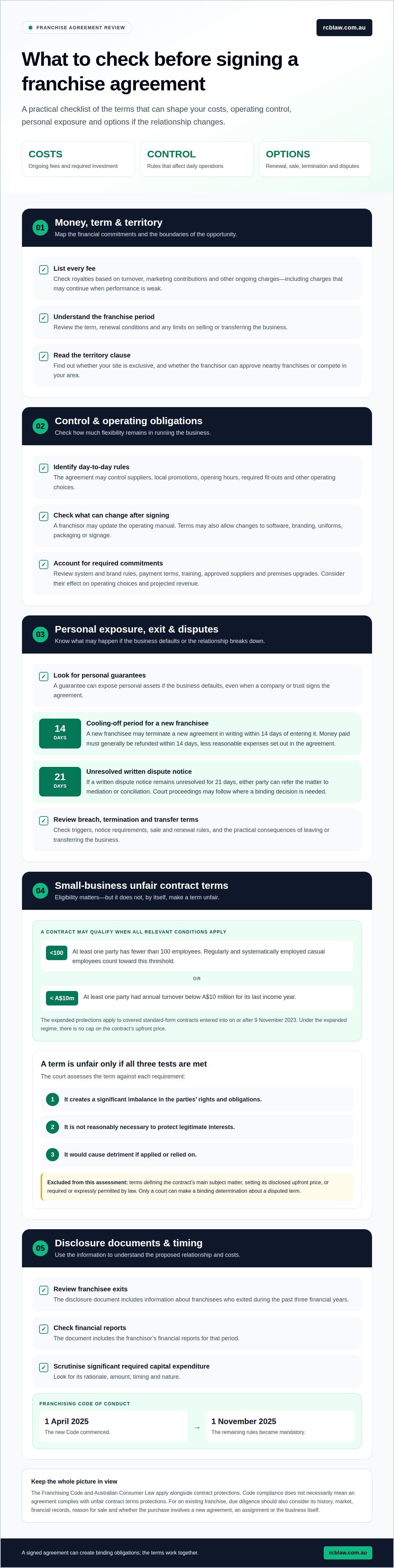
Terms set the franchise period, renewal conditions and limits on selling or transferring the business. Fees may include royalties based on turnover, marketing contributions and other ongoing charges, even when performance is weak. Territory clauses establish whether your site is exclusive and whether the franchisor can approve nearby franchises or compete. The agreement may also control suppliers, local promotions, opening hours and required fit-outs. Together, these terms affect projected revenue, operating choices and the value of your exit options.
Cooling-Off, Termination and Dispute Rights
A new franchisee may terminate a new franchise agreement in writing within 14 days of entering it. Money paid must generally be refunded within 14 days, less reasonable expenses set out in the agreement. For a written dispute notice that remains unresolved for 21 days, either party can refer the matter to mediation or conciliation. Court proceedings may follow where a dispute needs a binding decision. A solicitor can examine breach notices, termination triggers and dispute clauses to explain the practical consequences before signing.
Obligations, Guarantees and Personal Liability
Franchisees must follow the system, operating manual, brand rules and payment terms. A franchisor may update the manual, while the agreement may require training, approved suppliers or premises upgrades. Personal guarantees can expose a franchisee’s personal assets if the business defaults, even when a company or trust signs the agreement. Due diligence should also cover the business structure, lease arrangements, required capital expenditure and the agreement’s sale, renewal and exit rules.
Small-business eligibility for unfair contract terms protections
In Queensland, expanded small-business unfair contract terms protections apply to covered standard-form contracts entered into on or after 9 November 2023. A contract may qualify if at least one party has fewer than 100 employees or annual turnover below A$10 million for its last income year. Regularly and systematically employed casual employees count toward the employee threshold. Under the expanded regime, there’s no cap on the contract’s upfront price. These thresholds make the protections relevant to some franchise purchases, but eligibility alone doesn’t make a term unfair.
Assessing the legal risks of buying a franchise in Queensland includes understanding how a court assesses unfairness. A term is unfair only if it creates a significant imbalance, is not reasonably necessary to protect legitimate interests, and would cause detriment if applied or relied on. All three requirements must be met. Terms defining the contract’s main subject matter, setting its disclosed upfront price, or required or expressly permitted by law are excluded from this assessment. Only a court can make a binding determination about a disputed term.
Franchisor systems can limit a franchisee’s control over operations, marketing and training. Contract terms may allow changes to operating manuals, point-of-sale software, branding, uniforms, packaging or signage. Consider how these clauses could affect your independence and obligations after signing. The legal risks of buying a franchise in Queensland may also involve overlapping rules: compliance with the Franchising Code does not necessarily mean the agreement complies with unfair contract terms protections.
Buying an existing franchise calls for due diligence on its history, market, financial records and reasons for sale. The legal review should identify whether you’re entering a new agreement, taking an assignment or buying the business itself. Those structures affect which documents govern the purchase and your relationship with the franchisor. Reviewing the agreement and related documents can assist you to understand the commitments before proceeding. Franchise agreement legal advice can help clarify those terms.
What disclosure documents must a franchisor give in Queensland?
In Queensland, franchise buyers receive information under Australia’s Franchising Code of Conduct before committing. These documents help explain the proposed relationship, but still need careful review.
Disclosure Documents and the Franchising Code
The Franchising Code of Conduct sets disclosure requirements for franchisors and governs aspects of their conduct with franchisees. The new Code commenced on 1 April 2025, with its remaining rules mandatory from 1 November 2025. A disclosure document includes information about franchisees who exited during the past three financial years and the franchisor’s financial reports for that period. It must also disclose significant required capital expenditure, including its rationale, amount, timing and nature. These details can help frame questions about the system and the costs of taking on a franchise.
Disclosure Timing Before Signing
A franchisor must provide an information statement within 7 days of a prospective franchisee showing interest, before giving other documents. Required key documents, including the disclosure document and proposed agreement, must be provided at least 14 days before signing or making a non-refundable payment. Franchisors must also appear on the public Franchise Disclosure Register at least 14 days before entering an agreement and update it annually. These timeframes allow buyers to consider the material before the relationship becomes contractual.
Reviewing Disclosure Documents and Getting Advice
A solicitor can compare franchise opportunities by reviewing each disclosure document, agreement and related record against the proposed business model. They can identify gaps between the franchisor’s claims and the documents, examine exit history, financial reports, territory details and capital requirements, and explain the implications. This helps you assess the agreement alongside the opportunity, rather than relying on promotional statements alone.
Queensland franchise buyers may also need licences and permits, and must account for employment, consumer, health and safety, and local council requirements. Zoning rules and industry-specific obligations can affect whether and how a site operates. The ACCC manages the Franchising Code of Conduct and provides education for people considering a franchise. Reviewing disclosure documents should go hand in hand with considering applicable laws and potential disputes.
Franchising laws and consumer protections in Australia
Australian franchise protections come from more than the franchise contract. The Franchising Code of Conduct, consumer laws and unfair contract terms rules address different parts of the franchisor-franchisee relationship. Compliance with one does not establish compliance with the others.
The Competition and Consumer Act 2010 and the Australian Consumer Law apply to small businesses in Australia, including franchises, according to the Australian Government Federal Register of Legislation. The Australian Consumer Law is contained in Schedule 2 to that Act. For a franchisee, this means consumer-law duties remain relevant alongside franchise-specific obligations, including when dealing with customers and making business claims.
The Franchising Code may prohibit a franchisor from demanding certain fees or costs. If a franchisor leases premises to a franchisee, it must provide the lease or agreement to lease, along with details of lease-related incentives or financial benefits it receives. For a retail lease within a franchise, the franchisee must give the franchisor both legal and financial advice reports before entering the lease. These requirements matter because premises arrangements can affect operating costs and obligations separately from marketing or brand rules.
Consumer protections and the Code provide distinct pathways when concerns arise. A business may report suspected unfair contract terms to the ACCC, which can take enforcement action but does not resolve individual disputes. Only a court can make a binding decision that a contract term is unfair. A term found unfair is void, while the rest of the agreement may continue if it can operate without that term.
The Code also sets processes for franchise changes and exits. A franchisor must respond substantively within 28 days to a franchisee’s written early-exit proposal. From 1 November 2025, compensation applies in specified circumstances when a franchisor withdraws from Australia, rationalises its network or changes its distribution model. Understanding how these rules interact helps separate a possible Code breach from an individual contract dispute. For help assessing franchise obligations and consumer-law issues, seek franchise legal advice.
RCB Law
RCB Law’s Business Law service can help you understand a franchise agreement and its implications. Turn to the firm before signing, or when buying an existing franchise, for advice on how the agreement, disclosure documents and business purchase terms fit together. A review can clarify your obligations, restrictions, exit provisions and how the proposed business structure affects your position.
To make the discussion useful, provide the documents you’ve received, such as the proposed franchise agreement, disclosure document and sale or lease documents. RCB Law can consider the legal issues relevant to your circumstances and explain points that need attention. If you’re considering a franchise purchase in Queensland, contact RCB Law to discuss your legal advice needs.
Make your next move with clarity
Choosing a franchise is also a decision about the business you want to build and the personal commitments you’re prepared to take on. The legal risks of buying a franchise in Queensland are easier to assess when you consider the proposed agreement alongside your business structure, premises arrangements and future plans.
RCB Law can provide legal support through its Business Law, Commercial Property Law and Residential Conveyancing services when those matters connect with your franchise purchase. A considered review can help you understand the documents, identify issues that need attention and make your next decision with greater clarity.
If you’re weighing an opportunity or preparing to sign, discuss your franchise risks with RCB Law. Clear advice can help you move forward with a better understanding of the commitments involved.
Frequently Asked Questions
Before signing anything, what should a solicitor check?
Have a solicitor review the proposed agreement alongside the sale documents, disclosure material and premises arrangements. They can check whether the documents describe the same transaction, identify obligations that depend on another party’s approval, and assess what happens if the site lease ends before the franchise term. For an existing business, the review should also consider whether you’re buying assets, taking an assignment or entering a new agreement.
How does a solicitor help with a franchise in Queensland?
A solicitor can explain the legal effect of the documents and identify where they interact, such as when a franchise agreement relies on a separate lease or licence. They can also assess the proposed purchase structure and clarify how transfer, renewal and exit provisions affect your plans. This advice helps you understand the commitments attached to the opportunity, rather than treating the franchise contract as the only document that matters.
What does the Franchising Code of Conduct require in Queensland?
The Code sets rules for franchisor and franchisee conduct, including disclosure, dispute resolution and certain exit processes. For example, a franchisor must give an end-of-term notice at least six months before an agreement ends, or at least one month before the end if the term is under six months. The Code also provides for mediation or conciliation when a written dispute remains unresolved for the required period.
What franchise laws and regulations apply in Queensland, Australia?
Franchise businesses must consider the national Franchising Code of Conduct, the Australian Consumer Law and unfair contract terms protections, alongside laws relevant to their operations. Depending on the business, obligations may include employment, workplace health and safety, environmental, zoning and industry-specific requirements. A food business, for example, may face different operating rules from a retail service. The franchise contract does not replace these legal responsibilities.
What does the Australian Franchising Code of Conduct require before buying a franchise?
Before a purchase proceeds, the Code requires franchisors to provide prescribed information and documents so a prospective franchisee can assess the arrangement. Disclosure material can reveal network changes, financial information and required capital expenditure, while the agreement sets out contractual rights and responsibilities. The Code also provides a cooling-off right for a new franchisee, subject to its conditions, and sets rules for certain payments and dispute processes.
What documents must a franchisor provide, and how long is the disclosure period?
A franchisor must provide an information statement first, followed by the required key documents, including the disclosure document and proposed franchise agreement. The information statement is due within seven days after you show interest. The required documents must be provided at least 14 days before you sign or make a non-refundable payment. A franchisee can also request an updated disclosure document once every 12 months, which the franchisor must provide within two months.