
Buying or selling a home in Queensland is one of life’s most significant milestones. But the excitement can quickly be overshadowed by a wave of stress-navigating complex contracts, deciphering legal jargon, and meeting critical deadlines can feel overwhelming. You might be worried about hidden costs, unexpected legal issues, or simply choosing the right professional to protect your interests during this crucial transaction.
We understand. That’s why we’ve created this guide to demystify the process of residential conveyancing qld. Here, we will provide you with a clear, step-by-step roadmap to follow, whether you are buying your first home or selling a long-held property. Our goal is to replace uncertainty with confidence, ensuring you understand every stage, cost, and obligation. Let’s get you started on the path to a smooth, secure, and stress-free settlement.
Key Takeaways
- Follow a clear, step-by-step checklist for buyers to confidently navigate the process from making an offer to receiving your keys.
- Discover the key legal obligations and steps sellers must take to ensure a smooth, successful, and stress-free property sale.
- Demystify the complex legal documents and property searches involved in residential conveyancing qld so you understand every form you sign.
- Identify common pitfalls, such as contract issues and missed deadlines, and learn practical strategies to avoid costly delays.
What is Residential Conveyancing and Why is it Crucial in QLD?
Buying or selling your home is one of the most significant financial decisions you will ever make. We understand it can feel both exciting and overwhelming. The legal process that underpins this transaction is known as conveyancing. At its heart, conveyancing is the formal transfer of property ownership from one party to another. For a technical overview, you can learn more about what is conveyancing, but its core purpose is simple: to ensure you receive a clear, undisputed title to your new home.
In Queensland, this process is governed by specific laws and often involves standard contracts, such as those from the Real Estate Institute of Queensland (REIQ). While it might be tempting to handle this yourself to save money, the risks are substantial. The process of residential conveyancing qld is filled with critical deadlines and legal complexities. A small mistake could lead to a loss of deposit, a contract dispute, or even purchasing a property with hidden legal issues. Professional guidance isn't just a recommendation; it's essential protection for your investment.
Solicitor vs. Conveyancer: Understanding the Key Difference
While both professionals can manage a property transfer, there is a crucial distinction. A licensed conveyancer specialises solely in property law. A solicitor, however, is a qualified lawyer with broader legal expertise. This becomes vital if unexpected issues arise, such as a contract dispute, a deceased estate, or complex trust structures. At RCB Law, our team consists of experienced property lawyers, giving you the security and peace of mind that we can handle any complexity that may arise during your transaction.
The Role of Your Legal Team in the Process
Think of your legal team as your dedicated advocate, protecting your best interests from start to finish. Their goal is to make the entire process as seamless and stress-free as possible for you. Key responsibilities include:
- Expert Contract Review: Scrutinising the contract for unfavourable clauses and providing clear advice before you sign.
- Conducting Critical Searches: Investigating the property for any potential issues, such as planning restrictions, unpaid rates, or easements.
- Managing Communication: Liaising with the other party’s legal team, your bank, and real estate agents on your behalf.
- Overseeing Settlement: Ensuring all critical dates are met and managing the secure transfer of funds on settlement day.
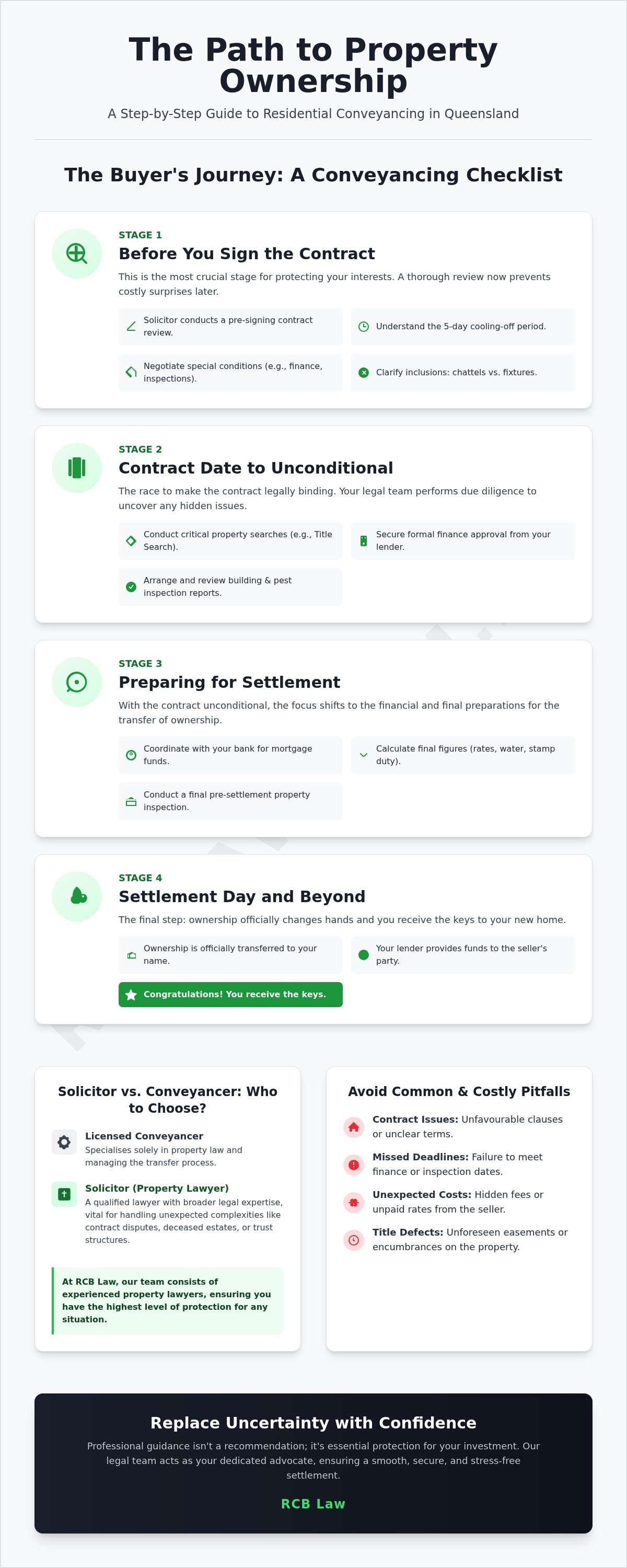
The Buyer's Journey: A Step-by-Step Conveyancing Checklist
Buying a home is one of life’s most significant milestones, but the legal process can feel overwhelming. We understand that this journey, from making an offer to finally holding the keys, is filled with critical steps. This checklist is your roadmap, designed to demystify the process of residential conveyancing qld and give you the confidence and control you deserve. Each stage involves vital legal checks to protect your investment, and we are here to guide you through them.
Stage 1: Before You Sign the Contract
This is the most crucial stage for protecting your interests. Before you sign anything, have your solicitor conduct a pre-signing contract review. This allows us to identify potential risks and negotiate important special conditions, such as making the contract subject to finance approval or a satisfactory building and pest report. We will also clarify Queensland’s five-day cooling-off period and explain what items (chattels vs. fixtures) are included in the sale, ensuring there are no surprises.
Stage 2: From Contract Date to Unconditional
Once the contract is signed, the race to 'unconditional' begins. This is the point where the contract becomes legally binding on all parties. During this period, your conveyancing team conducts critical property searches, including a title search to verify ownership and check for encumbrances. We ensure all processes align with Queensland Government property laws. You will work on securing formal finance approval from your lender while we help you arrange and interpret the building and pest inspection reports.
Stage 3: Preparing for Settlement
With the contract unconditional, we move towards the final transfer. This involves detailed coordination with your bank to ensure mortgage funds are ready for settlement day. Our team calculates the final settlement figures, which include adjustments for council rates and water, and advises you on the amount payable for stamp duty. In Queensland, most settlements now occur electronically via PEXA, a secure digital platform. Just before settlement, you will conduct a pre-settlement inspection to ensure the property is in the same condition as when you signed the contract.
Stage 4: Settlement Day and Beyond
Settlement day is when ownership officially changes hands. Your lender provides the funds to the seller, the title is transferred into your name, and the property legally becomes yours. Once settlement is complete, we will notify you immediately so you can collect the keys from the real estate agent. Post-settlement, we handle the final steps, such as notifying local authorities of the change in ownership. Congratulations, you are a homeowner!
Ready to buy? Let our experts guide you through every step.
The Seller's Journey: A Guide to a Successful Property Sale
Selling your home involves a different set of legal obligations than buying. We understand that navigating this process can feel complex, but with proper preparation and expert guidance, it can be a smooth and rewarding experience. Your conveyancing solicitor is your greatest asset, ensuring your contract is strong, your interests are protected, and settlement proceeds without any stressful last-minute issues. A successful sale begins long before the "For Sale" sign goes up.
Preparing the Contract of Sale
In Queensland, the seller is responsible for providing a legally compliant and accurate contract of sale to potential buyers. This document is the foundation of the entire transaction. A meticulously prepared contract not only meets legal requirements but also minimises the risk of future disputes. Key tasks include:
- Making required disclosures: This involves providing clear information on any encumbrances, easements, and statutory certificates like pool safety and smoke alarm compliance.
- Drafting special conditions: We can add clauses tailored to your specific situation, such as conditions regarding settlement dates or specific inclusions, to protect your interests.
From Executed Contract to Settlement
Once the contract is signed by both parties, the conveyancing process moves into a critical phase of monitoring deadlines and managing communications. Your solicitor handles negotiations on your behalf and ensures all parties are on track. While the buyer follows their own step-by-step conveyancing checklist for finance and inspections, we manage your side of the transaction. This includes preparing the formal property transfer documents for your signature and liaising with your bank to arrange the discharge of any existing mortgage on the property.
Finalising the Sale on Settlement Day
Settlement day is when the ownership of the property officially changes hands. The process of residential conveyancing qld culminates in a series of carefully coordinated steps to finalise the sale. On this day, your legal team will:
- Coordinate with your bank to ensure they are ready to release the title in exchange for the mortgage payout.
- Confirm that the full balance of the purchase price has been received from the buyer.
- Authorise the real estate agent to release the keys to the new owner once funds are cleared.
This ensures a clean and complete legal break from the property, allowing you to move forward with confidence and peace of mind.
Decoding the Paperwork: Key Searches & Documents Explained
We understand that the paperwork involved in residential conveyancing qld can feel like a mountain of complex legal jargon. This is a normal part of the process, but it doesn’t have to be stressful. This section breaks down the most important documents and property searches into plain English, helping you understand what each one is for and why it is critical for protecting your investment.
Think of this as your due diligence checklist. Each document serves a legal purpose, and each search is a vital step in uncovering any hidden issues before you commit to the purchase.
Essential Contract Documents
From the initial offer to the final transfer, these are the core documents that make your property purchase legally binding and official.
- Contract of Sale (REIQ): This is the cornerstone of the transaction. Usually a standard Real Estate Institute of Queensland (REIQ) contract, it outlines all the terms and conditions of the sale, including the price, settlement date, and any special conditions.
- Transfer Documents (Form 1): This is the official form registered with the Queensland Land Title Registry to legally transfer ownership of the property from the seller's name to yours.
- Mortgage Documents: If you are borrowing to fund your purchase, this is your formal loan agreement with your lender. It’s crucial that these documents are reviewed carefully to ensure they align with the contract terms before you sign.
- Pool Safety Certificate: A legal requirement in Queensland for any property with a pool or spa. This certificate confirms the pool fence and safety features comply with government standards.
Critical Property Searches You Can't Skip
Your conveyancer conducts a series of searches to protect you from inheriting the seller's problems or debts. These are non-negotiable checks.
- Title Search: This is the first and most important search. It confirms the seller is the legal owner and reveals any registered interests on the title, such as mortgages, easements (e.g., a right for a utility company to access part of your land), or caveats that could prevent the sale.
- Plan Search: This provides a diagram of the property, showing the legal boundaries, lot dimensions, and the precise location of any registered easements.
- Council Rates Search: This search reveals the status of the council rates, ensuring you don't inherit any outstanding debt from the previous owner.
- Land Tax Search: Similar to a rates search, this checks if there are any unpaid state land tax liabilities attached to the property that could become your responsibility.
While this overview clarifies the basics, professional guidance is essential to navigate the nuances of each document. For personalised support with your property transaction, contact the experienced team at RCB Law.
Common Pitfalls in QLD Residential Conveyancing (And How to Avoid Them)
We understand that buying or selling a home is a significant milestone. While exciting, the process of residential conveyancing qld can have hidden complexities. Even transactions that appear simple on the surface can encounter issues that cause unnecessary stress and cost. Being aware of these common pitfalls is the first step to a smoother, more secure settlement.
An experienced conveyancing solicitor doesn't just process paperwork; they proactively identify and manage these risks for you. This is where professional guidance proves its immense value, turning a potentially stressful experience into a seamless one.
Contract and Condition Issues
The contract of sale is the cornerstone of your transaction, and any oversights can have serious consequences. Key issues to watch for include:
- Failing to meet deadlines: Critical dates, especially for the finance clause, are legally binding. Missing one could give the other party the right to terminate the contract.
- Unfavourable reports: A building and pest report may uncover significant defects. An expert can help you negotiate for repairs, a price reduction, or lawfully terminate the contract if necessary.
- Misunderstanding special conditions: These are custom clauses added to a contract. Without clear legal advice, you may unknowingly agree to terms that are not in your best interest.
- Relying on verbal agreements: Any promise or agreement made verbally is not legally enforceable in property matters. It must be in writing in the contract to protect you.
Unexpected Title and Property Problems
Thorough property searches are vital for uncovering issues that aren't visible during an inspection. These problems can significantly impact your ownership rights and future plans for the property.
- Unregistered easements or covenants: These can grant another party rights over your land (e.g., for drainage or access) or restrict how you can use it, limiting future extensions or builds.
- Unapproved structures: A deck, shed, or extension built without council approval can become your problem, potentially leading to fines or demolition orders.
- Boundary disputes: A survey may reveal that a fence is in the wrong place or a neighbour's structure encroaches onto the property, creating a dispute that needs to be resolved before settlement.
Financial and Settlement Delays
The final step, settlement, is where many last-minute delays occur. A proactive solicitor helps coordinate all parties to prevent these issues from derailing your plans.
- Bank delays: Lenders not being ready with mortgage documents or funds is a leading cause of settlement delays.
- Incorrect adjustments: Council rates, water charges, and body corporate levies must be calculated precisely. Errors can lead to financial disputes.
- Transaction 'chains': If your settlement depends on another sale or purchase, a delay in one transaction can create a stressful domino effect.
Don't risk the stress and financial loss that can come from navigating the complexities of residential conveyancing qld alone. Protect your investment and ensure peace of mind. Get expert advice to ensure a smooth transaction.
Navigate Your QLD Property Journey with Confidence
Buying or selling a home is a significant milestone. As we've explored, successful residential conveyancing qld depends on meticulous attention to detail, from understanding the contract to navigating critical searches and avoiding common pitfalls. A smooth settlement isn't just about ticking boxes; it's about securing your investment and ensuring complete peace of mind throughout the entire process.
We understand that the process can feel overwhelming, which is why having a dependable expert on your side is crucial. The team at RCB Law brings over 30 years of specialised experience in Queensland property law. As local experts on the Sunshine Coast and in Brisbane, our dedicated team of property lawyers-not just conveyancers-is committed to providing clear, practical guidance and protecting your interests every step of the way.
Ready to move forward with clarity and confidence? Buying or selling in QLD? Contact RCB Law for a clear, fixed-fee quote and a stress-free experience. Let us handle the complexities, so you can focus on the excitement of your next chapter.
Frequently Asked Questions About Residential Conveyancing QLD
How much does residential conveyancing cost in Queensland?
The cost of residential conveyancing in Queensland typically involves two parts: the professional legal fee and disbursements. Professional fees for a standard transaction usually range from A$900 to A$2,200. Disbursements are out-of-pocket costs for property searches and certificates, which can add another A$500 to A$800. We recommend seeking a fixed-fee quote that clearly itemises all costs to ensure transparency and help you budget effectively for your property transaction.
How long does the conveyancing process take from contract to settlement in QLD?
In Queensland, the standard settlement period is typically 30 to 60 days from the date the contract is signed by both the buyer and seller. However, this timeframe is negotiable and can be adjusted to suit both parties. For instance, a shorter or longer period, such as 21 or 90 days, can be agreed upon and must be clearly specified in the contract of sale. Your conveyancer will work to ensure all critical dates are met.
What is the cooling-off period for residential property in Queensland?
Buyers of residential property in Queensland are entitled to a five-business-day cooling-off period. This period begins the day you receive a copy of the contract signed by both parties. It allows you to withdraw from the contract for any reason, but be aware that the seller can charge a termination penalty of 0.25% of the purchase price from your deposit if you do. This important protection can be waived or shortened by agreement.
What is Stamp Duty (or Transfer Duty) and who has to pay it?
Stamp Duty, officially called Transfer Duty in Queensland, is a state government tax that the buyer must pay when purchasing property. The amount is calculated on a sliding scale based on the property's purchase price or market value. While it is a significant cost, concessions and exemptions are often available, particularly for first home buyers or those purchasing a home to live in. Your conveyancer can help determine if you are eligible for any discounts.
What happens if the building and pest inspection finds major problems?
If your building and pest inspection uncovers major structural defects, you have options under a standard contract. You may be able to terminate the contract and have your deposit refunded in full. Alternatively, you can use the report as a tool to negotiate with the seller. This could involve asking them to fix the issues before settlement or requesting a reduction in the purchase price to cover the cost of repairs. Clear guidance is essential here.
Do I need to be physically present for the settlement?
No, you do not need to be physically present for settlement. The process of residential conveyancing QLD is now primarily handled electronically through PEXA (Property Exchange Australia). Your solicitor or conveyancer, along with your bank, will manage the entire digital transaction on your behalf. This modern approach provides a secure, efficient, and far more convenient way to finalise your property purchase, removing the stress of attending a physical meeting.


