
What if a property sale could be put at risk by information provided too late or details that haven’t been checked carefully? The seller disclosure obligations QLD property owners need to understand require preparation before a buyer signs. Since 1 August 2025, Queensland’s new regime has applied to most freehold property sales. Sellers must provide a Form 2 Seller Disclosure Statement and prescribed documents before the contract is signed.
If you’re unsure which records apply to your property, or concerned that an omission could disrupt a sale, preparation can help. Requirements may involve title and rates information, as well as additional documents for some properties. A buyer may have a right to terminate before settlement if disclosure is non-compliant or materially inaccurate, so it’s important to check the details.
This guide explains when the rules apply, what information and certificates may be needed, and how to prepare them ahead of a sale. It also outlines where a legal review can help clarify property-specific details. RCB Law provides residential and commercial conveyancing in Queensland, including support to organise and review disclosure materials before a contract is signed.
Key Takeaways
- Understand when seller disclosure obligations qld property apply and why the information must be provided before the buyer signs the contract.
- Learn what the Form 2 Seller Disclosure Statement covers and which supporting documents may be relevant to your property.
- See how missing or materially inaccurate disclosure can affect a sale, including potential buyer termination rights before settlement.
- Use a practical preparation sequence to gather records, complete and verify disclosure, and allow time for documents before marketing or contract discussions.
- Find out how conveyancing support can help organise disclosure materials and review them before the contract is signed.
Seller disclosure obligations in QLD property: what the rules require
Preparing a Queensland property for sale can involve more than gathering the usual sale documents. It helps to distinguish the seller’s statutory disclosure duty from the buyer’s broader investigations, and to prepare the required material before a contract is formed.
Seller disclosure is the information and prescribed documents a seller must give a buyer before the buyer enters a contract to purchase covered Queensland property. The seller disclosure obligations qld property owners need to understand generally apply to sales of freehold land, including many residential and commercial properties. The scheme commenced on 1 August 2025. Some transactions, including off-the-plan sales, remain subject to different disclosure arrangements.
When does a QLD seller need to provide disclosure?
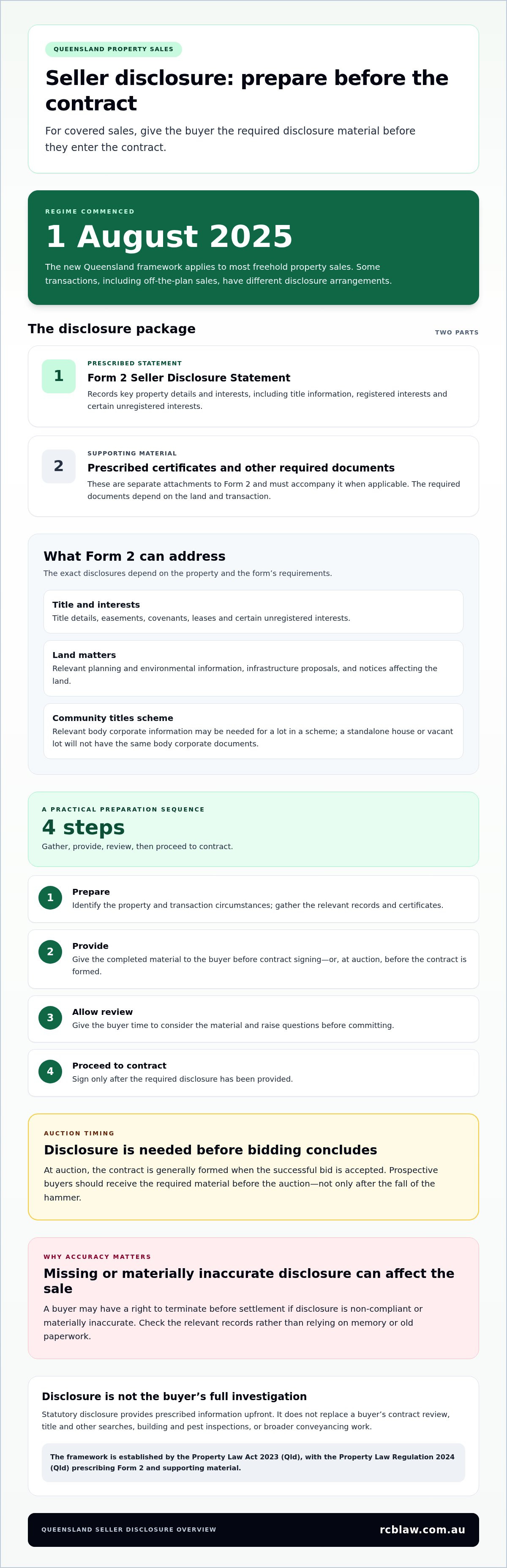
For a covered sale, the seller must provide the disclosure statement and required supporting material before the buyer signs the contract. This gives the buyer an opportunity to review the information before committing. Don’t leave document collection until a buyer is ready to sign: searches, certificates and records may take time to obtain or check.
At auction, the contract is generally formed when the successful bid is accepted. The practical deadline is therefore before bidding concludes. Arrange for prospective buyers to receive the required material before the auction, rather than treating post-auction signing as the first relevant moment.
A straightforward preparation timeline is:
- Prepare: Identify the property and transaction circumstances, then gather the relevant records and certificates.
- Provide: Give the completed disclosure material to the buyer before contract signing or, for an auction, before the contract is formed at the fall of the hammer.
- Review: Allow the buyer time to consider the material and raise questions before committing.
- Sign: Proceed to contract only after the required disclosure has been provided.
Which law governs seller disclosure in Queensland?
The Property Law Act 2023 (Qld) establishes the seller’s disclosure framework and the consequences that may follow if its requirements aren’t met. The Property Law Regulation 2024 (Qld) supports the Act by prescribing the disclosure form and the documents required for relevant transactions. Together, they set the core rules sellers need to follow. The required documents can vary with the property and its circumstances.
In Queensland, sellers of covered freehold property must give the buyer the required disclosure material before the buyer enters the sale contract. This statutory disclosure isn’t a complete property investigation. It doesn’t replace the buyer’s contract review, title and other searches, building and pest inspections, or broader conveyancing work. These steps serve different purposes: disclosure provides prescribed information upfront, while searches and inspections help a buyer investigate matters beyond that material.
Starting early gives sellers time to identify missing records, clarify property-specific details and organise disclosure materials before negotiations reach the contract stage. That preparation can reduce avoidable last-minute pressure for both sides.
What a QLD seller disclosure statement and supporting documents cover
The disclosure package has two parts: a prescribed statement and documents that support or add to its information. For a covered sale, the seller uses the current prescribed Form 2 Seller Disclosure Statement. The information must be accurate when given to the buyer, so check the relevant records rather than relying on memory or old paperwork.
The Queensland Property Law Act 2023 sets the disclosure framework, while the Property Law Regulation 2024 (Qld) prescribes Form 2 and supporting material. The seller disclosure obligations qld property owners face therefore depend on what the form asks and on the land and transaction involved.
What information is recorded in Form 2?
Form 2 records key details about the property and interests affecting it. These can include title information, registered interests such as easements, covenants or leases, and certain unregistered interests. An easement may give another party a right to use part of the land, while a covenant may restrict how the land can be used.
The statement also addresses prescribed matters such as relevant planning and environmental information, infrastructure proposals, and notices affecting the land. The exact disclosures depend on the property and the form’s requirements. For example, a notice relating to building or construction work may be relevant, while tree applications or orders may need to be disclosed where applicable.
For a lot in a community titles scheme, relevant body corporate information also matters. Buyers may need details about the scheme and its management arrangements, not just information about the individual unit. A standalone house or vacant lot won’t have the same body corporate documents.
Which prescribed certificates may accompany the statement?
Form 2 is the disclosure statement. Prescribed certificates and other required documents are separate attachments that must accompany it when applicable. These may include a current title search and registered plan, which help identify the registered owner, recorded interests and boundaries shown in the plan. The package may also need rates and water charges information, relevant notices, and a pool safety certificate or notice that one hasn’t been issued.
Where the property is part of a community titles scheme, a body corporate certificate and the community management statement may also be required. The certificate provides prescribed body corporate information, while the management statement sets out scheme arrangements, including by-laws. These aren’t universal attachments. First identify the property type and circumstances, then establish which prescribed documents apply under the legislation.
Disclosure also has limits. It isn’t a building inspection, a guarantee of structural condition, or a complete account of matters such as flood history or asbestos. Buyers still need to consider their own searches, inspections and legal review. Sellers can reduce confusion by organising the statement and attachments together, checking that names and property details match, and resolving inconsistencies before the buyer relies on the material. Queensland conveyancing assistance can help sellers organise and review disclosure documents as part of preparing for a property transaction.
What happens if QLD seller disclosure is missing or inaccurate?
A disclosure problem can have serious consequences, but it doesn’t mean every typo automatically cancels a sale. Under Queensland’s statutory scheme, a buyer may have a right to terminate before settlement if required disclosure wasn’t provided, or if the statement is inaccurate or incomplete about a material matter. Whether the right applies depends on the facts and statutory conditions.
The distinction matters. A missing Form 2 or required prescribed document is different from an error in information supplied. For an error or omission, the issue generally needs to concern a material matter, not simply any minor mistake. The REIQ Seller Disclosure Information offers practical context, but the legislation governs the legal test. The buyer’s knowledge and other statutory qualifications may also affect whether a termination right is available.
When might a buyer have a right to terminate?
In broad terms, the relevant remedy may be available after contract signing but before settlement if the statutory requirements are met. A buyer must exercise any right in accordance with the applicable law. The outcome isn’t automatic, and a seller shouldn’t assume that correcting a document alone resolves the issue. If a contract is validly terminated under the regime, the seller must refund the deposit and other amounts paid towards the purchase, plus accrued interest.
Illustrative example only, not legal advice: A buyer discovers before settlement that a prescribed document wasn’t provided before signing. The buyer may be able to terminate, but the result depends on the transaction facts, the buyer’s knowledge and the statutory conditions. Each case needs to be assessed on its own circumstances.
Does seller disclosure replace a buyer’s due diligence?
No. Disclosure is a prescribed legal process, not a certification that a property is structurally sound, suitable for a buyer’s plans or free from every issue. It doesn’t replace building and pest inspections, contract review, searches or enquiries specific to the property and the buyer’s intended use.
A buyer may still need independent legal advice and appropriate investigations. For example, a buyer concerned about visible cracking may need a building inspection, while someone planning a renovation may need to investigate relevant planning controls and contract terms. Disclosure documents can help identify matters to explore, but they aren’t a substitute for those checks.
For sellers, careful review before the contract is signed can help identify missing documents or information that needs attention. The seller disclosure obligations qld property law imposes are precise, and the consequences can depend on details that aren’t obvious from a quick read of the form. Queensland conveyancing support can help organise and review disclosure materials and contract documents before they’re provided to a buyer.
How to prepare QLD seller disclosure before a property sale
Preparing disclosure early gives you time to find records, resolve inconsistencies and avoid a scramble when a buyer is ready to sign. The seller disclosure obligations qld property owners must meet can depend on the property’s title, notices and ownership structure. Start before marketing or contract negotiations, rather than waiting for a buyer to show interest.
A practical preparation sequence
Work through these steps in order. If something doesn’t match or isn’t clear, pause and have it reviewed before giving the statement to a buyer.
- Identify the property circumstances. Confirm whether it’s freehold land, part of a community titles scheme, subject to a lease or affected by unusual title interests. These details help establish which disclosure information and supporting documents may apply.
- Gather the records. Assemble current title and plan information, rates and water details, relevant council and planning records, environmental information, notices affecting the land, and body corporate records where relevant. A unit in a community titles scheme may need scheme documents that wouldn’t apply to a standalone house.
- Prepare Form 2. Use the current prescribed seller disclosure statement and compile the applicable supporting documents. Don’t assume one property’s document set will suit another.
- Verify the details. Check the owner names, lot and plan details, and property identifiers against current source documents. Compare the statement with the records you’ve gathered, and flag unclear, outdated or inconsistent information for legal review.
- Provide the completed material in time. Give the buyer the statement and applicable documents before they enter the contract. Keep a copy of what was supplied and when, so the disclosure process is clearly documented.
Allow for title interests and special sale circumstances
A title search may show an easement, covenant, lease or caveat that needs careful consideration. These interests can affect how the land is used or who has an interest in it. If a caveat appears on title, understand what it relates to rather than treating it as a routine detail. The Queensland property caveat guide explains this title interest in plain English.
At auction, the successful bid can form the contract, so have the disclosure package ready for prospective buyers before bidding begins. Statutory exceptions are separate: whether one applies depends on the transaction and the legislation, so don’t assume a sale is exempt based on a general description alone.
For a broader overview of the legal steps involved in a Queensland sale, the complete Queensland conveyancing guide puts disclosure in the context of the wider transaction. Conveyancing support for your property sale can help organise and review disclosure documents before they’re provided to a buyer.
Get support with QLD seller disclosure and conveyancing
Preparing to sell can raise questions about which documents are needed, whether the information is current and how disclosure fits with the contract. Early legal review can turn those questions into practical next steps before a buyer is ready to sign.
A conveyancing lawyer can consider the property’s circumstances, organise the relevant disclosure material, review it for consistency and coordinate preparation of the sale contract. This is particularly useful if a title search shows an easement, lease or caveat, if a notice raises questions, or if the property is part of a community titles scheme. These details may affect which records are relevant and how the sale documents should be prepared.
How conveyancing support can reduce uncertainty
Disclosure preparation isn’t just a matter of filling in a form. The information and attachments need to relate to the property being sold and be ready before the buyer enters the contract. A conveyancing lawyer can review the available documents alongside the property details, identify missing or inconsistent information, and explain what needs attention before the material is supplied.
Clear communication matters. Sellers should understand which information is outstanding, why it may be relevant and what needs to happen next. For example, if current title details don’t appear to match older records, resolving the discrepancy before contract preparation can help avoid rushed corrections later. Legal review doesn’t replace a building or pest inspection; it focuses on the legal and transaction documents.
RCB Law has more than 30 years of experience in Queensland residential and commercial conveyancing. The firm can help coordinate disclosure materials and contract preparation. Whether you’re selling a house, vacant land or a property with more complex title or body corporate details, the steps depend on the transaction.
Choose a clear next step before you list or sign
If planning information, title interests or community-title arrangements are unclear, raise those questions before marketing or contract negotiations gather pace. Starting early leaves more room to locate records, clarify discrepancies and understand what remains to be done. It also gives you time to consider how the disclosure package and contract fit together, rather than making decisions under last-minute pressure.
The seller disclosure obligations qld property owners face can feel demanding, but a structured review can make the process easier to follow. A conveyancing lawyer can help you understand the documents, identify practical next steps and prepare for the buyer’s review before contract signing.
RCB Law provides conveyancing for Queensland property sales. Learn about conveyancing with RCB Law.
Prepare your next step with confidence
A property sale is easier to approach when legal questions are addressed before they become urgent. If you’re planning to sell, set aside time to consider any title, planning or ownership details that may need clarification, and decide who will coordinate the legal preparation of your transaction.
The seller disclosure obligations qld property owners face are part of a broader sale process. Getting guidance early can help you move from uncertainty to a clear plan, with documents and contract steps considered in the context of your property and circumstances.
RCB Law assists sellers across Brisbane and the Sunshine Coast with Queensland residential conveyancing. A conversation about your sale can help you identify a practical starting point and understand what legal preparation may be needed before your property goes to market.
Speak with RCB Law about your Queensland property sale to discuss the next steps.
Frequently Asked Questions
Does QLD seller disclosure replace a building and pest inspection?
No. The disclosure statement doesn’t assess a property’s physical condition. A buyer considering a timber home, for example, may still want a building and pest inspection to investigate visible damage, moisture or pest activity. Sellers shouldn’t present the disclosure documents as proof that a building is defect-free, and buyers should arrange inspections suited to the property and their concerns.
Can a buyer make further enquiries after receiving Form 2?
Yes. Receiving Form 2 doesn’t prevent a buyer from asking questions or making further enquiries before deciding whether to proceed. A buyer might ask for clarification about an easement shown on the title or seek information relevant to planned renovations. Keep responses clear and, where a matter may affect the transaction, record them in writing and have the contract implications reviewed.
Are verbal statements part of the QLD seller disclosure statement?
No. Verbal comments aren’t a substitute for the prescribed written Form 2 and its required attachments. However, statements made during inspections or negotiations may still matter to the parties’ dealings. Sellers should take care not to make unsupported assurances, such as saying an extension has approval without checking. Buyers should ask for important explanations in writing and have relevant promises addressed in the contract.
Does the QLD disclosure regime apply to every property sale?
No. The seller disclosure obligations qld property regime generally covers sales of freehold land, but exceptions and separate disclosure arrangements exist. For example, off-the-plan sales aren’t simply treated as ordinary existing-property sales under this scheme. Identify the type of interest being sold and the transaction structure before assuming the standard Form 2 process applies. Unusual transactions call for legal review.
What should a seller do if information changes after preparing Form 2?
Don’t rely on an old draft if a relevant detail changes. Form 2 must be accurate when it’s given to the buyer, so if you learn of a new notice or discover a title detail was recorded incorrectly, pause and seek legal advice about updating the material. If disclosure has already been provided, tell your conveyancer promptly so they can advise on the appropriate next step before contract signing.
Can a seller prepare Form 2 without a conveyancing lawyer?
A seller may complete Form 2 themselves, but they remain responsible for providing a correctly completed and signed statement with the applicable prescribed documents. The challenge is identifying which requirements fit the property and checking information across different records. If title interests, notices or body corporate details are unclear, a conveyancing lawyer can review the material and help coordinate it with the sale contract.


