
What if the farm you’re buying doesn’t include the water access, infrastructure or land-use rights you’ve assumed? A rural property purchase is more than a decision about paddocks and price. Getting legal advice for buying a farm qld can help you understand what the contract transfers, what still needs investigating and which risks need attention before you commit.
It’s understandable to feel unsure when title conditions, zoning, water rights and environmental or biosecurity obligations all affect how you can use the land. Rural-property checks can also take time to coordinate, while contract deadlines keep moving. Reviewing the agreement and organising enquiries early can help you make informed decisions before becoming unconditionally committed.
This guide explains the key legal issues to investigate when buying a farm in Queensland, including title and contract terms, water access, permitted land use, infrastructure and property obligations. It also outlines how to plan your due diligence around important deadlines. With more than 30 years of experience in Queensland conveyancing, RCB Law helps buyers understand property contracts and move through the conveyancing process with greater clarity.
Key Takeaways
- A farm purchase can involve a home, land, water and operating assets, so identify exactly what the contract includes.
- Use legal advice for buying a farm qld to understand contract terms and organise property investigations before you commit.
- Check title interests, access, permitted use, water arrangements and biosecurity obligations against your plans for the property.
- Match your due diligence to whether you intend to use the farm for a residence, grazing, cropping or a mix of purposes.
- Track the contract’s actual conditions and dates so investigations and finance milestones stay aligned with the path to settlement.
Buying a Farm in Queensland: Why Rural Property Needs a Different Legal Lens
Buying a farm can mean taking on much more than a home and a parcel of land. The property may also involve water access, tracks, fences, sheds, irrigation infrastructure or assets used in an operating farm. It’s a substantial decision, and the legal picture needs to match what you plan to buy and do with the property.
Rural-property due diligence means reviewing the contract, title, permitted use and relevant property interests to understand what is being transferred and what may affect it. The right checks depend on the land, the contract terms and your intended use. A property bought as a residence may raise different questions from one intended for grazing, cropping or a mixed operation.
Rural due diligence looks beyond the purchase price to what the land includes, how it can be accessed and used, and which obligations may come with it. Early legal advice for buying a farm qld can help you identify where the agreement needs clarification and which investigations should be organised before you commit.
What can make a farm purchase legally different?
Scale can complicate a transaction. A large holding may have several access points, internal tracks, boundary fences and improvements spread across the land. The contract’s description of the property should be understood alongside what you expect to occupy or use. If access relies on a route across another parcel, for example, it matters whether the relevant rights are reflected in the property arrangements.
Registered interests such as easements or covenants may also affect access or constrain some uses. Their effect depends on their terms and the land they relate to. A title search can identify registered interests, but it doesn’t answer every practical question about boundaries, condition or how the property functions on the ground. Rural properties vary, so investigations need to respond to the individual holding rather than assume every farm has the same features.
Is the buyer purchasing land, a home or a farming business?
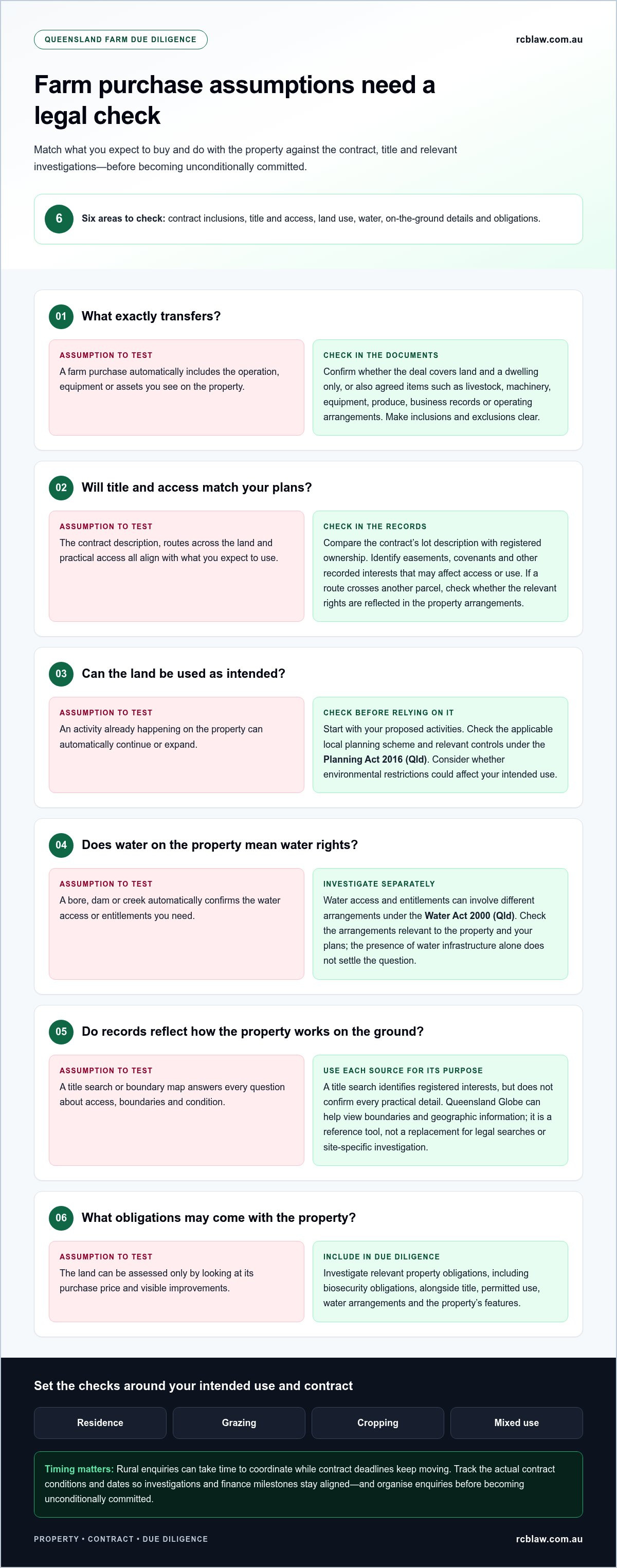
A land-and-dwelling purchase is not automatically a purchase of the farming operation on that land. Livestock, machinery, equipment, produce, business records or arrangements connected with ongoing operations may be separate assets, if the parties agree to include them. Don’t rely on the farm’s appearance or the seller’s description alone to establish what transfers. The contract and any related sale documents need to make the agreed inclusions and exclusions clear.
This distinction affects the scope of review. If the deal includes business assets or an operating enterprise, the buyer may need to consider more than the land transfer, including how assets are identified and what obligations accompany the business. The transaction structure should reflect the parties’ agreement, rather than leaving important assumptions outside the documents. For a separate business or asset purchase, Queensland commercial conveyancing guidance can help explain the broader transaction context.
Separating these components at the outset gives you a clearer basis for checking the contract and planning the investigations that follow.
Queensland Farm Due Diligence: Check Title, Use, Water and Biosecurity
Once you know what the agreement is intended to include, the next step is to test whether the land and its recorded interests align with your plans. Grouping enquiries by buyer concern helps keep the process manageable and makes it easier to spot gaps before contract conditions expire.
Title, planning and water checks answer different questions about rural land, so no single search can establish the full picture. A title search can show the registered owner and recorded interests, but it won’t confirm every practical detail about access, boundaries, land condition or permitted activities. Queensland Globe can help you view property boundaries and geographic information, but maps are a reference tool, not a replacement for legal searches or site-specific investigation.
What should a Queensland title and contract review reveal?
Compare the registered ownership and lot description with the contract, then identify recorded easements, covenants and other interests that may affect the property. Check that the agreement describes the land you intend to acquire and clearly addresses any included items. A caveat may signal a claimed interest in land; Queensland property caveat guidance can help explain why such a title entry deserves careful attention.
Then consider what the title record cannot tell you. If access depends on a track, or a boundary fence is important to your plans, establish what further enquiries are needed rather than treating a map or title search as a complete answer.
How should buyers investigate land use, water and biosecurity?
Start with your proposed activities. Relevant planning controls under the Planning Act 2016 (Qld) may affect whether a particular use is permitted or needs approval. Don’t assume that an existing activity can automatically continue or expand. Check the applicable local planning scheme and consider whether any environmental restrictions could affect the way you intend to use the land.
Water deserves its own investigation. Under the Water Act 2000 (Qld), different arrangements may apply to water access and entitlements. A bore, dam or creek on the property does not, by itself, establish what rights transfer with the sale. Identify the source, any relevant authority or allocation, and whether the contract expressly includes the associated entitlement or infrastructure.
Also consider day-to-day responsibilities. The Biosecurity Act 2014 (Qld) establishes a general biosecurity obligation to take reasonable and practical measures to prevent or minimise biosecurity risks. The property’s history and intended operation can shape the enquiries needed about pests, diseases or contaminants. Environmental restrictions and other obligations may also depend on the specific land, so investigate these through relevant property records and appropriate Queensland sources.
- Ownership and interests: compare title details with the contract and investigate registered interests.
- Access and use: check practical access and relevant planning controls against your intended activities.
- Water and obligations: clarify what water rights transfer and identify relevant biosecurity or environmental responsibilities.
Careful Queensland conveyancing support can help you understand contract terms and organise property investigations around your transaction.
Farm Purchase Risks: Match the Contract and Checks to Your Intended Use
A standard home-purchase checklist may not cover every issue that matters on a rural property. A house may appear ready to occupy, but the surrounding land could be subject to restrictions, access arrangements or conditions that affect a planned farming activity. The practical question is not only whether the property suits you today, but whether the contract and relevant checks support what you intend to do with it.
For example, a buyer might assume a dam, pump or water allocation is part of the sale because it is on the property. If the contract doesn’t include it, that assumption could leave a gap between expectations and what transfers. Legal advice for buying a farm qld can help identify issues in the agreement and clarify which further enquiries or contract protections may be worth considering.
Does the property suit the buyer's intended use?
Compare the land’s current use with your plans, including any change or expansion. A property used for grazing now may not automatically be suitable for a proposed cropping operation or additional buildings. Zoning, overlays, approvals and restrictions need property-specific investigation using current council information. A listing or seller’s description can inform your enquiries, but it cannot establish that a proposed use is permitted.
The checks differ with the purpose of the purchase:
| Intended use | Questions to investigate |
|---|---|
| Residence | Does the contract clearly cover the dwelling and relevant access? Are any restrictions relevant to occupying or maintaining the home? |
| Grazing | Are access, fencing, water arrangements and any relevant land-use restrictions suitable for the planned operation? |
| Cropping | Do planning controls, water arrangements and any environmental restrictions align with the proposed crop and associated activities? |
| Mixed use | Can the intended residential and farming activities operate together under applicable controls, access arrangements and contract terms? |
This comparison is a starting point, not a substitute for checking the specific property. If your plan depends on an approval, particular water access or a defined part of the land, raise that dependency early so it can inform the investigation and contract review.
Which contract terms can matter more on rural land?
Read the property description, inclusions, special conditions and access terms against your intended use. Equipment, water-related items and other assets may need to be expressly listed or dealt with under separate sale documents. Check the actual search, finance and other relevant dates in the contract. A negotiated condition may provide time for an investigation, but its protection depends on the wording agreed by the parties.
A legal review can explain contract terms, identify potential concerns and help you understand available options. It can’t guarantee planning approval, water access or a particular outcome. Its value is helping you make an informed decision before you’re bound by the agreement.
A Practical Legal Checklist for Buying a Farm in Queensland
A clear sequence helps keep a complex purchase on track. Begin early: rural investigations may involve several records and decisions, while the contract sets the time available to complete them. Plan searches and contract conditions around the deadlines in the signed agreement, not generic assumptions about how long a buyer has.
Before signing: prepare the questions and contract review
Before committing, write down your intended use, the assets you expect to acquire, how you’ll access the land and what water arrangements your plans rely on. These priorities help focus the contract review and identify questions that may need answers or specific wording. The Queensland conveyancing process guide provides general context for the steps involved in a property transaction.
- Set out your requirements. Note the land, dwelling, access, water arrangements and any equipment or business assets you understand to be included. Separate essential requirements from assumptions that need clarification.
- Arrange prompt contract review. Ask your solicitor to explain the property description, inclusions, special conditions, key dates and obligations. If a search or finance condition is important to your decision, understand exactly what the wording requires and when it applies.
- Confirm the decision points. Review the contract’s conditions and dates so you know when information must be obtained, notices may need to be given and finance steps need attention. Don’t rely on a standard timetable from another purchase.
After signing: coordinate investigations and settlement
Once the contract is signed, keep the work visible. Your solicitor can coordinate legal searches, track relevant dates and explain findings in the context of the contract. Raise concerns as soon as they emerge, since the options available may depend on the agreement’s wording and timing.
- Build a dated checklist. Record each contractual condition, search, finance task and settlement requirement with its due date and responsible person. Allow time to review results and follow up on missing information, rather than scheduling tasks only for the final day.
- Assess material findings promptly. If a search reveals an interest, restriction or other issue that could affect your plans, discuss its significance and any available contractual options with your solicitor before the relevant deadline. Keep written records of enquiries and responses.
- Prepare for transfer and settlement. Follow the steps required for the particular transaction, including any documents, funds or approvals that must be ready. The transfer process depends on the contract, search results and circumstances of the sale, so confirm the practical requirements as the settlement date approaches.
Using legal advice for buying a farm qld to interpret the agreement and organise these steps can make deadlines easier to manage. For support reviewing your contract and progressing the conveyancing process, speak with RCB Law about your Queensland property transaction.
How RCB Law Can Help With Queensland Farm Conveyancing
A farm purchase can bring together land, a dwelling, contract conditions and a range of legal searches. Clear conveyancing support helps you understand how these parts fit together, what the contract requires and which dates need your attention. RCB Law has more than 30 years of experience in Queensland conveyancing, assisting with property contract review and the conveyancing process through settlement.
What legal support can cover during a farm purchase
Legal review can clarify the agreement’s terms, including the property description, inclusions, special conditions and obligations that may affect your decisions. Your solicitor can help track transaction deadlines, coordinate relevant legal searches and explain findings in the context of the contract. If a search identifies an interest or other issue, clear advice can help you understand its potential significance and the options available under the agreement.
This support can bring structure to a busy process. For example, if a search result raises a question about a recorded interest, your solicitor can explain what the record means for the transaction and identify whether further enquiry is needed. The legal work is distinct from technical or on-site assessments of matters such as infrastructure condition, soil or water quality. Those findings may still be important to your decision, and legal advice can help you consider them alongside the contract.
- Contract clarity: Understand key terms, inclusions, conditions and obligations.
- Search coordination: Keep legal enquiries aligned with relevant contract dates.
- Settlement preparation: Understand the legal steps and responsibilities leading to transfer.
The aim is not to promise a particular outcome. It’s to help you see the transaction more clearly, identify issues that need attention and make decisions with a better understanding of your contractual position.
When should a buyer seek legal advice?
Where possible, seek advice before signing. A prompt review of a proposed contract can help surface important conditions and deadlines while there’s still an opportunity to consider the wording. If you’ve already received or signed an agreement, acting promptly can still help you understand what happens next and organise enquiries within the time available.
The exact steps depend on the contract and the property. Early communication gives your solicitor a clearer opportunity to review the documents, explain relevant findings and keep settlement obligations in view. For calm, practical support with a Queensland property transaction, discuss a Queensland property purchase with RCB Law.
Take Your Next Step With Greater Confidence
A farm purchase is a major commitment, but you don’t have to resolve every uncertainty alone. Before signing or moving further through the transaction, gather the proposed contract and note the questions that matter most to your plans. A focused conversation can help you understand what needs attention and how to approach the next decision.
For legal advice for buying a farm qld, RCB Law offers Queensland conveyancing experience built over more than 30 years, serving clients in Brisbane, the Sunshine Coast and Redland Bay. Legal review can provide a clearer view of the contract, relevant searches and the steps towards settlement, so you can make decisions with care.
Discuss your Queensland property purchase with RCB Law and take the next step with a steadier understanding of the process.
Frequently Asked Questions
Do I need a solicitor to buy a farm in Queensland?
Engaging a Queensland solicitor is a practical way to understand the legal side of a farm purchase. They can explain your obligations under the agreement and guide the title transfer through settlement. For example, if the contract names a dwelling but is unclear about a separate machinery shed, legal review can help identify the ambiguity. Share your intended use early so your solicitor can focus on the terms and searches most relevant to your decision. This is a useful starting point for legal advice for buying a farm qld.
Can I buy a farm in Queensland as a foreign buyer?
Possibly, but foreign investment requirements can depend on the buyer’s circumstances, ownership structure, land type and proposed acquisition. A purchase through a company or trust may raise different questions from one made personally. Before entering a binding agreement, obtain current advice on Foreign Investment Review Board requirements and applicable Australian Government rules. Don’t assume citizenship, visa status or a property’s advertised agricultural use settles the question. Requirements can change, so check them for your specific transaction.
Is GST payable when buying a farm in Queensland?
GST treatment depends on the transaction and should be assessed for the particular sale. A sale of farmland may be GST-free if the land was used for a farming business for at least five years before sale and you intend to continue a farming business on it. Other structures, such as a sale that includes a business or assets, may raise different tax questions. Have a tax adviser assess the facts and ensure the contract’s GST terms reflect the advice.
Can a farm purchase include water entitlements?
Yes, a transaction may include a water entitlement, but its connection with the farm doesn’t automatically mean it transfers with the land. For example, the agreement may need to identify an allocation separately from a bore, pump or other water infrastructure. Check the relevant records and contract wording to establish what is being sold and what transfer steps may apply. The legal position depends on the specific entitlement and circumstances, so avoid relying on informal statements about water access.
Do I pay Queensland land tax on a farm?
Land tax may apply, but whether it does depends on current Queensland rules and your ownership circumstances. The way land is held, its assessed value and any potentially relevant exemption can affect the assessment. Don’t assume that agricultural use alone removes a liability. Before settling, check the current rules and consider how the ownership structure affects your position. The Queensland Revenue Office and a tax adviser can help clarify your potential liability as part of the wider cost of ownership.
What happens if a farm search reveals a problem after I sign?
Your next step should be to contact your solicitor promptly and provide the search result, related correspondence and the contract dates. For instance, a newly identified interest may need to be considered alongside a finance or other condition before its deadline. The result doesn’t automatically give you a right to cancel or renegotiate. Your solicitor can assess the contract and explain possible options before you send a formal notice or response to the seller.
Can I change the intended use of a farm after buying it?
Not necessarily; a new or expanded activity may require further investigation before you rely on it. For example, changing from grazing to a crop that needs additional water or infrastructure could involve planning controls, approvals or environmental restrictions. Check current council planning information and relevant requirements for the exact land and proposed activity. Past use or a seller’s description isn’t a guarantee that your plans will be allowed, so assess feasibility before committing to a purchase based on future use.


