
Could changing a property title affect who inherits a co-owner’s share without settling who keeps the home or how its value is divided? If you’re considering severing a joint tenancy qld, it’s understandable to be unsure whether the other owner must agree and what the change will actually resolve.
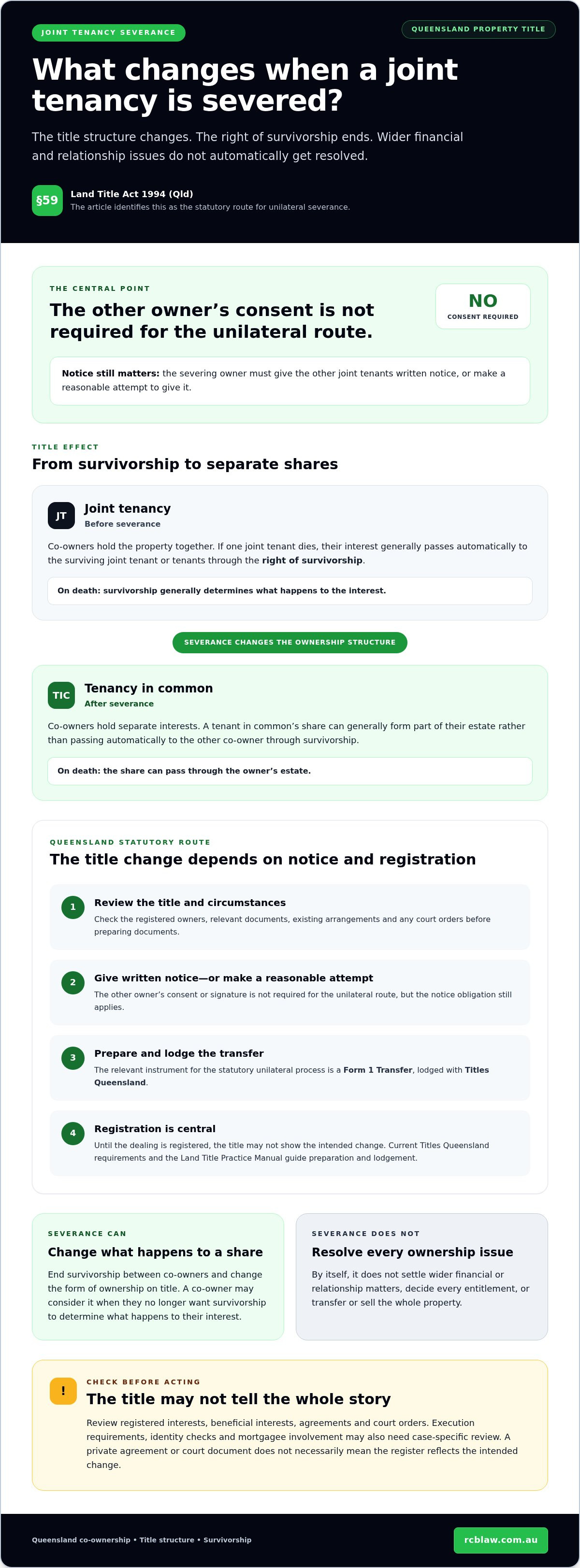
In Queensland, a joint tenant can generally sever the joint tenancy by registering a Form 1 Transfer, without the other owner’s consent. However, written notice must be given, or a reasonable attempt made to give it. Severance changes the ownership structure from joint tenants to tenants in common and removes the right of survivorship. It doesn’t, by itself, settle wider financial or relationship issues.
This guide explains the difference between joint tenancy and tenancy in common, the main routes and steps involved in severance, and the practical effects to consider before acting. It also covers why timing, title documents and the circumstances behind the ownership matter. A legal review can help clarify the title consequences before you take a step, including what severance does and does not resolve.
Key Takeaways
- Understand how joint tenancy differs from tenancy in common, especially when it comes to the right of survivorship.
- Learn the Queensland routes for severing a joint tenancy qld, including when one owner may act without the other’s consent.
- See how severance can change what happens to a co-owner’s share after death, without resolving every financial or ownership issue.
- Use a practical checklist to review the title, registered interests, agreements and court orders before taking steps.
- Discover how conveyancing advice can help clarify title records and the potential implications of a transfer.
What does severing a joint tenancy in Queensland mean?
Changing how a property is co-owned can be a significant step, especially during a relationship change or estate-planning review. Start by separating the effect on the title from wider questions about who contributed to the property, who may benefit from it, or what should happen next.
In a joint tenancy, two or more people own the property together with a right of survivorship. If one joint tenant dies, their interest generally passes automatically to the surviving joint tenant or tenants, rather than forming part of the deceased person’s estate. Severance ends survivorship between the co-owners and changes their form of ownership. In Queensland, review the registered title and any relevant beneficial interests to understand the effect in the particular circumstances.
Severance changes how co-owners hold a property; it is not the sale or transfer of the whole property.
Joint tenancy and tenancy in common: the title distinction
Joint tenants hold the property together, and survivorship determines what generally happens to an owner’s interest on death. Tenants in common instead hold separate interests. A tenant in common’s share can generally form part of their estate rather than passing automatically to the other co-owner through survivorship. The title and legal documents matter, so don’t assume the registered arrangement tells the whole story about each owner’s entitlement.
In general property-law usage, Severance (land) describes ending a joint tenancy and converting ownership to a tenancy in common. The key distinction is that survivorship applies to joint tenancy, while a tenant in common’s share can pass through their estate. Neither structure, by itself, answers every question about wider financial interests or entitlements.
Why Queensland co-owners consider severance
Co-owners may consider severance after a change in personal circumstances, as part of estate planning, or because they no longer want survivorship to determine what happens to their interest. For example, someone may want their share to be dealt with under their will. That intention can prompt a title review, but it doesn’t establish which legal step is appropriate or its full effect.
Motivation and legal outcome are separate questions. Check how the current title is recorded and whether other documents or arrangements affect the ownership picture. Severing a joint tenancy qld changes the form of co-ownership on title; it is not a substitute for resolving separate financial or relationship-property matters. Reviewing the title and related documents before acting can clarify what a proposed change may achieve and what remains unresolved.
How can a joint tenancy be severed under Queensland law?
In Queensland, the main statutory route is set out in section 59 of the Land Title Act 1994 (Qld). A joint tenant may sever the joint tenancy by transferring their own interest, without the other joint tenant’s consent. The severing owner must give the other joint tenants written notice or make a reasonable attempt to do so. Review the title, existing arrangements and circumstances before preparing documents.
For anyone considering severing a joint tenancy qld, distinguish between acting alone under the statutory route and acting by agreement. A co-owner’s lack of consent does not necessarily prevent unilateral severance, but notice and registration requirements still apply. A court order may also affect how a property interest is dealt with. Its terms and the title position determine what action may be needed, so don’t assume one process suits every case.
Which legal routes may apply to severance?
The unilateral route involves transferring the joint tenant’s own interest under section 59. Where co-owners agree, a transfer may also be prepared to reflect their intended ownership arrangement, but the appropriate instrument and legal effect depend on the transaction. Court-related orders need separate attention: read the order alongside the current title, as it may direct or affect dealings with the property. The right route depends on the registered owners, intended outcome and any existing orders or agreements.
Agreement can clarify the co-owners’ intentions, but it does not replace the required land-title steps. Similarly, a court document or private agreement does not necessarily mean the register reflects the intended change. Confirming the legal basis first helps ensure the documents match the title and the outcome sought.
What title documents and registration steps need attention?
For the statutory unilateral process, the relevant instrument is a Form 1 Transfer lodged with Titles Queensland. The current Land Title Practice Manual and Titles Queensland requirements guide preparation and lodgement. A conveyancer or lawyer can review the title and circumstances to identify the correct parties, instrument and supporting requirements. The other owner’s consent or signature is not required for the unilateral route, but the notice obligation still applies.
Execution requirements, identity checks and any mortgagee involvement need case-specific review. A mortgage or other registered interest may affect the practical steps. Check the documents and current official guidance rather than assuming what is required. Registration is central: until the dealing is registered, the title may not show the intended change. For background on title documents, see this guide to Queensland conveyancing.
In short, review the title and legal circumstances, identify the appropriate route, prepare and execute the required documents, give written notice or make a reasonable attempt where required, then lodge the instrument for registration. This is a general framework; the documents and timing must be assessed for the particular property.
What changes after severing a joint tenancy in QLD, and what does not?
Severance changes how co-owners hold property on the registered title. Under Queensland law, it converts the co-ownership to a tenancy in common and ends the right of survivorship between the affected owners. That change has limits: it does not automatically settle every financial claim, debt or disagreement connected with the property.
| Before severance | After severance | Not automatically resolved |
|---|---|---|
| Co-owners hold as joint tenants, with survivorship applying. | Co-owners hold as tenants in common, and survivorship between them ends. | Who has a beneficial interest, who owes the mortgage, or how broader claims should be resolved. |
The table summarises the general distinction, not the outcome for every property. Check the registered title and related documents to understand the effect in the owners’ circumstances.
Does severance change who inherits the property?
With a joint tenancy, a deceased owner’s interest generally passes to the surviving joint tenant or tenants through survivorship. After severance, the deceased co-owner’s interest is held as a tenancy-in-common share. That share can form part of the estate and be dealt with under the owner’s will, subject to the title and relevant legal circumstances. Consider the will and ownership arrangement together: a will alone does not change the title, and a title change does not update a will. Queenslanders reviewing both issues may also find a dedicated guide to Why You Need a Will: A Comprehensive Guide for Queenslanders useful.
Does severance change shares, a mortgage or a property settlement?
Not necessarily. Severance ends survivorship, but it does not establish each owner’s beneficial entitlement or resolve disagreements about contributions. Nor does changing the form of title automatically discharge a mortgage or release a borrower from loan obligations. The lender’s rights and registered interests remain separate matters.
Keep these issues distinct. The title records registered ownership; a mortgage concerns secured lending; beneficial interests may depend on other facts and documents; and a separate settlement or estate process may address matters beyond the register. If a caveat appears on the title, review it as a relevant interest because it may relate to a claimed interest in the property. A plain-English guide to What is a Caveat? A Plain English Guide for Property in Queensland can provide background.
Severance changes survivorship on title, not every right or financial issue connected with the property. Review the title alongside loan documents, wills, agreements and relevant orders to clarify what has changed and what still needs attention.
What should you check before severing a joint tenancy in Queensland?
Before taking a step, establish who has an interest in the property and what outcome you want. Start with a current title search. It shows the registered owners and may reveal a mortgage, caveat or other registered interest that affects the practical steps. The title may not tell the whole story, so gather relevant agreements and property documents as well.
What information should you gather first?
Use this checklist to organise the facts before deciding how to proceed:
- Current property title: Check the registered owners, how they hold the property and any registered mortgage, caveat or other interest.
- Loan information: Gather the relevant loan documents and identify the lender, borrowers and security connected with the property.
- Co-ownership documents: Locate agreements or records that describe the owners’ arrangements or contributions.
- Orders and related documents: Identify any court orders or other legal documents that may affect dealings with the property.
- Your intended outcome: Write down why you are considering severance and what you expect to change, including how you want your estate arrangements to work.
- Timing concerns: Note any pending sale, refinancing, other transaction, dispute or urgent personal circumstance that could affect when action is appropriate.
This preparation helps separate the title change from other matters that may need to be addressed on their own. It also gives a legal adviser a clearer basis for reviewing the proposed step.
How can you reduce the risk of unintended consequences?
Understand the effect on survivorship, what the title may show after registration and which existing obligations remain. A change in co-ownership does not automatically resolve a mortgage, establish beneficial entitlements or settle a wider dispute. If estate planning is part of your reason for acting, consider the title arrangement alongside your will so the documents support your intended outcome.
For unilateral severance in Queensland, the owner must give the other joint tenants written notice or make a reasonable attempt to give it. Keep a record of the steps taken. Preparation, execution and registration requirements depend on the property and current Titles Queensland rules. Mortgage interests, caveats, agreements or court orders may also affect what needs attention, so don’t assume a change intended by one owner has no consequences for anyone else.
Before acting, check the current title, understand any lender and other registered interests, and consider notice and timing alongside the transaction and estate circumstances. For severing a joint tenancy qld, a review before signing can clarify what a proposed title change may achieve and what it leaves untouched. RCB Law’s Queensland residential conveyancing experience can help you review your property title and transfer implications before proceeding.
How can RCB Law help you understand joint tenancy severance in QLD?
Property-title decisions can have practical and personal consequences, especially when ownership arrangements are changing. RCB Law is a Queensland firm with more than 30 years of experience and a primary focus on residential conveyancing. The firm helps property owners understand what the current title records show and what a proposed transfer may mean for their registered ownership.
For people considering severing a joint tenancy qld, start by clarifying the documents and intended outcome. A title review can show who is registered as an owner, how the property is held and whether registered interests may affect the proposed change. The right approach depends on the property and circumstances, so don’t assume the same process or result applies to every co-owner.
What can a property-law review help clarify?
A considered review brings the title together with relevant transaction documents, loan information, agreements and any orders affecting the property. It can identify questions to resolve before documents are signed, including whether the proposed change reflects the intended ownership arrangement and what further steps may be required. The review focuses on property-title and conveyancing implications; it does not assume a title change will settle separate financial or relationship matters.
A review can also help explain what the documents establish. The register records registered interests, while other documents may provide context about the owners’ arrangements or obligations. If estate planning is part of the reason for changing ownership, consider the title implications alongside the intended arrangements. This supports informed decisions without promising a particular registration outcome, timeframe or resolution of a dispute.
Where can Queensland property owners take the next step?
RCB Law serves property owners across the Sunshine Coast, Brisbane and Redland Bay. Its Queensland residential conveyancing experience provides a local point of reference for reviewing title records and understanding property-transfer issues. Bringing the current title, relevant documents and a clear explanation of your intended outcome can make a discussion more focused.
A property-title review is useful if ownership records, a mortgage, caveat, agreement or existing order may affect the next step. It can clarify title implications before you act and distinguish them from matters requiring a separate process. Discussing the documents can provide a steadier basis for your decision.
Discuss your Queensland property matter with RCB Law to explore the title and conveyancing considerations relevant to your situation.
Take your next step with a clearer view of the title
A decision about severing a joint tenancy qld can shape how your property interest is recorded and what happens next. Before acting, consider the outcome you want, the documents that may affect it and any timing pressures. A title change should not be mistaken for resolving wider financial or estate matters.
If you’re weighing up the implications, a focused discussion about your property documents can clarify the title questions relevant to your situation. RCB Law provides guidance on Queensland property-title and conveyancing issues, based on the records and circumstances involved. You don’t need to have every answer prepared before starting the conversation.
Discuss your Queensland property matter with RCB Law and take the next step with greater clarity and confidence.
Frequently Asked Questions
Can one joint tenant sever a joint tenancy in Queensland without the other owner’s consent?
Yes. Section 59 of the Land Title Act 1994 (Qld) provides a route for one joint tenant to transfer their own interest and sever the joint tenancy without the other owner’s consent. The owner must give written notice or make a reasonable attempt to give it. This is not a transfer of the whole property. Check the current title and the requirements applying to the particular dealing before proceeding.
Does getting divorced automatically sever a joint tenancy in QLD?
No. Divorce alone doesn’t automatically change the property title or end the right of survivorship. If former spouses remain registered as joint tenants, the title arrangement needs to be addressed separately. A divorce order or agreement may form part of the wider circumstances, but its effect on title depends on its terms and any steps taken to register a change. Review the title and relevant documents before assuming ownership has changed.
What happens if a joint tenant dies before severance is registered?
The outcome can depend on whether severance had legally taken effect before the death and on the documents and steps completed. If the owners are still joint tenants, survivorship may apply, but a pending or attempted transfer can raise questions requiring close legal review. Don’t assume signing or sending paperwork alone changed the registered ownership. The title history, notice and lodgement details, and relevant documents should be examined promptly.
Does severing a joint tenancy change each owner’s share of the property?
Not necessarily. Severance changes the form of co-ownership, but it doesn’t automatically decide beneficial entitlements or resolve disagreements about contributions. For example, the register may show tenants in common after a change while the owners still disagree about their respective interests. The transfer documents and surrounding circumstances matter. If the intended shares are unequal, get advice on the legal and duty consequences before documents are prepared or signed.
Do I need to tell the other joint tenant before severing the title?
For the unilateral Queensland process, the severing owner must give the other joint tenants written notice or make a reasonable attempt to give it. This is different from needing their consent. Keep a clear record of when and how notice was sent, or of the reasonable steps taken if delivery was unsuccessful. The appropriate method and evidence can depend on the circumstances, so review the notice arrangements alongside the transfer documents.
Can I sever a joint tenancy if there is a mortgage on the property?
A mortgage doesn’t, by itself, answer whether severance can proceed or what steps are required. Consider the registered mortgage and loan arrangements alongside the proposed dealing. Check who is named as borrower, what the title records and whether the lender’s requirements affect the transaction. Changing co-ownership does not, by itself, release anyone from loan obligations or alter the lender’s security. A conveyancing review can help identify the issues before lodgement.
Is severing a joint tenancy the same as a property settlement?
No. Severing a joint tenancy qld changes the co-ownership arrangement on title, but it doesn’t itself divide assets, determine financial entitlements or resolve all claims between co-owners. A title change may be one part of a broader arrangement, with separate documents or processes needed for other issues. Keep the proposed title transfer distinct from settlement discussions and obtain advice suited to each issue rather than treating registration as a complete resolution.


