
Buying or selling a home in Australia is an exciting milestone, but it often comes with a mountain of complex paperwork, confusing legal jargon, and the nagging fear of a costly mistake. It’s a process where you want to feel secure, not stressed. This is where a conveyancer becomes your most important ally, but many people find themselves asking: what does a conveyancer do, exactly, and why are their services so vital?
We understand that navigating the property market can feel overwhelming. This simple guide is designed to give you clarity and confidence. We will break down the crucial role a conveyancer plays at every stage, from reviewing the contract of sale to ensuring a smooth and legally sound settlement. By the end, you’ll understand how they protect your interests, what you’re paying for with their fees, and how to approach your property transaction with the peace of mind you deserve.
The Core Role of a Conveyancer: Your Legal Guardian in Property Transactions
We understand that buying or selling a property is one of the most significant financial decisions you'll ever make. While it's an exciting time, the legal complexities can feel overwhelming. This is precisely where a conveyancer steps in. Their primary mission is to be your legal guardian, protecting your financial and contractual interests throughout the entire transaction. Think of them not as someone involved in the sale, like a real estate agent, but as the specialist who manages the legal transfer of title from one person to another.
So, what does a conveyancer do that's so crucial? They are your expert guide, navigating the maze of legal requirements, contracts, and deadlines on your behalf. Their diligent work behind the scenes is your best defence against future disputes, hidden issues, and costly problems, ensuring your property journey is smooth and secure from start to finish.
What is Conveyancing in Simple Terms?
Imagine your property transaction is a ship navigating complex waters. Your conveyancer is the legal captain, steering you safely to your destination. At its heart, conveyancing is the essential legal process of transferring property ownership. It is a non-negotiable step in any property sale in Australia and involves critical tasks such as:
- Preparing and reviewing the Contract of Sale.
- Conducting vital property and title searches.
- Liaising with banks and other parties.
- Ensuring a legally sound and official transfer of ownership.
Conveyancer vs. Solicitor: What's the Difference in Queensland?
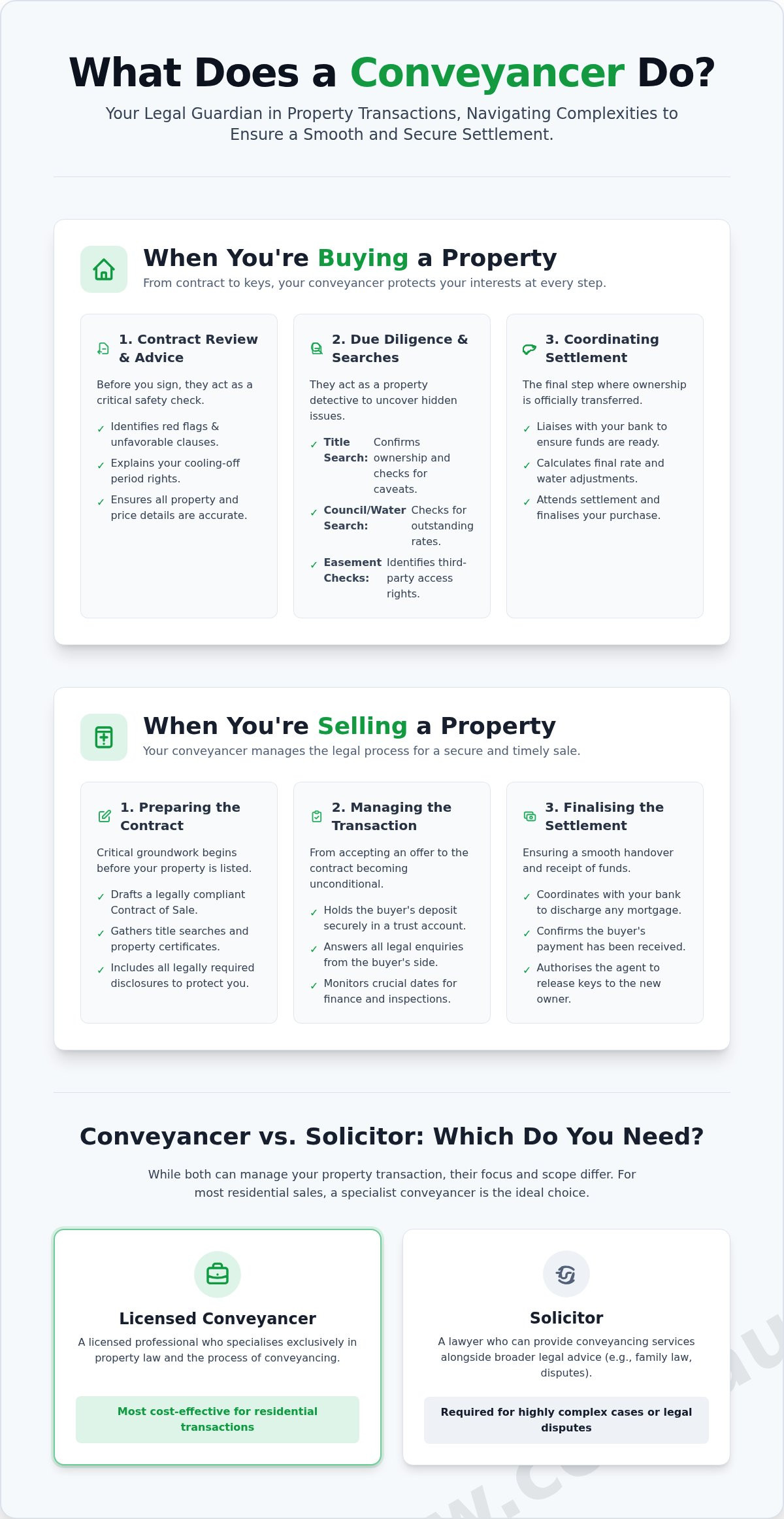
In Queensland, you can engage either a licensed conveyancer or a solicitor to handle your property transaction. A conveyancer is a licensed professional who specialises exclusively in property law. A solicitor, on the other hand, is a lawyer who can provide conveyancing services alongside broader legal advice on matters like family law or litigation.
While a solicitor may be necessary for highly complex situations, such as transactions involving intricate trusts or ongoing legal disputes, a specialist conveyancer is perfectly equipped and often more cost-effective for the vast majority of residential property sales and purchases. Their focused expertise ensures a streamlined and efficient process, giving you the dedicated support you need for a successful settlement.
A Conveyancer's Role When You're Buying a Property
Finding your perfect home is an exciting milestone, but the legal process that follows can feel overwhelming. This is where your conveyancer becomes your most valuable asset. They act as your legal expert and project manager, guiding you from the moment you say "yes" to the property until the keys are in your hand. So, when you're on the buying side, what does a conveyancer do? They proactively protect your interests, manage all the complex paperwork, and ensure the property you're buying is free from hidden legal risks.
Before You Sign: Contract Review and Advice
Before you commit to what is likely your largest financial investment, a conveyancer provides a crucial safety check. They meticulously review the Contract of Sale to identify any red flags, such as unfavourable special conditions or missing clauses that could put you at a disadvantage. They will explain your rights during the cooling-off period and ensure all details, from the price to the property description, are accurate, giving you the confidence to sign on the dotted line.
Due Diligence: Conducting Essential Property Searches
Think of your conveyancer as a property detective. They conduct a series of essential searches to uncover any hidden issues that could affect your ownership in the future. This 'due diligence' phase includes:
- Title Search: Confirming the seller is the legal owner and checking for any mortgages, restrictions, or caveats on the title.
- Council and Water Searches: Investigating zoning regulations, building approvals, and any outstanding rates or water bills you might inherit.
- Easement Checks: Identifying if any third parties (like a utility company) have rights to access or use part of your land.
This level of investigation is critical, and its importance is recognised by consumer bodies globally. For instance, official government advice for new homeowners often stresses the need to find a conveyancer to manage these essential checks and protect their interests before the purchase becomes unconditional.
Coordinating Settlement: Bringing It All Together
The final step is settlement, where ownership is officially transferred. Your conveyancer coordinates this entire process. They liaise with your bank to ensure funds are ready, calculate the final adjustments for council rates and water, and prepare the legal transfer documents for you to sign. They then attend the settlement on your behalf, which is now almost always completed electronically via PEXA, ensuring a seamless and secure finalisation of your purchase.
A Conveyancer's Role When You're Selling a Property
Selling your home is a significant financial and emotional milestone. While your real estate agent finds the buyer, your conveyancer works behind the scenes to manage the complex legal process, ensuring a smooth and secure transaction from start to finish. Understanding what does a conveyancer do during this time provides peace of mind, knowing your interests are protected every step of the way.
Preparing for Sale: Drafting the Contract
Before your property can even be listed, your conveyancer begins the critical groundwork. Their first task is to prepare a legally compliant Contract of Sale. This involves gathering all necessary documents, such as the title search and property certificates, and including all legally required disclosures. This is where the expertise of a specialist property lawyer becomes invaluable, as they draft clauses that protect you as the seller. Once complete, this vital document is provided to your agent to share with prospective buyers.
Managing the Process: From Contract to Unconditional
Once you accept an offer, your conveyancer’s role shifts to managing the transaction. They will:
- Receive and hold the buyer's deposit securely in a trust account.
- Methodically answer all legal enquiries and requisitions from the buyer’s conveyancer.
- Monitor crucial dates for contract conditions, such as finance approval or building and pest inspection deadlines.
- Provide clear confirmation once all conditions have been met and the contract becomes 'unconditional', locking in the sale.
Finalising the Sale: Settlement and Handover
In the lead-up to settlement day, your conveyancer handles the final, crucial financial and legal steps. They liaise directly with your bank to arrange the discharge of your existing mortgage, a task that can be complicated and stressful to manage alone. They calculate the final settlement figures, accounting for adjustments like council rates and water usage. On the day, they oversee the electronic settlement, authorise the release of keys to the new owner, and most importantly, ensure the net sale proceeds are paid directly and promptly into your nominated bank account.
Navigating the sale of a property requires professional guidance. For clear, stress-free support in Brisbane, Logan, or the Sunshine Coast, visit our team at rcblaw.com.au.
Key Tasks and Responsibilities Throughout the Process
Beyond the specific duties for buyers and sellers, a conveyancer acts as the central pillar supporting the entire property transaction. They manage the critical administrative and communication tasks that ensure a smooth, secure, and successful settlement. Understanding what does a conveyancer do at this core level helps you appreciate their role in protecting your interests and reducing the potential for stress.
From handling funds with the highest level of security to coordinating with every party involved, their work is the backbone of the process. This includes demystifying complex costs and navigating the transition to modern, electronic settlements.
Managing Trust Accounts and Funds
One of a conveyancer’s most important duties is the secure management of funds. By law, they must use a highly regulated solicitor's trust account, which is separate from their business accounts and subject to strict auditing. This is where your deposit is held safely until settlement day, and where all funds from your bank and the other party are coordinated for the final transfer, giving you complete peace of mind.
Calculating Stamp Duty and Other Costs
Navigating government taxes can be confusing, but your conveyancer handles it all. They will accurately calculate the stamp duty (also known as transfer duty in Queensland) payable on your purchase and advise you on critical payment deadlines. They also prepare and lodge all the required government forms and can identify if you are eligible for any money-saving concessions or exemptions, such as those available to first home buyers.
Liaising with All Parties
A property transaction involves many moving parts. Your conveyancer acts as the central point of contact, ensuring clear and consistent communication between:
- Your bank or mortgage broker
- The other party’s solicitor or conveyancer
- The real estate agent
- Any other relevant authorities
This proactive coordination prevents delays and ensures everyone is on the same page. We understand that you need to be kept informed. Let our experienced team handle the details for you.
Secure Your Property Transaction with an Expert Partner
Navigating the complexities of buying or selling a property can feel overwhelming, but it doesn't have to be. As we've explored, a conveyancer is your essential legal guide, meticulously managing contracts, conducting vital searches, and ensuring a smooth settlement. Ultimately, understanding what does a conveyancer do is the first step towards protecting your most significant investment. They are your safeguard, ensuring every detail is handled with professional care, whether you are a buyer or a seller.
With over 30 years of conveyancing experience in Queensland, the specialist residential and commercial property lawyers at RCB Law provide clear, practical guidance. Our transparent, clear, fixed-fee pricing gives you complete peace of mind from start to finish. Ensure a stress-free property transaction. Contact the specialists at RCB Law today for a fixed-fee quote.
Let us handle the legal complexities so you can focus on the excitement of your property journey.
Frequently Asked Questions
Can I do my own conveyancing in Queensland?
While it is legally possible to do your own conveyancing in Queensland, it is a complex process with significant risks. The paperwork is extensive, deadlines are strict, and a small mistake can lead to serious legal or financial consequences. Engaging an experienced conveyancer provides peace of mind, ensuring every detail is managed correctly and your investment is protected, allowing for a stress-free property transaction.
What is the average cost of conveyancing in QLD?
The average cost for conveyancing services in Queensland typically ranges from A$900 to A$2,500. This amount is generally composed of a fixed professional fee for the conveyancer's time and expertise, plus disbursements. Disbursements are the out-of-pocket costs for essential property searches and government certificates. Always ask for a detailed quote that clearly separates these costs so you understand the full financial picture.
How long does the conveyancing process usually take from start to finish?
In Queensland, the standard conveyancing process from the contract date to the settlement day is usually between 30 and 60 days. This timeline can be shorter or longer depending on the conditions negotiated in the contract, such as the timeframes for finance approval or building and pest inspections. Your conveyancer will manage these critical dates to ensure the transaction progresses smoothly and settles on time.
When is the best time to hire a conveyancer?
The best time to engage a conveyancer is before you sign a contract of sale. Understanding what a conveyancer does early on is invaluable; they can review the contract for you, identify potential risks, and recommend protective clauses before you are legally bound. This proactive guidance ensures your interests are safeguarded from the very start and sets the foundation for a secure and seamless transaction.
What happens if a problem is discovered during the property searches?
If a property search uncovers an issue, such as an unregistered easement or an unapproved building structure, your conveyancer will provide clear advice on the implications. This is a critical part of their role. Depending on the problem and your contract rights, they will outline your options, which may include negotiating with the seller to rectify the issue, requesting a price reduction, or, if necessary, terminating the contract.
Do I need to meet my conveyancer in person?
No, you typically do not need to meet your conveyancer in person. Most aspects of the conveyancing process can be handled efficiently and securely via email, phone, and secure online portals. This modern approach allows us to provide expert guidance and personalised service to clients no matter where they are located. We ensure you receive clear and consistent communication every step of the way.


