
Is the thought of dense contracts and hidden legal clauses turning the excitement of buying or selling your home into a source of stress? You’re not alone. For many Queenslanders, the property journey can feel overwhelming, and the fear of a costly mistake is very real. This is precisely where the guidance of professional property lawyers becomes invaluable, offering not just legal expertise but crucial peace of mind when you need it most.
But what exactly do they do that a conveyancer doesn’t, and how can you be sure their fees are justified? In this complete guide for 2026, we demystify their essential role. We’ll walk you through everything from reviewing a contract for your first home on the Sunshine Coast to navigating a complex commercial lease in Brisbane. You will gain the confidence that comes from understanding how an expert protects your financial interests, ensuring your transaction is as smooth and secure as possible.
What is a Property Lawyer? Your Expert Guide in Legal Matters
Buying your first home is one of life's most significant milestones, but it also comes with complex legal processes that can feel overwhelming. This is where a property lawyer becomes your most valuable ally. A property lawyer is a legal professional who specialises in the intricate field of Property law, which governs the rights and interests related to real estate.
Their primary role is to provide expert legal advice and ensure your property transaction is legally sound from start to finish. More importantly, their duty is to protect your interests above all else, acting as your dedicated advocate. While you're focused on saving for a deposit and finding the perfect home, they are working in the background to secure your investment. Their expertise covers a wide scope, including residential homes, commercial properties, and even large-scale land developments.
The Core Role: Beyond Just Paperwork
It’s a common misconception that a lawyer’s job is just to stamp documents. In reality, engaging experienced property lawyers provides a crucial layer of protection. They interpret complex contracts and legislation, translating confusing jargon into clear, practical advice you can understand. They proactively identify and mitigate potential legal risks-like zoning issues or problems on the title-before they can become costly problems. They can also offer strategic guidance on ownership structures, such as whether to buy as 'joint tenants' or 'tenants in common'. In essence, they are your legal representative, ensuring your rights are protected during negotiations and any disputes.
Areas of Property Law Expertise
A property lawyer’s skills are diverse, covering many aspects of real estate. Key areas of their expertise include:
- Conveyancing: The most common service for first home buyers, this is the legal process of transferring property ownership from the seller to you.
- Leasing: Advising on and drafting agreements for both commercial and retail properties, protecting the interests of either the landlord or tenant.
- Property Development: Assisting with more complex matters like subdivisions, easements (rights of way), and navigating council planning regulations.
- Disputes: Representing clients in disagreements over contracts, boundary lines, caveats, or other property-related conflicts.
Property Lawyer vs. Conveyancer: Understanding the Key Differences in QLD
As a first home buyer, one of the most common points of confusion is deciding who should handle the legal side of your purchase. We understand that the terms ‘conveyancer’ and ‘property lawyer’ are often used interchangeably, but it’s crucial to know they are not the same. While both professionals can manage the transfer of property title, their qualifications and the scope of their services differ significantly.
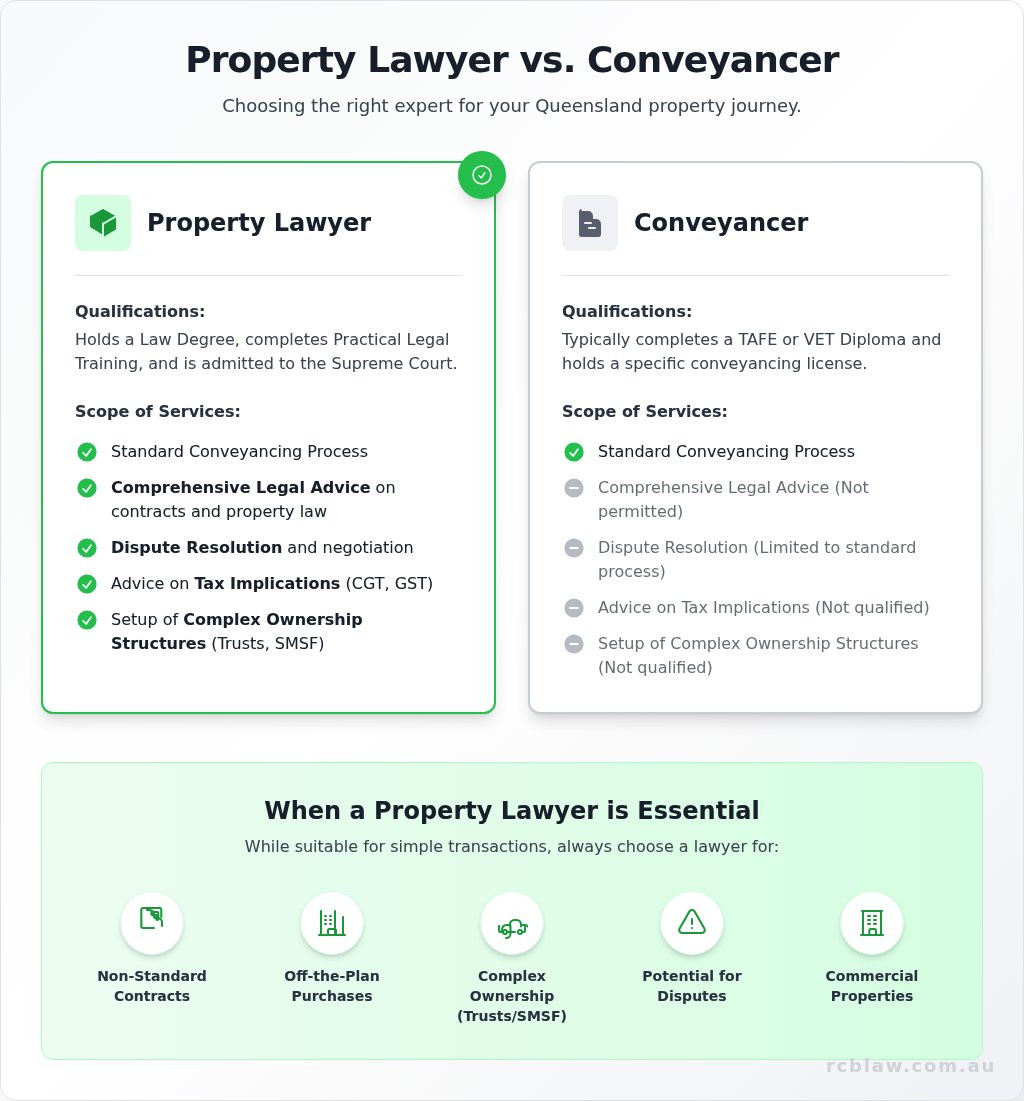
Essentially, a conveyancer is licensed to handle the standard conveyancing process. In contrast, property lawyers are fully qualified solicitors who can manage the entire process and provide comprehensive legal advice on any complex issues that may arise, giving you a higher level of protection.
Qualifications and Regulation
The fundamental difference lies in their training. A solicitor holds a law degree, completes practical legal training, and is admitted to the Supreme Court. They are bound by strict professional conduct rules. A conveyancer typically completes a TAFE or VET diploma and holds a specific license. This distinction in training directly impacts the depth of advice and support they are legally permitted to provide during your property journey.
Scope of Services: Where the Roles Diverge
A conveyancer excels at managing straightforward, standard residential property transfers. They will conduct searches, prepare documents, and ensure settlement occurs on time. However, their role is purely transactional. A property lawyer can do all of this and much more. Their legal expertise allows them to navigate issues that fall outside the standard process, as detailed in resources like the Queensland Law Handbook guide to conveyancing. This includes advising on tax implications (like CGT or GST), setting up complex ownership structures such as trusts, or managing contract disputes if the other party fails to meet their obligations.
When to Choose a Property Lawyer Over a Conveyancer
While a conveyancer may be suitable for the simplest transactions, engaging a property lawyer from the outset provides peace of mind and vital protection. We strongly recommend choosing a lawyer if your situation involves:
- A non-standard contract with unusual or special clauses.
- Purchasing a property off-the-plan, which carries unique risks.
- Buying through a complex entity like a trust or a self-managed super fund (SMSF).
- Any concerns that a dispute might arise with the seller.
- Buying a commercial property, which is governed by more complex legislation.
Key Responsibilities: What a Property Lawyer Does for You
Once you've saved your deposit, the legal side of purchasing a property can feel daunting. This is where experienced property lawyers step in, acting as your trusted guide to navigate the complexities and protect your interests. We understand this is a major life event, and their role is to manage the critical details, ensuring your journey to homeownership is as smooth and stress-free as possible.
For Property Buyers
For first home buyers, a lawyer’s support is particularly vital. They provide essential peace of mind by handling the technical aspects of the purchase. Key tasks include:
- Reviewing the Contract of Sale: They meticulously check the contract for any hidden risks, special conditions, or unfair clauses that could put you at a disadvantage.
- Conducting Essential Property Searches: As recommended in guides like the REIQ's 8 steps to buying a house, your lawyer performs crucial searches on the property's title, local planning schemes, and council rates to uncover any issues before you commit.
- Advising on Due diligence: They offer clear, practical guidance on critical contract conditions, such as obtaining finance approval and completing satisfactory building and pest inspections.
- Managing the Settlement Process: Your lawyer coordinates with your bank and the seller’s representative, managing the electronic settlement via PEXA to ensure a seamless transfer of ownership on settlement day.
For Property Sellers
When selling a property, a lawyer ensures the transaction is legally sound and progresses smoothly, protecting you from potential disputes. Their responsibilities include:
- Preparing the Contract of Sale: They draft a comprehensive contract and gather all legally required disclosure documents to provide to potential buyers.
- Responding to Buyer Requisitions: They handle enquiries from the buyer's legal team and negotiate contract terms on your behalf.
- Ensuring Legal Compliance: They make sure you meet all your legal obligations as a vendor before the settlement date.
- Coordinating Mortgage Release: They work with your bank to arrange the release of any existing mortgage and manage the successful transfer of funds into your account.
For Commercial Leases and Business Transactions
Beyond residential sales, experienced property lawyers also provide crucial support for other significant transactions, such as drafting and reviewing commercial lease agreements, advising landlords and tenants on their rights, and handling the legal aspects of buying or selling a business. Navigating a commercial lease? Get expert advice from RCB Law.
When Should You Engage a Property Lawyer?
While saving for your deposit is a huge achievement, the legal side of buying a home can feel complex and daunting. A common question we hear from first home buyers is, "When do I actually need a lawyer?" The simple answer is: as early as possible. Involving a legal expert from the beginning is a proactive investment that saves you time, money, and significant stress down the track.
Think of it as having a professional guide to help you navigate one of the biggest financial decisions of your life. Engaging experienced property lawyers isn't just for when things go wrong; it’s about ensuring everything goes right from the start. Here are the key moments when you should seek professional legal advice.
Before You Sign Anything
This is the most critical stage. Before you put pen to paper on a contract of sale, a lawyer can conduct a thorough review to ensure your interests are protected. They can identify potential risks and add crucial protective clauses, such as making the contract subject to finance approval or a satisfactory building and pest inspection. This provides you with a safe exit strategy if something unexpected arises, preventing you from being locked into a bad deal.
For Complex or High-Value Transactions
Certain property purchases carry a higher level of risk and complexity, demanding specialist legal oversight. If you are considering any of the following, expert guidance is essential:
- Buying off-the-plan: These contracts are often lengthy and heavily favour the developer. A lawyer ensures your rights are protected against delays or changes.
- Bidding at auction: Auction contracts are typically unconditional, meaning you have no cooling-off period and limited protections if you win. A pre-auction contract review is vital.
- Deceased estates or settlements: Purchasing property as part of an inheritance or family law matter requires careful legal navigation to ensure the title is transferred correctly and without future complications.
When Disputes Arise or Seem Likely
Unfortunately, not every transaction proceeds smoothly. If a disagreement emerges over a contract term, a boundary line, or if the other party fails to meet their obligations (a breach of contract), you need immediate support. A lawyer can advise on your rights, manage negotiations, and take formal action if needed, such as lodging or removing a caveat on the property title to protect your financial interest.
For clear, practical guidance on your property journey, the team at RCB Law is here to help ensure your first home purchase is a secure and positive experience.
How to Choose the Right Property Lawyer in Queensland
You've worked hard to save your deposit and find your dream home; now it’s time to protect that investment. The final step is engaging a legal expert to guide you through the conveyancing process. We understand that choosing from the many available property lawyers can feel like another challenge, but finding the right partner is crucial for a smooth and stress-free settlement. This decision ensures your rights are protected and that there are no hidden surprises waiting for you down the track.
Key Qualities to Look For
When selecting your legal representative, prioritise a firm that specialises exclusively in property law. A lawyer who dabbles in multiple fields may not have the focused expertise required for complex conveyancing. Look for a team with a long, proven track record in Queensland. Most importantly, choose a lawyer who communicates clearly and proactively, translating complex legal jargon into plain English and keeping you informed at every stage of your purchase.
Important Questions to Ask
To empower yourself to make the best choice, don’t be afraid to ask direct questions before you commit. A transparent and client-focused firm will welcome them. Key questions include:
- What are your fees, and do you offer a fixed-fee service for conveyancing to avoid unexpected costs?
- Who will be my primary day-to-day contact at the firm?
- What is your preferred method of communication (phone, email) and how often can I expect updates?
- Can you provide an overview of your experience with properties similar to the one I am buying?
Why Local Queensland Expertise Matters
Property law is not uniform across Australia; it varies significantly from state to state. A local Queensland lawyer possesses an in-depth understanding of state-specific legislation, contract conditions, and local council regulations that an interstate firm simply won't have. They have also built valuable relationships with local real estate agents, inspectors, and authorities, which can be instrumental in navigating hurdles and ensuring a seamless transaction. Work with a dedicated Queensland property law team.
Secure Your Property Transaction with Expert Guidance
Understanding the role of a property lawyer is the first step toward a secure and successful property transaction. As this guide has shown, their expertise extends far beyond simple conveyancing; they provide vital legal counsel, conduct thorough due diligence, and navigate the complex legal landscape of Queensland property law on your behalf. Ultimately, engaging the right property lawyers isn't just a precaution-it's a strategic move to protect your most significant asset.
When you're ready to move forward, you need a partner you can trust. At RCB Law, our team combines over 30 years of specialised property law experience with a genuine commitment to our clients. Serving the Sunshine Coast, Brisbane, and all of Queensland, we pride ourselves on making the legal process stress-free with clear communication and our transparent, fixed-fee pricing for your peace of mind.
Feeling overwhelmed? Let our experienced property lawyers make your transaction stress-free. Contact RCB Law today.
Let us handle the complexities so you can focus on the excitement of your new property journey.
Frequently Asked Questions
How much does a property lawyer cost in Queensland?
The cost for a property lawyer in Queensland for a standard residential purchase typically ranges from A$1,500 to A$3,000. This fee generally covers professional services, essential government searches, and other out-of-pocket expenses known as disbursements. We understand budgeting is crucial for first-home buyers, which is why we provide clear, fixed-fee quotes. This gives you complete certainty and no hidden surprises, allowing you to focus on the excitement of securing your new home.
Do I need a property lawyer for a property auction?
Yes, engaging a property lawyer before an auction is highly recommended and a vital step in protecting your interests. Auction contracts are typically unconditional, meaning you are legally bound once the hammer falls, with no cooling-off period. Your lawyer will review the contract and conduct necessary due diligence checks beforehand to identify potential risks. This guidance provides you with the confidence and clarity needed to bid, ensuring you are fully informed and protected.
What's the difference between a solicitor, a lawyer, and a barrister?
In Australia, 'lawyer' is a general term for any qualified legal professional. A 'solicitor' is a type of lawyer who provides a wide range of legal advice and handles transactions, such as the conveyancing for your property purchase. A 'barrister' is a lawyer who specialises in representing clients and arguing cases in court. For buying or selling a home, you will work directly with a solicitor who provides the expert guidance needed to navigate the process smoothly.
Can a property lawyer help me with refinancing my mortgage?
Absolutely. A property lawyer provides essential support when you refinance. We assist by reviewing the new loan and mortgage documents from your lender to ensure your interests are protected and the terms are clear. Our role involves coordinating with your outgoing and incoming banks to ensure the old mortgage is discharged correctly and the new one is registered on your property's title. This ensures the entire legal process is managed seamlessly, providing you with complete peace of mind.
Is it possible to change property lawyers mid-way through a transaction?
While it is possible to change lawyers during a transaction, we advise doing so with caution as it can introduce delays and potential extra costs. You would need to finalise payment with your initial firm for the work they have completed and arrange for your file to be transferred. To ensure a smooth and stress-free experience from start to finish, it is always best to choose a firm you trust from the outset for consistent support.
What happens at property settlement and does my lawyer attend?
Property settlement is the final stage where ownership officially transfers to you. Today, this is almost always handled electronically through a secure platform like PEXA, so you are not required to attend. Your lawyer acts on your behalf, coordinating with your bank and the seller's representative to ensure the balance of the purchase price is paid and the title is correctly transferred into your name. We manage this entire process for a successful completion.


