
Buying or selling a home in Queensland is one of life’s most significant milestones, but the journey can often feel complex and stressful. If you're feeling overwhelmed by legal jargon, anxious about critical deadlines, or simply unsure about what happens next, you are not alone. We understand that the legal process of conveyancing can seem intimidating, filled with potential pitfalls that could jeopardise your sale or purchase and disrupt your peace of mind.
That’s why we created this guide. We believe you deserve to feel secure and confident from the moment you sign the contract to the day you receive the keys. Here, we will provide clear, practical guidance, breaking down the entire conveyancing process in simple, easy-to-understand terms. Consider this your complete roadmap to a smooth, successful, and stress-free settlement, empowering you to make informed decisions every step of the way.
What is Conveyancing? A Plain English Explanation
Buying or selling a home in Queensland is one of the most significant financial steps you'll ever take. We understand it can be both exciting and stressful. Behind the scenes of every property sale is a critical legal process designed to protect you: conveyancing. In simple terms, conveyancing is the entire legal and administrative process of transferring ownership of a property from one person or entity to another.
Its core purpose is to ensure the buyer receives a clear and legally valid title to the property, free from hidden debts or disputes. While a real estate agent manages the deal-finding the property and negotiating the price-your conveyancer handles the essential legalities, ensuring the transaction is sound. This isn't an optional extra; it's a non-negotiable step that safeguards your investment, whether you are buying your first home or selling a long-held property.
Why You Can't Afford to Get it Wrong
Navigating the conveyancing process without expert guidance is fraught with risk. Simple errors can lead to significant financial and legal consequences. You could potentially lose your entire deposit (often tens of thousands of dollars) if a critical deadline is missed. Legally, you might inadvertently inherit outstanding council rates, land tax liabilities, or unresolved boundary disputes. These mistakes cause immense stress and can delay your settlement, disrupting moving plans and creating a costly domino effect.
Key Terms You'll Encounter in the Conveyancing Process
You'll come across specific legal language during your property transaction. Here are a few key terms explained in a clear, concise way:
- Settlement: This is the final step. It’s the official day when your representative meets with the seller's representative, the funds are transferred, and the keys are handed over. Ownership officially changes hands.
- Contract of Sale: The legally binding agreement between the buyer and seller. It details all the terms and conditions of the sale, including the price, settlement date, and any special conditions.
- Disbursements: These are the out-of-pocket costs your conveyancer pays to third parties on your behalf for essential property searches and certificates, such as title searches and council rate inquiries.
- Unconditional: This is the milestone where all conditions in the contract (like obtaining finance approval or a satisfactory building and pest inspection) have been met. The contract is now fully binding on both parties.
The Conveyancing Process in Queensland: A Step-by-Step Timeline
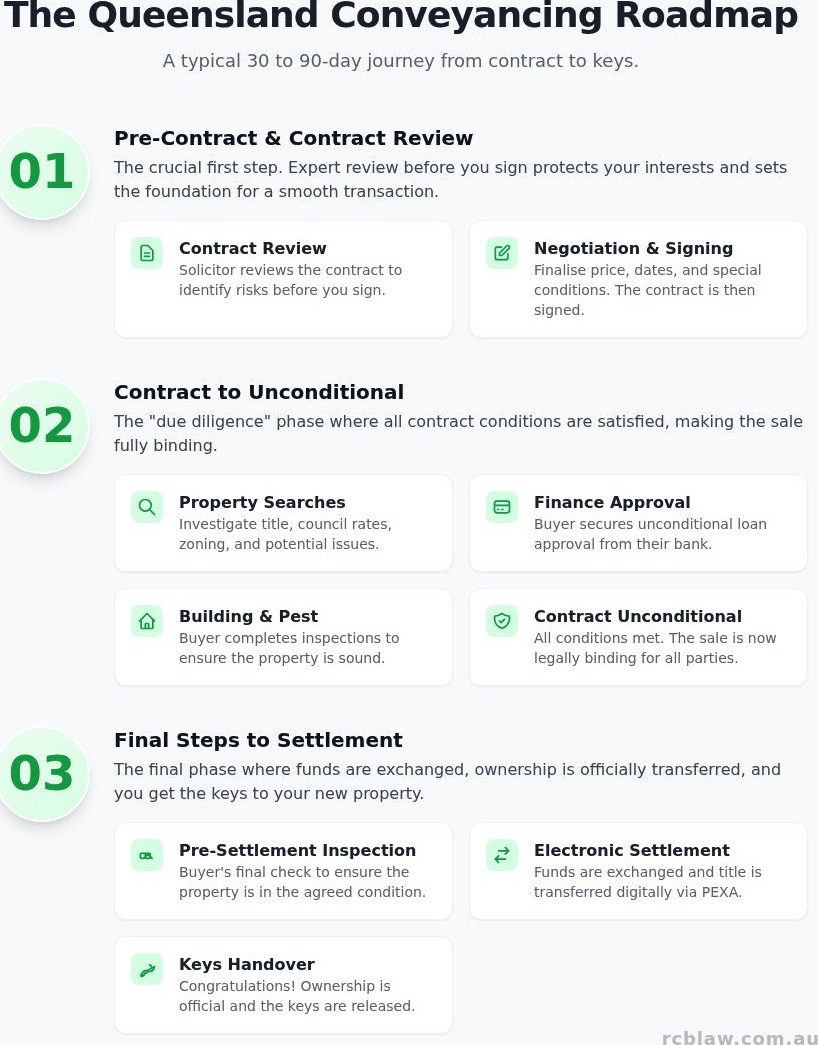
Navigating a property transaction can feel complex, but understanding the timeline brings clarity and peace of mind. The conveyancing process in Queensland is typically broken into three distinct phases: pre-contract, the journey from contract to unconditional, and the final settlement. While the steps differ slightly for buyers and sellers, the entire process usually takes between 30 and 90 days from the date the contract is signed, culminating in a secure, digital settlement.
Stage 1: Pre-Contract and Contract Review
For sellers, this stage involves preparing the contract of sale and all necessary disclosure documents. For buyers, it's the most critical time for professional guidance. Having your solicitor review the contract before you sign is essential to protect your interests. This is also when key terms like price, settlement date, and special conditions are negotiated. Once signed, Queensland buyers have a statutory five-business-day cooling-off period to reconsider.
Stage 2: From Contract Signing to Unconditional
Once the contract is signed, the "due diligence" phase begins. Your legal team performs crucial property searches to check the title, council rates, and zoning. This is also when buyers must secure formal finance approval and complete building and pest inspections. This stage involves several critical steps outlined in the official Queensland's conveyancing process, including liaising with banks for mortgage documents and calculating stamp duty and other settlement adjustments.
Stage 3: The Final Steps to Settlement
As the settlement date approaches, the final pieces fall into place. The buyer conducts a pre-settlement inspection to ensure the property is in the agreed-upon condition. In modern property law, all parties-including solicitors and banks-coordinate through an electronic platform like PEXA (Property Exchange Australia). On settlement day, funds are exchanged electronically, the seller’s mortgage is discharged, and the title is officially transferred to the buyer. Finally, we notify relevant authorities of the ownership change.
Conveyancer vs. Solicitor: Who Should You Choose for Your QLD Property?
When you begin the process of buying or selling property in Queensland, one of the first decisions you'll face is who to hire to manage the legal transfer of ownership. We understand this can be a confusing choice. Both licensed conveyancers and property solicitors are professionals dedicated to this process, but they offer different levels of service and protection.
A licensed conveyancer is a specialist whose expertise is focused solely on the administrative and procedural requirements of transferring property titles. A property solicitor, on the other hand, is a qualified lawyer who can not only manage the entire conveyancing process but also provide comprehensive legal advice on any issues that might arise. While both are legally permitted to handle a standard property transaction, the right choice for you depends entirely on the complexity of your purchase or sale.
When a Licensed Conveyancer is a Good Fit
For a completely straightforward residential property transaction with no unusual conditions, a licensed conveyancer can be a suitable and often more budget-friendly option. They are highly experienced in the standard procedures. You might choose a conveyancer if:
- Your purchase or sale is a standard residential home on a registered plan.
- You are working to a strict budget for legal fees.
- You have an established and trusted relationship with a conveyancer from previous transactions.
Why a Solicitor Offers Broader Protection
Choosing a solicitor provides a safety net that extends far beyond standard property transfers. Because they are lawyers, they can offer legal advice on matters a conveyancer cannot, such as tax implications (like GST or stamp duty), estate planning, or complex contract clauses. This becomes critical if unexpected issues arise, like a contract dispute, a problem with the title, or unapproved structures on the property. A solicitor is essential for commercial property deals, off-the-plan purchases, and properties with complex titles. Ultimately, having a lawyer oversee what is likely your largest financial investment provides invaluable peace of mind.
Questions to Ask Before Hiring Anyone
To make an informed decision, ask any potential representative these clear, practical questions:
- Are you a practising solicitor or a licensed conveyancer?
- How much experience do you have with properties in my specific area (e.g., Brisbane, Sunshine Coast, Logan City)?
- What is your fixed fee, and what do your disbursement costs include? You can get a clearer picture of all potential costs by reviewing the government's breakdown of fees and charges.
This clarity ensures you receive the right level of support and protection for your unique circumstances. Our team of expert property solicitors is ready to help.
Understanding Conveyancing Costs: A Breakdown of Fees and Charges
We understand that one of the biggest sources of stress when buying or selling property is uncertainty around the final costs. To provide clarity, it’s important to know that conveyancing costs are typically made up of two distinct parts: the professional fee and disbursements. While it can be tempting to choose a provider based on the cheapest advertised price, this often leads to unexpected charges later on. The key to a stress-free transaction is to request a comprehensive written quote that breaks down every potential cost from the start.
Professional Fees (The Service Cost)
This is the amount you pay your solicitor or conveyancer for their time, expertise, and professional guidance throughout the entire process. Most experienced firms, including RCB Law, offer a fixed-fee structure for standard transactions. This gives you certainty and peace of mind, knowing the cost for the service won't change. This fee typically covers all the essential legal work, including reviewing the contract, providing advice, liaising with all parties, and ensuring a smooth settlement.
Disbursements (Third-Party Search Costs)
Disbursements are the out-of-pocket expenses that your legal team pays to third parties on your behalf to conduct necessary property searches. These are not markups; they are passed on to you at cost. The number and type of searches required can vary depending on the property, but standard searches in Queensland include:
- Title Search
- Local Council Rates and Water Search
- Land Tax Clearance Search
- Transport and Main Roads Property Search
For a standard residential property purchase in Queensland, you can typically expect the total cost for your conveyancing, including both professional fees and standard disbursements, to range from A$1,500 to A$2,500 + GST. For a clear, fixed-fee quote tailored to your specific property, we invite you to contact our experienced team for transparent and practical guidance.
Common Conveyancing Pitfalls and How to Avoid Them
While a property transaction is an exciting milestone, the path to settlement can sometimes have unexpected hurdles. We understand that legal complexities can be stressful, but being aware of potential issues is the first step towards a smooth, successful outcome. An experienced conveyancer doesn't just process paperwork; they anticipate and manage these challenges on your behalf, protecting your interests every step of the way.
Here are some of the most common pitfalls we help our clients navigate:
Contract and Paperwork Errors
The Contract of Sale is a legally binding document, and small oversights can have significant consequences. Rushing this stage can lead to costly mistakes. Common issues include:
- Signing without a legal review: A conveyancer ensures the terms are fair and standard for a QLD contract, identifying any unusual or risky clauses.
- Incorrectly drafted special conditions: A generic clause may not adequately protect your specific needs, whether it's for finance approval or a satisfactory building and pest inspection.
- Missing key dates: Failing to meet deadlines for finance, inspections, or other conditions can put your deposit at risk or even cause the contract to crash.
Unexpected Property Issues
Thorough due diligence is essential to uncovering hidden problems that aren't visible during an open home. Without professional searches, you could be left with a surprise that impacts your property's value or your ability to use it as intended. These can include:
- Unapproved structures: Discovering a shed, deck, or extension was built without council approval can become your expensive problem to fix.
- Easements or covenants: A search may reveal a hidden easement giving a utility company access to your yard or a covenant that restricts you from building a pool.
- Body corporate problems: For units and townhouses, a review of body corporate records might uncover unresolved disputes, major upcoming expenses, or a poorly managed sinking fund.
Finance and Settlement Delays
Even with a solid contract, delays can occur in the final stages, often due to third parties. Proactive communication and management are critical to keeping settlement on track. Watch out for:
- Finance approval delays: Not having unconditional finance approval by the due date is a common reason for extensions or contract termination.
- Bank readiness: Lenders can sometimes be slow to prepare mortgage documents and have funds ready for settlement day, causing last-minute panic.
- Final inspection issues: Finding unexpected damage or discovering that an agreed-upon item has been removed can complicate the final handover.
Navigating the QLD property market requires careful attention to detail and proactive problem-solving. A smooth conveyancing process is built on experience and foresight, ensuring these potential pitfalls are managed before they become major problems. Let our experienced team navigate these complexities for you.
Your Next Step to a Stress-Free Settlement
Buying or selling property in Queensland is a significant milestone, and as we've explored, the legal process of transferring ownership can be complex. By understanding the key steps, potential costs, and the importance of professional guidance, you are already in a much stronger position to navigate the journey successfully. Ultimately, having the right expert on your side is the best way to avoid common pitfalls and ensure your interests are protected from contract to completion.
At RCB Law, our specialist solicitors bring over 30 years of dedicated Queensland property law experience to every file. We focus on clear, consistent communication, turning what can be a stressful process into a smooth and straightforward one for our clients across the Sunshine Coast and Brisbane. For expert guidance through every stage of your property conveyancing, trust a team that puts you first.
Ready to proceed with confidence? Request a fixed-fee conveyancing quote from our expert QLD team today. Let us handle the details, so you can focus on the excitement of your new beginning.
Frequently Asked Questions About Conveyancing in QLD
How long does the conveyancing process take in Queensland?
The standard settlement period for a property in Queensland is typically between 30 and 60 days from the date the contract is signed. This timeframe can be negotiated to suit both the buyer and seller. Factors such as securing finance approval, completing building and pest inspections, and ensuring all parties are ready can influence the timeline. Our role is to manage these critical dates proactively, ensuring a smooth and timely process while keeping you informed every step of the way.
Can I do my own conveyancing in QLD?
While it is legally possible to handle your own conveyancing in Queensland, it comes with significant risks. The process involves complex legal documents and strict deadlines, and any errors can lead to serious consequences, including financial loss or even losing the property. Engaging an experienced professional provides peace of mind, ensuring all legal requirements are met correctly and your interests are protected throughout this critical transaction. We are here to provide that expert guidance.
What happens on the day of settlement?
On settlement day, your conveyancer and financial representatives meet with the seller's team, usually on an electronic platform like PEXA. The final balance of the purchase price is paid to the seller, and in return, the legal documents to transfer ownership are handed over. Once we confirm the settlement is complete, we will notify you and the real estate agent immediately. The agent can then release the keys to you, and the property is officially yours!
When do I need to pay the conveyancer?
In most cases, our professional fees are payable on the day of settlement. This cost is typically included in the settlement statement and deducted from the funds at the final stage, meaning you don't need to pay it out of pocket beforehand. We may request a small upfront payment to cover the cost of essential property searches, but we ensure all fees are clearly outlined for you from the very beginning, so there are no surprises.
What is stamp duty and how is it calculated?
Stamp duty, or transfer duty, is a Queensland Government tax you must pay when you buy a property. The amount is calculated on a sliding scale based on the property's purchase price or market value, whichever is higher. Various concessions are available, such as for first home buyers or those purchasing a home to live in. We can help you determine the exact amount payable and identify any concessions you are eligible for to minimise your costs.
What is the difference between joint tenants and tenants in common?
These are two different ways of co-owning a property. As joint tenants, all owners hold an equal share, and if one owner passes away, their share automatically transfers to the surviving owner(s). As tenants in common, owners can hold unequal shares (e.g., 70/30), and each owner can leave their portion to a specific beneficiary in their will. We can provide clear advice on which structure best suits your personal and financial circumstances.
Can I pull out of a property contract after signing?
You have very limited rights to terminate a contract after it is signed. In Queensland, buyers have a five-business-day cooling-off period, though a termination penalty applies. You may also be able to terminate if a special condition, like finance approval or a satisfactory building and pest inspection, is not met. Once a contract is unconditional, pulling out can result in losing your deposit and facing legal action. It is crucial to get legal advice before this stage.


