
If you’re wondering how to protect my deposit from seller's creditors, start by checking who will hold the money, in what capacity, and when it can be released. The account arrangement matters, but so do the contract terms and any request for early release.
It’s understandable to worry that a seller’s financial difficulties could put your money at risk. In Queensland, a property deposit is typically held in a trust account by a real estate agent or solicitor, subject to the contract. It isn’t accessible to the seller simply because they have received an offer, but the deposit holder, contract terms and any release arrangements all matter. A trust account is not a reason to overlook the details.
This article explains who may hold your deposit, which contract and payment terms to check, and what to clarify before agreeing to release funds. RCB Law’s residential conveyancing team assists property clients across Brisbane and the Sunshine Coast. The firm has more than 30 years of experience and can advise on the terms and circumstances of your Queensland transaction.
Key Takeaways
- To understand how to protect my deposit from seller's creditors, check who will hold the funds and in what capacity before paying.
- Compare the arrangements for stakeholder-held funds, direct payments to the seller and any proposed early release.
- Before signing, check the contract’s deposit recipient, payment deadline, holding arrangements and release conditions.
- A trust account, deposit bond, guarantee and insurance are different arrangements, not interchangeable protections.
- If you receive a warning about creditor pressure, keep payment records and get advice about the contract and next steps promptly.
How could a seller’s creditors put your property deposit at risk?
Learning that a seller may be under pressure from lenders or other creditors can be unsettling, particularly after you have paid a substantial sum. The seller’s debts alone do not answer what happens to your deposit. The practical questions are where the money is now, what the contract says about it, and whether it has been released.
Your deposit is money paid towards the property purchase under the contract. A stakeholder is a third party, often a real estate agent or solicitor, who holds the money while the sale progresses. A trust account is used to hold money on behalf of others rather than as the account holder’s own funds. A creditor is a person or organisation to whom the seller owes money. For background on the wider legal setting, see this overview of Australian property law.
In Queensland, a property deposit is typically held in a trust account by an agent or solicitor, subject to the contract. Money held pending settlement is in a different position from money paid directly to the seller or released before settlement. That distinction may affect the practical steps available if a dispute or insolvency arises. Your recovery rights depend on the signed contract, payment records and circumstances, so a general explanation cannot determine the outcome of an individual case.
Who holds the deposit after you pay?
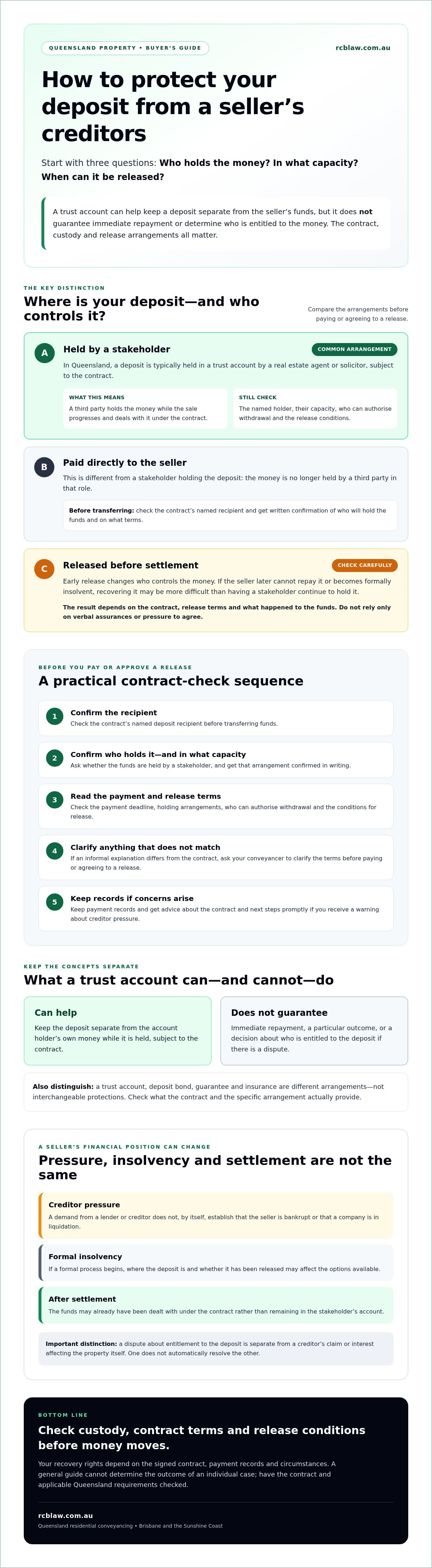
A stakeholder holds the deposit while the sale progresses and deals with it according to the contract. That differs from paying the seller directly, because the money is no longer held by a third party in that role. Before transferring funds, check the contract’s named recipient and ask for written confirmation of who will hold the money, whether they are holding it as stakeholder, and what conditions apply to release. If an informal explanation differs from the contract, ask your conveyancer to clarify the terms before paying.
What changes if a seller faces insolvency?
Creditor pressure, formal insolvency and a completed sale are different situations. A demand from a lender or creditor does not, by itself, establish that the seller is bankrupt or that a company is in liquidation. If a formal insolvency process begins, the deposit’s location and release history may affect the options available. After settlement, the funds may already have been dealt with under the contract rather than remaining in the stakeholder’s account.
Trust-account handling can help keep the deposit separate from money available to the seller, but it does not guarantee immediate repayment or a particular result. If you’re asking how to protect my deposit from seller's creditors, confirm the arrangements before paying and seek advice promptly if you learn that the seller’s financial position has changed.
How deposit custody and contract terms affect your protection
Deposit protection depends on more than the account in which the money is held. The contract, who controls the funds and any later instructions about release all matter. A deposit dispute is also separate from a creditor’s claim against the property itself. The first concerns who is entitled to the deposit under the sale contract; the second may involve a separate claim or interest affecting the land. One does not automatically resolve the other.
In Queensland, deposits are generally held in a trust account by an agent or solicitor, but the applicable rules and contract arrangements should be checked for your transaction. Trust-account handling can help keep money separate from the account holder’s own funds. It does not decide a disagreement about entitlement to the deposit or guarantee that you will receive it back immediately.
What does stakeholder-held deposit mean?
A stakeholder holds the deposit and deals with it under the contract. Depending on the terms and circumstances, that may mean retaining it pending settlement or paying it out when specified conditions are met. Before transferring funds, ask the named holder to confirm in writing who they are, the capacity in which they hold the money, who can authorise a withdrawal, and what happens if settlement does not proceed. Have the contract and relevant Queensland trust-account requirements checked instead of relying on assumptions.
Why can early release change the risk?
When a deposit is released before settlement, control of the money changes. If the seller later cannot repay it or becomes formally insolvent, recovering the funds may be more difficult than asking a stakeholder to continue holding them. The outcome depends on the contract, the release terms and what happened to the money. Do not agree based only on verbal assurances or pressure to help the seller meet a payment. Get independent legal advice before signing a release or contract variation.
A deposit bond is not cash held in a stakeholder’s trust account. It is a separate arrangement that may be accepted instead of a cash deposit, subject to the contract and the issuer’s terms. Check who issued it, what it covers and when it can be called on. A bond, guarantee, insurance and cash deposit are not interchangeable protections.
Before you sign, a Queensland conveyancing lawyer can review the deposit recipient, holding instructions and release provisions alongside the wider contract. This helps you understand the practical effect of the terms before paying or agreeing to a change. For advice tailored to your transaction, consider Queensland conveyancing contract review.
Seller’s creditors and your deposit: protection limits
A deposit held by a stakeholder may be treated differently from money already paid to the seller, but that does not protect you from every loss connected with the transaction. Separate two questions: who is entitled to the deposit under the contract, and whether a creditor has a claim or other interest affecting the property. They involve different issues, and resolving one does not automatically resolve the other.
The account arrangement, contract wording, authority to release funds and any formal insolvency process can all affect the options available. Creditor priority and recovery rights depend on the specific facts and require Queensland legal advice. A trust account is not a promise of immediate repayment or a guaranteed outcome.
Does a trust account keep the deposit safe from seller creditors?
Stakeholder or trust-account handling is intended to hold money for the transaction rather than simply place it in the seller’s hands. The account holder, the terms governing the funds and who can authorise payment still matter. If a dispute or formal insolvency arises, do not assume the funds will automatically be returned to you. Have the contract and payment records reviewed promptly to understand what steps may be available.
Can a caveat or deposit bond protect the buyer?
A caveat is a notice recorded against a property title that may protect a claimed interest in land. It is not a substitute for correctly handling the deposit, and paying a deposit does not automatically mean a buyer can lodge one. Whether a buyer has a caveatable interest depends on the circumstances and needs legal assessment. For separate background, RCB Law’s guide, What is a Caveat?, explains the concept.
A deposit bond is a different arrangement. It is issued by a third party and may be accepted instead of a cash deposit, subject to the contract and the issuer’s terms. It does not mean cash is held in a stakeholder’s trust account, and it is not the same as insurance or a guarantee. Check what the bond covers, when it can be called on and whether the contract accepts it.
So, how to protect my deposit from seller's creditors depends on more than choosing a particular safeguard. Before signing, paying or agreeing to release funds, get advice on the contract and transaction. If you learn of creditor action or a dispute, seek Queensland conveyancing advice promptly rather than relying on a caveat, bond or trust-account label alone.
Steps before paying, releasing, or recovering a deposit
A clear paper trail and a timely review can help you understand what you agreed to and what needs attention. Use this checklist before transferring funds, and act promptly if you receive a warning about the seller’s financial position.
Before you sign or transfer the deposit
- Check the contract details. Confirm the deposit recipient, amount, due date, holding arrangements and circumstances in which the deposit may be released. Ask your conveyancer to explain any wording you are unsure about.
- Confirm payment instructions independently. Before transferring money, verify the account details with the intended recipient using a contact method you already trust. Do not rely solely on new or changed bank details sent by email.
- Ask about release and settlement failure. Clarify who can authorise a withdrawal and what the contract says happens if settlement does not proceed. Do not assume the deposit will be returned automatically.
- Keep the records together. Save the signed contract, receipts, payment instructions, variations and messages about the deposit. These documents help your conveyancer establish what was agreed and when.
Reviewing the contract before signing or paying gives you a chance to identify unclear deposit terms. For broader context about the property transaction, use a Queensland conveyancing guide that explains contract review and settlement support.
If the seller’s financial position becomes concerning
- 5. Contact your conveyancer promptly. Send the contract, proof of payment and any creditor, insolvency or release notices. Ask whether the deposit is still held and whether a deadline or request needs a response.
- 6. Pause before agreeing to changes. Do not sign a release, variation or repayment arrangement, or rely on verbal assurances, until you understand the effect on your position.
- 7. Do not try to recover the money yourself. Avoid taking unilateral steps or contacting creditors without advice. Entitlement to the deposit and the appropriate action depend on the contract and circumstances.
If you’re asking how to protect my deposit from seller's creditors, an early review of the contract and payment records can help clarify your next steps. Ask RCB Law about Queensland conveyancing advice tailored to your transaction.
How a Queensland conveyancing lawyer can help protect your position
A Queensland conveyancing lawyer can review the contract before you sign or pay, helping you understand who is meant to hold the deposit, what conditions apply to its release and what the contract says if the sale does not proceed. If a concern arises later, they can assess the signed terms and explain what steps may be available. This is practical guidance, not a guarantee of recovery.
The advice depends on the details of your transaction, including the signed contract and any amendments, where the money was paid, the payment trail and current circumstances. A request for early release, a creditor notice or an insolvency communication may each call for a different response. The question of how to protect my deposit from seller's creditors is best considered against those specific facts, not answered by a general rule.
What information should you prepare for legal advice?
Gather the documents and prepare a short timeline before speaking with a lawyer. Include the signed contract, any variations, receipts, trust-account details and correspondence with the seller, agent or deposit holder. Note when you paid, when any release was requested and when you received creditor or insolvency communications. Ask which deadlines or decisions need attention first so you can focus on the most urgent steps.
When should you contact a conveyancing lawyer?
Seek advice before signing unusual deposit terms or agreeing to release funds before settlement. If the seller, agent or a creditor raises a dispute, contact a lawyer promptly and share the relevant records. Avoid signing a release or making assumptions about your rights until someone has reviewed the contract and circumstances with you.
RCB Law provides residential conveyancing advice across Queensland, including Brisbane and the Sunshine Coast, and has more than 30 years of experience. If you are unsure about a deposit clause or have received a warning that concerns you, advice about your transaction can help clarify the issues before you take an irreversible step. You can speak with RCB Law about Queensland conveyancing for guidance tailored to your contract and circumstances.
Take a careful next step with your deposit
Protecting your position starts with understanding who holds the deposit, in what capacity, and what the contract allows them to do with it. Check the payment recipient, due date and release terms before transferring funds, and keep receipts, instructions and correspondence together. If you receive a creditor or insolvency notice, get advice promptly before signing a release or trying to recover the money yourself.
The answer to how to protect my deposit from seller's creditors depends on your signed contract, payment trail and current circumstances. An early review can identify terms that may affect your options, but general guidance cannot guarantee a particular recovery outcome.
RCB Law provides residential conveyancing support across Brisbane and the Sunshine Coast, backed by more than 30 years of experience. If you are considering a purchase or have concerns about deposit terms, discuss your Queensland property purchase with RCB Law before taking an irreversible step. Advice tailored to your transaction can help clarify the issues and your next steps.
Frequently Asked Questions
Can a seller’s creditors take my property deposit in Queensland?
Not automatically, but the outcome depends on where the deposit is held and the contract terms. A deposit held by a stakeholder in a trust account is different from money already paid to the seller or released before settlement. If the seller faces formal insolvency or a dispute arises, your recovery options depend on the circumstances. Get advice based on your contract and payment records before deciding what to do.
Is my deposit safe if it is held in a real estate agent’s trust account?
A trust account is intended to hold money on behalf of others, but it does not guarantee an immediate refund or a particular outcome. Check that the agent is named or authorised under the contract to hold the funds, and clarify who can approve their release. If there is a dispute or insolvency concern, ask a Queensland conveyancing lawyer to review the contract and payment history.
Can a seller ask for my deposit to be released before settlement?
Yes, a seller can make a request, but the request alone does not mean you have to agree. Whether a deposit can be released depends on the contract, any proposed variation and the circumstances. Before signing a release or relying on verbal assurances, get independent legal advice about the effect on your position. Ask who will receive the funds and what recourse may be available if the seller cannot settle.
What should I do if the seller becomes insolvent after I pay the deposit?
Contact your conveyancer promptly and provide the signed contract, proof of payment and any insolvency or creditor notices. Ask whether the deposit remains with the stakeholder, whether a release has been requested and whether a deadline needs attention. If you’re wondering how to protect my deposit from seller's creditors, avoid signing a release or trying to recover funds yourself before getting advice specific to your transaction.
Does a caveat protect my deposit from a seller’s creditors?
No, a caveat is not an automatic safeguard for a deposit. It is a notice on a property title relating to a claimed interest in land, not a way to keep cash in a trust account or guarantee repayment. Whether a buyer has a caveatable interest depends on the contract and facts. Get legal advice before considering a caveat, as lodging one without a proper basis may have consequences.
Can I get my deposit back if the seller cannot settle?
Possibly, but a seller’s inability to settle does not by itself determine whether you are entitled to a refund. Your rights depend on the contract, the reason settlement cannot proceed, any notices given and whether the deposit has been released. Do not assume the stakeholder can return the funds without following the contract or resolving a dispute. Have a conveyancer review the documents and advise on deadlines and available options.
Should I pay a property deposit directly to the seller?
Do not pay the seller directly without first checking the contract and getting conveyancing advice. In Queensland, a property deposit is typically held in a trust account by a real estate agent or solicitor for one of the parties. Confirm the named deposit holder, account details and payment instructions independently before transferring funds. Keep your receipt and written confirmation of how the money will be held.


