
What if a handwritten change to your will creates more uncertainty than it resolves? If you’re wondering how to update a will qld, pause before altering or replacing the document. Life changes can affect whether your will still reflects your wishes, and some events, including marriage or the end of a de facto relationship, can affect its legal effect.
It’s understandable to be unsure whether a change calls for a new will, a codicil or simply a review. The right approach depends on what needs to change and how clearly the updated document records your intentions. Informal edits may not be legally effective, so getting the formalities right matters.
This guide explains when to review your Queensland will, how a codicil differs from a new will, and the practical steps involved in arranging and properly executing an update. It also covers why changes to family circumstances and superannuation arrangements may warrant attention. With a careful review, you can decide what to do next.
Key Takeaways
- Use major family or relationship changes as a prompt to check whether your will still reflects your wishes.
- Compare a codicil with a new will based on the scale and complexity of the changes you need.
- Don’t assume handwritten edits are legally effective. Proper preparation and execution matter.
- For how to update a will qld, start by gathering your current will and details of your beneficiaries, executors, assets and family circumstances.
- A legal review can help clarify the next step, especially if your circumstances have changed or your existing document is unclear.
When should you update a will in Queensland?
Reviewing your will after a life change is a practical step, not a sign that anything is wrong. It gives you a chance to check whether the people you’ve named and the instructions you’ve made still match your wishes. A will is a legal document, so consider changes carefully rather than treating them as informal notes.
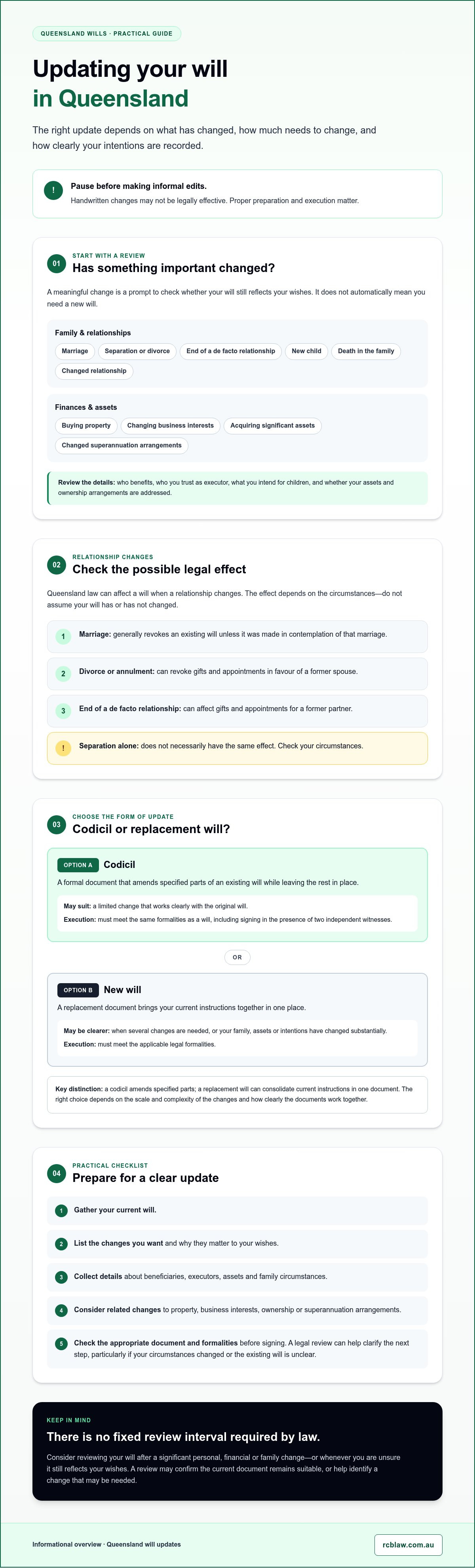
Marriage, separation, divorce, a new child, a death in the family or a changed relationship can all prompt a review. So can buying property, changing your business interests or acquiring significant assets. These events don’t necessarily make every existing will ineffective, but they may leave important details out of date. If you’re considering how to update a will qld, start by checking how the change relates to your current instructions.
Which life changes can affect your will?
Family changes may affect who you want to benefit, who you trust to act as executor or what you wish to provide for children. If a beneficiary dies, their gift may not pass as you expected. A beneficiary’s changed circumstances may also lead you to reconsider what you intended to leave them.
Queensland law can affect a will when a relationship changes. Marriage generally revokes an existing will unless it was made in contemplation of that marriage. Divorce or annulment can revoke gifts and appointments in favour of a former spouse. The end of a de facto relationship can also affect gifts and appointments for a former partner. Separation alone doesn’t necessarily have the same effect, so don’t assume your will has changed or been revoked without checking your circumstances.
Financial changes matter too. A new home, a business interest or other substantial assets may affect how your estate is distributed. Ownership arrangements can also influence what passes under your will. A review can help identify whether your instructions still address your assets and intended beneficiaries.
How often should you review a Queensland will?
There’s no fixed review interval required by law. Instead, consider reviewing your will after a significant personal, financial or family change, or whenever you’re unsure whether it still reflects your wishes. For a broader introduction to making a will, see Why You Need a Will: A Comprehensive Guide for Queenslanders.
Arrange a review when a meaningful change in your relationships, family or finances could affect who benefits from your estate or how your wishes are carried out. A review doesn’t automatically mean you need a new will. It can clarify whether your current document remains suitable or whether changes may be needed.
How can you legally change a will in Queensland?
Once you’ve identified what needs to change, decide how to record your wishes clearly and effectively. In Queensland, the main options are a codicil, which formally amends parts of an existing will, or a newly prepared will. The right choice depends on the number and complexity of the changes, as well as how your current document is written.
Neither option should be treated as a casual add-on. A codicil must be properly executed, and a new will must also meet the applicable legal formalities. The effect of a document, including whether it revokes or changes an earlier will, can depend on its wording and the circumstances. Getting advice before signing can help avoid uncertainty about which instructions are intended to apply.
What is a codicil, and when might one be used?
A codicil is a formal document that amends specified parts of an existing will while leaving the rest in place. It may suit a limited change if the new instructions work clearly with the original document. In Queensland, a codicil needs to be executed with the same formalities as a will, including signing in the presence of two independent witnesses.
Ask a lawyer whether a codicil suits the change you intend to make. If the amendment and original will are unclear or inconsistent, executors and beneficiaries may be left uncertain about your wishes.
When might a new will be clearer than an amendment?
A replacement will may be easier to follow when you need to make several changes or when your family, assets or intentions have changed substantially. It brings your current instructions together in one document, rather than requiring someone to read the original will alongside later amendments. That can make your overall plan clearer, though a new will isn’t automatically necessary for every update.
A codicil adjusts specified parts of an existing will; a replacement will can consolidate your current instructions in a single document. For example, if you’re changing several beneficiaries and your executor, ask whether a fresh document would make your intentions easier to understand.
If you’re unsure how to update a will qld, gather the current will and a clear list of intended changes before seeking advice. RCB Law can review an existing will and assist with will drafting. You can learn about will drafting assistance and consider whether a review may help. A lawyer can assess whether a codicil or newly drafted will better reflects your circumstances and explain the execution steps for the document you choose.
Can you edit a will by hand or change it without witnesses?
Don’t assume a handwritten change to a will is legally effective. Crossing out a gift, adding a beneficiary’s name or attaching a note may not achieve the result you intend. The change might be difficult to interpret, fail to meet the requirements for a valid alteration or leave uncertainty about which instructions apply.
Queensland’s Succession Act 1981 sets formal requirements for making a will. A codicil is also a formal document, not simply a handwritten edit. A court may have power to recognise some informal documents as a will if satisfied they express the deceased person’s testamentary intentions, but that possibility is not a safe substitute for proper preparation and signing.
Why are informal edits risky?
An alteration to the original document can raise questions about when it was made, who made it and whether the will-maker intended to change their instructions. A crossed-out name, handwritten addition or separate note may also conflict with the rest of the will. That uncertainty can make it harder for an executor to identify which instructions to follow.
If you’re considering how to update a will qld, preserve the existing document as it is and seek advice before making physical changes. Don’t destroy or mark up the original to try to revoke or replace it. A lawyer can help determine whether a properly prepared codicil or replacement will is appropriate.
What are the usual Queensland signing and witnessing considerations?
For an ordinary formal will in Queensland, the will-maker must sign it, or acknowledge their signature, in the presence of two witnesses who are present together. The witnesses must then attest and sign in the will-maker’s presence. A codicil generally needs to meet the same execution formalities. The circumstances and document matter, so confirm the requirements that apply before signing.
Witness eligibility deserves care. A gift to someone who witnesses a will can raise separate legal issues, so choose witnesses who are not beneficiaries and get advice if there’s any doubt. Record when and where the document was signed and who witnessed it. Keep the signed original secure and make sure your executor can locate it.
These steps reduce avoidable uncertainty, but they can’t resolve every issue with an older or altered document. If you’re unsure whether an existing will has been changed effectively, have it reviewed before relying on handwritten amendments or informal notes.
How to update a will in QLD: a practical checklist
A little preparation can make a will review more focused. Before meeting with a Queensland wills lawyer, locate the current signed will and note what has changed and what you want your instructions to achieve. This helps the lawyer assess whether a codicil or a newly drafted will may be suitable, without assuming every update needs a replacement document.
What information should you gather before seeking advice?
Bring the signed original if you have it, along with any codicils or related estate-planning documents. Don’t write on or attach notes to the will while preparing for the review. Make a clear list of proposed changes, including beneficiaries, executors, guardianship wishes and how you want your estate distributed.
A current overview of your circumstances can also help. Consider gathering details of:
- Family changes: births, deaths, relationship changes and anyone whose needs may affect your instructions.
- Assets and liabilities: property, business interests, significant possessions, debts and other relevant financial commitments.
- Ownership arrangements: how property or other assets are held, and whether that may affect what your will can address.
These details provide context, but ownership structures can have different legal effects. Ask the lawyer to consider how your arrangements relate to your estate plan rather than assuming an asset will pass in a particular way.
How do you complete and store the updated document?
Once the appropriate document is prepared, follow the signing and witnessing requirements that apply to it in Queensland. Don’t rely on informal edits or skip a step because the change seems small. Confirm who needs to be present and how the signing should be carried out before execution.
After signing, keep the original document secure and tell your executor where it can be found. Ask the lawyer what to do with earlier wills, codicils and copies. Don’t destroy or mark an older document unless you’ve received advice about how that may affect your circumstances.
Take this checklist to your appointment:
- Current signed will and any codicils or related documents
- Proposed changes to beneficiaries, executors, guardianship wishes and distributions
- Details of relevant family changes, assets, liabilities and ownership arrangements
- Questions about execution, storage and what to do with earlier documents
If you’re unsure how to update a will qld, a review can help clarify the next steps. Arrange a review of your existing will with RCB Law to discuss whether your current document still reflects your wishes.
Getting help to review or update your Queensland will
Some will updates are straightforward to identify, but the right document and signing process can depend on your circumstances. Legal review may be especially helpful if you have complex assets, business interests, changed family circumstances or an older will with unclear wording. It can also help if you’re unsure whether a previous amendment was properly made.
A solicitor can review whether your existing instructions still reflect your wishes, identify potential conflicts or execution questions, and explain whether a codicil or newly drafted will may suit the changes you want. This doesn’t mean every review leads to a new will. It gives you a clearer basis for deciding what, if anything, needs to change.
What can a solicitor help you check?
A review can help clarify how the document addresses your beneficiaries, executor choices and distribution instructions in light of your current circumstances. The solicitor can explain unclear wording, discuss questions about how the will was signed and outline the steps for preparing and executing an update. If you’re researching how to update a will qld, this tailored assessment is more useful than assuming one method suits every situation.
What should you ask before proceeding?
Bring your current will and any later codicils or related documents. Ask whether a review, codicil or new will may fit your proposed changes, what additional information is needed, and how to sign and store the completed document. You can also ask what to do with earlier wills and copies, and how to let your executor know where the signed original is kept.
RCB Law provides will drafting and a complimentary review of existing wills, with over 30 years of experience. The firm serves the Sunshine Coast, Brisbane and Redland Bay. Ask about the scope of the complimentary review and what information to provide so you understand what it covers.
If you’d like help working through your options, request a review of your existing will from RCB Law. A review can help you decide on a practical next step, without assuming that your current will is ineffective or that a particular outcome is guaranteed.
This information is general in nature and isn’t legal advice. The effect of a will or proposed change depends on the document and your circumstances. Seek advice tailored to your situation before making or signing changes.
Take the next step with confidence
A change in your family, relationships or finances can be a good reason to check whether your will still reflects your wishes. It doesn’t automatically mean the document is ineffective or that you need a completely new one. A legal review can clarify whether a codicil or replacement will may be appropriate, and how to make sure the chosen document is properly prepared and signed.
If you’re considering how to update a will qld, gather your current will and note the changes you want to discuss. RCB Law provides will drafting and estate-planning assistance, including a complimentary review of existing wills. With more than 30 years of experience, the firm can help you understand practical next steps based on your circumstances.
Arrange a complimentary review of your existing will with RCB Law and take a considered first step. A review can help make the process more manageable and clarify what to do next.
Frequently Asked Questions
How do I update my will in Queensland?
To update your will in Queensland, review your current document, identify the changes you want and get advice on the appropriate legal option. A codicil may suit a limited amendment, while a new will may bring several changed instructions together. The document must be prepared and signed in line with the requirements that apply. If you’re considering how to update a will qld, keep the original unchanged until you’ve received advice.
Can I change my will by writing on it?
Don’t assume that writing on your will changes it legally. Crossing out a gift, adding a name or attaching a note may create uncertainty about what you intended and whether the alteration is effective. Queensland courts may have powers to recognise some informal documents in particular circumstances, but that isn’t a reliable substitute for a properly prepared and executed amendment. Preserve the will as it is and get legal advice before making physical changes.
Do I need a new will or can I use a codicil?
You may be able to use a codicil for a limited change, or prepare a new will if your instructions have changed more broadly. A codicil formally amends specified parts of your existing will and must be properly executed. A replacement will can consolidate current instructions in one document. The better fit depends on your circumstances and the wording of your existing will, so ask a lawyer to assess both options.
Does getting married or divorced change a will in Queensland?
Marriage generally revokes an existing Queensland will unless it was made in contemplation of that marriage. Divorce or annulment generally revokes provisions that benefit a former spouse or appoint them to a role under the will, rather than necessarily revoking the whole document. The end of a de facto relationship can also affect gifts and appointments for a former partner. The effect depends on your circumstances, so arrange a review after a relationship change.
Do I need witnesses when I update my will?
Yes, a formal will or codicil in Queensland generally needs to be signed or acknowledged by the will-maker in the presence of two witnesses who are present together, and the witnesses must sign in the will-maker’s presence. Witness eligibility and gifts to witnesses can raise separate issues. Confirm the requirements for your document before signing, and don’t assume an informal amendment is effective just because it records your wishes.
How often should I review my will?
There’s no fixed review interval required by law. Review your will after a meaningful personal, family or financial change, such as a birth, death, relationship change, property purchase or change in business interests. It’s also sensible to check it if you’re unsure whether it still reflects your wishes. A review can clarify whether any change is needed; it doesn’t automatically mean you need a new will.


