
What if the granny flat that makes a Queensland property look like a perfect fit isn’t approved for the use you have in mind? If you’re researching “buying a property with a granny flat qld,” don’t rely on the listing or the building’s appearance alone. Its value to you depends on what the records confirm.
It’s understandable to feel uncertain when approval documents are missing, council records are unclear or advertised rental potential seems too good to assume. In Queensland, a granny flat’s permitted use can depend on its approvals and the property’s circumstances. Check the details before you commit.
This article explains how to verify approval status, clarify whether the dwelling can be used as you expect, and identify records and inspections to consider before contract deadlines. You’ll also learn which professionals may help assess the information. Conveyancing advice can help you understand contract terms, property records and potential issues before the contract becomes unconditional, so you can make a more informed decision.
Key Takeaways
- When buying a property with a granny flat qld, check the dwelling’s approval and permitted use instead of relying on the listing or its appearance.
- For a Sunshine Coast property, confirm the records process with Sunshine Coast Council, then compare available documents with the dwelling.
- Check approval records, visible building condition and your intended use separately. A building inspection doesn’t determine council approval or lawful use.
- Before contract deadlines, request relevant approval documents and clarify gaps or inconsistencies with the seller or agent.
- Ask a Queensland conveyancing lawyer to review the contract and disclosure material so you can understand issues and next steps before committing.
Buying a Property with a Granny Flat in QLD: What Should You Confirm First?
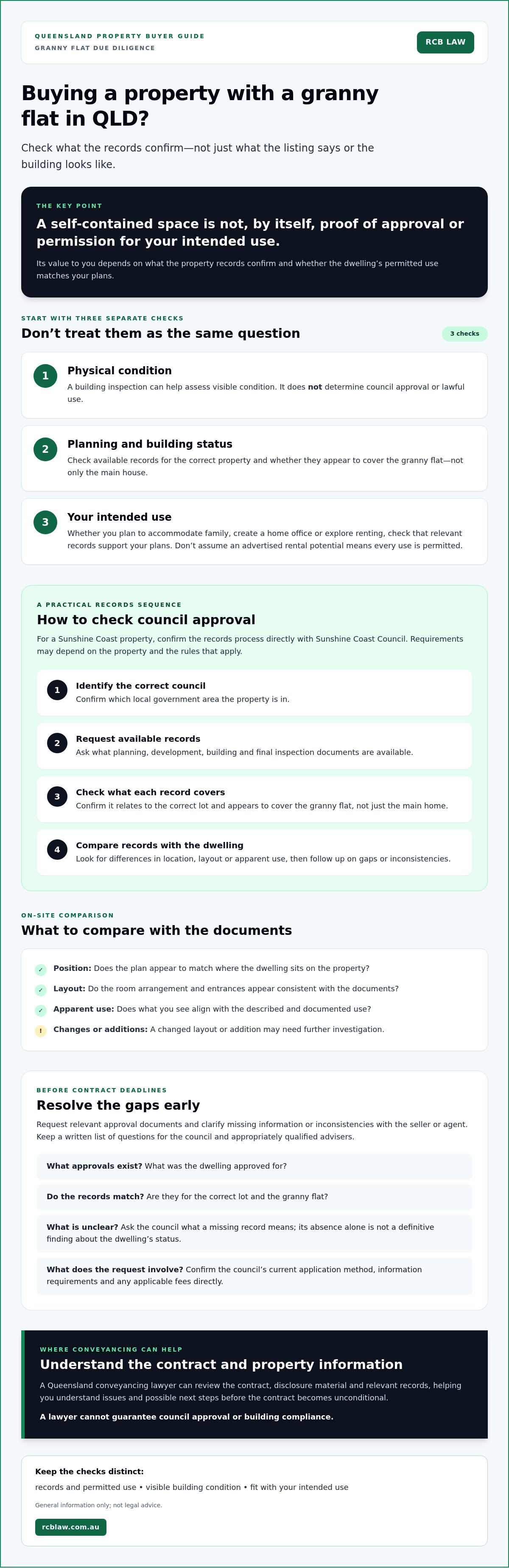
A second living space can make a property more flexible, but its appearance alone won’t tell you whether it’s approved or suitable for your plans. If you’re buying a property with a granny flat qld, assess three separate things: its physical condition, its planning and building status, and whether its permitted use matches your intentions. A building inspection can help assess visible condition, but it doesn’t confirm council approval or lawful use.
Start by comparing the seller’s description with available property records. Ask what approvals exist, what the dwelling was approved for and whether its current layout appears consistent with the documents. If information is missing or doesn’t match, don’t assume the issue is minor. Council records and advice from relevant professionals may help clarify what the documents mean for your purchase.
What counts as a granny flat or secondary dwelling in Queensland?
In everyday language, a granny flat is usually self-contained accommodation on the same property as a main home. It may be attached to the house or detached, with its own living facilities. The term secondary dwelling is also used in discussions of dual living in Australia, but the legal classification depends on the property and applicable rules.
Listing terms such as “granny flat” or “dual living” don’t establish formal classification, approval or a separate title. Compare the actual layout and the agent’s description with the property records, and ask for supporting documents if details are unclear.
Why approval and permitted use matter to a property buyer
Your intended use matters. You might plan to accommodate family, create a home office or explore renting the space. Don’t assume that a dwelling can be used for every purpose simply because it’s self-contained or advertised as income-producing. Check whether relevant records support your plans, and seek clarification if they don’t.
An unresolved approval or use question may affect your due diligence, negotiations and confidence in the purchase. Raise concerns early enough to understand your options before applicable contract deadlines. For the broader purchase process, consult the existing QLD conveyancing guide alongside these granny-flat checks. A Queensland conveyancing lawyer can help review the contract and relevant records, but can’t guarantee council approval or building compliance. This section is general information, not legal advice.
How to Check a Granny Flat’s Council Approval on the Sunshine Coast
Approval checks are most useful when they follow a clear sequence. Requirements can depend on the property and the planning and building rules that apply, so don’t assume a granny flat has the same approval pathway as another dwelling. Confirm current requirements with the relevant council and get advice if the records or intended use are unclear.
- Identify the correct council. Confirm which local government area the property is in. For a Sunshine Coast property, check the records process directly with Sunshine Coast Council.
- Request available records. Ask what planning, development, building and final inspection documents are available for the property.
- Check the details. Make sure each record relates to the correct lot and appears to cover the granny flat, not only the main house.
- Compare the documents with the dwelling. Look for differences in location, layout or apparent use, then follow up on gaps or inconsistencies.
Which council records should a buyer request?
Ask the council what records it holds and how to request them. Confirm its current application method, information requirements and any applicable fees directly, as these may depend on the request. If no approval or final inspection record is available, ask the council what that absence means for the property. A missing document isn’t, by itself, a definitive finding about the dwelling’s status.
How to compare approval records with the granny flat on site
Compare plans and descriptions with what you can see, including the building’s position, room arrangement, entrances and apparent use. A changed layout or addition may need further investigation. Keep a written list of questions and raise them with the council and appropriately qualified advisers before relevant contract or due diligence deadlines.
A council search can clarify what records are held, but it doesn’t assess every aspect of construction, physical condition or permitted use. If documents don’t match the dwelling, don’t treat a visual inspection as proof that the work was approved. Ask the council what further information may be available and seek professional advice about unresolved building or planning concerns.
If you plan to rent the space, approval records are only part of your checks. Review the Residential Tenancies Authority guidelines for relevant tenancy information, and get advice about how your intended use applies to the property. For buyers buying a property with a granny flat qld, a conveyancing lawyer can help review the contract and understand how outstanding record questions may affect the transaction. You can learn about residential conveyancing support as you consider your next steps.
What to Compare: Approval, Building Condition and Intended Use
Assess the granny flat through three separate lenses. Approval records can help clarify its documented status, an inspection can identify visible condition issues, and your intended use needs its own checks. None of these checks substitutes for the others.
| What to check | What it can help establish | What it doesn’t establish by itself |
|---|---|---|
| Planning and building records | What documents are available and what they describe or approve. | The dwelling’s current condition or whether your planned use is suitable. |
| Physical condition | Visible defects or areas that may need further inspection. | Council approval, formal classification or lawful use. |
| Intended use | Questions to verify against relevant council information, records and contract disclosures. | A guaranteed right to occupy, rent or earn income from the space. |
A structure that’s been there for years, or a seller’s assurance that it’s approved, isn’t proof of approval. Compare available documents with the dwelling and seek clarification if the records are incomplete or don’t appear to match.
Does approval mean the granny flat is in suitable condition?
No. Documentary checks and a building and pest inspection answer different questions. An inspection can report on visible condition, but it doesn’t determine council approval or lawful use. Likewise, a council search or supplied plan shouldn’t be treated as a complete assessment of the building. If the building’s age, apparent defects or services raise concerns, ask whether specialist inspections are appropriate.
Can the granny flat be used or rented as advertised?
Verify the specific use you have in mind, whether that’s family accommodation, separate occupancy or rental. Check relevant council information and contract disclosures before relying on the listing’s description or assumed rental income. If renting is part of your plan, confirm applicable tenancy obligations and get advice based on the property’s circumstances. For investment ownership, also consider whether land tax advice is relevant to your situation.
These distinctions are particularly useful when buying a property with a granny flat qld, because a positive answer on one point doesn’t settle the others. If records, inspection findings and advertised use don’t align, note the discrepancy and get appropriate advice before proceeding.
Buyer Due Diligence: Questions to Resolve Before Contract Deadlines
Gather information early, while there’s still time to review it against your contract. When buying a property with a granny flat qld, ask the seller or agent for available documents and written answers, then compare them with council records and contract material. Keep a note of what you’ve received, what’s missing and what still needs clarification.
Ask for or clarify:
- Available planning, development and building approval documents, including approved plans and any final inspection records.
- Inspection reports, maintenance records or other documents about the granny flat’s condition and services.
- Any correspondence with council about the dwelling, including enquiries about approvals, alterations or its use.
- Whether the seller knows of additions or changes to the layout since the plans were prepared.
- Whether the seller is aware of restrictions or conditions that could affect the dwelling’s use or occupancy.
- Whether the contract and disclosure material describe the secondary dwelling consistently with available records and the property you inspected.
A seller’s response is useful, but it may not settle the question. Check whether documents identify the correct property and appear to relate to the granny flat, not just the main house. If a plan is missing, a council response is unclear or the contract description doesn’t match the visible layout, record the discrepancy and request clarification.
When a discrepancy should prompt advice
Seek conveyancing advice promptly if council records, seller statements, contract documents and the physical layout don’t align. A Queensland conveyancing lawyer can review the contract and disclosure material, explain relevant terms and help you understand possible next steps. For planning or building compliance questions, contact the relevant council or an appropriately qualified professional. These roles are complementary, and legal advice doesn’t itself establish building compliance or council approval.
Pay close attention to the dates and conditions in your signed contract. Any rights, conditions and deadlines depend on the actual contract, so don’t assume you can cancel, negotiate a particular outcome or obtain an extension. Ask your lawyer what action may be available and when it must be taken, before a relevant deadline passes.
Early review can give you a clearer picture of unresolved risks before you commit further. Discuss your Queensland conveyancing questions with RCB Law as part of reviewing the contract and property documents.
How Queensland Conveyancing Helps You Buy with Greater Confidence
Buying a property with a granny flat involves more than checking whether the extra space looks suitable. Verify available records, investigate discrepancies, confirm whether your intended use needs further checking, and understand the contract before proceeding. If “buying a property with a granny flat qld” is on your search list, conveyancing advice can help bring the contract and property information into focus.
What a conveyancing lawyer can help you review
A Queensland conveyancing lawyer can review the contract and relevant property information in light of your questions about the granny flat. They can help identify documents or contract details that may need clarification, explain the significance of terms and deadlines, and discuss possible next steps based on your circumstances. They can also guide the legal transaction through to settlement. This advice doesn’t determine council approval or replace a building inspection or specialist planning advice.
Each check has a different role. Council records can clarify what information is held about the dwelling. A building inspection considers its condition. Conveyancing advice focuses on the legal documents and transaction, including how identified concerns relate to the contract. If an issue requires a council determination or technical assessment, your lawyer can help you understand that separate advice may be needed, without guaranteeing the outcome.
A clear next step for Sunshine Coast and Queensland buyers
Before seeking advice, gather the contract, property address and any available granny-flat records. Prepare a short list of the uses you’re considering, such as family accommodation or rental, along with unanswered questions about approvals, alterations or disclosure. Having these details together can make it easier to identify what needs attention and which questions may need to go to council or another qualified professional.
RCB Law is a Queensland firm with more than 30 years of experience and a primary focus on residential conveyancing. The firm assists with contract review, property transfers and settlement for clients in the Sunshine Coast and Brisbane areas. Its conveyancing support can help you understand relevant contract terms and next steps, while council and technical questions remain with the appropriate authorities and specialists.
Buying a home can feel demanding when important records are unclear. You don’t have to sort through the contract questions alone. Talk to RCB Law about residential conveyancing and discuss the documents and concerns relevant to your purchase.
Take the Next Step with Clearer Property Checks
A granny flat can add useful flexibility, but its value depends on more than its appearance or the way it’s described in a listing. Before committing, check available council and building records, assess the structure’s condition separately, and confirm whether your intended use is supported. If documents are missing or don’t align with the property, raise the issue early and get advice before relevant contract deadlines.
Careful checks can help you make a more informed decision when buying a property with a granny flat qld. A Queensland conveyancing lawyer can review the contract and relevant property information, while council and appropriately qualified professionals can address approval and technical questions.
RCB Law has more than 30 years of legal experience, with a primary focus on residential conveyancing for clients across the Sunshine Coast and Brisbane areas. Talk to RCB Law about Queensland residential conveyancing and take your next steps with greater clarity.
Frequently Asked Questions
Is a granny flat on a QLD property automatically approved?
No. A granny flat’s presence, age or description in an advertisement doesn’t prove it has the required approvals or that its current use is permitted. Classification and requirements depend on the property and applicable planning and building rules. Request available records, check with the relevant council and compare the documents with the dwelling. If you’re buying a property with a granny flat qld, resolve uncertainties before relevant contract deadlines.
How do I check if a granny flat is council approved on the Sunshine Coast?
Contact Sunshine Coast Council to confirm its current process for accessing records. Ask what planning, development, building and final inspection documents are available, and provide the property details the council requests. Check that the records relate to the correct lot and granny flat, then compare plans with the dwelling’s layout and location. If information is missing or doesn’t match, ask the council what follow-up may be appropriate.
Can I rent out a granny flat when I buy a property in Queensland?
Queensland has allowed homeowners to rent secondary dwellings to people who aren’t family members since 26 September 2022. However, that change doesn’t establish that a particular granny flat has the necessary approvals or can be rented as advertised. Check relevant council information, property records and tenancy obligations for your circumstances. Treat potential rental income as an assumption to verify, not a guaranteed outcome of the purchase.
What happens if the granny flat has no approval documents?
Missing documents don’t, by themselves, prove the granny flat is unapproved. Ask the seller or agent for any available plans, approvals, inspection records and council correspondence, then contact the relevant council about records for the property. Keep a note of what remains unresolved. If the contract description or physical layout raises concerns, seek legal and appropriate technical advice promptly, and consider the actual contract deadlines before deciding how to proceed.
Does a building inspection confirm a granny flat is council approved?
No. A building inspection assesses physical condition and may identify visible issues, but it doesn’t determine council approval, formal classification or lawful use. Approval records and inspections answer different questions. Compare available council documents with the dwelling, and ask the inspector or another appropriately qualified professional about condition concerns that may need further assessment. For approval or permitted-use questions, seek clarification from the relevant council and get advice as needed.
Should I ask a conveyancing lawyer to review a property with a granny flat?
Yes. A Queensland conveyancing lawyer can review the contract and relevant property information, identify documents or statements that may need clarification, and explain next steps in the context of your transaction. Legal advice doesn’t replace council determinations, building inspections or specialist planning advice. RCB Law has more than 30 years of experience and focuses on residential conveyancing for clients across the Sunshine Coast and Brisbane areas.


