
If consent orders award you a Queensland property, why might the title still show both names? The orders set out the agreed outcome, but they don’t automatically change the registered ownership. That distinction is central to transferring property pursuant to consent orders qld, and it can leave people unsure what to do next.
It’s understandable to expect a court-approved agreement to complete the transfer. In practice, separate conveyancing steps are usually needed. The process depends on the wording of the orders, any mortgage or refinancing arrangements, and Queensland transfer-duty requirements. If a former partner won’t sign, you may also need family law advice, not just help with the title paperwork.
This guide explains the steps to discuss with your advisers, from checking the orders and transfer documents to confirming duty treatment and registering the change with Titles Queensland. It also explains how to distinguish routine conveyancing from a potential compliance issue. RCB Law has more than 30 years of experience in Queensland residential conveyancing and can assist with the title-transfer stage once the orders and instructions are clear.
Key Takeaways
- When transferring property pursuant to consent orders qld, start by checking the exact wording of the orders. It guides the transfer instructions and next steps.
- Be ready to discuss the current title, mortgage details, transfer-duty requirements and documents needed for lodgement with your conveyancing adviser.
- If a former partner refuses to sign or disputes what the orders require, keep relevant records and seek family law advice about compliance or enforcement.
- Gather the sealed orders, title or rates information, mortgage details and relevant contact information to help identify missing requirements early.
- Use conveyancing support when the orders and transfer instructions are clear. Seek family law advice about interpreting, varying or enforcing the orders.
Transferring property pursuant to consent orders QLD: what the process involves
Separation can be demanding, and property paperwork may feel like one more uncertainty to manage. Start by separating what the orders say should happen from what the land title currently records. Consent orders can establish an agreed property outcome, but carrying it out may require a separate transfer and registration process. Check the specific orders before arranging documents or signing anything.
In brief: Consent orders set out the property arrangement, but they don’t necessarily update the Queensland land title by themselves. The transfer generally needs to go through the relevant conveyancing and registration steps.
For example, an order may give one person the agreed entitlement to a home while the title still lists both former partners as registered owners. Until the required transfer is registered, the title may not reflect the arrangement. Consent orders sit within the federal family law framework, governed by the Family Law Act 1975, while registering a Queensland land title is a separate administrative process.
Do consent orders automatically change the property title?
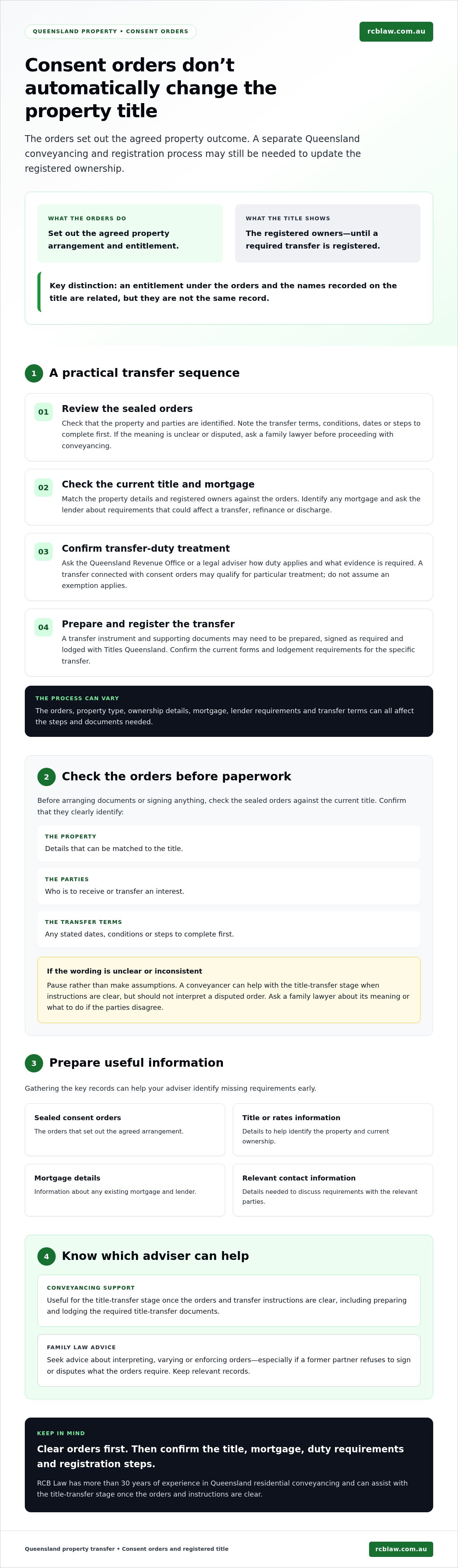
Don’t assume the title changes automatically. Check the wording of the sealed orders against the current title to confirm the property description and registered owners. A transfer instrument and supporting documents may still need to be prepared, signed as required, and lodged with Titles Queensland, the state body responsible for land title registration. Confirm the current forms and lodgement requirements for the specific transfer.
The steps can vary depending on the property and ownership details. A residential home, an investment property or another type of land may involve different considerations. The number and identity of registered owners, an existing mortgage, lender requirements and the terms of the orders can also affect the process. An entitlement under the orders and the names on the title are related, but they aren’t the same record.
What details in the orders matter for a Queensland transfer?
Before progressing, check whether the orders clearly identify:
- the property being transferred, using details that can be matched to the title
- the parties involved and who is to receive or transfer an interest
- the transfer terms, including any stated dates, conditions or steps to complete first
If the wording is unclear, incomplete or appears inconsistent with the title or the parties’ understanding, pause rather than making assumptions. A conveyancer can help with the title-transfer stage when instructions are clear, but shouldn’t interpret a disputed order. Ask a family lawyer about the order’s meaning or what to do if the parties disagree. This distinction matters when transferring property pursuant to consent orders qld, because unclear instructions can complicate otherwise routine registration work.
How a Queensland property transfer under consent orders usually proceeds
Once the orders and transfer instructions are clear, the title-transfer work can follow a practical sequence. The steps and documents depend on the order, ownership structure and any lender requirements. The Federal Circuit and Family Court of Australia provides information about the orders from the Federal Circuit and Family Court. Your advisers can help move from the final orders to the separate Queensland registration process.
Before lodging, check the order terms, title details, duty treatment and lender requirements.
- Review the orders. Confirm that the property and parties are identified, then note any transfer terms, conditions or timeframes. If the meaning is disputed or unclear, ask a family lawyer before proceeding with conveyancing.
- Obtain title and mortgage information. Check the current registered owners and property details. Identify any mortgage and contact the lender about requirements that could affect a transfer, refinance or discharge.
- Confirm transfer duty. Ask the Queensland Revenue Office (QRO) or a legal adviser to confirm how duty applies and what evidence is required. Transfers connected with consent orders may qualify for particular treatment, but don’t assume an exemption applies.
- Prepare the transfer documents. A conveyancer can assist with appropriate transfer documentation and registration tasks within their professional role. Confirm the required forms and supporting documents against current Titles Queensland requirements.
- Lodge and check registration. Once the documents and any required duty steps are in order, arrange lodgement with Titles Queensland. Confirm the outcome by checking that the register reflects the intended ownership change.
What documents and information may be needed?
As a starting point, gather the sealed or formally issued orders, current title details, identification information for the parties and relevant property records. Include mortgage information if a lender has an interest in the property. This is an indicative list, not a complete checklist. Titles Queensland, the lender or QRO may request additional material. Confirm current forms and requirements before signing or lodging anything.
When do transfer duty and mortgage arrangements need checking?
Duty treatment depends on the transaction and applicable Queensland requirements. Check current evidence and assessment requirements with QRO rather than relying on a general assumption about an exemption. If the property is mortgaged, the lender may need to be involved. Refinancing or mortgage discharge arrangements may also affect the timing and documents. Confirm the lender’s requirements for your specific matter.
For the registration stage, a Queensland conveyancing practice such as RCB Law’s residential conveyancing service may be relevant once the orders and instructions are clear. RCB Law focuses on property transfers, not interpreting or enforcing disputed family law orders.
What if someone will not sign or follow the consent orders?
A refusal to sign can stall the practical steps, but it doesn’t necessarily mean the property arrangement has changed. What to do next depends on what the orders require, what has happened so far and the legal process available in the circumstances. A conveyancer may be able to identify outstanding transfer documents, but conveyancing alone can’t resolve deliberate non-compliance or a dispute about the orders.
If cooperation breaks down while transferring property pursuant to consent orders qld, keep the relevant information together. Save a copy of the sealed orders, messages and letters about the transfer, and records of steps already taken, such as requests for signatures or lender communications. Keep communication factual and calm. Avoid threats or attempts to force a signature, and get legal advice before deciding how to respond.
Can the transfer continue if the other party refuses to sign?
There isn’t one answer that applies to every matter. Preparing transfer documents is different from having legal authority to complete a transfer when someone won’t cooperate. Whether registration can proceed, or what other steps may be available, depends on the orders, the facts and the applicable legal process. Speak with a family lawyer before assuming the transfer can be lodged without the other party’s signature or consent.
Seek advice promptly. A family lawyer can assess possible enforcement options and explain whether any time limits apply to your situation. Don’t rely on a general example or deadline as if it automatically governs your matter. The right approach needs to be checked against the orders and current law.
When is the issue a family law dispute rather than conveyancing?
A practical paperwork delay may call for conveyancing assistance. But if a former partner disputes what the orders mean, misses an obligation or challenges the property outcome, the issue may concern compliance or the orders themselves. Those matters require family law advice, not a conveyancer’s interpretation of a contested meaning.
RCB Law provides Queensland residential conveyancing, including legal property transfers, but doesn’t offer family law representation or enforcement services. Once a family lawyer has clarified the position and the transfer instructions are settled, a conveyancer can handle the title-transfer work within their role. If both issues are active, keep the relevant advisers informed so legal questions and registration requirements are addressed separately.
- Keep the orders and relevant correspondence organised.
- Ask a family lawyer about disputed obligations, enforcement options and any applicable time limits.
- Use conveyancing support for transfer documentation when the instructions are clear.
How to prepare for a consent-order property transfer in Queensland
Preparing key information can help your advisers identify gaps before they hold up the transfer. Documents and checks vary with the orders, ownership and mortgage arrangements, so use this as a starting checklist, not a complete list for every matter. For broader background, read this Queensland conveyancing guide.
Before instructing a conveyancer, gather what you have and note what still needs to be confirmed:
- sealed or formally issued consent orders, including any stated conditions or dates
- the property’s title details or rates information
- mortgage details and the lender’s contact information
- contact details for the parties and any relevant lender or adviser
- correspondence about the transfer or any outstanding requirements
If duty treatment is uncertain, check current assessment and evidence requirements with the Queensland Revenue Office (QRO). If a mortgage is involved, ask the lender what steps it requires. Don’t assume that documents used for a similar transfer will be sufficient for your circumstances.
Questions to ask before instructing a conveyancer
Ask which documents are needed, which transfer and registration tasks the conveyancer can manage, and how they’ll update you about progress, missing information and registration status. If the order wording is unclear or someone may not comply, ask whether a family lawyer should review that issue before conveyancing proceeds. This keeps transfer administration separate from legal questions about the orders.
Checks to make before the transfer is lodged
Before lodgement, compare the proposed transfer details with the current title and the terms of the orders. Confirm lender requirements and duty treatment with the relevant professionals, and check which supporting evidence is needed. Requirements can differ, so have the documents reviewed for this transfer rather than relying on an earlier matter.
| Task | Who to ask | Question to confirm |
|---|---|---|
| Match the transfer to the orders and title | Conveyancer; family lawyer if wording is unclear | Do the proposed parties and property details align with the orders and current title? |
| Check duty treatment and evidence | QRO or a legal adviser | What current assessment process and supporting evidence apply to these circumstances? |
| Confirm mortgage steps | Lender and conveyancer | Is lender consent, refinancing or discharge relevant to this transfer? |
| Clarify disputed obligations | Family lawyer | Does the order or a compliance concern need advice before transfer work continues? |
Once the orders and instructions are clear, discuss the title-transfer work with RCB Law. Its Queensland residential conveyancing practice can assist with property transfer steps. Questions about interpreting or enforcing family law orders should go to a family lawyer.
Who can help complete a property transfer under QLD consent orders?
The right adviser depends on what remains unresolved. If the consent orders clearly set out the property transfer and the parties’ instructions are settled, a conveyancer can help with the title-transfer process. If there’s a dispute about what the orders mean, whether someone has complied, or whether the arrangement should change, speak with a family lawyer before proceeding.
What a conveyancer can help with after consent orders
Once the instructions are clear, a conveyancer can assist with preparing transfer documents, coordinating relevant transaction requirements and progressing title-registration work within their professional role. They’ll need the orders and information relevant to the property, ownership and any mortgage. The exact work depends on the circumstances and current registration requirements.
RCB Law is a Queensland law firm with more than 30 years of experience and a primary focus on residential conveyancing, including property transfers. It serves Brisbane, the Sunshine Coast and Redland Bay. Its role is the conveyancing stage, not advising on the meaning of disputed family law orders, negotiating a property settlement or enforcing orders.
When to contact a family lawyer before proceeding
Pause and seek family law advice if a party disputes the order, refuses to comply or wants the property arrangement changed. A family lawyer can assess the facts, explain available legal options and advise whether any deadlines apply. Don’t assume that preparing transfer paperwork resolves a disagreement about what someone is required to do.
For transferring property pursuant to consent orders qld, keeping the roles clear helps identify the next step: a family lawyer addresses questions about the orders and compliance, while a conveyancer handles appropriate title-transfer work once instructions are settled. If your orders and transfer instructions are clear, you can discuss your Queensland conveyancing needs with RCB Law.
Take the next step with clarity
Consent orders set out the agreed property outcome, but the registered title may still need separate transfer steps. Before proceeding, make sure the order and transfer instructions are clear, and confirm the relevant title, duty and lender requirements for your circumstances.
If a former partner disputes the orders or won’t comply, seek family law advice about your options before treating the matter as routine conveyancing. Keeping that legal question separate from the title-registration work helps you identify the right adviser for each step in transferring property pursuant to consent orders qld.
Once the instructions are settled, RCB Law can assist with the conveyancing stage. The firm has more than 30 years of legal experience, with residential conveyancing as its primary service, serving Brisbane, the Sunshine Coast and Redland Bay.
Discuss your Queensland conveyancing needs with RCB Law when you’re ready to progress the title transfer. With the right guidance, you can approach the next steps with greater confidence.
Frequently Asked Questions
Do consent orders automatically transfer property ownership in Queensland?
No. Consent orders may record the agreed property outcome, but don’t assume the registered title changes automatically. A separate transfer and registration process may be needed, depending on the order, title details and circumstances. Have the orders and current title checked to establish which steps apply. A Queensland conveyancer can assist with transfer requirements, while questions about the meaning of an order or a disagreement about it should go to a family lawyer.
How do I transfer a house into my name under consent orders in QLD?
Start by obtaining the relevant orders and current title information, then ask a conveyancer to identify the likely transfer documents and registration steps. If you’re transferring property pursuant to consent orders qld, also check mortgage requirements with the lender and ask the Queensland Revenue Office about duty treatment and evidence. The process depends on the order and ownership details. If the other party disputes the arrangement or refuses to cooperate, seek family law advice.
Do I have to pay transfer duty when property is transferred under consent orders in Queensland?
Not necessarily, but don’t assume a transfer connected with consent orders is automatically exempt. Duty treatment depends on the circumstances and applicable Queensland requirements. Ask the Queensland Revenue Office or a qualified legal adviser which assessment steps and supporting evidence apply to your transfer. Confirm current requirements before preparing or lodging documents, since the correct treatment depends on the transaction details and the rules in force at the time.
What happens if my former partner refuses to sign the transfer documents?
A refusal may raise a compliance or enforcement issue that preparing conveyancing documents alone won’t resolve. Keep copies of the orders, requests for signatures and relevant messages or letters. Then speak promptly with a family lawyer about possible options and whether any time limits apply to your circumstances. Don’t assume the transfer can be registered without the required authority or documents. The appropriate next step depends on the order and the facts.
Can a conveyancer enforce family law consent orders in Queensland?
No. A conveyancer may assist with appropriate transfer documents and title-registration steps, but that’s different from interpreting or enforcing a family law order. If someone disagrees about what the orders require, refuses to comply or seeks a change, ask a family lawyer for advice. Once the legal position and transfer instructions are clear, a conveyancer can help with the property-transfer work within their professional role.
What documents may be needed to transfer property under consent orders?
Depending on the matter, a conveyancer may ask for the sealed or formally issued orders, current title details, identification information for the parties and mortgage details. The lender, Titles Queensland or the Queensland Revenue Office may require additional forms or evidence. Treat any checklist as indicative, not complete. Ask the professionals handling the transfer to confirm current document and signing requirements before arranging execution or lodgement.
Do I need my lender’s consent to transfer a mortgaged property under consent orders?
A mortgage can affect the transfer process, and the lender’s requirements depend on the loan and proposed change in ownership. Contact the lender and ask your conveyancer what needs to be confirmed before documents are prepared or lodged. Consent orders don’t, by themselves, establish that a lender has approved a change to the loan or its security. Get advice that takes account of the specific property and lending arrangements.


