
What if the dream home you just signed for comes with a hidden A$10,000 debt or a council demolition order you didn't see coming? In Queensland, the principle of "Caveat Emptor," or buyer beware, still places the heavy lifting of discovery on your shoulders. It's completely natural to feel anxious about what might be lurking beneath the surface of a property contract. You're likely asking, what searches does a conveyancer do in qld to keep these risks at bay? We understand that this transition is a major life event, and we're here to act as your steady guide through the complex legal process.
This guide provides a clear breakdown of the essential and optional searches required to protect your investment and ensure a smooth transfer in 2026. We'll explore the mandatory Seller Disclosure Statement requirements and the specific title, council, and environmental checks that provide true peace of mind. By the end, you'll know exactly how to secure a "good" title and avoid the pitfalls of hidden legal encumbrances. We'll help you distinguish between the "must-haves" and the "nice-to-haves" so you can move forward with confidence and clarity.
Key Takeaways
- Understand that Queensland law operates under "buyer beware," meaning the responsibility to uncover hidden property issues rests entirely with you before settlement.
- Learn exactly what searches does a conveyancer do in qld, from essential title checks to specific council investigations, to ensure your investment is protected from undisclosed debts.
- Gain the clarity needed to distinguish between minor administrative notes and critical "deal breakers" that may grant you the right to terminate a contract.
- Discover why regional expertise in Brisbane and the Sunshine Coast is vital for identifying local risks like flood zones or future government development plans.
- Identify which optional searches are necessary for your specific property type, such as body corporate records for units, to avoid unexpected costs after move-in.
Understanding the "Buyer Beware" Principle in Queensland Property Law
Purchasing property in Queensland is often the most significant financial commitment you'll ever make. It's a time filled with excitement, but it also carries a level of risk that can feel overwhelming without the right guidance. Central to this process is Understanding the "Buyer Beware" Principle, or caveat emptor. This legal doctrine means the responsibility falls on you, the buyer, to investigate the property's condition and legal standing before you're fully committed. While recent 2026 regulations like the mandatory Seller Disclosure Statement (Form 2) offer more transparency than in previous years, they don't cover everything. Many buyers find themselves asking, what searches does a conveyancer do in qld to ensure they aren't inheriting a legal nightmare?
The gap between what a seller must disclose and what you need to know can be surprisingly wide. A seller might disclose a known structural defect, but they might not be aware of a pending council resumption or an underground pipe that limits where you can build. In the fast-moving 2026 digital property market, these details are often buried in government databases. Professional searches act as a bridge, pulling this hidden data into the light before settlement becomes final. We see our role as a steady guide, helping you navigate these complexities so you can move forward with a sense of calm.
The Legal Framework of QLD Conveyancing
Most residential transactions in the state use the standard REIQ contract. While this document provides a solid foundation, it assumes you've performed your due diligence. Standard searches are often considered the bare minimum for protection. Your conveyancer looks beyond the surface to identify an "unmarketable title." This occurs when a property has legal defects so significant that a reasonable person wouldn't buy it. By identifying these issues early, we help remove friction from the transfer and protect your rights under the contract's search provisions.
The Risk of the Unknown
The real danger often lies in what isn't visible during a physical inspection. You might fall in love with a backyard, only to discover later that an unregistered easement for sewerage prevents you from ever installing a pool. Searches also reveal financial liabilities that "stick" to the land rather than the previous owner, such as unpaid land tax or council rates. When you ask, what searches does a conveyancer do in qld, you're really asking for the peace of mind that comes from a "clean" result. Knowing your property title is secure allows you to transition into your new home with confidence rather than anxiety.
Essential Standard Searches: Protecting Your Investment from Day One
Protecting your interests starts with verifying that the seller actually has the legal right to sell the property. When clients ask what searches does a conveyancer do in qld, we always point to the "Standard Searches" as the absolute baseline. These aren't just administrative hurdles; they're the tools we use to ensure you receive a clear title on settlement day. By performing these checks early, we identify potential roadblocks before they become expensive legal disputes. We take a methodical approach to these searches to remove friction from your property transfer and provide the clarity you need to move forward.
The Title Search: The Foundation of Due Diligence
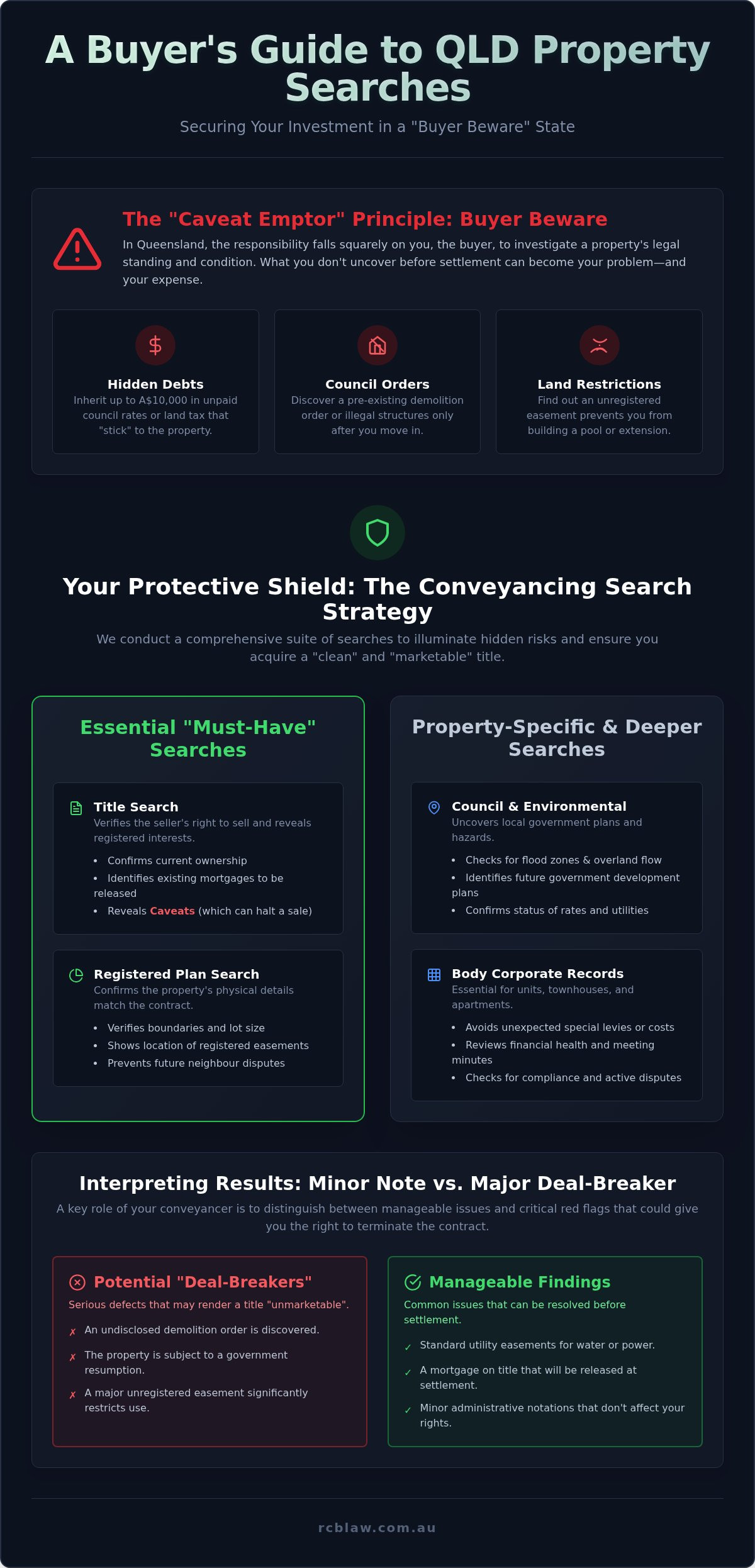
A title search from Titles Queensland is the first step in our due diligence process. This document provides a snapshot of the property's legal history, including current ownership and any registered interests. We carefully review the title for existing mortgages that must be released or leases that might affect your move-in date. We also cross-reference the Registered Plan to confirm the land's boundaries and lot size match what you've seen on-site. Discrepancies in boundary locations can lead to significant disputes with neighbours, so verifying the plan is a non-negotiable step in our workflow. One of the most critical elements we look for are caveats. These are legal notices that can effectively freeze a transaction, and identifying them early allows us to address the issue with the seller’s solicitors well before the settlement deadline.
Financial Searches: Rates and Land Tax
Financial searches are equally vital for your peace of mind and long-term budget. We conduct a land tax search to confirm the seller doesn't have outstanding liabilities that could transfer to you as the new owner. Similarly, a council rates search allows us to calculate the exact pro-rata adjustments for settlement. This ensures you only pay for the rates from the day you take ownership, rather than subsidising the seller's final weeks. The adjustment process involves a precise calculation of rates, water usage, and land tax, creating a fair financial transition for both parties. This transparency is key to a stress-free settlement. If you're feeling uncertain about these requirements, our residential conveyancing team can provide the steady guidance you need to navigate the financial complexities of your purchase.
Property-Specific and Optional Searches: When to Go Deeper
Every property has a unique story, and sometimes the standard checks aren't enough to tell the whole tale. While the title and rates searches we discussed earlier provide a solid foundation, certain properties require a more forensic approach. You might find yourself asking, what searches does a conveyancer do in qld when the property is a high-rise unit or a rural acreage? We tailor our search strategy to the specific risks of the land or building you're eyeing. This bespoke approach helps remove friction from the process, giving you the confidence that no hidden government plans or environmental restrictions will disrupt your future.
Buying a Unit? The Body Corporate Search
Purchasing a unit or townhouse introduces a layer of complexity known as strata title. In these cases, we perform a mandatory Body Corporate search to inspect the records of the owners' corporation. We look closely at the Community Management Statement (CMS) to understand the by-laws that will govern your daily life. It's also vital to check the financial health of the Sinking Fund. If the fund is low and a major roof repair is scheduled, you could be hit with a "special levy" shortly after moving in. We help you identify these financial red flags and building defects so you aren't blindsided by unexpected costs.
Environmental and Infrastructure Searches
The location of your property often dictates which optional searches are necessary to protect your investment. If a home is near a major transport corridor, we suggest a Main Roads or Department of Transport and Main Roads (TMR) search. This reveals if there are future resumption plans that could see a portion of your land taken for road widening. For those looking at older industrial or agricultural sites, checking the Contaminated Land Register is essential. This ensures the soil doesn't contain hazardous materials from previous land uses. We also investigate regional risks through the following checks:
- Flood and Vegetation: We assess council flood maps and check for Tree Preservation Orders or Vegetation Management Act restrictions that might prevent you from clearing land.
- Infrastructure: We verify the location of Energex equipment and sewer or water mains that could restrict where you build extensions or decks.
Our team acts as a steady guide during these deeper investigations. We interpret the technical data from these reports to ensure you understand exactly how they affect your property rights. By identifying these property-specific issues early, we provide the peace of mind that your "perfect" home doesn't come with a hidden "no-build" zone or a future highway in the front yard.
Interpreting Search Results: What Happens When a Red Flag Appears?
Finding a discrepancy in your property reports can be a jarring experience. After all, you've invested significant time and emotion into this purchase. When you ask, what searches does a conveyancer do in qld, you're essentially looking for a safety net. If a search returns a "red flag," it doesn't always mean the deal is over. Instead, it means we need to pause and assess the risk level. We help you distinguish between minor administrative fixes and true "deal breakers" that could impact your future property value or legal safety. Our role is to act as your steady guide, removing the friction from these high-pressure moments.
When the Search Shows an Error
One of the most common issues we uncover involves illegal structures or unapproved building work. This might be a deck, a patio, or a shed built without the necessary council certification. In Queensland's environment, illegal structures can lead to insurance denials or council demolition orders later on. We also look for unregistered encumbrances, such as private drainage rights that don't appear on the main title search. If we find a boundary dispute where a fence is significantly off-line, we'll communicate this to you clearly. We focus on explaining the technical risk in plain English so you can make an informed decision without feeling overwhelmed.
Many of these issues can be resolved through strategic negotiation before settlement. We might suggest asking the seller to obtain retrospective council approval or requesting a price reduction to cover the cost of rectifying the work. Title insurance is another valuable tool in these scenarios. It can provide a vital layer of protection against risks that searches might not fully resolve, such as unknown building non-compliance or historic survey errors. This ensures you can move forward with a sense of security.
Contract Termination and Rights
If a search reveals a major defect or an unmarketable title, you may have the right to terminate the contract. However, these rights are often tied to strict timeframes. Queensland law enforces the "time is of the essence" principle, which means even a small delay in raising an objection can result in a breach of contract. If you choose to cancel during the standard 5-day cooling-off period, the seller can legally deduct a penalty of 0.25% of the purchase price from your deposit. We ensure you understand these financial implications before any action is taken.
Understanding your legal position is much simpler with a comprehensive conveyancing guide. This resource helps clarify how search results interact with standard REIQ contract clauses and disclosure obligations. We're here to ensure you don't miss a critical deadline or legal requirement during this transition. If you've encountered a red flag and aren't sure of your next move, our expert residential conveyancing team can provide a calm, professional assessment of your rights and options.
Why Local Expertise Matters for Your QLD Property Search Strategy
While we've detailed the technical side of what searches does a conveyancer do in qld, the true value of those results often depends on regional context. A title search might look identical across the state, but a council report for a property on the Sunshine Coast carries very different implications than one for a Brisbane CBD apartment. With over 30 years of experience in Queensland property law, we've spent decades building relationships with local authorities. This history allows us to interpret search data with a level of nuance that a generic firm might miss. We act as your steady guide, ensuring that local risks are identified and managed long before you reach the settlement desk.
Regional Insights for the Sunshine Coast
Coastal living is a dream for many, but it brings unique legal and environmental considerations. When you're purchasing on the Sunshine Coast, we pay specific attention to coastal erosion zones and canal maintenance obligations. Sunshine Coast Council planning searches often feature complex environmental overlays that can strictly limit your ability to renovate or clear vegetation. Our local approach to Sunshine Coast residential law means we're already familiar with these regional nuances. We focus on removing the friction from these transfers, so you can focus on your transition to a coastal lifestyle with total confidence.
Navigating the Brisbane Property Market
The Brisbane market moves at a rapid pace and requires a deep understanding of Brisbane City Council (BCC) requirements. For those buying in the CBD or surrounding suburbs, infrastructure and transport development searches are vital. These checks reveal if upcoming tunnel projects, bridge expansions, or busway developments will impact your property's future value or structural integrity. We provide the clarity you need to understand these complex government plans. By combining this local knowledge with digital PEXA settlement integration, we ensure your property transfer is not only secure but also as fast and transparent as possible.
Our deep roots in both the Sunshine Coast and Brisbane regions mean we don't just "do searches"; we provide a comprehensive risk assessment tailored to your specific neighbourhood. Whether it's understanding local flood maps or navigating specific council rate nuances, our goal is to provide a sense of calm and security. We're here to ensure your investment is protected by the highest standards of professional conduct and local mastery.
Securing Your Property Future with Confidence
Your property journey shouldn't be defined by the anxiety of the unknown. By understanding the answer to what searches does a conveyancer do in qld, you've taken the first step toward protecting your financial future. We've explored how diligent title checks, environmental assessments, and local council investigations work together to reveal the true state of your investment. Whether you're buying a coastal retreat on the Sunshine Coast or a CBD apartment in Brisbane, having a steady guide to interpret these results is essential for a stress-free settlement.
At RCB Law, we combine over 30 years of Queensland property law expertise with a commitment to removing friction from your transfer. Our team of local specialists provides the clarity you need through fixed-price residential conveyancing, ensuring there are no surprises in your budget or your backyard. We're here to manage the legal complexities so you can focus on the excitement of your new home. Get a fixed-price conveyancing quote from RCB Law today and move forward with the peace of mind you deserve. Your next chapter starts with a clear title and a supportive partner by your side.
Frequently Asked Questions
Are conveyancing searches compulsory in Queensland?
While not legally mandatory under the standard REIQ contract, searches are a practical necessity for any prudent buyer. Most mortgage lenders will insist on specific checks before they approve your finance. Skipping these investigations means you accept the risk of hidden debts or legal defects. We always recommend a baseline set of searches to ensure you aren't inheriting the previous owner's liabilities or a property with unmarketable title.
How much do conveyancing searches typically cost in 2026?
In 2026, disbursements for property searches generally cost between A$200 and A$400 for a standard residential purchase. These fees are paid directly to government bodies and local councils. It's important to remember that this is separate from your solicitor's professional fees. The total cost can vary depending on the local council area and whether you choose optional checks like flood or contaminated land reports to secure your investment.
Can I perform my own property searches to save money?
You can technically order some reports yourself, but it's rarely a safe way to save money. Professional conveyancers have access to integrated digital platforms that ensure every search is accurate and current. We hold professional indemnity insurance and have the expertise to interpret complex legal jargon. If you miss a critical detail in a title search, you'll have no legal recourse, whereas our firm provides a steady guide through the entire discovery phase.
What is the most important search my conveyancer does?
The Title Search is widely considered the most critical check. This document from Titles Queensland confirms the seller actually owns the property and reveals any mortgages, caveats, or easements that could block your settlement. When people ask what searches does a conveyancer do in qld, this is always the first one we mention. It forms the foundation of your legal protection by ensuring the property you're paying for is legally available for transfer.
How long do search results take to come back?
Turnaround times depend on the type of search and the specific authority involved. Title searches are usually instant through our digital platforms. However, council rates and building searches can take anywhere from three to ten business days. We suggest starting the search process as soon as the contract is signed. This proactive approach ensures we have enough time to resolve any red flags before the settlement deadline arrives.
What happens if a search reveals a problem with the property?
If a search reveals a red flag, we'll immediately discuss your options to remove any friction from the transaction. Depending on the issue, you might choose to negotiate a price reduction, request the seller fix the problem, or terminate the contract if the defect is significant. Your rights depend on the specific clauses in your contract. We act as your advocate, ensuring you understand the legal implications before making a final decision on how to proceed.
Does title insurance replace the need for searches?
Title insurance is a valuable safety net, but it doesn't replace the need for comprehensive searches. Think of searches as your primary prevention tool and insurance as your backup for things that couldn't be found. Most title insurance policies actually require you to have performed standard searches to be valid. Using both provides the highest level of protection, giving you total peace of mind that your property investment is secure from every angle.
What search is required for a property in a body corporate?
When buying a unit or townhouse, a Body Corporate search is essential. This investigation reveals the financial health of the scheme, including the sinking fund balance and any upcoming special levies. It also includes the Community Management Statement, which outlines the by-laws you'll need to follow. Understanding what searches does a conveyancer do in qld for strata properties is vital to avoid inheriting debt from a poorly managed complex or building with known structural defects.


