
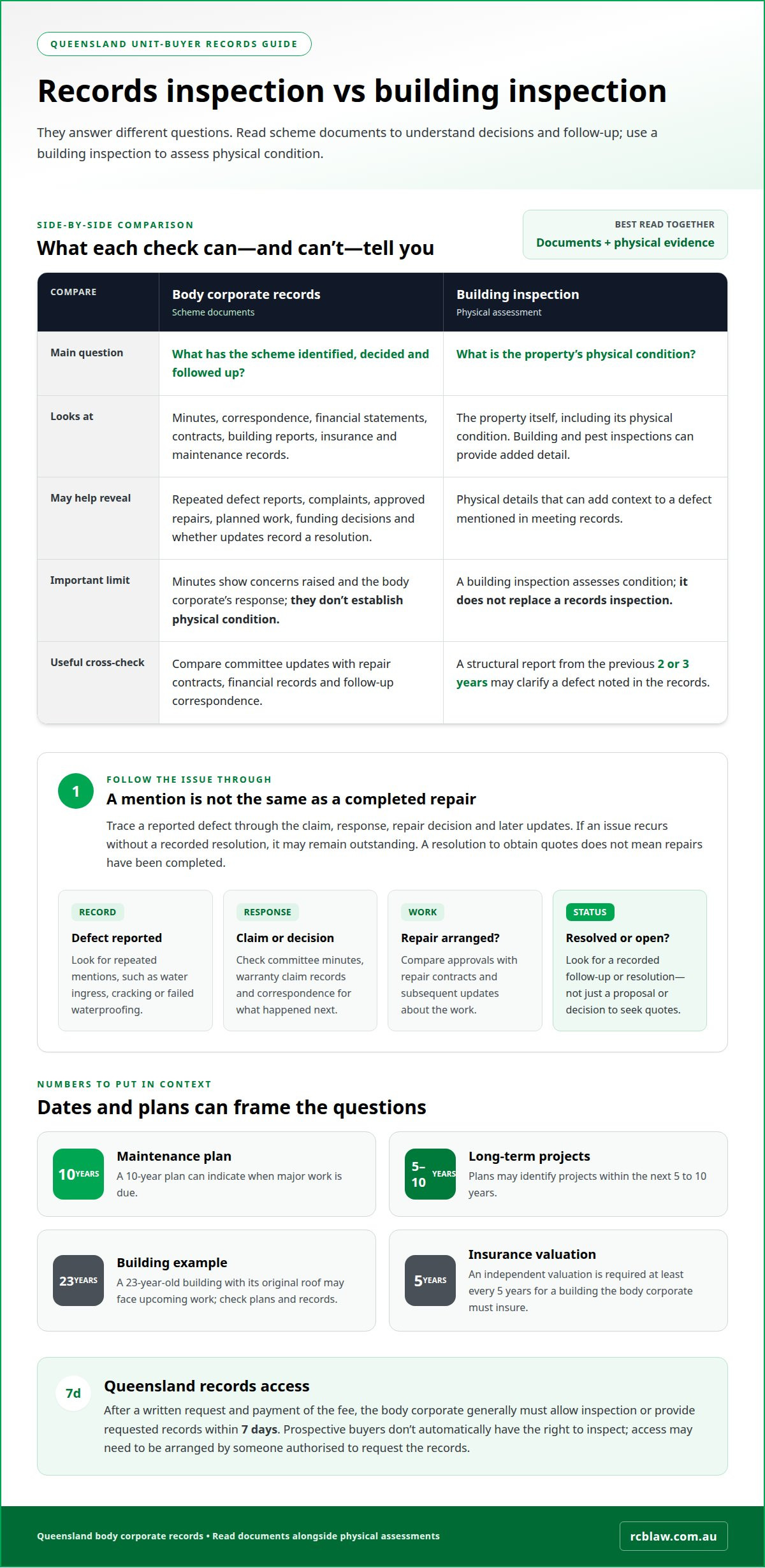
Meeting minutes can reveal more than a one-off problem: they may show whether building concerns were followed up or left unresolved. In Queensland, reviewing body corporate minutes before buying a unit is part of a records inspection that can also cover finances, building issues, insurance and planned work. After a written request and payment of the fee, the body corporate generally must allow inspection or provide requested records within 7 days.
It’s easy to focus on the unit itself, but decisions affecting the whole complex can shape future costs and day-to-day ownership. Prospective buyers may not have an automatic right to inspect body corporate records, so access may need to be arranged by someone authorised to request them. This article explains what a records inspection covers, how to read minutes alongside correspondence and financial documents, and what maintenance, insurance and claims history may reveal. These findings can help inform your decision before you commit.
Key Takeaways
- See how inspection records can reveal building defects, maintenance concerns and work that may affect future costs.
- Learn how minutes, correspondence and financial records together can show whether repairs are resolved or still pending.
- Understand what to look for in the scheme’s insurance cover and claims history before deciding whether the unit suits your needs.
- Find out how residential conveyancing can help you understand purchase documents and the legal implications of issues raised in the records.
What building, maintenance and insurance issues should you investigate?
Review financial statements, body corporate contracts and building reports alongside the minutes. Reviewing body corporate minutes before buying a unit can show whether common-property defects and planned work are being addressed.
Building Defects and Common-Property Condition
Common property includes shared parts of an apartment building, such as the roof, exterior and shared facilities. Body corporate records can reveal whether the committee has identified defects, approved repairs or received complaints about these areas.
Look for repeated mentions of water ingress, cracking or failed waterproofing. A 23-year-old building with its original roof, for example, may face upcoming work. Minutes show what concerns have been raised and how the body corporate responded, but they don’t establish the building’s physical condition.
Inspections and Outstanding Defects
A building inspection assesses the property’s physical condition, while a body corporate records inspection examines scheme documents. In Queensland, these are separate checks, so one does not replace the other.
Building and pest inspections can provide added detail, particularly for older or larger complexes. A structural report from the previous 2 or 3 years may clarify a defect mentioned in meeting records. Compare its findings with committee updates, repair contracts and follow-up correspondence. If an issue recurs without a recorded resolution, it may remain outstanding.
Warranty Claims and Planned Work
In Queensland, the body corporate typically manages warranty claims for common-property defects in new builds, while owners deal with defects inside their lots. Structural issues may be covered under the QBCC Home Warranty Scheme.
Trace a reported defect through any claim, response and repair updates. A 10-year maintenance plan can indicate when major work is due, while long-term plans may identify projects in the next 5 to 10 years. These records help distinguish routine upkeep from work that may require additional funding.
Insurance and Other Strata Records
Queensland body corporate insurance generally covers common property and, in most cases, buildings containing lots. The survey plan affects who is responsible, while owners remain responsible for contents. Review the policy alongside financial statements and building reports.
Check the valuation date, policy scope, exclusions and recorded claims. An independent valuation for a building the body corporate must insure is required at least every 5 years. A second benefit of reviewing body corporate minutes before buying a unit is seeing how planned work, insurance and scheme finances relate.
What is a Body Corporate Records Inspection?
A records inspection examines documents about a scheme’s finances, decisions and maintenance. In Queensland, it can reveal whether defects were resolved or could lead to extra costs for owners.
Financial Statements, Levies and Sinking Funds
Financial statements show the scheme’s income, spending and fund balances, while budgets help explain the levies owners pay. Queensland body corporate fees are usually billed quarterly to fund administrative and sinking fund budgets.
Compare levy changes over the past 3 to 5 years with meeting decisions and budget notes. An annual increase above 15% is a reason to seek an explanation in the records. A sinking fund’s balance matters alongside the building’s age and upcoming work; a balance alone doesn’t show whether funds are adequate.
Minutes can also reveal special levies, additional contributions for unexpected costs or projects that exceed the budget. They may identify proposed work and funding decisions, but each owner’s contribution depends on the scheme’s approved contribution arrangements.
Unresolved Repairs and Special Levies
Records of unresolved repairs link building issues to possible future spending. Read the meeting decision alongside related contracts, financial statements and follow-up correspondence to establish whether work was approved, completed or remains outstanding.
A proposed repair may lead to a special levy if its cost is unexpected or exceeds the approved budget. Minutes may record estimates, funding options or a decision to defer the work, helping you assess its status. The likely contribution for each owner depends on the project’s cost and the lot’s contribution schedule entitlement. A resolution to obtain quotes does not mean repairs have been completed.
State and Territory Disclosure Rules
Record-access procedures depend on the jurisdiction, so Queensland requirements should not be assumed to apply elsewhere in Australia. In Queensland, a written request and fee are required; the body corporate generally must allow inspection or provide requested records within 7 days.
Prospective purchasers in Queensland don’t automatically have the right to inspect records, so access must be arranged through someone authorised to request them. Most Queensland community titles schemes are governed by the Body Corporate and Community Management Act 1997, according to the Queensland Government. For a commercial unit purchase, commercial property legal advice can help clarify how records and contract terms relate to the transaction.
Insurance coverage and claims history
Insurance documents show what the body corporate protects, the insured amount and how claims have affected the scheme. In Queensland, the body corporate is responsible for insuring common property, body corporate assets and public risk, and, in most cases, buildings containing lots. The survey plan affects the precise responsibility, so read the policy alongside scheme records.
Start with the policy schedule and valuation. These documents can show the insured amount, what property is covered, policy exclusions and applicable excesses. An excess is the amount payable under the policy when a claim is made. Minutes and claim records can indicate whether an excess has been discussed or a claim remains unresolved. These documents provide context for due diligence but do not replace a physical building inspection.
In Queensland, an independent valuation of a building the body corporate must insure is required at least every 5 years. Compare the valuation date with the current policy period and any recorded changes to the building. A valuation helps inform the insured amount; it doesn’t by itself confirm that every relevant repair or loss is covered. Read policy terms and exclusions with the valuation and meeting records.
Review insurance claims from the past 5 years. Minutes, claim documents and financial statements may indicate the type of incident, whether repairs followed, and whether the matter affected scheme spending. Repeated references to water damage, for example, may warrant closer attention to related repair records and the claim outcome. Check that a claim described as completed has a corresponding repair update or final account.
Note the excess recorded for different claim types and any changes in premiums or cover. These details can affect the body corporate’s capital and future budgets, particularly if a claim is disputed or repairs remain outstanding. Trace the sequence: incident, claim, insurer response, excess and repair. This helps distinguish a settled event from an unresolved risk and clarify how insurance arrangements may affect owners.
Reviewing historical body corporate minutes and communications
When buying a unit in Australia, review committee and general meeting minutes alongside financial statements, contracts, notices and follow-up correspondence. These body corporate records can show whether decisions were acted on, defects remain unresolved or further costs may arise. Minutes alone may not tell the whole story: later emails or documents can explain what happened.
Compare each issue across the records. For example, a meeting may note a structural concern, while later correspondence records an inspection or repair decision. If there is no follow-up in the file, the issue’s status may be unclear. In Jane’s case, a concern in correspondence led the inspector to review four years of records. That broader timeline helped trace the issue beyond a single meeting entry.
Minutes also record approvals for proposed work and improvements. In Queensland, structural renovations or work affecting waterproofing, plumbing or exclusive-use areas usually require a general meeting and special resolution. Cosmetic changes, such as painting walls or replacing carpet, usually do not need approval. Minor changes to common property, including blinds or small landscaping, may require committee approval. These distinctions help explain why a proposal appears in the minutes and what decision followed.
Read the community management statement and by-laws alongside the meeting records. Queensland buyers are advised to review these documents, which are included in the contract of sale. By-laws may follow default rules under the BCCM Act or be specific to the building. Compare proposed improvements with the relevant approval and by-law records. The key is to trace each concern from its first mention through decisions, correspondence and recorded outcomes.
If historical records raise questions about approvals or contract terms, discuss the purchase contract and records as part of your unit-buying due diligence.
RCB Law
RCB Law can help you understand how body corporate records, contract terms and identified risks affect your unit purchase. If the minutes raise concerns about unresolved repairs, proposed levies or approvals, residential conveyancing advice can clarify what they mean for your transaction and what to address before proceeding.
Bring the relevant records and contract documents to the discussion so the issues can be considered in context. This can help you understand the legal steps involved and decide how to move forward with greater clarity.
Contact RCB Law to discuss your unit purchase and questions raised by the body corporate records.
Make your next step a considered one
Reviewing body corporate minutes before buying a unit can turn complex records into clearer questions for your purchase decision. Next, consider any concerns in the records alongside your contract, priorities and intended use of the property. This can help you identify which issues need attention before proceeding and which form part of your longer-term ownership plans.
RCB Law’s Residential Conveyancing and Commercial Property Law services support property transactions, while Business Law can assist where business considerations are relevant. If you’re weighing how body corporate findings affect your purchase, contact RCB Law to discuss your next steps. A clear understanding of the legal context can help you move forward with greater confidence.
Frequently Asked Questions
Are people paying their levies?
Financial records can show whether owners are in arrears and whether unpaid amounts are affecting the scheme. In Queensland, owners in arrears lose their right to vote at general meetings, and overdue levies may attract interest and debt-collection costs. Unpaid levies can affect a sale or refinancing, so check the scheme’s financial records for arrears and outstanding amounts. Look for arrears information alongside budget and cash-flow records.
Are there disputes?
Disputes may appear in meeting minutes, formal notices or correspondence between owners and the body corporate. Look for repeated references to the same issue, decisions that haven’t resolved it, or steps taken to manage the disagreement. In Queensland, the Office of the Commissioner for Body Corporate and Community Management can assist with dispute resolution. The records can show whether a matter remains active.
Are you buying a Body Corporate Lemon?
A records inspection cannot label a unit or building a “lemon”, but it can reveal warning signs to weigh before purchase. Repeated complaints, recurring damage, deferred work and unresolved decisions may point to ongoing concerns. Consider whether the same problem affects several areas or returns after repairs. Patterns across documents are more informative than a single mention in meeting minutes.
Have there been special levies?
Check meeting records and financial statements for special contributions raised during the previous 5 years. These additional levies can fund unexpected costs or work that exceeds the approved budget. Note what prompted each contribution, whether the project was completed and whether further costs were discussed. A history of special levies gives useful context for understanding how the scheme has handled unexpected spending.
How’s the committee?
Committee effectiveness is reflected in how clearly decisions are recorded and followed through. Look for meeting resolutions, assigned actions and later updates showing what happened. For example, a decision to obtain repair quotes should be followed by a recorded outcome or next step. Repeated discussion without progress may mean an issue remains unresolved, rather than showing that an effective response is underway.
Is there a maintenance schedule?
Look for a long-term maintenance plan and records showing how scheduled work progresses. A useful schedule identifies building components, anticipated maintenance and timing, while later minutes can show whether work was completed, deferred or changed. Compare planned tasks with repair updates and spending records. If an item keeps being postponed without a recorded explanation, that may affect your assessment of the building’s upkeep.


