
Your removalists are booked, but the seller is still in the property. If the seller hasn't moved out by settlement day qld, you may be unsure whether to proceed, postpone your move or challenge the seller’s failure to hand over possession.
It’s understandable to worry that either decision could affect your rights. There isn’t one remedy for every sale. The contract wording and the steps you take next matter. Before changing arrangements or taking action at the property, contact your conveyancer or a Queensland property lawyer and share the relevant contract details.
This article covers practical steps to take straight away, the difference between delaying settlement and completing while possession remains unresolved, and options that may be available under your contract. It also explains why an empty-property inspection matters and when to seek urgent legal advice. A conveyancing lawyer can review your circumstances and help you understand your options before you decide what to do.
Key Takeaways
- If the seller hasn't moved out by settlement day qld, check the signed contract to understand what possession is required and when.
- Review the possession, settlement, default and special-condition wording. Queensland contracts may differ.
- Delaying settlement and completing under a written agreement can affect access, timing, costs and contractual rights in different ways.
- Keep relevant messages, photographs and inspection notes, and write down a clear timeline of events.
- A Queensland conveyancing lawyer can assess the contract, available evidence and your priorities before you choose a next step.
Seller Hasn’t Moved Out by Settlement Day in QLD: What Does It Mean?
Finding the seller still at the property on settlement day can disrupt your moving plans and leave you unsure what happens next. Separate two issues: whether the financial and title-transfer process has completed, and whether you have received the access and possession your contract provides for. They may arise together, but one does not automatically answer the other.
If the seller hasn't moved out by settlement day qld, don’t assume every sale has the same possession terms or that one outcome applies automatically. Start with your signed contract, including any special conditions, and ask your conveyancer or solicitor to review it before you decide how to respond.
What does vacant possession mean in a Queensland property sale?
Vacant possession means handing over the property free of occupants and their belongings, so the buyer can take physical possession. The vacant possession concept is explained in general terms by Wikipedia, but that explanation isn’t a substitute for the terms of your Queensland contract.
Check whether your contract requires vacant possession at settlement or allows an existing tenancy to continue. If the sale is subject to a tenancy, the seller’s continued occupation needs to be considered against those terms. The circumstances matter, too. Someone living in the property is different from personal items left behind, and a general definition alone cannot determine the legal significance.
Is settlement delayed, or has the seller failed to hand over possession?
Settlement usually refers to the transaction’s completion, including the financial arrangements and transfer of title. Possession concerns who can physically occupy and access the property. A problem with one doesn’t necessarily mean the other has occurred. The contract and the events on the day determine how the issues relate and what options may be available.
For example, the seller may still be moving boxes out when settlement is due. The transaction might not complete as scheduled, or the parties might discuss a documented arrangement for completion and handover. Neither outcome is automatic. Consider the contract, any agreed tenancy and the precise circumstances before deciding whether to proceed or seek a change.
The distinction also matters for practical planning. You may need to coordinate access, moving arrangements or temporary accommodation, but don’t assume your rights based only on the seller’s presence. Ask your conveyancer or solicitor to identify the relevant possession and settlement clauses, including any special conditions, and explain the consequences of the available next steps.
What the Queensland Contract May Say About Vacant Possession
Your signed contract is the starting point if there’s a disagreement about who should be in the property at settlement. Don’t rely on a general summary or assume every Queensland sale uses identical wording. The contract form, completed terms, special conditions and any later agreed changes can all affect the expected handover.
The Queensland Government’s guidance says the seller should leave the home vacant and clean and give possession of the property to the buyer on settlement day. This provides useful context, but your own contract and circumstances still need to be considered. Contract forms and legal procedures can change, so confirm the current position with a Queensland conveyancer or solicitor.
Which contract clauses should the buyer check?
Ask your conveyancer to review the settlement date and the clauses dealing with possession, tenancy and default. Check any special conditions, written variations and later agreements as well. An informal discussion or message may not have the same effect as a properly documented change. Share all relevant communications with your adviser rather than deciding what they mean yourself.
Read the provisions together. For example, a special condition might set out an agreed handover arrangement that differs from the contract’s standard wording. A template summary may not reflect that change or explain its effect on your position.
Does an existing tenancy change the answer?
It can. If the property is being sold subject to a tenancy, the buyer may not be expecting the home to be empty on settlement day. Compare the contract with the tenancy documents and the agreed arrangements for when the seller or tenant will leave. Your options depend on those details, so don’t assume that someone remaining in the property automatically amounts to a breach.
If your concern is that the seller hasn't moved out by settlement day qld, gather the signed contract, any tenancy paperwork, variations and relevant messages for your conveyancer. Ask them to identify what the documents require and whether the actual handover matches those terms. A focused review can help you understand the next step without relying on assumptions.
RCB Law provides residential conveyancing in Queensland, including the Sunshine Coast and Brisbane, and has over 30 years of legal experience. For advice tailored to your contract, learn more about Queensland residential conveyancing.
Delay Settlement or Proceed by Agreement? Compare the Practical Options
If the seller hasn't moved out by settlement day qld, you may be weighing a delay against completing the transaction under an agreed arrangement. Neither option is automatically available or best in every situation. The contract, the reason the seller remains, your practical needs and the other party’s agreement all matter. Ask your conveyancer or solicitor to explain the consequences before you act.
| Option | What it may mean in practice | What to clarify |
|---|---|---|
| Pause or reschedule settlement | Completion may occur later, which could affect moving plans, finance timing and access to the property. | Whether the contract allows a change, what notice is needed, and whether any default consequences may arise. |
| Proceed under a written agreement | The parties may agree on completion while recording arrangements for the seller to leave or for the buyer to access the property. | The handover deadline, access, keys, occupation, responsibility for damage and how the agreement affects existing contract rights. |
What might happen if settlement is postponed?
The contract and circumstances determine whether settlement can be changed, how notice must be given and what consequences may follow. A delay could mean rearranging removalists, accommodation or finance arrangements, but responsibility for resulting costs depends on the contract and facts. Don’t assume an extension has been agreed because it was discussed informally. Have your conveyancer confirm any change and required notices in writing before relying on a new date.
Some contract forms may provide a specific way to extend settlement, but the terms aren’t identical across every sale. Your adviser should check the form and edition you signed, any special conditions and the timing requirements that apply to your situation.
Can the parties agree on a temporary arrangement?
The parties can discuss a written arrangement where legally appropriate, but its terms need to be clear and agreed. For example, if the seller needs more time to remove belongings, the document could specify when they must leave, whether anyone may access the property in the meantime, when keys will be handed over and who is responsible if damage occurs. Your lawyer can advise what to record and how the arrangement interacts with settlement.
A verbal promise may leave important details uncertain, especially if access or occupation continues after completion. Before agreeing to proceed, ask your conveyancer or solicitor to confirm the proposed terms and explain how each option could affect timing, evidence, costs and your contractual position. This can help you choose a practical path without treating either option as risk-free.
What to Do If the Seller Is Still There on Settlement Day
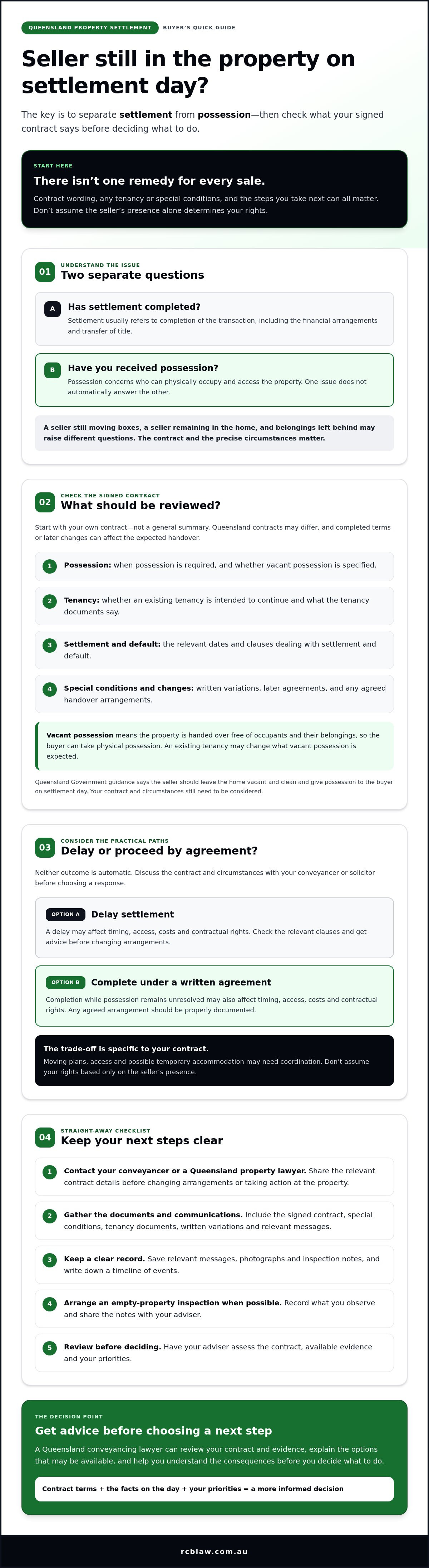
If the seller is still at the property and settlement is approaching, act promptly but calmly. Get advice before making decisions about settlement, access or possession. A clear record of what happened will also help your legal representative assess the situation.
Settlement-day checklist
- Contact your conveyancer or solicitor immediately. Explain who is still at the property, what you’ve observed and how soon settlement is due. They can review the contract and communicate with the seller’s representative.
- Record the facts. Note when the seller was expected to leave, when you attended or inspected, and what you saw. Keep a clear timeline, including any agreed handover arrangements.
- Preserve relevant evidence. Save messages and emails, inspection notes and photographs where appropriate. Keep the originals and record when each item was created.
- Don’t take matters into your own hands. Don’t change locks, remove belongings or force access without specific legal advice. These steps could create further issues while your rights and the agreed possession arrangements are being assessed.
Who should you contact first?
Contact the buyer’s conveyancer or solicitor before deciding whether to proceed with settlement or take possession. They can check the relevant contract terms and raise the issue with the seller’s legal representative. If settlement is imminent, don’t wait to see whether the seller leaves at the last minute. Early communication gives your adviser more time to consider the facts and explain possible next steps.
What if the seller refuses to leave?
A refusal calls for urgent, fact-specific legal advice. The right response may depend on the contract, any tenancy or written variation, whether settlement has completed and what the parties have agreed. Don’t assume that contacting police, seeking a particular notice or taking another step will resolve every situation. Follow your lawyer’s guidance and avoid confrontation where possible.
For broader context about the transaction, see What is Conveyancing? Your Complete Guide to Buying & Selling Property in QLD. If you need help understanding a Queensland property contract and the next steps, contact RCB Law about residential conveyancing.
How a Queensland Conveyancing Lawyer Can Help Resolve the Holdover
If the seller hasn't moved out by settlement day qld, you don’t have to interpret the contract’s effect alone. A Queensland conveyancing lawyer can review the documents and communications, explain what they may mean for your situation and help you understand the next steps. This won’t guarantee a particular result, but it can reduce uncertainty before you make a time-sensitive decision.
What can a conveyancer or property lawyer assess?
Your lawyer can examine the possession and settlement terms, default provisions, special conditions, and any written variations or later agreements. They can compare those terms with what has happened, including messages about the seller’s departure or arrangements for access.
With that information, your lawyer can help you raise the issue with the other side and explain possible options and their uncertainties. Advice should account for your priorities, such as when you need access, the timing of your move, the evidence available and the potential contractual consequences of each step. Whether a proposed solution is appropriate depends on the specific contract and circumstances.
When should a Queensland buyer seek legal advice?
Seek advice as soon as you learn the seller may not leave as expected. Time is especially important if settlement is due shortly, you can’t access the property or the seller disputes what was agreed. Give your lawyer the signed contract, any tenancy documents or written variations, and relevant communications so they can assess the full picture.
For wider background on the buying and selling process, read What is Conveyancing? Your Complete Guide to Buying & Selling Property in QLD. It can help explain the broader role of conveyancing, while advice on a holdover needs to be specific to your contract and events.
RCB Law provides residential conveyancing in Queensland, including the Sunshine Coast and Brisbane, and has over 30 years of legal experience. If you’re facing a settlement-day possession issue, contact RCB Law to discuss conveyancing guidance tailored to your circumstances. A lawyer can help you understand the available steps without promising a particular outcome, recovery of costs or a move-out date.
Take the Next Step With Clear Advice
If the seller hasn't moved out by settlement day qld, the signed contract and any agreed tenancy or written changes are central to understanding your options. Whether settlement should be delayed or proceed under an agreement depends on the facts. Get advice before changing arrangements or taking action at the property.
Contact your conveyancer or solicitor promptly, share the relevant documents and communications, and keep a clear record of what has happened. Tailored legal guidance can help you weigh timing, access and potential contractual consequences without assuming one solution fits every sale.
Residential conveyancing is RCB Law’s primary service. With more than 30 years of legal experience, the firm assists clients in Brisbane and the Sunshine Coast. Speak with RCB Law about your Queensland conveyancing matter and take your next step with greater confidence.
Frequently Asked Questions
Can the seller stay in the property after settlement in Queensland?
Yes, but the arrangement should be allowed by the contract or agreed in writing by the parties. A sale may involve an existing tenancy or a specific agreement allowing the seller to remain for a period after settlement. Check the signed contract and any later written changes, including when the seller must leave and what access is permitted. Ask your conveyancer or solicitor to review the terms before relying on an arrangement.
What should I do if the seller has not moved out on settlement day in QLD?
Contact your conveyancer or solicitor immediately, especially if settlement is due soon. Explain who remains at the property and what you’ve observed. Keep relevant messages, inspection notes and photographs where appropriate, and make a clear timeline. Don’t change locks, remove belongings or force access without legal advice. Your adviser can review the contract and discuss possible next steps based on the documents and circumstances.
Can I refuse to settle if the seller has not vacated?
You may be able to refuse to complete, but don’t make that decision without urgent advice on your specific contract. The possession terms, any tenancy or special conditions, and the circumstances can affect your position and the consequences of not settling. Contact your conveyancer or solicitor before settlement and ask them to explain whether the contract supports withholding completion and what notices or other steps may be required.
Can settlement go ahead if the seller has not moved out?
It may proceed if the parties agree on a suitable arrangement, but completion and physical possession are separate issues. Before proceeding, get advice and ensure any agreement is clearly documented. Clarify when the seller will leave, how and when you’ll get access and keys, and how the arrangement affects the contract. Don’t assume that completing the transfer automatically resolves an outstanding possession issue or preserves every potential right.
Can I change the locks if the seller is still in the house?
Don’t change the locks while the seller remains without getting specific legal advice. Your right to access and control the property may depend on whether settlement has completed, the contract terms and any agreed tenancy or temporary occupation arrangement. Changing locks or removing belongings could escalate the dispute or create further legal complications. Contact your conveyancer or solicitor and follow their guidance before taking action at the property.
What happens if the seller refuses to leave after settlement?
If the seller refuses to leave, seek prompt, fact-specific legal advice about your contractual and practical options. Give your lawyer the contract, any written arrangements and records of communications or access attempts. The appropriate steps depend on the circumstances, and there’s no single process that guarantees a particular outcome. Avoid confrontation or self-help measures, and have your legal representative advise on how to raise the issue with the other side.
Can I claim costs because the seller has not moved out by settlement?
You may be able to seek compensation for losses caused by a failure to provide possession, but recovery isn’t automatic. The contract, the circumstances, the evidence and the legal basis for the claim all matter. Keep records of relevant expenses, such as accommodation or removalist charges, and retain invoices and messages. Ask a Queensland conveyancing lawyer to assess whether those costs may be recoverable and what steps to take.


