
What happens if the buyer misses repayments, or the seller’s lender takes action against the property? The risks of vendor finance arrangements qld buyers and sellers face depend on more than the agreed instalments. Who holds title, how the seller’s finance is secured and what the contract says about default can all affect the outcome.
Vendor finance may help a transaction proceed when conventional lending isn’t suitable, but it can also leave both parties with obligations they haven’t fully considered. A missed payment can have different consequences for the buyer and seller, and the documents may not protect either party in the way they expect.
This article explains how vendor finance works in Queensland, outlines the distinct risks for buyers and sellers, and shows what to check before signing. You’ll learn which contract terms, title records, security arrangements and financial details deserve close review, and what to consider when comparing vendor finance with bank finance. Reviewing the documents together and getting advice tailored to the transaction can help you make a more informed decision before taking on those obligations.
Key Takeaways
- Vendor finance lets a buyer pay some or all of the purchase price later, but the documents and title arrangements determine how the deal works in practice.
- The risks of vendor finance arrangements qld buyers and sellers face are different. Buyers should assess repayment and title exposure, while sellers should consider default risk and whether their security is clearly documented.
- Compare vendor and bank finance by looking beyond the finance provider. Check repayment terms, security, default processes and each party’s negotiating position.
- Before signing, gather the documents, check the title, test affordability and review the contract and finance terms together.
- If payment obligations, title, security or default consequences are unclear, pause and seek Queensland legal advice tailored to the transaction.
Vendor Finance Arrangements in Queensland: How They Work
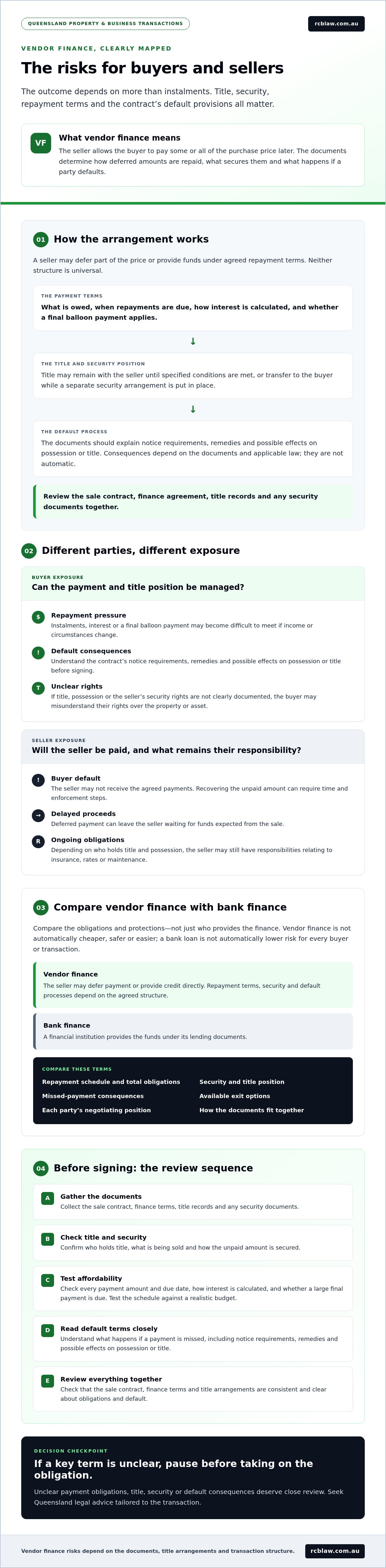
Vendor finance is an arrangement where a seller allows the buyer to pay some or all of the purchase price later. The seller may effectively provide credit, but the documents determine how that works in practice. For a neutral overview of the concept, see Seller financing.
Quotable definition: The sale contract sets out the terms of the sale. A finance agreement records how deferred amounts are repaid and, where applicable, secured. These documents may be separate or connected, so review them alongside the title arrangements. The structure may differ between a property purchase and a business sale, and the legal or credit rules that apply depend on the specific transaction.
What can a Queensland vendor finance arrangement look like?
A seller might agree to defer part of the price or lend the buyer funds under agreed repayment terms. Neither structure is universal. Depending on the contract, title may stay with the seller until specified conditions are met, or transfer to the buyer while a separate security arrangement is put in place. Don’t assume who owns the asset or what protects the unpaid amount. Check what the documents say.
For a property transaction, consider the sale contract, title records and any finance or security documents together. A business sale may involve different documents and assets, depending on whether it concerns business assets or another ownership structure. The paperwork should make clear what is being sold, what remains owing, how repayments work and what happens if a party defaults. The risks of vendor finance arrangements qld can turn on details that aren’t obvious from the sale price alone.
How does vendor finance differ from a bank loan?
With a bank loan, a financial institution provides the funds under its lending documents. With vendor finance, the seller may defer payment or provide credit directly, so the seller’s role and the buyer’s obligations depend on the agreed structure. The repayment schedule, security and default process aren’t automatically standardised just because the arrangement is called vendor finance.
Flexibility doesn’t necessarily make vendor finance cheaper, safer or easier. Compare the full repayment obligations, consequences of missed payments and available exit options with those of bank finance. A bank loan isn’t automatically lower risk for every buyer or transaction either. Before signing, have the sale contract, finance terms and title position reviewed together so you understand what each document requires and how the terms fit together.
What Are the Main Vendor Finance Risks for Buyers and Sellers?
Vendor finance can shift financial pressure between the parties, but it doesn’t remove it. The contract structure determines who bears each major risk, and when that risk arises. A missed repayment, for example, may affect a buyer’s right to remain in possession or a seller’s ability to recover the unpaid amount. The consequences depend on the documents and applicable law, and aren’t automatic.
Buyer exposure
- Repayment pressure: Instalments, interest or a final balloon payment may become difficult to meet if income or circumstances change.
- Default consequences: The contract may set out notice requirements, remedies and possible effects on possession or title. Buyers should understand these terms before signing.
- Unclear rights: If the title position, possession arrangements or seller’s security rights aren’t clearly documented, the buyer may misunderstand what they can do with the property or asset.
Seller exposure
- Buyer default: A seller may not receive the agreed payments, and recovering the unpaid amount can require time and enforcement steps.
- Delayed proceeds: Deferred payment can leave the seller waiting for funds they expected to receive from the sale.
- Ongoing obligations: Depending on who holds title and possession, the seller may still have responsibilities relating to insurance, rates or maintenance.
What risks should a buyer assess before agreeing?
Check every payment amount and due date, how interest is calculated, and whether a large final payment is due. Test the schedule against a realistic budget, including expected income and expenses, rather than relying only on current income. Then identify what counts as default, how notices must be given, what remedies may follow and whether you have a practical way to exit. Confirm in writing who holds title, when possession starts and what security rights apply.
What risks does a seller take by financing the buyer?
Assess whether the buyer appears able to meet the repayment schedule and whether you can manage without receiving the full sale proceeds at settlement. Check what security, if any, is documented and how it could be enforced under the transaction documents and applicable law. For business assets, ask whether registration on the Personal Property Securities Register (PPSR) is relevant to the proposed security. Registration and enforcement questions need to be assessed for the specific assets and arrangement.
Because title, security and payment risks can overlap, an independent review of the contract and related finance documents can help clarify each party’s position. For support with a Queensland property transaction, consider Queensland conveyancing and property law advice before committing.
Vendor Finance or Bank Finance: Which Risks Should You Compare?
Comparing vendor finance with a bank loan means looking beyond who provides the funds. The risks of vendor finance arrangements qld depend on the negotiated documents, the transaction and any laws that apply. A bank loan isn’t automatically lower risk for every borrower, just as seller finance doesn’t guarantee approval, lower costs or fewer protections.
Compare the options across the same key areas:
- Finance source and negotiating position: A bank assesses the application as a lender. With vendor finance, the seller may agree to defer payment or provide credit. Consider each party’s leverage and whether the buyer has other finance options.
- Repayments: Compare the full schedule, including interest, fees if applicable, payment dates and any final lump sum. Check whether payments remain manageable if circumstances change.
- Security and title: Establish what property or assets secure the debt, who holds title and whether any security is documented or registered where appropriate.
- Default and exit: Read what happens after a missed payment, what notices must be given, and whether the buyer can refinance, sell or otherwise exit the arrangement.
When might vendor finance appear attractive?
The parties may negotiate payment timing or other terms that suit their circumstances. A seller may consider financing where a buyer can’t secure conventional lending, while the buyer may value the chance to negotiate directly. These are possibilities, not guaranteed advantages. Flexible timing can still leave repayments unaffordable, and a seller may wait longer for proceeds. The arrangement needs clear written terms and a realistic assessment of the buyer’s capacity to pay.
A general overview of an owner financing arrangement can help explain the basic concept, but it reflects a US source and shouldn’t be treated as guidance on Queensland law or protections.
Which questions reveal whether the risks are manageable?
Put the proposed vendor finance schedule beside any available bank loan terms. Compare the total obligations and consequences of default, not just the initial payment or interest rate. Ask what happens if the buyer wants to refinance or sell, and whether a sale would require consent or repayment of the outstanding balance. If the buyer can’t keep paying, establish what steps each party may take under the documents.
Finally, don’t rely on the label “vendor finance” to determine your rights. Property and business transactions can involve different documents and legal considerations. A Queensland lawyer can review the sale contract, finance documents and title position together, and check which statutory protections or credit rules may apply to the specific arrangement.
How Can You Reduce Vendor Finance Risks Before Signing in QLD?
A clear review before signing can help both parties understand their obligations and identify gaps while there’s still time to address them. Work through the checks in order: gather the documents, check the title, test affordability, review the terms, then obtain independent advice. The risks of vendor finance arrangements qld can’t be assessed from the sale contract alone if related finance documents or title arrangements also shape the deal.
What should be checked in the property and documents?
Start by collecting the contract of sale and every document recording repayments, interest, security or other finance terms. Read them together so an obligation in one document doesn’t conflict with another. For general property due diligence, see this complete Queensland conveyancing guide.
- Check the title: Confirm who owns the property, identify recorded interests and have a lawyer assess how any existing or proposed security affects the transaction. Don’t assume a promise to provide security means it has been properly created or registered.
- Test affordability: Map each payment date, amount and interest term against the buyer’s expected income and expenses. Include any final lump sum and consider what happens if refinancing isn’t available when expected.
- Read the default terms: Confirm what counts as default, how notices must be given, what time is allowed to respond and what remedies or termination rights may follow. Check the stated process for repayment, refinancing or sale as well.
For Queensland property transactions, confirm the current legal framework and any disclosure requirements relevant to the property and contract. Don’t assume that rules applying to one transaction structure also apply to another.
What professional advice should each party obtain?
Buyers should obtain independent advice on affordability, title, possession and the consequences of default. Sellers should understand the buyer’s credit risk, what security the documents actually provide and what enforcement options may be available. For a business transaction, this Queensland commercial conveyancing guide provides further context.
Ask a Queensland lawyer to review the sale contract, title position and finance documents as a connected set. The lawyer can also help verify whether the National Credit Code or other credit rules apply to the particular arrangement. For a tailored review before committing, speak with a Queensland property lawyer.
Should You Proceed With a Vendor Finance Arrangement in Queensland?
There isn’t a single answer that suits every buyer or seller. A vendor finance arrangement may be worth considering if both parties understand the payment obligations, title position, security and consequences of default, and those terms are documented clearly. The risks of vendor finance arrangements qld depend on the transaction itself, so make a decision after reviewing the actual documents, not just a verbal explanation of the deal.
Proceed to the next review stage if the draft documents are complete, each party understands their obligations, the buyer has tested affordability and the seller has assessed repayment capacity. That doesn’t mean signing without advice. It means there’s a clear basis for asking a lawyer to confirm how the arrangement works.
When should you pause before signing?
Pause if either party is unsure who will hold title, what security exists or how it is documented. Do the same if payment dates, interest calculations, notices or default remedies are vague or inconsistent across the documents. A buyer who hasn’t tested affordability, or a seller who hasn’t considered the buyer’s ability to repay, should resolve those questions before committing.
Seek tailored advice where the parties disagree about their rights, the transaction involves complex security or ownership arrangements, or it’s uncertain which Queensland legal or credit rules apply. Both buyer and seller should obtain advice before signing, rather than waiting until a missed payment or dispute makes the position harder to address.
What are the next steps for a Queensland property transaction?
Gather the draft sale contract, every finance document and relevant title information. Write down unanswered questions, such as what happens if the buyer needs to refinance, wants to sell or can’t make a payment. Ask a Queensland lawyer to assess those documents against the transaction’s specific facts, including any applicable legal framework and credit obligations.
Independent review can help clarify the practical effect of the terms before either party commits. RCB Law provides residential and commercial conveyancing in Queensland and has more than 30 years of legal experience. If you’d like advice on a proposed property transaction, contact RCB Law for Queensland property legal advice.
Make Your Next Step With Clarity
Vendor finance can offer a way to structure a purchase, but the risks of vendor finance arrangements qld depend on the documents, title position and each party’s ability to meet the agreed terms. Buyers should understand repayment and default consequences; sellers should consider delayed proceeds, repayment risk and the security available. Both parties benefit from reviewing the sale contract and related finance documents before signing.
If payment dates, interest, title, security or exit terms remain unclear, pause and get advice tailored to your transaction. RCB Law provides residential and commercial conveyancing, including support with contract review and the legal transfer of property titles, as well as business and commercial law services relevant to business sales.
Speak with RCB Law about your Queensland property transaction to review the contract, title position and related finance documents before you commit.
Frequently Asked Questions
Is vendor finance legal in Queensland?
Yes, vendor finance is generally a lawful way to structure a property or business sale in Queensland, but the arrangement must comply with the laws that apply to its particular structure. For property transactions, the Property Law Act 2023 (Qld) commenced on 1 August 2025 and may be relevant, including where the arrangement is an instalment contract. Check the contract, title arrangements and any credit obligations for the specific transaction before signing.
What are the biggest risks of vendor finance for a buyer?
The main risks are taking on repayments you can’t sustain, unclear rights over title or possession, and consequences under the contract if you default. A final lump-sum payment may also be difficult to meet if refinancing doesn’t eventuate. The risks of vendor finance arrangements qld buyers face depend on the structure and documents, so check how interest is calculated, what security exists and what happens after a missed payment.
What happens if a buyer defaults on vendor finance?
The consequences depend on the contract, finance documents, transaction structure and applicable law. The documents should explain what counts as default, how notice is given, whether there’s time to remedy the breach and what steps the seller may take. Some Queensland arrangements may be instalment contracts under the Property Law Act 2023 (Qld), which can provide specific protections. Don’t assume the same process applies to every deal. Get legal advice promptly if a payment is missed.
Can a seller lose money with vendor finance?
Yes. If the buyer stops paying, the seller may face delayed proceeds, costs and uncertainty while pursuing contractual remedies. A seller’s ability to recover the unpaid amount can depend on the buyer’s financial position, the security documented and the relevant enforcement process. If the seller still has obligations connected with the property, such as a mortgage, those also need consideration. Review the buyer’s capacity to repay and the proposed security before agreeing to defer payment.
Is vendor finance safer than a bank loan?
Not necessarily. A bank loan and vendor finance allocate obligations and risks differently, and neither is automatically safer for every buyer or transaction. Compare the full repayment schedule, interest, security, default steps and exit options, including what happens if the buyer wants to refinance or sell. The contract terms and any applicable legal protections matter more than the finance label. Have the documents reviewed before deciding which option better suits your circumstances.
What should be included in a Queensland vendor finance agreement?
The documents should clearly identify the parties, sale price, amount deferred, interest and repayment dates, including any final lump sum. They should also address title and possession, any security, what constitutes default, notice and remedy steps, and what happens on refinancing, resale or termination. Review the sale contract and finance agreement together, alongside relevant title information. A Queensland lawyer can check whether the terms are clear and how they operate under current law.
Does the National Credit Code apply to vendor finance in Queensland?
It may apply, but not to every arrangement. For example, vendor finance for residential property intended for the buyer to live in may raise National Credit Code obligations, depending on the circumstances and whether the seller is considered to be in the business of providing credit. Licensing requirements may also need consideration. The answer depends on the transaction and parties, so obtain advice on the specific facts before relying on an assumption that the Code does or doesn’t apply.


