
What if a single missing form or a miscalculated notice period could stall your property settlement for months? Selling an investment property is already a high-pressure transition, but managing a tenancy alongside a sale adds a layer of legal friction that can feel overwhelming. You want a successful result, yet the fear of tenant disputes or accidental non-compliance with the selling a tenanted property qld laws often keeps Queensland landlords awake at night. It's a complex balancing act that requires a steady hand and a clear understanding of your obligations.
We understand that these professional transitions are significant life events, and we're here to help you move forward with confidence. This expert guide is designed to soothe those anxieties by providing a clear, structured breakdown of the current legal requirements as they stand in 2026. You'll gain the clarity needed to navigate the process without the usual stress or uncertainty, ensuring you remain a proactive and compliant communicator with your tenants.
We will walk you through the updated 48-hour entry notice requirements, the mandatory Form 10, and the specific disclosure rules regarding rent history. By following this roadmap, you can ensure your sale remains compliant and low-friction from the initial listing through to a successful settlement.
Key Takeaways
- Understand how selling a tenanted property qld laws dictate that a lease continues after a sale, with the buyer assuming all existing lessor responsibilities.
- Learn the specific notice periods and frequency limits for inspections to ensure you respect your tenant’s right to quiet enjoyment while marketing the home.
- Identify the critical differences between fixed-term and periodic agreements to determine if you can offer vacant possession to potential buyers at settlement.
- Discover the essential financial adjustments handled during conveyancing, including the seamless transfer of rental bonds and pro-rata rent payments.
- Gain peace of mind by engaging legal experts to review contracts and navigate the Residential Tenancies Authority (RTA) requirements before you list.
Understanding the Basics of Selling a Tenanted Property in QLD
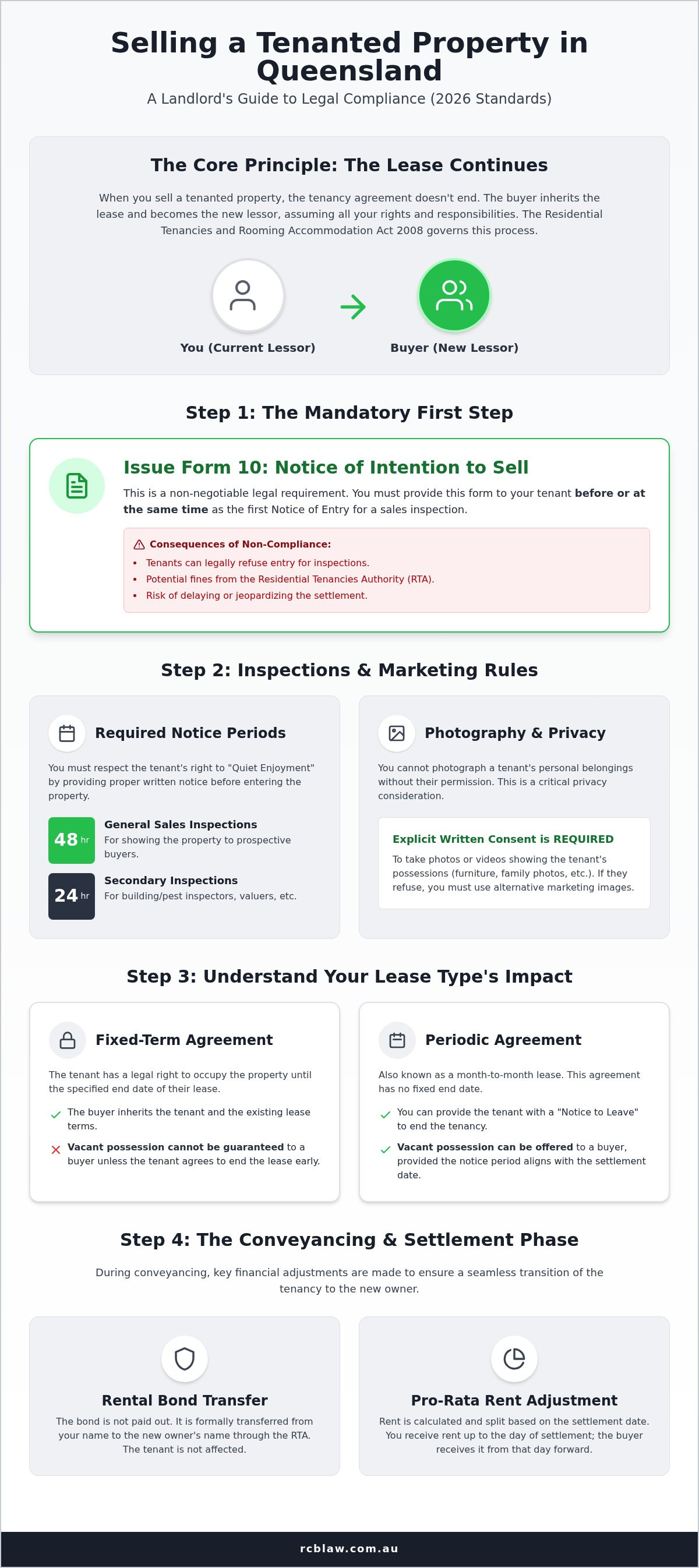
Selling a home with residents in place requires a careful approach to ensure you meet all legal obligations while maintaining a positive relationship with your tenants. Under the current selling a tenanted property qld laws, a tenancy agreement doesn't simply vanish because the title changes hands. Instead, the buyer essentially steps into your shoes as the lessor upon settlement, inheriting the existing lease terms and responsibilities. This process is primarily governed by the Residential Tenancies and Rooming Accommodation Act 2008, which provides the framework for balancing your right to sell with the tenant's right to occupy the home.
The "Notice of Lessor’s Intention to Sell" (Form 10) is the mandatory document that officially informs your tenant of your plan to sell the property and must be issued before any marketing or inspections begin.
The Legal Framework: Property Law vs. Tenancy Rights
When you sign an REIQ Contract of Sale, you're engaging with property law, but the presence of a tenant brings RTA regulations into play. These two legal areas must work in harmony to avoid settlement delays. You'll need to identify whether the lease is fixed-term or periodic before you list, as this choice dictates what you can promise a buyer. If you have a fixed-term agreement, the tenant has a right to stay until the end of that term, regardless of the sale. These Landlord-tenant law principles are designed to protect the "Quiet Enjoyment" of the property, meaning your sales activities can't unreasonably interfere with the tenant’s daily life. Respecting this right is not just a courtesy; it's a legal requirement that keeps the sale process moving smoothly.
The Role of the Form 10: Notice of Intention to Sell
Timing is everything when it comes to the Form 10. You must provide this notice to the tenant before or at the same time you first give a Notice of Entry for a potential buyer to view the premises. If you begin marketing the property or conducting inspections without issuing this form, you're in breach of the Act. This initial step is vital because it sets the tone for the entire transaction. Non-compliance isn't just a minor oversight; it can lead to significant friction that stalls your progress.
- Entry Denials: Tenants may legally refuse entry for inspections if the proper notice wasn't provided.
- Regulatory Penalties: The RTA can issue fines for failing to follow notification protocols.
- Settlement Risks: Disputes over notice periods can lead to delays in providing vacant possession, potentially putting your contract at risk.
By issuing the Form 10 correctly and early, you provide the clarity your tenants need, which often leads to better cooperation during the busy inspection period. This proactive communication is the first step in removing friction from your property sale.
Marketing and Inspections: Balancing Rights and Sales Goals
Marketing a home while it's occupied requires a delicate balance between your sales objectives and the tenant's right to privacy. The Residential Tenancies and Rooming Accommodation Act 2008 protects the "Quiet Enjoyment" of the property, which means inspections can't be so frequent that they disrupt the tenant’s daily life. While you're eager to secure a buyer, you must adhere to strict entry protocols to remain compliant with selling a tenanted property qld laws. Under the 2026 standards, you're required to provide a minimum of 48 hours' notice for most property entries, including initial buyer inspections. It's vital to remember that secondary inspections, such as those required by a valuer or building inspector, generally require a minimum of 24 hours' notice before entry can occur.
Photography and Privacy Laws in 2026
Creating an appealing listing often involves professional photography, but you don't have an automatic right to photograph a tenant’s personal belongings. You must obtain explicit written consent before taking internal photos that show the tenant’s possessions, such as furniture, family photos, or specialized equipment. If a tenant refuses, you might need to use older marketing images from before the tenancy or wait for a period when the home is staged differently. Managing these privacy concerns early prevents friction and ensures your digital marketing campaign doesn't inadvertently breach privacy statutes. Clear communication about the intended use of these images often helps in gaining the tenant's cooperation.
Navigating Open Houses and On-site Auctions
Open houses and on-site auctions are powerful sales tools, but they're not a standard right of entry under Queensland law. You cannot hold an open home or an auction on the premises without the tenant’s written permission. Even with consent, you're subject to the 2-in-7-day rule, which limits entries to a maximum of two times per seven-day period once a notice to leave has been issued. This cap applies to all entry reasons combined, excluding emergency repairs. If a tenant becomes uncooperative, it's often more effective to negotiate a compromise, such as a temporary rent reduction, rather than forcing entry and risking a legal dispute. Professional residential conveyancing advice can help you draft these agreements to protect your interests while keeping the sale on track. Maintaining a supportive approach during this high-pressure period usually leads to a smoother settlement and a better presentation of your property to prospective buyers.
Fixed-Term vs. Periodic Agreements: Impact on Settlement
Your choice of buyer often depends on whether you can offer an empty home at settlement. In Queensland, the type of lease currently in place is the single most important factor in determining your timeline. While you might be eager to move toward a successful settlement, the law prioritizes the tenant's right to remain in their home. Understanding how these agreements function under selling a tenanted property qld laws will help you avoid the common friction points that often delay or even derail a sale.
The "Vacant Possession" Trap for Fixed-Term Leases
Fixed-term agreements offer the highest level of protection to tenants. It's a common misconception that you can simply ask a tenant to leave because you've found a buyer. You cannot force a tenant out before their fixed term expires just because the property has been sold. If you sign an REIQ contract promising "vacant possession" while a fixed-term lease is still active, you're walking into a significant legal trap. You risk being in breach of contract if the tenant exercises their right to stay, which they're legally entitled to do until the final day of their agreement.
There's a supportive way to resolve this if you need the property empty for an owner-occupier buyer. You can negotiate a "Mutual Termination" using an RTA Form 13. This must be a voluntary agreement where the tenant agrees to leave early, often in exchange for an incentive like a rent waiver or moving cost assistance. Without this signed form, the lease simply transfers to the new owner at settlement.
Ending a Periodic Agreement for a Sale
Periodic agreements provide more flexibility for sellers, but they still require strict adherence to notice periods. If you've entered into a contract of sale and need the tenant to vacate, you must provide a minimum of two months' written notice. This is done by serving a "Notice to Leave" (Form 12) specifically citing the sale of the property as the reason. Timing is everything here. If your settlement is scheduled for 30 days but the notice period is 60 days, you won't be able to provide vacant possession on time.
- Serve the notice early: Don't wait for the contract to go unconditional if your settlement period is short.
- Verify the dates: Ensure the notice period ends on or before the settlement date to avoid contractual penalties.
- Proactive communication: Talk to your tenants before serving the form to reduce the risk of them refusing to leave, which could necessitate a QCAT hearing and stall your sale for months.
By aligning your contract dates with these mandatory notice periods, you create a smooth path to settlement that respects both your goals and the tenant's rights.
The Conveyancing Process for Tenanted Properties
Settlement day marks a major transition where the buyer officially inherits the tenant and all associated responsibilities. Under selling a tenanted property qld laws, your conveyancer must manage specific financial and legal handovers to ensure a friction-free experience for all parties involved. An Attornment Notice is a formal document issued at settlement that notifies the tenant of the change in ownership and provides clear instructions on where to pay future rent. This notice ensures there's no confusion for the tenant, allowing the new owner to start their relationship on a professional and secure footing.
Contract Conditions and Special Clauses
Your contract of sale must clearly state that the property is "Subject to Existing Tenancies" if the buyer is not taking vacant possession. This specific clause protects you by ensuring the buyer acknowledges the active lease and the tenant's right to occupy the home. You're also responsible for providing the buyer with a complete documentation pack, including the current General Tenancy Agreement (Form 18a) and the original entry condition report. During the digital settlement process in PEXA, your legal team will manage the "Form 5" (Change of Lessor), which is essential for updating the official records. Providing these documents early helps the buyer’s solicitors verify that all 2026 regulatory requirements have been met, removing potential hurdles before they cause delays.
Financial Adjustments at Settlement
The financial side of conveyancing for tenanted homes requires precise calculations to ensure both you and the buyer receive your fair share of income. Rent is adjusted pro-rata during the settlement process. This means if the tenant paid rent in advance to you, a credit is given to the buyer for the exact portion covering the period after the settlement date. These calculations are transparent and help prevent any post-sale disputes regarding rental income.
Handling unpaid rent requires a different approach that should be addressed before the final handover. If the tenant is in arrears at the time of settlement, the responsibility for collecting those funds generally remains with you as the seller unless a specific agreement is reached with the buyer. It's often cleaner to resolve these issues before settlement to avoid complex legal follow-ups once you no longer own the property.
The rental bond is another critical component that requires careful handling. It isn't paid out to you or the buyer at settlement; instead, it remains held by the RTA. Your conveyancer will facilitate the transfer of the bond through the RTA Web Services portal, ensuring the buyer is correctly listed as the new lessor. This step is vital for protecting the buyer’s future interests, as it ensures they have the legal standing to make claims against the bond for any future damages or unpaid rent. If you're feeling overwhelmed by these technical requirements, our team offers specialized residential conveyancing services to guide you through every adjustment and notification. We focus on removing the administrative burden so you can focus on your next chapter with complete peace of mind.
How RCB Law Simplifies Your Tenanted Property Sale
Selling a home with an active lease introduces layers of complexity that can lead to significant friction if not managed with care. At RCB Law, we bring over 30 years of Queensland property law experience to your side, acting as a steady guide through every legal requirement. We recognize that these transitions are often high-pressure events for both you and your tenants. Our approach is built on empathetic, professional guidance, helping you maintain a positive relationship with your residents while we focus on achieving a successful settlement. By deeply understanding the nuances of selling a tenanted property qld laws, we remove the administrative burden from your shoulders so you can move forward with confidence.
Our team specializes in the Brisbane and Sunshine Coast markets, where local variations in property types and tenant expectations can impact your sale. We handle the intricate RTA paperwork and the technical PEXA adjustments, ensuring that the transfer of title and the handover of the tenancy are perfectly synchronized. This allows you to focus on your next move with the security that your legal obligations are fully met without unnecessary stress.
Expert Contract Review and Drafting
A pre-signing contract review is essential when residents are involved. We don't just look at the price and the names; we scrutinize how the lease interacts with the proposed settlement date. Our solicitors draft special conditions that protect you from delays caused by tenant notice periods or access disputes. We ensure that every RTA notice aligns perfectly with your target date to prevent the vacant possession traps that can occur with fixed-term agreements. This proactive planning keeps your sale on a predictable path and ensures you don't find yourself in breach of contract on settlement day.
Local Knowledge, Professional Standards
Our deep roots in the Sunshine Coast and Brisbane property markets mean we understand the regional nuances that generic or distant organizations might miss. We offer a fixed-price conveyancing model for residential sales, providing investors with the financial certainty they need when managing their property portfolios. Our goal is to provide brief and direct assistance that clears the confusion often associated with complex professional processes. When you partner with us, you're gaining more than just a legal service; you're gaining a supportive partner who values your peace of mind as much as the final result.
Contact RCB Law for a stress-free tenanted property sale and let our experts handle the complexities of your next property transition.
Moving Forward with Your Property Sale
Success in a tenanted sale depends on aligning your timelines with specific RTA requirements. By respecting the 48-hour entry notice and understanding the nuances of fixed-term versus periodic agreements, you protect your contract from unnecessary friction. Mastery of the selling a tenanted property qld laws ensures that your settlement proceeds without the delays often caused by tenant disputes or missing documentation. This proactive approach transforms a high-pressure transition into a manageable, structured process.
You don't have to navigate these complexities alone. RCB Law provides the steady hand you need, backed by over 30 years of Queensland legal experience. As fixed-price conveyancing specialists and local experts in Brisbane and the Sunshine Coast, we focus on removing the emotional and administrative burden from your shoulders. We ensure every adjustment is precise and every notification is compliant, allowing you to focus on your future with complete confidence. Our team is dedicated to providing the clarity and support required for a seamless handover.
Secure your stress-free tenanted property sale with RCB Law today. Your next chapter is within reach, and we're here to ensure you arrive there smoothly and securely.
Frequently Asked Questions
Can I sell my house if the tenant has a fixed-term lease in QLD?
Yes, you can sell your property at any time, but the fixed-term lease remains legally binding on the new owner. Under selling a tenanted property qld laws, the buyer essentially steps into your shoes as the lessor upon settlement. They cannot force the tenant to leave before the lease expiry date unless the tenant voluntarily agrees to a mutual termination. It's a critical point for sellers to disclose to potential buyers who may want to move in immediately.
How much notice must I give a tenant for an inspection in Queensland?
You must provide a minimum of 48 hours' written notice before a prospective buyer can enter the property for an inspection. This requirement ensures tenants have adequate time to prepare and maintain their privacy. Once you've issued a notice to leave, you're limited to a maximum of two entries per seven-day period for all combined reasons. Providing clear communication and respecting these notice periods helps maintain a cooperative relationship throughout your entire sales campaign.
What happens to the rental bond when I sell my tenanted property?
The rental bond is not released to you or the buyer at settlement; it remains held securely by the Residential Tenancies Authority (RTA). Instead, your conveyancer will facilitate a transfer of the bond through the RTA Web Services portal using a Form 5. This process updates the official records to reflect the buyer as the new lessor. It's a seamless transition that ensures the security deposit continues to protect the property investment under the new ownership.
Can a tenant refuse an open house in QLD?
Yes, a tenant has the legal right to refuse an open house or an on-site auction. These specific marketing activities require the tenant's explicit written consent before they can proceed. If your tenant doesn't agree, you'll need to rely on private inspections instead. Negotiating a mutually beneficial arrangement, such as a temporary rent reduction, often encourages tenants to support your marketing goals while respecting their right to quiet enjoyment and privacy.
Is a tenant allowed to break their lease early if I decide to sell?
A tenant may be able to break their lease early if they weren't notified of your intention to sell before they signed the agreement. If you issue a Form 10 within the first two months of a lease and didn't disclose the upcoming sale previously, the tenant can provide a Notice of Intention to Leave. In other circumstances, any early exit must be negotiated through a mutual termination agreement to avoid financial penalties or disputes for either party.
Who pays the rent on settlement day in a tenanted property sale?
Rent is adjusted on a pro-rata basis at settlement to ensure a fair transition between the seller and the buyer. If the tenant has paid rent in advance to you, your conveyancer will calculate the portion belonging to the buyer from the settlement date onwards. This amount is then credited to the buyer in the final settlement figures. This ensures the new owner receives their rightful income from the moment they take legal ownership of the premises.
What is a Form 10 and when do I need to use it?
The Form 10, or Notice of Lessor's Intention to Sell Premises, is a mandatory document used to officially inform tenants that the property is being placed on the market. You must provide this form to the tenant before or at the same time you issue the first entry notice for a buyer inspection. Failing to use this form is a breach of selling a tenanted property qld laws and can lead to significant disputes that delay your sale.
Can I take photos of my tenanted property for real estate websites?
You can take photos of the property, but you must obtain written consent from the tenant before publishing images that show their personal belongings. This includes furniture, family photos, and other private items. If the tenant refuses, you're restricted to using photos that only show the permanent fixtures and fittings of the home. Most landlords find that a respectful conversation about privacy helps secure the necessary permissions for a high-quality digital marketing campaign.


