
The most expensive mistake you can make when selling your home isn't a low sale price; it's the unexpected erosion of your equity through hidden disbursements and avoidable settlement delays. You've worked hard to build value in your property, so it's only natural to feel a sense of unease when looking at a contract full of legal jargon. It's frustrating when the excitement of a "Sold" sign is dampened by the anxiety of mounting costs you didn't see coming.
Understanding the current landscape of conveyancing fees for selling a house qld is essential, especially with the 2026 disclosure requirements now in full effect. We've created this guide to pull back the curtain on every line item, from the mandatory Form 2 Seller Disclosure Statement to PEXA platform fees. Our goal is to ensure you can transition to your next chapter with total financial clarity and the legal security you deserve. We will break down professional fees, government searches, and the specific 2026 compliance standards that keep your title transfer error-free and your settlement on track.
Key Takeaways
- Gain total transparency on the difference between professional legal fees and third-party disbursements to ensure you aren't caught off guard at settlement.
- Navigate the new 2026 mandatory Seller Disclosure Statement (Form 2) requirements designed to protect your sale from being terminated by the buyer.
- Learn how to accurately compare quotes for conveyancing fees for selling a house qld by identifying hidden costs in standard estimates.
- Identify the essential third-party costs, such as PEXA platform fees and Title Searches, that must be included for a valid property transfer.
- Discover how a fixed-fee approach combined with local Sunshine Coast and Brisbane expertise provides the financial certainty you need for your next move.
Understanding Conveyancing Fees for Selling a House in QLD
Selling your home is more than a transaction; it's a significant life transition that often carries a heavy emotional and financial weight. You've likely spent years building equity and memories within those walls, so the final step of transferring ownership should feel like a victory, not a source of stress. Understanding the landscape of conveyancing fees for selling a house qld is the first step toward a stress-free settlement. Conveyancing is the essential legal process of transferring property title from a seller to a buyer, ensuring that the exchange of funds and the change of ownership happen simultaneously and securely.
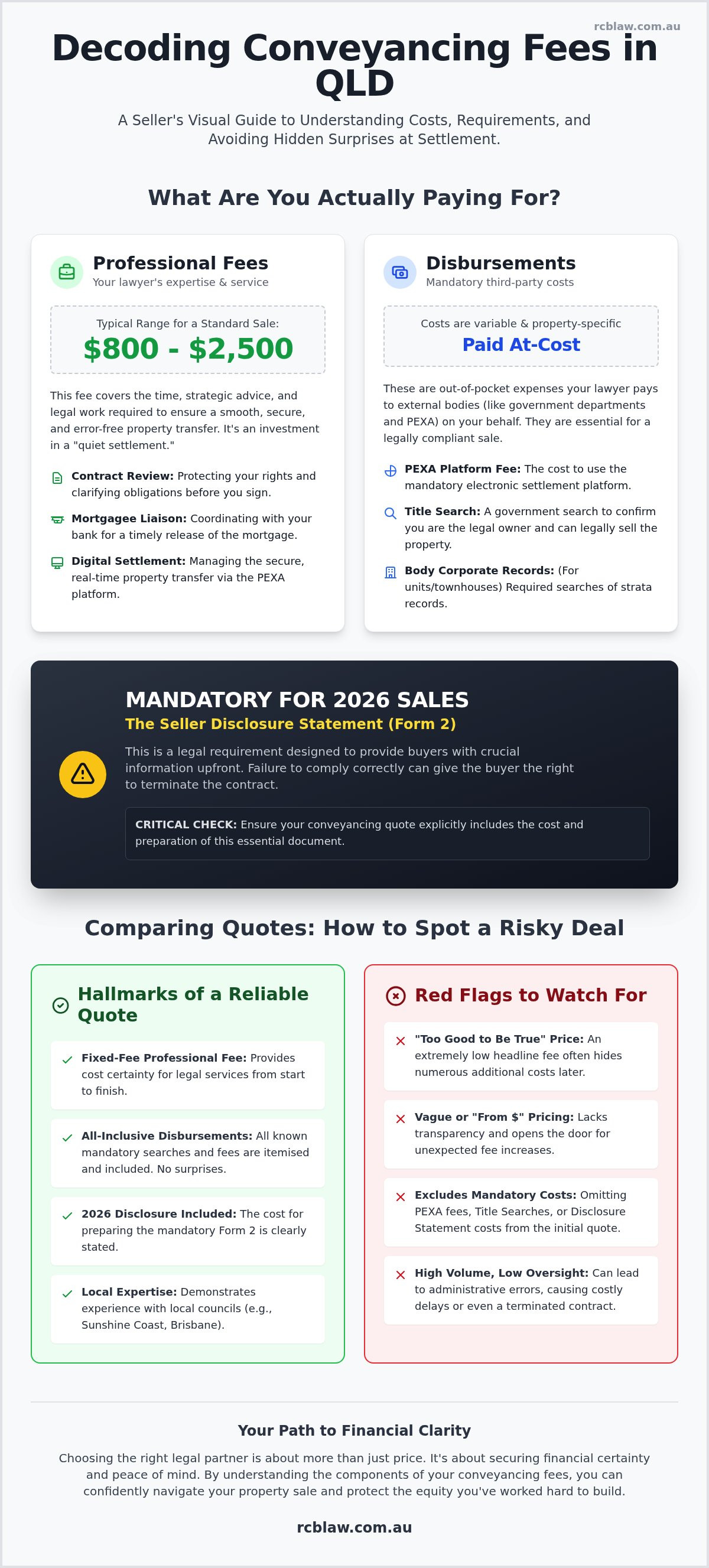
In Queensland, the law requires legal practitioners to oversee this process. This differs from some other states where non-lawyers might handle portions of the work. This requirement exists because QLD property contracts are complex and carry strict obligations. For a standard residential sale in 2026, you'll typically find professional fees ranging between $800 and $2,500. While this is an additional cost to consider, it's an investment in a "quiet settlement" where the legal heavy lifting is handled by experts, allowing you to focus on your next chapter with confidence.
What is Included in a Standard Seller Quote?
A comprehensive quote from a reputable firm provides more than just a signature on a page. It covers the logistical coordination that removes friction from your move. When you engage a specialist, your fee generally covers:
- Contract Review: A thorough check of the Contract of Sale to verify your rights are protected and your obligations are clearly defined before you're legally bound.
- Mortgagee Liaison: Proactive communication with your bank to ensure the release of the mortgage is ready exactly when the buyer's funds arrive.
- Digital Settlement: The technical arrangement and attendance of the electronic settlement via the PEXA platform, which has become the standard for secure, real-time property transfers.
Why a "Cheap" Quote Can Be a Financial Risk
It's tempting to hunt for the lowest possible price, but in the legal world, "cheap" can become expensive very quickly. When you compare conveyancing fees for selling a house qld, remember that the lowest number on the page often hides missing essentials. Some budget operators provide quotes that exclude mandatory 2026 disclosure documents or essential government searches. If an administrative error occurs due to high file volumes and low oversight, you could face penalty interest or even a terminated contract. Choosing an established firm like RCB Law means you're backed by 30+ years of local experience in the Sunshine Coast and Brisbane markets. We provide the security of professional indemnity insurance and a tailored approach that ensures your transition is defined by clarity rather than last-minute panic.
Professional Fees vs. Disbursements: What Are You Actually Paying For?
When you receive a quote for your sale, you'll likely see two distinct categories that make up the total conveyancing fees for selling a house qld. Understanding the difference between professional fees and disbursements is the best way to gain financial clarity before you sign a contract. It's common to feel a sense of confusion when looking at a breakdown of costs, but these items are the building blocks of a secure and legally binding transfer.
Professional fees represent the value of your lawyer’s time, expertise, and guidance. This isn't just for administrative work; it's for the strategic advice that prevents a deal from falling through. Your lawyer acts as your advocate, managing the high-pressure environment of settlement so you don't have to. On the other hand, disbursements are out-of-pocket expenses your lawyer pays to third parties on your behalf. These are necessary to satisfy the legal requirements of selling a home in Queensland, such as government searches and platform fees.
The complexity of your property directly impacts these costs. For example, selling a standalone house typically involves fewer searches than selling a unit or townhouse within a body corporate. Complex properties incur higher disbursements because additional certificates and strata records are required to ensure the buyer receives a clear title. A supportive firm will explain these nuances upfront, removing friction later in the process and ensuring there are no surprises on settlement day.
Common Disbursements for QLD Sellers
While every property is unique, most sellers in 2026 will encounter a standard set of disbursements. These ensure the transaction is transparent and compliant with state regulations. Typical items include:
- Title Searches: These verify that you are the registered owner and have the legal right to sell the property.
- PEXA Fees: This is the mandatory digital platform fee used for the secure, real-time transfer of funds and title documents.
- Land Tax Clearances: This search ensures there are no outstanding debts attached to the title that could become the buyer's responsibility.
The Role of Your Lawyer in Managing These Costs
A seasoned lawyer doesn't just order every search available. They use their experience to identify exactly which searches are strictly necessary for your specific property. This targeted approach prevents you from paying for redundant information. A structured breakdown in your initial quote is a hallmark of a professional firm. It allows you to see exactly where your money is going and why each item is essential for your legal security. For a broader overview of how these steps fit into the property transfer journey, you can explore our Ultimate Guide to Conveyancing in QLD. If you're feeling overwhelmed by the details, reaching out to conveyancing specialists for a clear explanation can provide the peace of mind you need to move forward.
The Seller Disclosure Mandate: New Costs and Requirements
The introduction of the mandatory Seller Disclosure Statement, known as Form 2, represents one of the most significant changes to property law in decades. For sellers, this isn't just another piece of paperwork; it's a fundamental shift in how you must present your property to the market. When calculating conveyancing fees for selling a house qld, it's vital to account for the costs associated with gathering the certificates and searches required for this statement. Form 2 is a mandatory legal shield for sellers in the 2026 QLD property market. Its primary purpose is to provide transparency to the buyer, but its real value lies in the protection it offers you by closing the door on a buyer’s ability to terminate the contract later based on undisclosed encumbrances.
The seller disclosure scheme ensures that all parties have a clear understanding of the property's legal status before the contract is signed. While this adds an upfront cost to your selling journey, it's an essential investment in settlement security. By providing this information early, you remove the friction that often leads to last minute negotiations or legal disputes, allowing for a smoother transition to your next chapter.
Why Disclosure Matters for Your Settlement Security
Incomplete or inaccurate disclosure is a leading cause of contract failure in the current market. If a buyer discovers a registered interest or a local council restriction that wasn't included in your Form 2, they may have the legal right to walk away from the sale entirely. This often happens just days before settlement, leaving you in a precarious financial position. At RCB Law, we ensure your disclosure statement is legally robust by leveraging our 30 plus years of experience in the Sunshine Coast and Brisbane regions. We understand the specific local requirements, such as Brisbane City Council flood maps or Sunshine Coast regional planning searches, that must be accurate to ensure your settlement stays on track.
Additional Costs for Units and Townhouses
If you're selling a unit or townhouse, your conveyancing fees for selling a house qld will reflect the additional complexity of strata titles. Unlike a standard house, a strata sale requires Body Corporate Information Certificates. These certificates are essential because they disclose the financial health of the scheme, insurance details, and specific by-laws that govern the property. Because these documents must be sourced from the body corporate manager, they incur third party fees that are higher than standard government searches. If your property is part of a mixed-use development or carries a commercial title, you may find our Commercial Conveyancing Guide helpful for understanding those specific requirements. Our team handles the coordination of these certificates, removing the administrative burden from your shoulders so you can focus on your move with confidence.
Comparing Quotes: How to Spot Hidden Fees and Red Flags
Finding the right legal partner starts with looking beyond the bottom line of a quote. When you compare conveyancing fees for selling a house qld, it's easy to be swayed by the lowest number, but a low headline price can often be a signal of hidden costs or automated service. To protect your equity and your peace of mind, you need a structured approach to evaluate your options. A transparent quote is the foundation of a trust based relationship, ensuring you aren't met with financial surprises on the day you should be celebrating your sale.
To ensure you're getting a fair and comprehensive service, follow these five essential steps:
- Step 1: Check if the quote is a "Fixed Fee" or just an estimate. An estimate can grow as the file progresses, while a fixed fee provides the certainty you need for your budget.
- Step 2: Ask specifically if GST and standard disbursements, such as Title Searches and PEXA fees, are included in the total.
- Step 3: Look for "Local Specialist" markers. A firm should demonstrate knowledge of specific council requirements, whether you're selling in Redland Bay or on the Sunshine Coast.
- Step 4: Evaluate the communication style. Did you receive a direct contact for a lawyer, or were you directed to a generic "info@" email address?
- Step 5: Verify the firm’s history. RCB Law’s 30 year history in Queensland property law provides a level of mastery that "conveyancing factories" simply cannot match.
The "Plus GST" and "Plus Searches" Trap
A $600 professional fee sounds appealing on paper. However, if that quote excludes GST and essential disbursements, your final bill could easily double by the time you reach settlement. Many budget operators use this tactic to appear more competitive than they truly are. It is vital to ask for an "All-In" estimate for your specific suburb. Transparency is a clear marker of a professional, empathetic firm that values your transition. If you want to avoid these common pitfalls, you can request a transparent quote from our team today.
Online-Only vs. Local Specialist Firms
Automated "conveyancing factories" often struggle when a negotiation becomes complex or a title issue arises. These firms rely on high volumes and may miss the nuances of Queensland Land Tax or specific local regulations. Having a lawyer who understands these details is vital for a smooth, error free transfer. For example, understanding how land tax liabilities are adjusted at settlement requires a deep level of expertise. You can explore these complexities further in our Land Tax in Queensland Guide. Choosing a local specialist ensures you have a supportive partner who can handle the pressure of the 2026 market with ease.
Navigating Your Property Sale with RCB Law’s Expertise
Selling a home is a high-pressure event that marks the end of one chapter and the start of another. It's a time of significant transition, and the last thing you need is a legal process that feels like an additional hurdle. We position ourselves as your steady guide through this complexity. Our team understands that behind every contract is a person making a major life change. By choosing specialists who prioritize your calm, you ensure that the technical details of conveyancing fees for selling a house qld are managed with precision and empathy.
The RCB Law Difference: 30 Years of Local Knowledge
Our deep roots in the Sunshine Coast and Brisbane communities aren't just a matter of history; they're a practical advantage for your settlement. With 30+ years of experience in Queensland property law, we've seen every market shift and regulatory change. This long-term presence means we handle the friction points of 2026 property transfers before they become problems for you. We're committed to clear communication that avoids dense legal jargon. We want you to feel informed and in control at every stage. Often, a major property sale is the perfect time to review other life documents. We offer complementary services to help you update your Will, ensuring your new financial position is protected for the future.
Ready to Sell? Your Next Steps
Engaging our team is a straightforward process designed to remove uncertainty. Whether you're just about to list your property or you already have a signed contract, we're ready to step in. Our fixed-fee structure is built on transparency to provide the financial certainty you deserve. To provide you with an accurate quote, we'll need basic details about your property, such as whether it's a standard house or a strata-titled unit. This allows us to account for the specific searches and disclosure requirements discussed earlier in this guide. Once we provide your quote, that price stays fixed. We believe you deserve clarity during such a significant move. Reach out to us for a tailored quote that respects your unique situation. We handle the legal complexities so you can focus on your move.
Secure Your Settlement with Financial Clarity
Selling your property is a significant milestone that deserves a smooth, friction-free ending. By understanding the breakdown of professional fees and mandatory 2026 disclosures, you've taken the first step toward protecting your equity. Transparency in your initial quote remains your best defense against hidden disbursements and avoidable settlement delays. Navigating the landscape of conveyancing fees for selling a house qld doesn't have to be a source of anxiety when you have a seasoned partner by your side.
At RCB Law, we bring 30 plus years of Queensland property law expertise to every transaction. We provide fixed-fee residential conveyancing backed by empathetic, local support across Brisbane and the Sunshine Coast. Our team is here to manage the legal complexities so you can focus on your next move with total confidence. Contact the Conveyancing Specialists at RCB Law for a Transparent Quote today to ensure your transition is defined by security and peace of mind.
Frequently Asked Questions
Do I pay conveyancing fees at settlement or upfront in QLD?
Professional fees are typically paid at settlement, as they are deducted directly from the sale proceeds by your lawyer. This arrangement removes the immediate financial burden during your transition. However, some firms may require a small upfront payment to cover initial disbursements, such as the Title Search or Form 2 preparation costs. We always provide a clear breakdown of these timelines so you can manage your cash flow with total confidence.
Can I do my own conveyancing when selling a house in Queensland?
While you can technically attempt your own conveyancing, it's a high-risk strategy that most Queensland sellers avoid. The complexity of the 2026 disclosure requirements and the mandatory use of the PEXA platform make professional oversight essential. Banks often refuse to settle without a registered legal practitioner involved. Engaging a specialist ensures your title transfer is error-free and protects you from the severe legal consequences of incomplete disclosure or missed deadlines.
How much are PEXA fees for sellers in 2026?
For 2026, the PEXA settlement fee for sellers typically ranges between $80 and $150. Based on current industry data, a specific fee of $146.30 is common for standard residential transfers. This cost is a third-party disbursement paid to the electronic platform for the secure, real-time exchange of funds and documents. It's a non-negotiable fee that replaces the old physical settlement costs, providing a much higher level of security for your sale proceeds.
Are conveyancing fees tax-deductible when selling an investment property?
Conveyancing fees for selling a house qld are generally not deductible against your yearly income, but they are vital for your Capital Gains Tax (CGT) calculation. When selling an investment property, these legal costs and disbursements are usually added to your cost base. This reduces the capital gain you report to the ATO, potentially lowering your tax liability. We recommend keeping all settlement statements and invoices for your accountant to ensure your financial transition is handled correctly.
What happens to the legal fees if my property sale falls through?
If your property sale falls through, you remain responsible for the legal work completed up to that point. This typically includes a pro-rata portion of the professional fee and any out-of-pocket disbursements already paid to third parties, such as government search fees. A supportive firm will communicate these costs clearly and help you prepare for the next potential buyer. This transparency ensures that a failed contract doesn't lead to unexpected financial friction or additional stress.
Is there a difference in fees between selling a house and a unit in QLD?
There is a noticeable difference in disbursements between selling a standalone house and a unit or townhouse. Units require additional Body Corporate Information Certificates to satisfy 2026 disclosure mandates. These certificates verify the scheme's insurance, financial health, and by-laws, which costs more to obtain than standard council searches. While the professional fee for the lawyer's time may remain similar, the total cost for a unit sale is usually higher due to these mandatory strata-title documents.
Do I need a lawyer before I sign a contract with a real estate agent?
It's highly beneficial to engage a lawyer before you sign a contract with a real estate agent or a buyer. A pre-contract review ensures that your mandatory Form 2 Seller Disclosure Statement is legally robust and accurate from day one. This proactive step prevents the buyer from finding a reason to terminate the contract later. Having an expert review the terms early provides a sense of security and ensures the agent's commission structure is clearly understood.
How long does the conveyancing process usually take for a seller?
The conveyancing process for a seller usually takes between 30 and 60 days, depending on the terms negotiated in the contract. This timeline begins the moment the contract is signed and ends on the settlement date. During this period, your lawyer manages the discharge of your mortgage, coordinates with the buyer's legal team, and ensures all 2026 disclosure requirements are met. We focus on proactive communication throughout these weeks to ensure your move stays on schedule.


