
What happens if the bank is not ready for settlement brisbane on the day your property is due to settle? A lender delay can put pressure on a transaction, but it does not automatically mean you will lose the property. What happens next depends on the contract, the reason for the delay and how promptly the parties respond.
Start by contacting your lender and conveyancer. Ask what is still outstanding, whether the bank can provide funds and complete its settlement tasks, and when it expects to be ready. Do not assume the settlement date has changed: any change needs to be handled in line with the contract and the circumstances.
This article explains possible consequences of a bank delay, practical steps to take straight away and how conveyancing guidance can help you communicate with the lender and the other party. RCB Law has more than 30 years of experience in Queensland residential conveyancing and helps Brisbane clients understand the settlement process and respond when plans are disrupted.
Key Takeaways
- A bank delay does not determine the legal outcome by itself. The signed contract and circumstances matter.
- Identify whether the delay involves the lender, a buyer requirement, funds or settlement coordination.
- Find out what happens if the bank is not ready for settlement brisbane, and why the practical concerns may differ for buyers and sellers.
- Contact your lender and conveyancer promptly. Clarify what is outstanding, who is responsible and when the bank expects to be ready.
- A conveyancing lawyer can review the contract and help coordinate communication about next steps.
Bank Not Ready for Brisbane Settlement? Know the Risks
A lender delay is stressful, but it does not establish the legal outcome of a property transaction on its own. Settlement is the contractual completion process: the buyer’s funds are paid, the property interest is transferred and the parties complete their obligations under the contract. If the bank is not ready, first establish what remains outstanding and tell your conveyancer promptly.
The settlement date in the signed contract continues to matter unless the parties formally change the arrangements. A delay does not automatically move the date, and an informal conversation is not confirmation of an extension. The Australian property market offers general context, but the requirements for your transaction depend on your contract and circumstances.
Before assuming the date or your obligations have changed, confirm the position under the contract and make sure any proposed change is properly agreed.
What does it mean when a bank is not ready for settlement?
Loan approval and settlement readiness are different stages. A lender may have approved a loan but still need to complete the work required to provide funds on settlement day. Possible hold-ups include funding arrangements, incomplete or corrected documents, or outstanding tasks in the electronic settlement workspace. These are examples, not a diagnosis of your lender’s situation.
The bank may also be waiting for information or documents from the buyer. Ask the lender to identify the exact outstanding item, who needs to deal with it and what action is required. That is more useful than relying on a general update that the loan is approved or still being processed.
Why the Brisbane settlement date matters
Your signed contract sets the settlement date and each party’s obligations. Queensland contract terms can differ, so the same bank delay may not have the same result in every transaction. The parties may need to consider how to handle a missed date, but do not assume an extension or another arrangement applies unless it has been properly agreed or exercised under the relevant terms.
Understanding the broader process can help put the date in context. RCB Law’s Queensland conveyancing guide explains the steps from contract through settlement. If you are asking what happens if the bank is not ready for settlement brisbane, have your conveyancer review the signed contract and the latest lender updates. This gives you a sound basis for discussing next steps with the lender and the other party.
Why a Bank May Miss a Queensland Property Settlement Date
A delay can have several causes. The lender may still be completing its own processing, or it may be waiting for something from the buyer. Conveyancers also need to coordinate settlement arrangements with the lender and the other representatives involved, often through PEXA, a digital platform used to facilitate property settlements.
Loan approval does not mean every step required to complete settlement is ready. If you are trying to understand what happens if the bank is not ready for settlement brisbane, ask for the current status and outstanding actions rather than relying on an earlier approval or a general update.
Lender and loan-funding issues that can affect readiness
Possible lender-side hold-ups include loan documents still being prepared or signed, funding instructions that are not finalised, or other processing steps that remain incomplete. An approved loan may still need further work before the bank can provide funds for the scheduled settlement. These are possibilities, not assumptions about your lender.
Ask the lender for a clear update and a written list of what remains outstanding. Useful questions include:
- Is the loan ready for funds to be provided at settlement?
- Are any loan documents, checks or funding instructions still pending?
- Who is responsible for each outstanding task?
- What is the realistic timeframe, and when will the lender provide another update?
Specific answers help your conveyancer identify whether the next action sits with the bank, the buyer or another representative, and what information needs to be passed on to the other party.
Documents, funds, and settlement coordination
Some delays relate to buyer-side requirements rather than the bank’s processing. The lender may still need a document or information from the buyer, or the buyer may need to arrange funds required for completion. Ask exactly what is missing before assuming responsibility or assigning fault.
Settlement also depends on coordination between the conveyancers and lenders. PEXA gives participating representatives a digital environment to manage settlement-related tasks. If something needed for completion is not ready, the relevant representatives can identify the incomplete item and communicate about next steps. The platform does not replace checking the documents, funding arrangements and contract obligations.
Keep messages and documents together. Send your conveyancer the lender’s exact update, including any stated deadline or outstanding requirement. If the bank is waiting for something, ask who needs to provide it and whether it has been received. This helps the people coordinating the transaction work from the same information.
If you need help understanding how the lender’s update fits with your contract and settlement arrangements, Brisbane conveyancing support can help clarify the legal process and communication needed.
What a Bank Delay Could Mean for Brisbane Buyers and Sellers
A delayed settlement can create different practical pressures for buyers and sellers. It may disrupt plans before the parties know how the contract applies. The comparison below highlights issues to raise with your conveyancer, rather than predicting what either party is entitled to do.
Buyer
Find out exactly what the lender still needs, who is handling it and when the bank realistically expects to be ready. Tell your conveyancer promptly and pass on updates about funds or documents.
Seller
Ask your conveyancer to request updates through the buyer’s conveyancing representative. Explain any time-sensitive moving arrangements or linked purchase, and get advice on how the contract applies before deciding how to respond.
A delay may also create extra costs, such as accommodation, storage or moving expenses. Whether these costs can be claimed, or other contract consequences may apply, depends on the signed terms and the specific circumstances. Do not assume an extension, penalty or termination right applies automatically. A lender delay alone does not establish what either party can do.
If you are the buyer and your lender is delayed
Ask the bank to identify the specific hold-up, then give your conveyancer its latest status and estimated readiness. If the timing is uncertain, say so instead of promising a funding time the lender has not confirmed. Your conveyancer can assess the contract and circumstances before advising on contractual implications or communicating with the other party.
Keep a record of lender updates and any documents or requests you receive. This can help distinguish a bank processing issue from something still required from you. Loan approval alone cannot answer what happens if the bank is not ready for settlement brisbane; the contract and the facts of the delay need to be considered together.
If you are the seller waiting for the buyer’s bank
Waiting for funds can affect plans beyond the transaction. You may have arranged movers, booked accommodation or planned to use the sale proceeds for another purchase. Tell your conveyancer about any time-sensitive arrangements and ask them to request a clear update from the buyer’s conveyancing representative. Treat informal estimates as estimates, not confirmation that settlement will occur at a particular time.
Your response, potential costs and any rights available to you depend on the contract and circumstances. A conveyancer can review the terms and explain the options before you act. This helps you protect your position while the parties establish whether the delay can be resolved and what arrangements, if any, are appropriate.
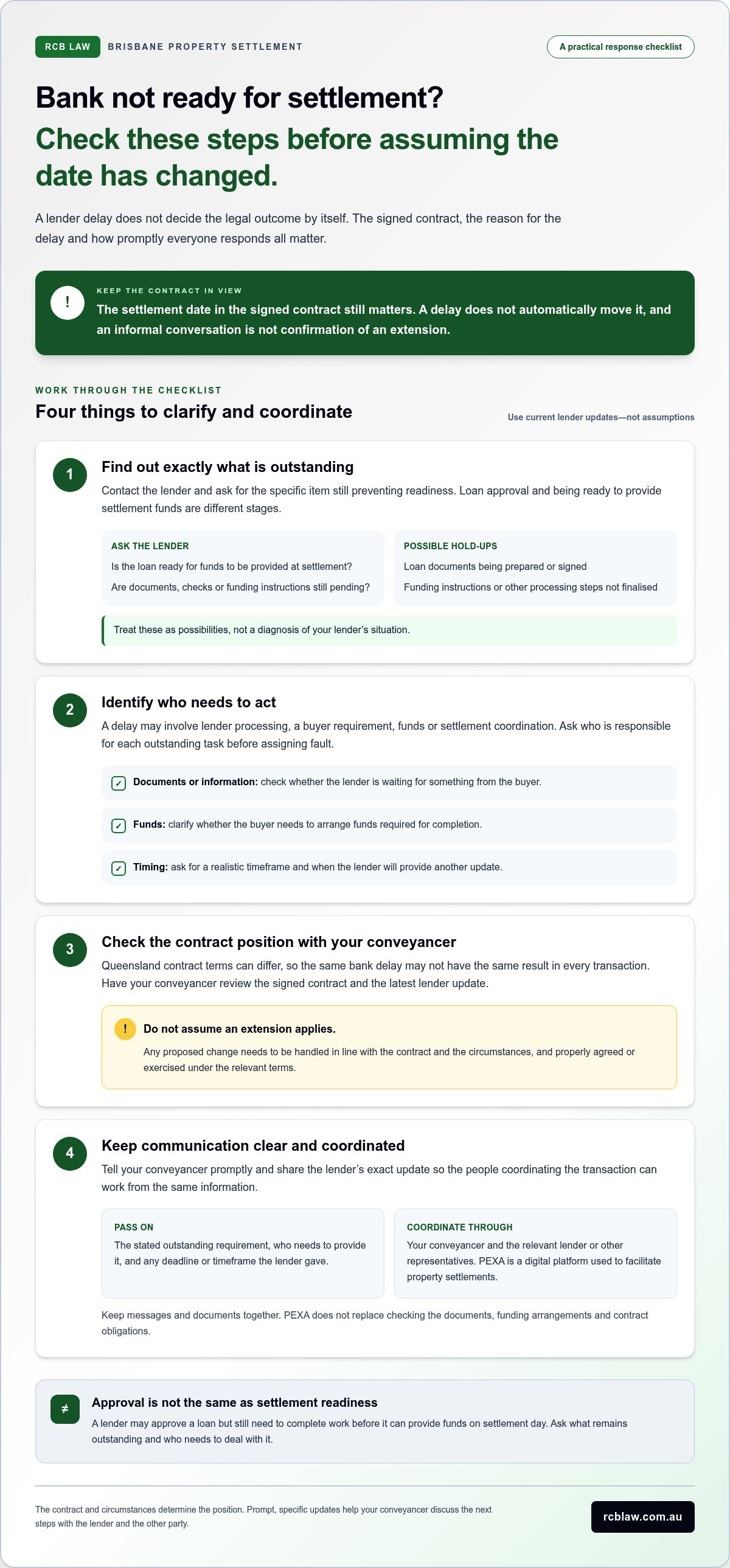
What to Do if Your Bank Is Not Ready for Settlement
A clear sequence of calls and updates can make a delay easier to manage. Contact your lender and conveyancer promptly, then keep both informed as the situation changes. If you are trying to work out what happens if the bank is not ready for settlement brisbane, focus on three facts first: the confirmed settlement date, the precise hold-up and the next action required.
- Call your lender and conveyancer. Tell them the scheduled settlement date and that the bank may not be ready. Ask your conveyancer to check the date and relevant obligations in the signed contract while you request a direct status update from the lender.
- Request exact details from the lender. Ask which requirements remain incomplete, who is responsible for each item and whether you need to take action. Request a realistic timeframe and ask when to expect the next update. “It’s being processed” may not give you enough information to plan.
- Send your conveyancer a factual update. Share the lender’s response, when you received it, the outstanding items and any estimate of when the bank may be ready. If timing is unconfirmed, say so. Do not promise that funds will arrive by a particular time without confirmation.
- Follow up on outstanding actions. If the lender identifies a document or task for you, clarify how to provide it and whether it has been received. Keep copies of messages and documents, and note when you called and whom you spoke with. Pass on important changes promptly so your conveyancer can coordinate communication.
- Discuss any proposed date change through your conveyancer. A verbal conversation about an extension does not, by itself, complete a contractual variation. Ask your conveyancer to review the contract and explain how any agreed change should be recorded. Do not assume a new date is in place until the required arrangements have been properly documented.
The first calls and details to gather
Have the contract or settlement correspondence available so you can refer to the scheduled date accurately. Ask the lender for its current status, the next required action, who is handling it and when it expects to provide another update. Send that information to your conveyancer in writing, even if the timing remains uncertain. Clear, time-stamped updates help everyone work from the same facts.
How to handle a possible extension
If an extension is being considered, raise it through the conveyancing representatives rather than treating an informal discussion as approval. The correct process depends on the contract and circumstances, so your conveyancer should review the agreement and explain how to record any change. General assumptions about Queensland practice are not a substitute for advice on your contract.
RCB Law has more than 30 years of experience supporting Queensland property transactions through settlement. Speak with RCB Law about conveyancing for guidance on responding to a lender delay and communicating about your contract.
How RCB Law Can Help With a Brisbane Settlement Delay
A lender delay can make it difficult to know which information matters and what to do next. A conveyancing lawyer can bring the contract, lender updates and settlement arrangements into focus. RCB Law supports residential property transactions in Brisbane and across the Sunshine Coast, with more than 30 years of experience guiding clients through the legal process to settlement.
What conveyancing support can clarify
Your conveyancer can review the signed contract, confirm the applicable settlement date and identify provisions relevant to the delay. They can explain how the terms may apply to the known facts, including possible options and risks, without assuming that a particular outcome or remedy is automatic.
Your conveyancer can also help organise communication between you, the lender and the other conveyancing representatives. Clear, consistent updates help the parties understand what remains outstanding and whether a change to settlement arrangements is being considered. If you are asking what happens if the bank is not ready for settlement brisbane, advice based on your contract is more useful than assumptions about how every delayed settlement is handled.
Prepare for a focused conversation with your conveyancer
Gathering the relevant information can make it easier to explain the issue and discuss practical next steps. Have these items ready:
- Your signed contract and the stated settlement date.
- The lender’s latest update, including what is outstanding and who is responsible.
- Any estimated timeframe for completion or the next update.
- Relevant emails, messages or documents exchanged with the lender and other representatives.
Separate confirmed information from estimates. For example, note whether the bank has confirmed when funds will be available or has only said it is still processing the matter. Share new information promptly, especially if the lender identifies another requirement or revises its timing. This gives your conveyancer a clearer basis for assessing the circumstances and communicating with the other side.
RCB Law’s Queensland conveyancing experience can help you understand the contract and the steps involved when a lender delay puts settlement under pressure. The focus is practical guidance tailored to the transaction, not a promise of a particular outcome. Your conveyancer can explain what the available information means and how proposed communications or arrangements should be handled.
If your settlement date is approaching and the bank has raised a delay, discuss the issue promptly to understand your position and consider next steps. Contact RCB Law for conveyancing support.
Take the Next Step With Confidence
A settlement delay can feel difficult to control, but clear questions can help you make a considered next move. Ask what remains outstanding, what the lender can confirm about timing and what your conveyancer recommends under the contract. Keep the latest information together so decisions are based on facts, not guesswork.
If you are still asking what happens if the bank is not ready for settlement brisbane, discuss your contract and the lender’s update with a conveyancing lawyer. Contract-specific guidance can help you understand your position and communicate clearly without assuming how the matter will resolve.
Contact RCB Law for practical conveyancing support to discuss the settlement issue with a team experienced in Queensland property transactions. Clear advice can help you approach the next conversation with greater confidence and focus on the steps within your control.
Frequently Asked Questions
What happens if the buyer’s bank is not ready for settlement in Queensland?
Settlement may not complete as scheduled, but the consequences depend on the signed contract and the circumstances. If you are asking what happens if the bank is not ready for settlement brisbane, first find out whether the lender is waiting on a bank task, a buyer document or funds. Give your conveyancer the latest update and ask them to assess the contract before you agree to a new date or respond to the other party.
Can settlement be extended if a bank is not ready?
The parties may be able to agree to change the settlement date, but a discussion is not a confirmed extension. Ask your conveyancer to communicate any proposal and review how an agreed change should be recorded under the contract. Before relying on a revised date, make sure the agreement clearly sets out the new date and any related arrangements, including whether other settlement steps need to change.
Can the seller charge default interest if the bank delays settlement?
Whether default interest or other costs may apply depends on the contract, the circumstances and applicable Queensland law. A bank delay does not by itself confirm that a charge is payable or determine how it would be calculated. Ask your conveyancer to check the relevant clauses and explain the position before accepting a payment request, calculating an amount or responding to a claim from the other party.
What should I do if my bank has not transferred funds by settlement day?
Contact your lender and conveyancer straight away, even if you are waiting for a firm explanation. Ask the bank whether funds have been released, what remains outstanding and when it expects to update you. Send your conveyancer the exact information you receive, including any revised estimate. Keep a record of calls and messages, and do not tell the other party settlement will happen at a time the lender has not confirmed.
Can a seller terminate the contract if the buyer’s bank is not ready?
Termination is not automatic just because the buyer’s lender is delayed. Whether a seller can take that step depends on the contract, applicable requirements and the facts of the delay. A seller should have their conveyancer review the agreement before serving a notice or making a decision. Buyers should respond promptly through their representatives so the parties can clarify the position while advice is obtained.
Does PEXA automatically reschedule a delayed settlement?
Do not assume PEXA automatically changes the settlement date or resolves a delay. It is a digital settlement platform, and the people handling the transaction need to coordinate readiness and any revised arrangements through the relevant process. Ask your conveyancer for the current status and whether an action is required from you or another participant. The effect of a changed date depends on the contract and properly documented arrangements.
Will I have to pay extra costs if settlement is delayed?
Extra costs may arise, but whether they apply and who is responsible depends on the contract and circumstances. You might incur costs for temporary accommodation or changed moving arrangements, but that does not automatically mean another party must cover them. Keep receipts and written records, and ask your conveyancer to explain the relevant contract terms before agreeing to pay, seeking reimbursement or making decisions based on assumed liability.


