
The way your name appears on a Queensland property title is actually your first act of estate planning, and getting it wrong can override your Will entirely. When you're standing at the kitchen table ready to sign, the choice between tenants in common vs joint tenants qld can feel like just another box to tick. However, this single decision dictates who eventually inherits your share of the home and whether your wishes can be carried out. It's completely natural to feel a sense of anxiety when faced with complex legal terminology during what should be an exciting life transition.
We understand that you want to protect your investment and ensure your loved ones are looked after without the friction of future legal disputes. This guide provides the clarity you need to choose the right ownership structure for your specific circumstances. We'll break down the critical legal differences; we will also explain the "Right of Survivorship" and show you how to align your property title with your long-term goals for a smooth, low-stress conveyancing process. By the end of this article, you'll have the confidence to move forward with your purchase knowing your legacy is secure.
Key Takeaways
- Understand the fundamental differences between tenants in common vs joint tenants qld to ensure your property ownership matches your personal relationship and financial goals.
- Learn how the "Right of Survivorship" works in a joint tenancy, which automatically transfers ownership to the surviving owner regardless of what your Will says.
- Discover the flexibility of tenancy in common, allowing you to own specific shares of a property and leave your portion to a chosen beneficiary.
- Identify which structure provides the best protection for blended families or business partners to prevent future inheritance disputes.
- Gain clarity on how to review or update your current registration with Titles Queensland to better align with your evolving estate planning needs.
The Co-Ownership Crossroads: Why Your QLD Property Title Matters
When you sit down to sign a property contract, the atmosphere is usually filled with excitement and a touch of nerves. Your solicitor will eventually ask a critical question: do you want to be registered as joint tenants or tenants in common? This choice represents more than just legal terminology; it's a decision about your future legacy. Many buyers feel pressured to answer quickly during the high-pressure conveyancing phase. However, the distinction between tenants in common vs joint tenants qld determines whether your home follows the instructions in your Will or passes automatically to a co-owner.
Queensland property law is primarily governed by the *Land Title Act 1994*. This Act ensures that every legal interest in land is clearly recorded with Titles Queensland. When two or more people buy property together, they create a concurrent estate. While the concept is ancient, its application today is very practical. It defines your rights and your responsibilities; it also determines what happens to your share of the property if you pass away. Understanding these foundations is the first step toward a secure property investment.
What Is Co-Ownership in Queensland?
Co-ownership occurs when more than one person holds a legal interest in a single piece of real estate. Unlike owning a home solo, co-ownership requires a specific structure to be recorded on the title at the Titles Queensland registry. This registration is the definitive record of ownership. It acts as a shield against future uncertainty, providing a clear framework for how the property is managed and eventually transferred to the next generation. The registry ensures that the interests of all parties are transparent and legally enforceable.
The High Stakes of a Wrong Choice
Choosing the wrong structure can lead to unintended consequences that a Will cannot always fix. If you're weighing up tenants in common vs joint tenants qld, remember that your choice can override your testamentary intentions. For example, if you intend for your children from a previous marriage to inherit your share, but you are registered as a joint tenant, the "Right of Survivorship" will likely bypass your Will. This can spark painful legal disputes among survivors during an already difficult time. Correcting a title after settlement is possible, but it involves additional Titles Queensland registration fees and legal costs. Proactive planning ensures a low-friction experience for your family and provides the lasting peace of mind you deserve.
Joint Tenants: The 'Right of Survivorship' Explained
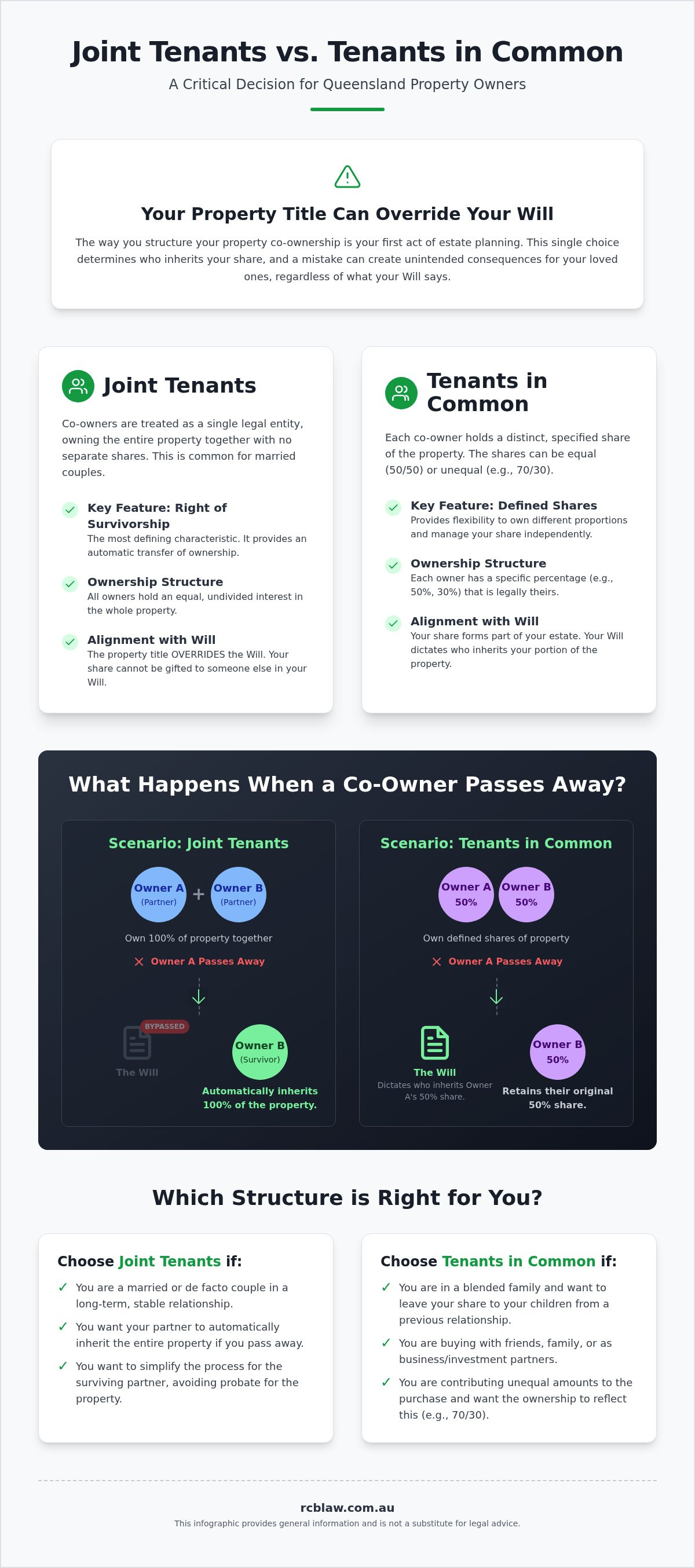
Joint tenancy is a unique way of holding property where owners don't have distinct or divided shares. Instead, you own the whole property together as a single legal entity. This is often the preferred choice for married couples or long-term partners because it reflects a shared life and shared assets. To establish a valid joint tenancy in Queensland, four specific legal unities must exist. These include the unity of time, title, interest, and possession. Essentially, this means all owners must acquire the property at the same time, through the same document, with identical interests and equal rights to the entire home.
The most significant feature of this arrangement is the Right of Survivorship. This legal rule ensures that when one owner passes away, their interest automatically passes to the surviving owner or owners. It's a powerful mechanism because the property title takes precedence over the deceased person's Will. When comparing tenants in common vs joint tenants qld, many couples choose joint tenancy specifically for this automatic protection. It provides a legal safety net that guarantees the surviving partner retains full ownership of the family home without it becoming tied up in estate distributions.
How Survivorship Works in Practice
In the event of a partner's passing, the transfer of ownership happens almost seamlessly. Because the property isn't considered part of the deceased person's estate, it doesn't usually need to go through the probate process. This provides immense relief during a time of grief; it removes the friction of complex legal delays and associated costs. To update the title, the surviving owner simply files a Record of Death with Titles Queensland along with the death certificate. This process is relatively straightforward and ensures the survivor retains full control of their home without unnecessary hurdles. If you're unsure if your current title reflects your wishes, a complimentary Will review can help clarify how your property and estate plan work together.
Pros and Cons for Joint Tenants
The primary advantage of joint tenancy is simplicity. It offers immediate protection for a surviving partner, ensuring they can remain in their home without interference from other potential beneficiaries. However, this all or nothing nature is also its main disadvantage. You lack the individual control to leave your portion to anyone else, such as children from a previous marriage or a charitable cause. If you need to ensure specific people inherit your portion of the property, you might find that the tenants in common vs joint tenants qld debate leans toward a more flexible structure. Understanding these trade-offs is essential for your long-term security and peace of mind.
Tenants in Common: Flexibility and Fixed Shares
Unlike the single legal entity created by joint tenancy, being a tenant in common means you own a specific, identifiable share of the property. Think of it as having your own distinct "slice" of the real estate pie. This share is yours to control, manage, and eventually bequeath. This structure is the preferred choice for friends buying together or business partners because it keeps individual financial interests separate and transparent. It acknowledges that while you're buying together, your long-term financial paths might differ.
A major advantage of this arrangement is the freedom to decide proportions. You aren't restricted to an equal 50/50 split. If one person contributes significantly more to the deposit or mortgage repayments, you might register the title as 70/30 or even 99/1. When deciding between tenants in common vs joint tenants qld, this flexibility allows the legal title to mirror the actual financial reality of your purchase. It provides a clear, documented record of who owns what from day one.
The most critical difference lies in what happens when an owner passes away. There's no Right of Survivorship in a tenancy in common. If you die, your share doesn't automatically go to the other co-owners. Instead, it forms part of your estate and is distributed according to your Will. This makes having a current, legally binding Will absolutely essential. Without one, your property share is distributed according to Queensland's intestacy laws. This could lead to your share passing to unintended relatives rather than your co-owner or chosen beneficiaries.
Strategic Use for Blended Families
For those in second marriages or with children from previous relationships, this structure provides vital protection. It allows you to ensure your children eventually inherit your portion of the family home rather than it passing entirely to a surviving spouse. You can use your Will to grant a "right to reside" or a "life interest" to a current partner. This ensures they have a roof over their head while guaranteeing the underlying asset eventually passes to your children. It's a compassionate way to manage complex inheritance goals without creating family friction.
Tenants in Common for Property Investors
Investors often use this method to reflect disparate financial contributions or to achieve specific tax outcomes. Because you own a defined share, you generally have the legal right to sell or mortgage your portion independently of the other owners. While this requires careful legal coordination, it provides a level of autonomy that joint tenancy cannot offer. It's a strategic approach for those looking to build a portfolio while maintaining clear boundaries between their personal and business assets.
The Decision Matrix: Joint Tenants vs Tenants in Common QLD
Deciding how to hold your property title is a balance between your current relationship and your future legacy. While the choice between tenants in common vs joint tenants qld often arises during the rush of a contract signing, it deserves a moment of calm reflection. Your decision should align with how you've contributed financially and who you wish to benefit from the property's value later in life. We see many clients find peace of mind simply by knowing their title reflects their true intentions.
One aspect often overlooked is that your choice isn't necessarily permanent. Life circumstances change, and a structure that worked during your first year of ownership might not fit a decade later. In Queensland, it's possible to "sever" a joint tenancy. This process converts the ownership to a tenancy in common, ensuring your share becomes part of your estate rather than passing automatically to a co-owner. This is a vital tool for those navigating relationship changes or updating their estate plans to protect children from a previous marriage.
When to Choose Joint Tenants
This structure is typically the most supportive option for long-term spouses or de facto partners who share the same beneficiaries. It's particularly effective for those who want to ensure the family home remains a sanctuary for the surviving partner without the delays of the probate process. By choosing joint tenancy, you're opting for a low-friction transition during a difficult time. Couples often choose joint tenancy to provide an effortless and automatic transfer of the family home to the surviving partner.
When to Choose Tenants in Common
Tenancy in common offers the precision required for more complex arrangements. It's the logical choice for friends or siblings buying together on the Sunshine Coast, as it keeps their financial interests distinct. This structure also serves property investors who need to align their ownership with specific tax strategies or asset protection goals. Additionally, if parents are helping a child with a deposit, they can hold a specific share of the title to protect their capital until a later date. To ensure your property title is correctly registered with Titles Queensland, contact our specialist conveyancing team for expert guidance tailored to your situation.
Taking Action: How to Secure Your Property Interests
Knowing the difference between tenants in common vs joint tenants qld is only half the battle; the next step is ensuring your physical title matches your intentions. Many Queenslanders assume their property is held one way, only to find out years later that the registration doesn't align with their Will. This disconnect can cause significant stress for families during an already difficult time. The first step is often the most simple: check your title. By reviewing your original purchase documents or ordering a fresh title search from Titles Queensland, you can confirm exactly how your legal interest is recorded.
If you discover your current arrangement no longer serves your family's needs, you can take steps to change it. This process is common for those updating their estate plans or managing a change in relationship status. Every property purchase or title change should trigger a comprehensive Will review. This ensures that your most significant asset is handled exactly as you intended, protecting your legacy and providing clarity for your loved ones. Aligning your property title with your estate plan is a fundamental part of responsible ownership.
Changing Your Title in Queensland
In Queensland, the process of moving from a joint tenancy to a tenancy in common is known as "severance." This is achieved by lodging specific documents with Titles Queensland, primarily a Form 1 Transfer and a Form 7 Lodge. A unique feature of Queensland law is that you don't always need the other owner's consent to sever a joint tenancy. While you must provide them with formal notice of the change, you have the legal right to protect your individual interest unilaterally. This provides an important layer of control for individuals who need to ensure their share of a property follows their Will rather than the Right of Survivorship.
The RCB Law Approach to Stress-Free Property
Our team has spent over 30 years helping families across Brisbane and the Sunshine Coast move through complex property transitions with confidence. We understand that legal jargon can be overwhelming, which is why we focus on providing clear, direct assistance. By combining our deep local expertise with a supportive, client-focused approach, we remove the friction from the conveyancing process. Whether you're buying your first home or restructuring your portfolio, we provide the steady guidance you need. We offer fixed-price conveyancing to ensure there are no surprises, allowing you to focus on your future rather than the paperwork.
If you're ready to secure your future and want to ensure your property ownership is correctly structured, contact RCB Law for a reassuring hand with your QLD property matter. We're here to help you move forward with total peace of mind.
Securing Your Legacy with Confidence
Choosing how you hold your property is one of the most significant decisions you'll make during the buying process. Whether you opt for tenants in common vs joint tenants qld, ensuring your title reflects your family's unique needs is vital for long-term peace of mind. This choice dictates whether your home passes automatically to a partner or follows the specific instructions laid out in your Will. It's a foundational step in protecting your assets and your loved ones from future uncertainty.
With over 30 years of Queensland legal expertise, our specialist team in Brisbane and the Sunshine Coast is here to provide the jargon-free, empathetic guidance you deserve. We focus on removing the friction from property law so you can focus on building your life in your new home. Our goal is to ensure you feel supported and informed at every stage of the conveyancing journey. Secure your property future with RCB Law's expert conveyancing and move forward with total certainty. You've worked hard for your home; let's make sure it's protected exactly the way you intended.
Frequently Asked Questions
Can I change from joint tenants to tenants in common in QLD later?
Yes, you can change your ownership structure by lodging a "severance of joint tenancy" with Titles Queensland. This process involves preparing and filing a Form 1 Transfer and a Form 7 Lodge. It's a common step for individuals who want to ensure their specific share of a home passes to their children or other beneficiaries rather than automatically going to the co-owner.
What happens if a joint tenant dies without a Will in Queensland?
If a joint tenant passes away without a Will, the Right of Survivorship still applies. This means their interest in the property automatically transfers to the surviving joint owner. Because this legal rule takes precedence over intestacy laws, the property doesn't become part of the deceased person's estate for distribution. This provides a clear, automatic path for the surviving partner.
Do tenants in common have to own equal shares of the property?
No, tenants in common don't have to own equal shares. You have the flexibility to define ownership proportions that reflect your financial contributions, such as a 70/30 or 60/40 split. When comparing tenants in common vs joint tenants qld, this ability to hold unequal interests is a major reason why friends or business partners choose this specific structure.
Is it better for married couples to be joint tenants or tenants in common?
There's no single "best" choice, as the decision depends on your family dynamics and estate planning goals. Joint tenancy offers a simple, automatic transfer for many first-marriage couples. However, for blended families, the choice between tenants in common vs joint tenants qld often leans toward tenancy in common. This structure allows you to protect your children's inheritance while still providing for your current spouse.
Can one tenant in common sell their share without the other's permission?
Legally, a tenant in common owns a distinct share and can sell or mortgage that share independently. In reality, finding a buyer for a partial interest in a property is incredibly difficult without the co-operation of the other owners. Most co-owners enter into a separate agreement to outline how a potential sale or exit would be managed to prevent future friction.
Does joint tenancy avoid land tax in QLD?
Choosing joint tenancy does not provide a way to avoid land tax in Queensland. The Office of State Revenue assesses land tax based on the total unimproved value of the land you own. While the assessment process for joint owners can be complex, the ownership structure itself isn't a tax avoidance tool. You should always seek professional advice regarding your specific land tax obligations.
How do I find out if I am a joint tenant or tenant in common?
You can find your ownership status by conducting a Title Search through the Titles Queensland registry. This document clearly states whether the owners are registered as joint tenants or as tenants in common in specific shares. If you've lost your original settlement documents, a fresh search is a quick and reliable way to confirm how your property is held.
What is a 'severance of joint tenancy' and when is it used?
Severance of joint tenancy is the legal act of converting a joint tenancy into a tenancy in common. It's used when one owner no longer wants the Right of Survivorship to apply. This often happens during relationship breakdowns or when an owner decides they want their share of the property to be distributed according to their Will rather than passing automatically to the co-owner.


