
An unapproved retaining wall can become more than a paperwork issue after settlement. Buying a property with an unapproved retaining wall in QLD means understanding whether the wall needs approval and who may have to address it. In Queensland, walls over 1 metre high or within 1.5 metres of a building or another retaining wall will likely need approval.
Before committing to a purchase, it’s understandable to want clear answers. Retrospective building approval is the process of assessing and certifying work completed without the required approval. Many retaining walls can be assessed, but approval depends on factors such as the wall’s condition, drainage, design and location.
This article explains how retrospective approval works, how responsibility may depend on the wall and surrounding land, and what council notices can mean for deadlines. It also covers risks to consider before buying, including possible repair or removal requirements, insurance concerns and contract terms. These points can help you understand what an unapproved wall may mean for the property and your next steps.
Key Takeaways
- A building and pest inspection generally won’t establish whether a wall has the required approvals; council records can help reveal what paperwork is missing.
- Responsibility may depend on who changed the natural ground level, where the wall sits and whether it supports a fence. Sellers may have disclosure obligations regarding unapproved structures when selling a property.
- Unapproved work can create contract, insurance and repair risks. Understand how the contract treats council notices before deciding how to proceed.
- A council may require an unapproved wall to be approved, modified or removed. Its condition, drainage, stability and effects on neighbouring land can influence the assessment.
What is a retrospective building approval?
Retrospective building approval assesses structures built without required approval. For a buyer, the process can clarify what remains to be done before an unapproved wall’s compliance status is resolved.
Retrospective Approval for Existing Walls
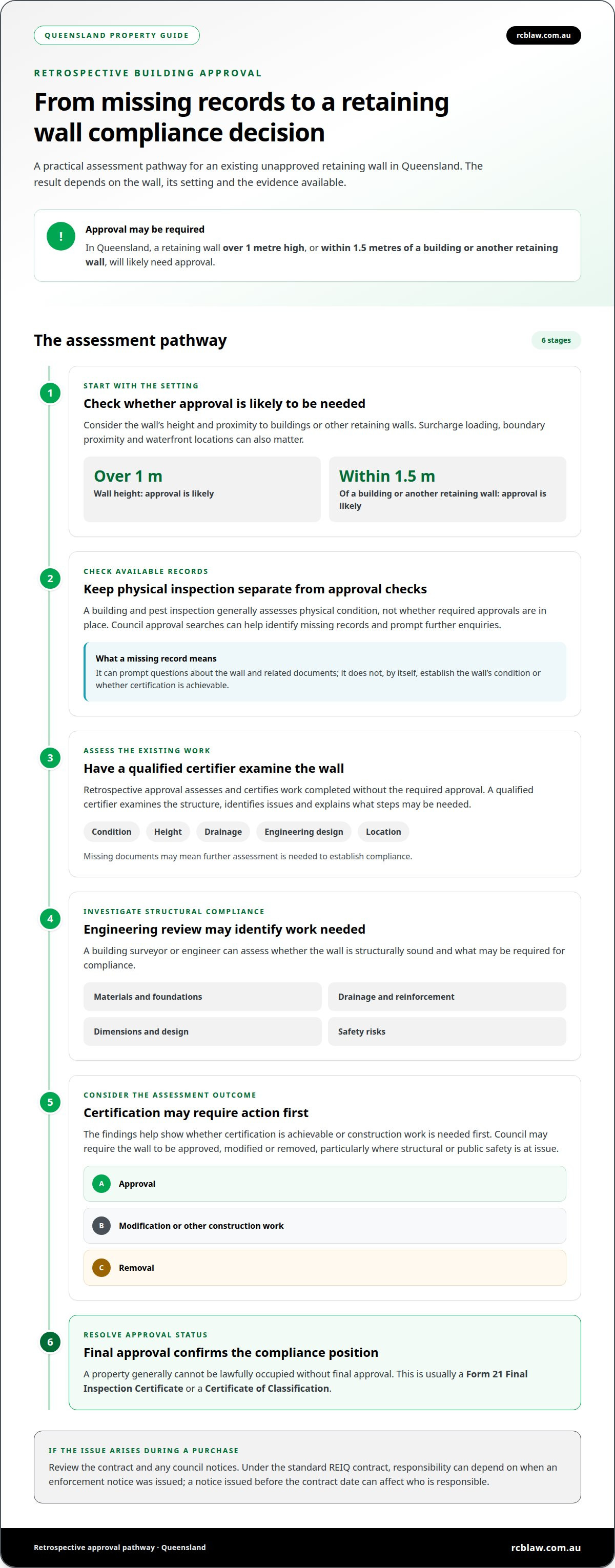
For an existing retaining wall, retrospective approval involves assessing the unapproved work for certification. A qualified certifier examines the structure, identifies issues and explains what steps are needed. The wall’s condition, height, drainage, engineering design and location can all affect whether it can be certified. If documents are missing, further assessment may be needed to establish its compliance.
A building and pest inspection generally assesses physical condition, not whether all required approvals are in place. A leaning wall or visible cracks may alert an inspector to concerns, but the report won’t establish whether council approved the construction. Council approval searches provide a separate check of available records. In Brisbane and elsewhere in Queensland, a missing approval record can prompt further enquiries about the wall and related documents.
Approval requirements depend on the wall and its setting. In Queensland, retaining walls over 1 metre high, or within 1.5 metres of a building or another retaining wall, will likely need approval. Surcharge loading, boundary proximity and waterfront locations can also matter. A property generally cannot be lawfully occupied without final approval, usually a Form 21 Final Inspection Certificate or Certificate of Classification.
Engineering Requirements and Council Directions
An engineering assessment examines whether the wall is structurally sound and what may be needed for compliance. A qualified building surveyor or engineer can assess its materials, foundations, drainage, reinforcement, dimensions and safety risks. Council may require approval, modifications or removal, particularly if structural or public safety is at issue. The findings can show whether certification is achievable or construction work is needed first.
If an approval issue emerges during a sale, missing records can affect negotiations and the buyer’s assessment of risk. The contract and any council notices are important: under the standard REIQ contract, responsibility can depend on when a notice was issued.
Who Is Responsible For A Retaining Wall In Australia?
After a sale in Queensland, responsibility can depend on the contract, council notices and who changed the land. Under the standard REIQ contract, the buyer is generally responsible for unapproved structures unless council issued an enforcement notice before the contract date.
Seller Disclosure of Unapproved Structures
Since 1 August 2025, Queensland sellers have been legally required to disclose unapproved structures when selling a property. Disclosure can help a buyer identify approval questions and potential work after settlement. Ask how disclosed structures and any council notices are addressed in the contract. The timing of a notice matters because the standard REIQ contract allocates responsibility differently before and after the contract date.
Responsibility After a Property Sale
Responsibility for construction costs may depend on who changed the natural ground level and whether the wall supports a neighbour’s land. The person who alters that level is responsible for the necessary retaining wall. An owner who removes support from a neighbour’s natural land may be strictly liable for resulting instability. If a wall sits exactly on a surveyed boundary, each neighbour owns it up to its midpoint.
Queensland’s Dividing Fences Act generally doesn’t cover retaining walls unless a wall was specifically built to support a fence. The usual equal-contribution rule for a sufficient dividing fence doesn’t automatically determine retaining-wall costs. A wall retains an embankment, while a fence divides properties, so they serve different functions.
Construction also matters. Retaining walls must follow the National Construction Code, including when their height falls below approval thresholds. Queensland Development Code NMP 1.7 recommends that retaining walls up to one metre requiring fill or excavation follow an accepted industry standard publication. These requirements help distinguish a wall’s construction obligations from responsibility for its costs.
Risks of buying a property with an unapproved wall
Buying a property with an unapproved retaining wall in Queensland can leave new owners facing compliance work and uncertainty about responsibility. Under the standard REIQ contract, buyers are generally responsible for unapproved structures unless council issued an enforcement notice before the contract date. Buyers generally can’t terminate solely because a structure lacks approval, so the contract terms and any notices can affect their options.
Look for physical warning signs such as a leaning or bulging wall, cracks, poor drainage, soil movement and water pressure behind the structure. These may indicate problems beyond missing documents. A qualified certifier can assess the wall’s condition and safety, while an engineer can examine its structural integrity, foundations and drainage. Findings may point to repairs, further engineering work or more serious safety concerns.
Insurance is another practical risk. An insurer may not cover damage caused by an unapproved retaining wall. If the wall fails and damages a neighbour’s building, vehicle or other property, the insurer may investigate whether the structure complied with relevant requirements. Owners could then face disputes about responsibility as well as repair demands. The wall’s location and the damage caused can affect the consequences.
Council action can add expense and disruption. If a wall presents a serious structural or safety risk, council may require demolition and reconstruction. Retrospective assessment may also involve engineering reports, inspections, survey plans, soil testing and repairs. These requirements can delay a sale, prompt contract renegotiations or contribute to a lost sale. Before signing, a special condition can allow time for searches and specify termination rights if unapproved structures are found. This matters because the standard REIQ contract generally doesn’t give buyers an automatic right to end the contract over an unapproved wall.
Can a Queensland council require an owner to approve, modify or remove an unapproved retaining wall?
Yes. A Queensland council may require an unauthorised retaining wall to be approved, modified or removed. The response depends on the wall’s compliance and safety, not simply whether paperwork exists. Councils can consider structural condition, height, drainage, boundary setbacks, soil stability, materials, environmental effects and public safety. A leaning wall with poor drainage, for example, raises different concerns from a stable wall with missing approval documents.
Retrospective approval may be possible if an assessment shows the wall can meet relevant requirements. A qualified certifier assesses the work and identifies what is needed for certification. Engineering reports, survey plans, inspections or soil testing may support the assessment. If the wall’s design or condition presents a safety risk, approval alone may not resolve the problem. Required changes may include repairs or modifications; serious structural or safety risks may lead council to require demolition and reconstruction.
Brisbane’s building approval exemption has specific limits. A retaining wall doesn’t need building approval if its total height, including retained fill or cut, is no more than one metre above the wall’s natural ground surface, provided the other exemption conditions are met. Walls outside an exemption may need building approval. Even exempt work must comply with relevant building codes and standards in the National Construction Code.
Deadlines depend on the council process and the notice issued. In Brisbane, an applicant has 20 days to comply if Council issues an action notice because a development application is not properly made. That period relates to correcting the application, not a general deadline for every wall assessment. Read the notice carefully to identify what must be supplied and by when. For guidance on how a council notice may affect a property purchase, seek legal advice on your property purchase.
RCB Law: Commercial Property Law
RCB Law’s Commercial Property Law service helps buyers understand how an unapproved retaining wall affects a commercial property transaction. Legal advice can clarify contract terms, council notices, disclosure information and responsibilities that may pass to a buyer. For residential purchases, RCB Law’s Residential Conveyancing service can address property-specific legal issues before settlement, including questions about approvals and contract conditions.
Consider legal advice before signing if council records show missing approvals, a notice sets a deadline, or the contract doesn’t clearly allocate responsibility. Early review can help you understand the implications and the options available under the proposed agreement. Contact RCB Law to discuss the purchase and any retaining-wall approval concerns.
Take the Next Step Before You Commit
If you’re buying a property with an unapproved retaining wall in Queensland, use the time before committing to clarify how the issue affects your decision. Identify what you need resolved in writing, how the contract treats the wall, and whether a council process could affect your plans for the property. A legal review can help you understand the transaction and make a considered choice.
RCB Law provides Residential Conveyancing for home purchases, Commercial Property Law for commercial transactions, and Business Law for related business matters. The right support depends on the property and transaction. Bring the relevant contract and council correspondence to discuss your next steps.
Contact RCB Law about your property to discuss your next step. A clearer understanding of the terms can help you move forward with greater confidence.
Frequently Asked Questions
Are Retaining Walls Treated Like Fences?
No. In Queensland, a retaining wall supports an embankment, while a fence separates properties, so different rules apply. The Dividing Fences Act generally doesn’t cover retaining walls unless the wall was specifically built to support a fence. For example, a fence attached to a wall doesn’t automatically make the whole structure a dividing fence. The purpose and construction of each part matter when considering responsibility.
Can I terminate the contract due to an unapproved structure?
Not usually under the standard REIQ contract: a buyer generally can’t terminate solely because the property has an unapproved structure. A special condition may set out specific rights if searches identify unapproved work, including a right to terminate. The wording and timing matter. Have the proposed condition reviewed before signing, rather than assuming missing approval lets you end the contract.
Can You Get Approval After a Retaining Wall Has Been Built?
Yes, retrospective approval may be available for an existing wall. A qualified certifier assesses the work, identifies compliance issues and explains what is needed for certification. For example, an assessment may identify a need for engineering information or physical changes before certification. The wall’s design, condition, drainage and location all affect the assessment, so the fact that it has already been built doesn’t establish its approval status.
How do I protect myself?
Before signing, arrange relevant council approval searches and have the contract reviewed alongside any seller disclosures or council notices. A special condition can allow time for searches and specify what happens if they reveal unapproved structures. For example, it could provide a termination right tied to a search result. Also consider how the contract allocates responsibility for notices issued before or after its date.
What If the Wall Sits on a Boundary or Affects Neighbours?
A wall exactly on a surveyed Queensland boundary is generally owned by each neighbour up to its midpoint. Responsibility can also depend on which property’s earthworks created the need for support. If a neighbour dispute arises, mediation is recommended before court action. Keep the boundary location, land levels and evidence of any damage clear, as these details can help explain how the wall affects each property.
What approvals are required for a retaining wall in Queensland?
Requirements depend on the wall’s height, location, loading and local council rules. Walls over 1 metre high or within 1.5 metres of a building or another retaining wall will likely need approval. Surcharge loading, boundary position and waterfront locations can also affect requirements. In Brisbane, an exemption may apply only when its listed conditions are met. Even without building approval, walls must follow relevant National Construction Code requirements.


