
Buying a tenanted property doesn’t mean you can move in straight away. Your rights when buying a property with tenants in place in QLD depend first on the existing lease: the sale doesn’t automatically end it, and a tenant on a fixed-term agreement can generally stay until it expires. If you plan to move in, the lease end date and applicable notice requirements affect when you can take possession.
Before committing, get a clear picture of the tenancy and the costs. Transfer duty is one consideration: Queensland Revenue Office says a buyer claiming the principal place of residence transfer duty concession must have the tenants leave within six months of settlement or when the lease expires, whichever comes sooner.
This article explains how lease terms, notice to leave and vacant possession fit together, and why the duty concession may affect your plans. It also outlines what to review in the tenancy documents to assess whether the property suits your timing and intended use.
Key Takeaways
- Identify whether the tenancy is fixed-term or periodic, and review the lease terms that will affect your plans for the property.
- Understand what tenancy information belongs in the sale documents and how notice and access requirements affect the sale campaign.
- Factor in rent, tenancy handover and the property’s intended use when considering the purchase and its transfer duty implications.
- Clear contract terms can help align the tenancy arrangements with your plans for the property before settlement.
Can I buy a property with tenants and then evict them?
You can buy a tenanted property, but ownership doesn’t automatically end the tenancy agreement. Queensland Government states that residential tenancies are governed by the Residential Tenancies and Rooming Accommodation Act 2008. Buyers’ rights when buying property with tenants in place in Queensland depend on the existing agreement and its terms.
The main risks include inheriting a fixed-term lease that delays your move-in, or rent arrears that must be handled lawfully. A sale doesn’t give the buyer the right to remove tenants or change the locks. Understanding the rights involved in buying property with tenants in place in QLD helps you set realistic expectations before signing.
Buyer Responsibilities at Settlement
At settlement, the buyer takes over the tenancy arrangements and accounts for rent paid around the ownership change. Rent may cover days both before and after settlement, so the amount needs to be allocated appropriately.
Your conveyancer can arrange for rent to be apportioned at settlement with the property manager. The contract should also clearly address any land tax adjustments, which are separate from rent and depend on the agreed terms. After the sale, the tenant must be told the new owner’s details and where to pay rent through an attornment notice.
Rent increases have limits after ownership changes. Since 6 June 2024, the annual frequency limit has attached to the property, so settlement doesn’t reset the clock. A rent increase generally can’t occur during a fixed-term tenancy unless the agreement contains specific provisions allowing it. At least two months’ written notice is required for an increase, and a landlord must prove the last increase date within 14 days if the tenant asks.
Tenancy Laws and Dispute Resolution Help
The Queensland Government sets out the state’s tenancy law, and the Residential Tenancies Authority (RTA) provides tenancy information and dispute assistance. These are relevant points of reference for buyers and tenants dealing with lease terms, rent or arrears.
The RTA is also relevant to understanding tenancy procedures after a property is sold. If rent is unpaid, a landlord must follow lawful procedures. Changing locks or removing belongings is not a substitute. Keep the tenancy agreement and rent records available when discussing a dispute with the RTA.
Notice requirements for ending a tenancy depend on the agreement and circumstances. A fixed-term tenant can’t be made to leave simply because the property is sold and may stay until the term ends. If you plan to move in, the lease expiry date and applicable notice rules affect when vacant possession may be possible.
Reviewing the existing lease and its expiry date
In Queensland, the lease terms and expiry date shape your obligations after settlement. Review them before signing to check that the contract aligns with your plans to occupy the property or continue renting it out.
Reviewing the Lease Expiry
A lease review identifies whether the arrangement is a lease or licence, whether it’s fixed-term or periodic, and its end date. Queensland sellers must disclose these details, and buyers have the right to receive full lease documents before signing. Confirm the contract records the term, end date, tenants’ names and property manager. Under the Land Title Act 1994 (Qld), an unregistered lease of three years or less may bind a registered owner if the tenant is in possession. A renewal beyond three years from the original term isn’t protected.
Tenancy Continuity After Sale
To understand whether the tenancy will continue after settlement, identify the existing agreement and the obligations that carry over. The buyer takes over the tenancy in place, so the sale contract should accurately describe it. Compare the disclosed details with the agreement, including any renewal option. This can reveal differences between the seller’s description and the tenant’s actual rights, helping you assess the likely occupation date before signing.
Taking Over the Existing Tenancy
After settlement, you must manage the Queensland tenancy according to its terms. If you plan to move in, the fixed-term expiry date may affect your timing. You may need to negotiate with the tenant or wait until the lease expires: buying the property alone doesn’t give you vacant possession. Rent generally can’t increase during a fixed-term agreement unless it contains specific provisions allowing an increase. Legal advice can clarify how the lease terms affect your plans.
Where lease disclosures, renewal rights or vacant possession affect your purchase, residential conveyancing advice can help align the agreement with your intended use.
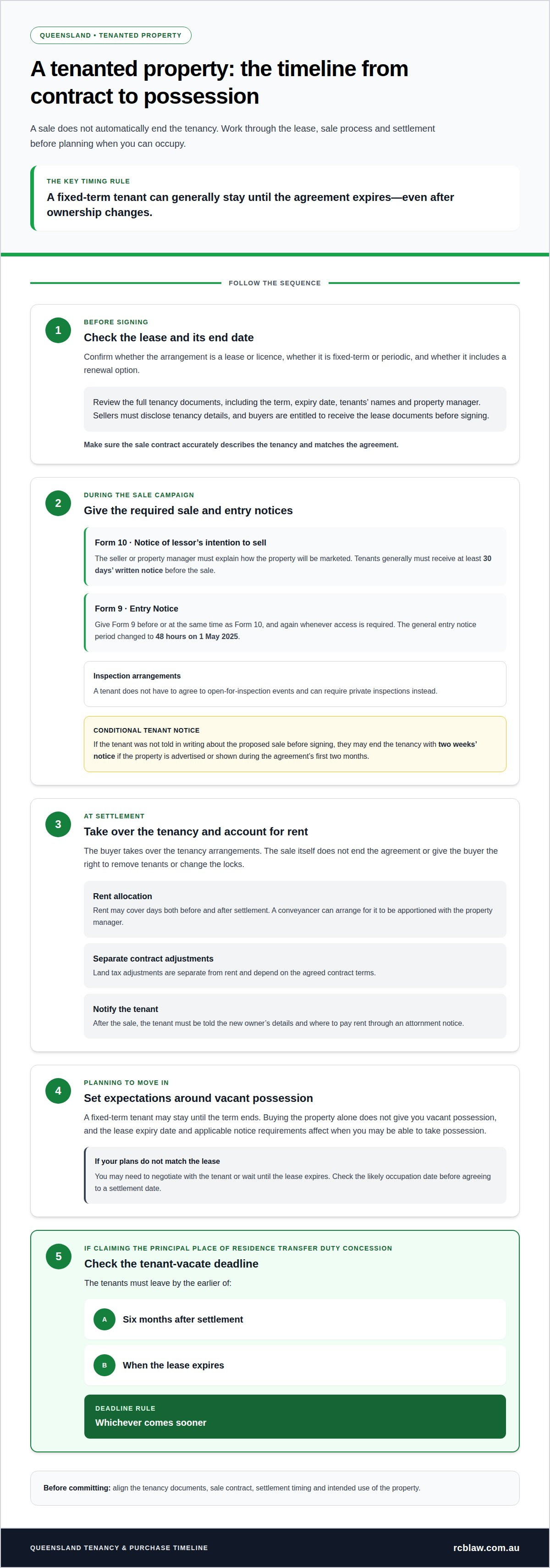
Notice to leave and vacant possession when a property is sold
In Queensland, selling a tenanted property doesn’t automatically give the buyer vacant possession. A tenant on a fixed-term agreement can stay until that term ends, even after ownership transfers. If you plan to live in the property, factor in the lease end date before agreeing to a settlement date.
The seller or property manager must give tenants a Notice of lessor’s intention to sell premises, Form 10, explaining how the property will be marketed. Tenants generally must receive at least 30 days’ written notice before the sale. If the tenant wasn’t told in writing about the proposed sale before signing, they may end the tenancy with two weeks’ notice if the property is advertised or shown during the first two months of the agreement.
Property access also has rules. An Entry Notice, Form 9, must be given before or at the same time as Form 10, and again whenever access is required. Queensland’s general entry notice period changed to 48 hours on 1 May 2025. A tenant doesn’t have to agree to open-for-inspection events and can require private inspections instead. An open house or on-site auction can occur only with the tenant’s written agreement.
These requirements affect how a seller can organise inspections and how quickly a buyer can expect possession. Form 10 should explain the marketing approach, while each required Form 9 gives notice of access. The tenant’s right to quiet enjoyment remains relevant during the campaign; selling doesn’t give the owner unrestricted entry. Since 1 September 2024, Queensland minimum housing standards have applied to all tenancies. A sale doesn’t remove those standards or the parties’ tenancy obligations. For a buyer, the practical distinction is clear: a contract for a tenanted property doesn’t itself require the tenant to leave. Vacant possession depends on the tenancy ending lawfully and the agreed sale terms being met.
Stamp duty when buying a tenanted property
Queensland transfer duty applies to property transactions, and the amount varies with factors including property value and intended use. The fact that a tenant lives at the property doesn’t, by itself, determine whether you can claim a concession. The key question is whether the purchase and planned occupation meet the relevant concession requirements.
If you’re seeking the principal place of residence transfer duty concession, timing matters. Queensland Revenue Office says existing tenants must vacate within six months of settlement or when their lease expires, whichever occurs sooner. The lease expiry date can therefore bring the deadline forward. If the tenant has a shorter fixed-term lease, plan around that earlier date rather than assuming you have the full six months.
Before signing, compare the proposed settlement date with the tenancy end date and your move-in plans. Then check whether the contract’s possession arrangements make the concession timeframe workable. If the tenant remains beyond the applicable deadline, your intended use and concession position may not align. A property manager can help coordinate tenancy information, but consider the sale contract and duty implications together.
Keep transfer duty separate from settlement adjustments. Rent apportionment allocates rental income around settlement; transfer duty applies to the property transaction and any relevant concession. Previous rent history or the tenant’s payment arrangements don’t replace the occupation timing test for the principal place of residence concession. Describe your intended use accurately, including whether the premises are residential or rooming accommodation, as intended use can affect duty calculations.
The practical takeaway is to assess duty alongside the lease, settlement date and possession plan, rather than treating tenant status as a simple discount or surcharge. Get conveyancing advice on how the contract and tenancy arrangements fit your purchase plans.
RCB Law: Commercial Property Law
RCB Law assists buyers who need legal clarity when purchasing a tenanted property. For a residential property, our Residential Conveyancing service can address the sale contract, tenancy documents, settlement arrangements and intended possession. For a purchase involving commercial premises, our Commercial Property Law service can assist with the transaction and its lease terms.
Seek legal advice before signing if the lease expiry, tenant disclosure, vacant possession or intended use could affect your decision. Reviewing these details alongside the contract can clarify which obligations continue after settlement and whether the purchase terms reflect your plans.
Contact RCB Law to discuss legal support for your property purchase.
Make your purchase plan clear before you proceed
Before moving forward, decide how you intend to use the property. An investment purchase and a future home can involve different priorities, so be clear about your intended use, timing and willingness to take on ongoing tenancy obligations. This gives your legal adviser a practical framework for reviewing the transaction and identifying issues that need attention.
Understanding your rights when buying a property with tenants in place in Queensland is part of making an informed decision, not just completing a purchase. Raise your questions and priorities early so the advice can focus on the issues that matter to your plans.
Contact RCB Law about your purchase to discuss the next step with confidence.
Frequently Asked Questions
Can a new owner increase the rent after settlement in Queensland?
A new owner can increase rent only in accordance with Queensland’s tenancy rules; settlement alone doesn’t create a new entitlement to increase it. Relevant details include the tenancy agreement, the property’s last rent increase date and any clause allowing an increase during a fixed term. For example, inheriting a fixed-term lease doesn’t give you permission to reset the rent schedule when ownership changes.
What If I Want To Live In The Property?
You can plan to live in the property, but the tenant’s agreement and the sale contract affect when you can move in. If a fixed-term lease remains in force, consider whether you can wait until it expires or negotiate an earlier departure with the tenant. Make your intended move-in timing clear before committing, particularly if vacant possession is essential to your plans.
Can I force my tenants to move out before the end of their lease or notice period?
No. You can’t bypass a tenant’s fixed-term agreement or a valid notice period just because you’ve bought the property. The tenant may agree to leave earlier, but the change must be handled properly. Don’t change the locks or remove belongings to pressure a tenant. If a dispute arises, follow the applicable tenancy procedures rather than taking possession yourself.
Can a buyer end the lease after settlement?
A buyer doesn’t gain an automatic right to end a lease at settlement. The new owner takes over the tenancy and must follow the agreement and Queensland notice requirements. For a periodic tenancy, the applicable notice process matters. A fixed-term agreement generally continues until its end date unless the tenant agrees otherwise. The lease type is central to deciding the next step.
How does the presence of tenants affect the sale price and timing of the sale?
A property’s sale price doesn’t automatically change because it has tenants. The lease may appeal to buyers seeking rental income, while a buyer planning to move in may factor in the remaining tenancy term. Sale timing can also depend on access arrangements and whether the contract provides for vacant possession. The rent, lease terms and likely buyer pool all shape the transaction.
What If I Intend to Occupy the Property Myself?
Compare your occupation plans with both the lease and any duty concession conditions before settlement. Queensland Revenue Office says a buyer claiming the principal place of residence transfer duty concession must have existing tenants vacate within six months of settlement or when their lease expires, whichever comes sooner. That earlier deadline can affect moving arrangements, so include the tenancy end date in your plans.


