
A deceased-estate purchase in Brisbane isn’t automatically exempt from transfer duty. When buying property out of a deceased estate in Brisbane as an outside purchaser, you may be assessed transfer duty at the standard rate. The exemption generally applies to a transfer distributing estate property to a beneficiary under a will or the intestacy rules.
It’s understandable to want clarity before committing, especially when the seller’s authority and estate paperwork can affect the transaction. The duty outcome depends on whether the property is being sold to an outside buyer or distributed to a beneficiary, as well as how it is held.
This guide explains when transfer duty may apply, what probate or letters of administration do, and how an executor’s or administrator’s authority affects a sale. It also covers the conveyancing steps that help move the transaction from contract to settlement.
Key Takeaways
- Transfer duty treatment depends on whether the property is being distributed to a beneficiary or sold to an outside buyer.
- Queensland’s seller disclosure requirements apply before a buyer signs a covered contract, so the documents matter early in the transaction.
- Probate or letters of administration establish who can deal with estate property, while the title pathway affects how ownership can be transferred.
- An executor or administrator manages the estate and its sale; understanding their authority helps clarify how the purchase can proceed.
How does the conveyancing process work when buying a deceased estate property in Queensland?
A Queensland estate sale proceeds from confirming authority and preparing the contract through to settlement and title transfer. The sale method, property information and contract terms all shape the buyer’s decisions.
Preparing and Settling the Sale
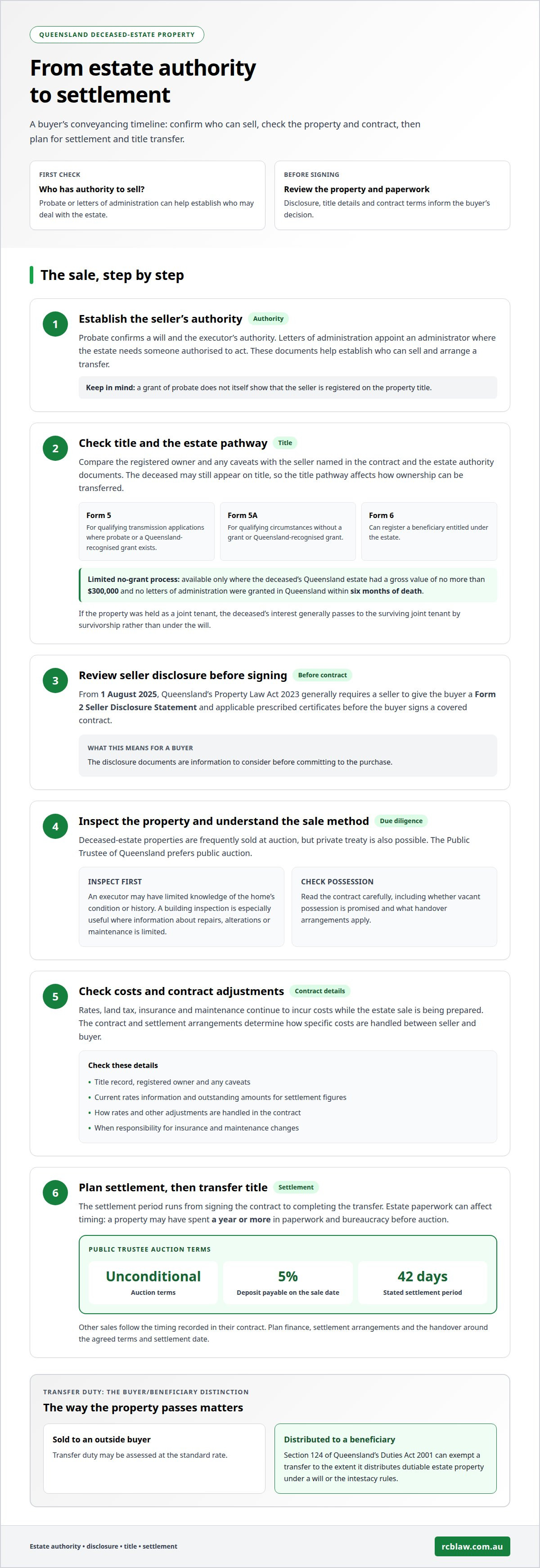
Preparing the sale means confirming the seller’s authority, preparing the contract and organising required disclosure before signing. From 1 August 2025, Queensland’s Property Law Act 2023 generally requires a seller to give the buyer a Form 2 Seller Disclosure Statement and applicable prescribed certificates before the buyer signs the contract, according to Queensland Government. This gives buyers information to consider before committing.
Deceased-estate properties are frequently sold at auction, but private treaty is also possible. The Public Trustee of Queensland prefers public auction. Its auctions have unconditional terms, a 5% deposit payable on the sale date and 42-day settlement. Arrange an inspection before deciding: an executor may have limited knowledge of the home’s condition or history. Read the contract’s possession terms carefully, including whether vacant possession is promised.
Settlement Timing and Delays
The settlement period runs from signing the contract to completing the transfer. Estate paperwork can affect the timing: a property may have spent a year or more in paperwork and bureaucracy before auction.
For a Public Trustee auction, the stated settlement period is 42 days, so buyers need to plan finance and settlement arrangements around that contract term. Other sales follow the timing recorded in their contract. Limited information about repairs, alterations or maintenance makes a building inspection especially useful before the buyer’s decision becomes binding.
Estate Property Costs During Sale
Rates, land tax, insurance and maintenance continue to incur costs while an estate sale is being prepared. The executor manages the estate, including the property sale, while the contract and settlement arrangements determine how specific costs are handled between seller and buyer.
Before signing, clarify how the contract handles rates and other adjustments, and when responsibility for insurance and maintenance changes. Vacant possession and an occupied property, for example, can involve different handover arrangements. Use the agreed possession terms and settlement date to plan the handover.
Checking Title and Outstanding Debts
Title and debt checks reveal ownership details and property liabilities that need to be considered during conveyancing. A deceased owner’s name on title, a caveat or unpaid rates can affect the steps required before settlement.
Check the title record for the registered owner and any caveats, then compare those details with the seller named in the contract and the estate authority documents. Obtain current rates information and identify outstanding amounts for the settlement figures. If the deceased owned the property jointly, the title pathway may differ, so consider ownership details alongside the estate documents.
Probate and letters of administration
Probate is a grant confirming a will and the executor’s authority to administer the estate. Letters of administration appoint an administrator where the estate needs someone authorised to act. In Queensland, the Succession Act 1981 governs how property devolves on death. For a buyer, these documents help establish who can sell and arrange the property’s transfer.
A grant of probate doesn’t itself show that the seller is registered on the property title. The title may still name the deceased owner, so the estate’s representative and title pathway matter. In qualifying Queensland cases, Form 5 is used to apply to transmit property to a personal representative where probate, or a Queensland-recognised grant, exists. Form 5A applies in qualifying circumstances without a grant or Queensland-recognised grant. Form 6 can register a beneficiary entitled under the estate.
Queensland also has a limited no-grant process through Titles Queensland. It is available only where the deceased’s Queensland estate had a gross value of no more than $300,000 and no letters of administration were granted in Queensland within six months of death. A personal representative registered through this process has the same rights, powers and liabilities as if a grant had been made. These conditions can affect which title documents support the sale.
Before proceeding, establish whether probate has been granted or another lawful administration pathway applies. This clarifies the representative’s authority and the steps needed to register the transfer to you. If the deceased owned the property as a joint tenant, their interest generally passes to the surviving joint tenant by survivorship, rather than under the will. This differs from a sale by an executor and can change who appears on title. The estate paperwork and title pathway can therefore affect when the contract can proceed to settlement.
Is transfer duty payable on a deceased-estate property transfer?
Transfer duty depends on whether the property passes to a beneficiary through the estate or is sold to an outside buyer. Also allow for conveyancing and other transaction costs, which depend on the transaction and work involved.
Duty Exemptions for Estate Transfers
Section 124 of Queensland’s Duties Act 2001 can exempt a transfer to the extent it distributes dutiable estate property under a will or intestacy rules. The exemption matters because a transfer to a beneficiary may receive different treatment from an ordinary sale to a purchaser.
A Form 6 transmission application to register a devisee or legatee is not dutiable and does not require a stamp to be lodged with Titles Queensland. The exemption does not apply to a deceased joint tenant’s interest where the property was held as tenants in common.
Beneficiary Distributions and Duty
A distribution differs from the will or intestacy where the property goes to someone, or in proportions, not provided for by those arrangements. That difference can affect whether the transfer qualifies for the section 124 exemption, so the distribution’s details matter.
For a transfer outside the will or intestacy, the claimant must provide a schedule of distribution stating how the property is distributed, to whom and at what value. Transfer duty may apply, and evidence of the property’s value may be required. A transfer to someone who is not a beneficiary may be assessed at the standard rate.
Open-Market Sales and Beneficiary Transfers
An open-market sale transfers the property from the estate to an outside buyer. This differs from a distribution to beneficiaries under a will or intestacy. The distinction matters because the beneficiary exemption applies to qualifying distributions, not every transfer involving a deceased person’s property.
For a Brisbane buyer purchasing from an estate, transfer duty may be assessed at the standard rate. The fact that the seller is an estate does not make an outside purchase exempt. The transfer’s legal nature, including whether it implements a beneficiary distribution, determines the applicable duty treatment.
Executor and administrator authority
An executor named in a will, or an administrator appointed for an estate, manages the deceased person’s property. For buyers, the key point is that the person negotiating the sale must be authorised to act for the estate and complete the transfer.
The executor manages the estate, including selling property, and is legally required to ensure it sells for a sensible sum. The executor must therefore consider the estate’s interests when deciding how to proceed, rather than simply accepting an offer. An administrator performs the estate-management role when administration is required, with authority arising from the relevant appointment.
Beneficiaries or family members may raise concerns about a proposed sale price or the decision to sell. The executor’s responsibility to secure a sensible sum is relevant, but a beneficiary’s objection alone does not establish that the sale must stop. The will, the estate’s circumstances and the basis of the concern all matter when considering a dispute.
For buyers, the practical question is whether the person signing the contract has authority to sell and can complete the title transfer. The estate representative’s name and capacity should align with the sale documents and the relevant title pathway. If they do not, further estate or title steps may be needed before settlement can proceed.
Real estate agents may handle marketing and offers, but the executor or administrator remains responsible for managing the estate sale. When reviewing who is selling the property, distinguish the agent’s role from the representative’s authority. The contract should identify the seller in a way that reflects the estate’s legal position.
Where questions about authority, the sale decision or contract wording affect a Queensland property transaction, seek legal guidance on the estate sale before proceeding.
RCB Law: Commercial Property Law
RCB Law assists with the legal work involved in purchasing property from a deceased estate. For a residential purchase, its Residential Conveyancing service covers the contract, title transfer and settlement requirements. For commercial estate property, Commercial Property Law supports the transaction and its legal considerations.
Consider legal advice before signing if you have questions about the seller’s authority, title pathway, disclosure documents or transfer duty treatment. Understanding these points can help you assess the transaction and your obligations as a buyer. The support you need depends on the property and the issues involved.
Contact RCB Law to discuss the legal requirements for your deceased-estate property purchase.
Make your next property decision with clarity
If you’re buying property out of a deceased estate in Brisbane, consider how the purchase fits your plans before committing. Think about the property’s intended use, your preferred timing and any points in the contract or estate paperwork you want explained. Setting out your priorities can make discussions about the transaction more focused.
If a particular issue is holding up your decision, identify it clearly. It may concern the sale documents, the seller’s authority or how the transfer will proceed. Pinpointing what needs attention can help you choose a practical next step while keeping the property itself in view.
For guidance on your purchase, contact RCB Law about your purchase. A clear conversation can help you move forward with greater confidence.
Frequently Asked Questions
Can an executor sell a Queensland property before probate?
An executor may be able to progress a sale before probate where a valid Queensland title pathway allows it. Titles Queensland’s no-grant process is limited to estates with a gross Queensland estate value of no more than $300,000, where no letters of administration have been granted in Queensland within six months of death. A buyer should distinguish an agreed sale from the steps needed to complete registration.
Does Form 2 seller disclosure apply to an executor’s sale?
Generally, yes, where an executor sells estate property to an outside buyer in a covered Queensland sale. The executor acts for the estate, and the required disclosure must be provided before the buyer signs. For example, a buyer should receive the Form 2 Seller Disclosure Statement and applicable prescribed certificates before signing the contract.
Does the seller disclosure scheme apply to deceased estate sales in Queensland?
Generally, transfer duty applies to a deceased estate’s sale to an outside buyer, but not to specified internal estate transfers. The distinction is whether the property is sold beyond the estate or transferred as part of its internal distribution. It helps explain why an open-market contract may involve disclosure documents that an internal transfer does not require.
How long does probate take?
There is no single timeframe for Queensland probate. Timing depends on the application and the estate’s circumstances, including whether the court needs further information about the will or the executor’s authority. For a prospective buyer, the practical question is whether the estate representative can complete the required title steps within the contract’s settlement period.
What are the common questions buyers have about deceased estate properties in Queensland?
Buyers often ask who can sign the contract, whether the title can be transferred, what disclosure applies and whether vacant possession is included. They may also want to understand the property’s condition. If you’re buying property out of a deceased estate in Brisbane, an inspection can help identify maintenance concerns, while the contract sets out the agreed possession arrangements.
How do you buy property from a deceased estate in Brisbane?
Buying property out of a deceased estate in Brisbane involves reviewing the contract and disclosure documents, confirming the seller’s authority and arranging an inspection before signing. Pay close attention to the settlement date, deposit terms and possession provisions. These details help you plan the purchase and understand what must happen before ownership transfers into your name.


