
What happens to social media accounts when you die depends on the platform and the request. Facebook accounts can be memorialised, preserving existing posts while preventing new content, or permanently closed and removed. Other platforms have their own procedures for memorialising or deleting accounts.
Families may be unsure where to begin while managing other responsibilities after a death. Requests commonly require details such as the person’s username and a death certificate. Some platforms may also ask for proof of the requester’s identity or legal authority.
This guide explains the options for social media accounts after death, how families can request deletion, and which documents may be needed. It also explains how recording digital-account wishes in advance can give those handling an estate clearer guidance.
Key Takeaways
- Choose whether preserving a loved one’s online presence or removing it better reflects their wishes before starting a platform request.
- Account closure processes vary, so the person making a request may need to show their connection or legal authority.
- Search for accounts using saved records, devices and email notifications, while respecting the deceased person’s privacy and provider terms.
- Clear instructions in estate planning can help loved ones understand how to manage digital accounts and content.
What Happens To My Social Media Accounts When I Die?
There’s no single outcome for every account after death. Facebook, Google, Apple and Yahoo each have their own account options and processes.
Memorialising or Closing Accounts
Memorialisation preserves an account as a place for friends and family, while closure removes it from the platform. On Facebook, memorialisation keeps existing posts visible but prevents new content from being added. Permanent closure removes the account. The right choice depends on the person’s wishes: family may want to retain meaningful posts or honour a preference for deletion. Instagram requires proof of death for memorialisation, so the platform’s process affects what families can request.
Documents for Managing Accounts
Platforms use documents to verify a death and assess who is making the request. A death certificate and the deceased person’s username may be needed to request memorialisation. Instagram also requires proof of death for a memorialisation request. Requirements vary by platform and by the action requested, such as memorialising or deleting an account. Keep the person’s name and account details with relevant documents to help identify the account and complete the request.
Legacy Contacts and Inactive Settings
Legacy contacts and inactive-account settings let someone record preferences or nominate a person to manage certain account matters. These options give friends and family direction, rather than leaving them to guess whether an account should be preserved or removed. Look in each provider’s settings for legacy or inactivity options, choose a trusted contact where available, and record that person’s responsibilities. A separate written list of account names and instructions can also help an executor locate accounts without relying on memory.
For Apple and iCloud accounts, Australian law does not establish one universal process for social media access or deletion. Provider terms and account settings matter. Google and Yahoo also have their own processes, so their handling of accounts after death may differ from Facebook’s memorialisation option. The relevant provider terms determine what a family member can request and which documents are needed. Platforms set their own fees, if any, for memorialising, managing or deleting accounts.
Deleting a deceased person's social media accounts
Removal requests depend on each platform’s process and the requester’s authority. X requires a form and may later ask for identification and the deceased person’s death certificate. In 2014, Twitter added an option to request removal of a deceased user’s photos.
Removing a LinkedIn Profile
Closing a deceased member’s LinkedIn profile requires a removal request. The requester must have legal authority; being next of kin alone does not establish that authority. This matters when an executor is handling the estate or a family member is making the request. LinkedIn’s process is separate from requests to remove inactive accounts on other platforms.
Accessing a Deceased User’s YouTube Account
A YouTube account may contain videos, comments and channel details that family members want to preserve or remove. Being related to the deceased does not automatically grant access. Google account settings and provider terms affect what can be requested. Distinguish a request about YouTube content from a request to access the account itself, and state clearly whether the family seeks access or closure.
Executor and Next-of-Kin Access
An executor or next of kin cannot assume they may log in to every social media account belonging to someone who has died. Platform procedures for deceased users’ accounts vary, so the appropriate process depends on the platform and the action requested. Access, memorialisation and deletion are separate requests, each with its own requirements. An executor should identify the action sought and provide the authority documents requested by the platform.
Privacy and Security Risks
An inactive account can remain vulnerable to hacking and other risks. Unauthorised access may expose private messages, personal photos or details that could be misused for identity theft. Avoid sharing passwords broadly or logging in without permission. A formal request to the platform can address an account’s status without circulating login details. Families should weigh privacy alongside preserving a profile or removing its content.
Documents required to request account deletion
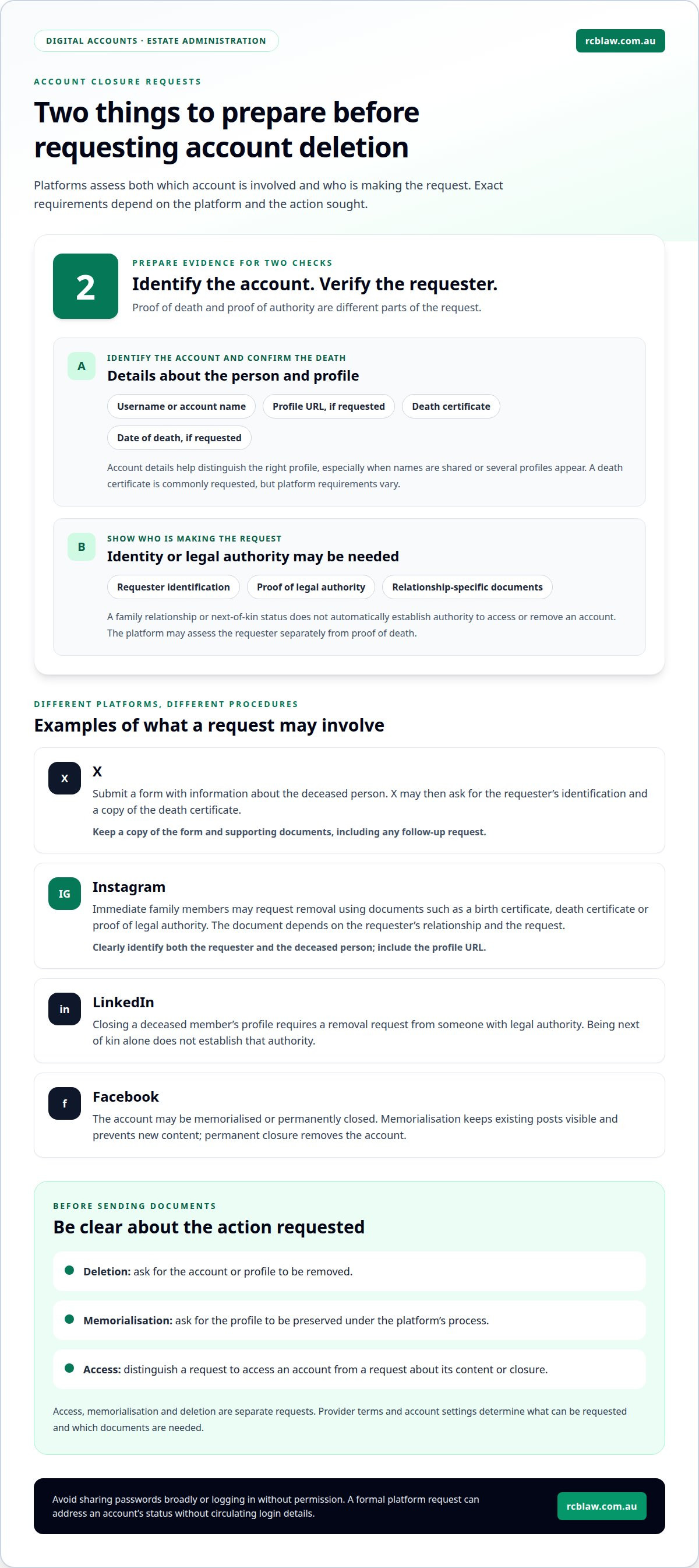
Prepare documents covering two things: the account to be closed and the requester’s authority. Deletion requests usually require a copy of the deceased person’s death certificate and their username. A platform may also ask for the date of death and profile URL. These details help distinguish the right account, especially when people share a name or several profiles appear.
Immediate family members can request Instagram account removal using documents such as a birth certificate, death certificate or proof of legal authority. The required document depends on the requester’s relationship and the request. A family member seeking deletion should clearly identify themselves and the deceased person. Include the profile URL so Instagram can identify the account.
For X, the requester submits a form with information about the deceased person. X may then ask for the requester’s identification and a copy of the death certificate. The form and supporting documents are separate parts of the process. Keep a copy of everything provided, including the account name and any follow-up request, to track the deletion request.
Requirements for removing a deceased member’s profile can vary depending on the platform and the requester’s circumstances. A family relationship alone does not meet this requirement. An executor or other authorised representative should prepare documents showing their authority, along with the member’s profile details. This distinction matters because the platform assesses who is making the request separately from proof that the member has died.
Before sending documents, clarify the purpose of the request: delete an account, remove photos or memorialise a profile. Facebook and other platforms have different processes, so one set of documents may not meet every provider’s requirements. A legacy note with usernames, profile links and account wishes helps identify the right request. Send only documents requested through the platform’s official process, and keep a record of submissions.
Finding a loved one's accounts
Start with records the deceased person kept for their estate. A paper list of platforms, usernames and account instructions can help reveal profiles without guessing passwords. Check whether the executor knows where the list is stored. If a password manager or device contains account details, use only access the person authorised or the executor can lawfully use. Understanding what happens to social media accounts when you die starts with locating accounts and their recorded instructions.
Email can reveal accounts family members haven’t found. Search the deceased person’s inbox for platform names such as Instagram, Twitter, Facebook and LinkedIn. Notifications about followers, password changes or posted content may identify a username or profile link. Record each platform and account separately; an Instagram account may use a different email address from other services. These clues help build an inventory, but a notification does not grant permission to log in.
Devices may provide further clues without anyone signing in. Look for social media apps, saved bookmarks and profile links in contacts or messages. A Twitter notification, for example, may show the account name even if the profile is inactive. An app on a phone does not mean family members have permission to access the account or private messages.
- Record each platform, username and profile link found.
- Keep account details separate from public memorial or deletion requests.
- Note whether information came from estate records, email or devices.
The Digital Legacy Association provides detailed guides for popular platforms, while the Bereavement Advice Centre lists contact details for major digital account providers. These resources can help identify the right provider process once a profile is located. Keep the deceased person’s instructions with estate records, and avoid sharing passwords broadly. For an executor, understanding what happens to social media accounts when you die also means distinguishing account discovery from permission to access it.
Inactive profiles can be easy to overlook when there are no recent notifications. Compare discovered usernames with the deceased person’s written account list, then note any unresolved profiles for the executor. A clear inventory helps family members distinguish accounts they may wish to preserve from those they may ask platforms to remove. Record the person’s stated wishes rather than making assumptions based on old posts.
RCB Law
RCB Law can help you put broader estate-planning wishes in writing through Will Drafting. This can help your executor understand your preferences, including what you would like to happen to digital accounts. Platform terms still determine what families can request after a death, so written wishes offer direction, not a guarantee of account access or deletion.
If you’re reviewing a will or planning how your estate should be managed, RCB Law can help clarify how a will can document your intentions. Contact RCB Law to discuss Will Drafting and your estate-planning needs.
Make Your Digital Wishes Part of the Plan
Digital preferences belong in broader conversations about how your affairs should be handled. Consider the values behind each choice: preserving a public record, protecting private conversations or limiting what remains accessible. These priorities can help loved ones interpret your wishes if a platform’s options don’t match your first preference. Review your instructions as circumstances change.
Understanding what happens to social media accounts when you die can prompt a useful review of your estate planning. Revisit your instructions as your online life changes, and make sure someone you trust knows where to find them. Clear intentions won’t remove every practical difficulty, but they can give family members a steadier starting point during a demanding time.
If you’d like help considering how your broader estate plans reflect your wishes, contact RCB Law for guidance. A considered plan can make your intentions easier to understand and give loved ones greater clarity. Take the next step at a pace that feels manageable.
Frequently Asked Questions
What is a digital legacy?
A digital legacy is the collection of a person’s online accounts, content and instructions about what should happen to them. It may include social profiles, photos, messages, videos and account details. For example, someone might want family photos preserved but a personal profile removed. Recording these preferences alongside estate information helps loved ones understand the person’s wishes without assuming every platform offers the same options.
What happens to Facebook accounts after the account holder dies in Australia?
A Facebook account can be memorialised or permanently closed after its holder dies. Memorialisation may affect whether existing content remains available and whether new content can be added. Closure removes the account from Facebook. The right option depends on the person’s wishes and what the family wants to achieve. Requesting removal is different from preserving the account’s existing presence.
What happens to Instagram accounts when someone dies, and how can they be memorialised or removed?
Instagram allows a deceased person’s account to be memorialised or removed by request. Proof of death is required for memorialisation. Immediate family members can request removal and may need to provide documents such as a birth certificate, death certificate or proof of legal authority. Identify the account clearly, since a username or profile link can distinguish it from profiles with similar names.
What documents do platforms require to report a death or request account removal?
Requirements vary by platform and by the action requested. Deletion requests commonly require a death certificate and the deceased person’s username. A platform may also request the date of death, profile URL, requester identification or proof of legal authority. For example, X may ask for the requester’s ID and the death certificate after a form is submitted. Prepare documents for the specific request.
Can social media accounts, photos, or digital assets be included in an Australian will?
A will can include instructions about digital accounts and specify what should happen to different platforms or content. These directions can guide an executor, but provider terms still affect which actions are available. A separate social media will can record account wishes and who should manage them, but it isn’t legally binding. Keep passwords secure and consider provider terms before recording or sharing login details.


