
A company isn’t automatically the simpler choice, and a discretionary trust isn’t automatically the more flexible one. For a small business, choosing a company versus a discretionary trust means weighing how profits are taxed and distributed, who carries trustee liability, and the ongoing compliance involved. For the 2024/25 financial year, the Australian Taxation Office says an eligible base rate entity may pay company tax at 25% if its aggregated turnover is less than A$50 million and no more than 80% of its assessable income is passive.
It’s understandable to want a structure that protects what you’ve built without adding unnecessary cost or administration. The right fit depends on how you plan to use business profits, who should control distributions, and what legal and reporting responsibilities you can manage. This comparison explains how a company and a discretionary trust differ in distribution rules, liability, asset protection, tax considerations and compliance costs, so you can weigh the trade-offs for your circumstances.
Key Takeaways
- Compare how each structure handles business profits, tax and the ability to distribute income before choosing a path.
- Understand why a discretionary trust’s distribution decisions and trust deed can shape who benefits from trust income and capital.
- Weigh trustee responsibility and potential personal liability against the separate legal identity of a company.
- Look beyond setup costs to ongoing company compliance, then consider which structure’s responsibilities best fit your business.
Should I Set My Business Up As A Trust Or Company?
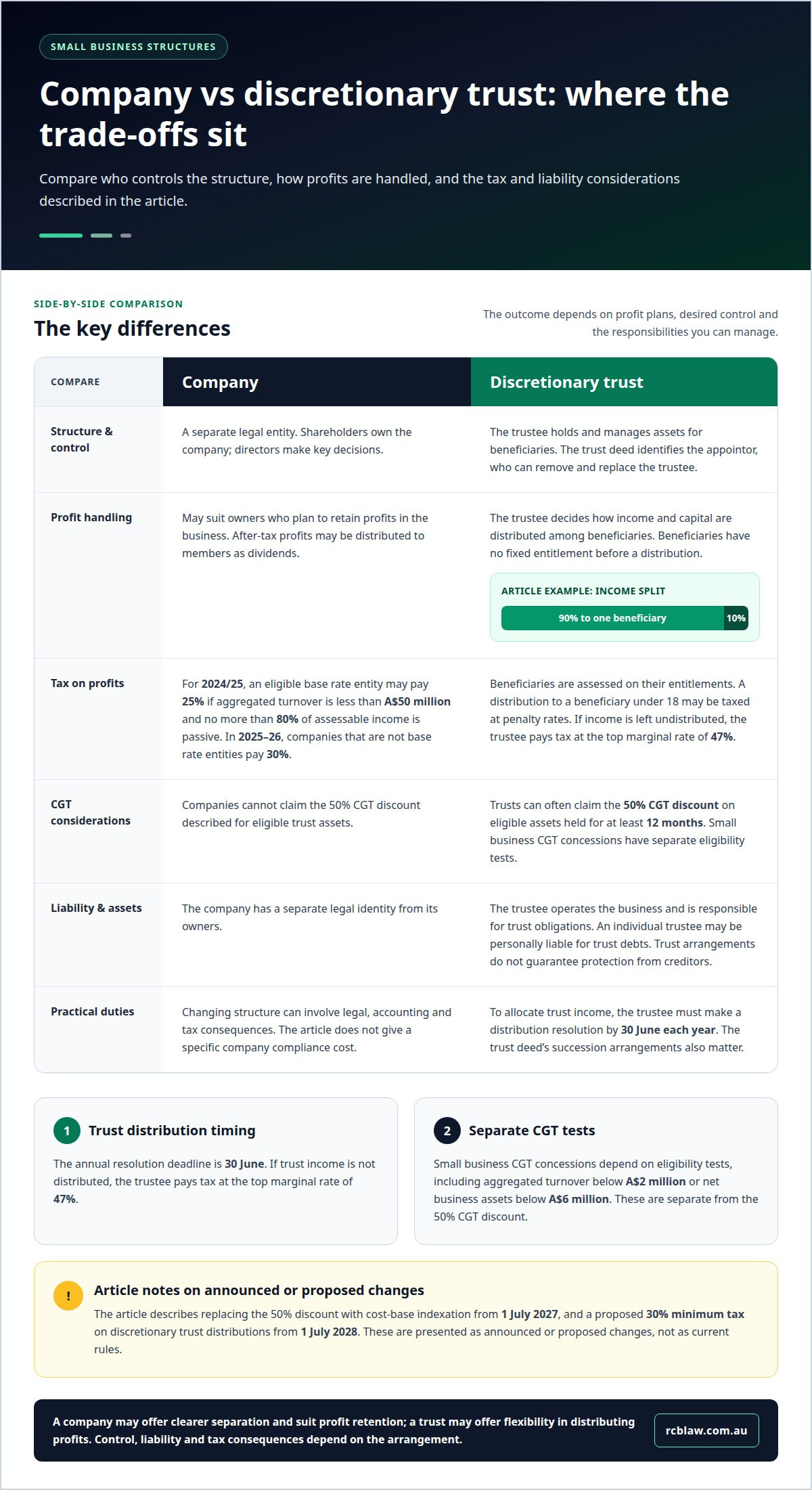
The main difference is who owns or controls business assets and how profits are handled. A company is a separate legal entity; a discretionary trust holds assets for beneficiaries through its trustee.
Company Structure
A company operates as its own legal entity, with shareholders as owners and directors making key decisions. Australian companies are governed by the Corporations Act 2001 (Cth), according to the Australian Government. For the 2024/25 financial year, the Australian Taxation Office says a base rate entity may be subject to a 25% tax rate if aggregated turnover is less than A$50 million and no more than 80% of assessable income is passive.
Discretionary Trust Structure
A trustee holds and manages trust assets for beneficiaries, but beneficiaries have no fixed entitlement before a distribution. The Australian Taxation Office says trusts can often claim the 50% CGT discount on eligible assets held for at least 12 months; companies cannot claim this discount. A trust may suit owners seeking distribution flexibility, while a company offers clearer separation between the business entity and its owners.
Structure Costs and Tax Consequences
Changing structures can involve legal, accounting and tax consequences, so consider them before transferring business assets or operations. For 2025-26, the Australian Taxation Office says companies that are not base rate entities pay a 30% company tax rate. Tax outcomes also depend on how profits are retained, distributed or realised as capital gains; compare those plans before making a change.
Control, Succession and Profit Plans
A trust deed identifies the appointor, who can remove and replace the trustee. If a company acts as trustee, control of its shares affects who can appoint directors and, in turn, who exercises the trustee’s powers. This can shape succession planning. A company may suit owners who plan to retain profits in the business, while a trust can offer flexibility in distributing profits among beneficiaries. Choose based on your profit plans, desired control and asset protection needs.
| Structure | Control | Key consideration |
|---|---|---|
| Company | Shareholders and directors | Separate legal entity |
| Trust | Trustee and appointor | Discretionary distributions |
| Trust with company trustee | Company directors | Trust plus corporate control |
Choose by weighing profit plans, control preferences and the cost and tax effects of changing.
What happens if a trust does not distribute all its income?
If a discretionary trust leaves income undistributed, its trustee pays tax at the top marginal rate of 47%. To allocate trust income, the trustee must make a distribution resolution by 30 June each year. Beneficiaries are assessed on their entitlements, so the trustee cannot simply retain profits without tax consequences. For a company vs discretionary trust for small business comparison, this annual decision is an important practical difference.
A discretionary trust gives its trustee discretion over how much income and capital each beneficiary receives. For example, a trustee may distribute 90% of income to one beneficiary and 10% to another. In a discretionary trust, beneficiaries’ access to trust assets depends on the trustee’s distribution decisions. Keep income and capital distributions distinct: the trust terms and resolution guide who receives each amount.
For distributed income, each beneficiary’s own tax position affects the final outcome. A distribution to a beneficiary under 18 may be taxed at penalty rates. By contrast, a company pays tax on profits, then may distribute after-tax profits to members as dividends. The company rate is 25% for eligible base rate entities or 30% for companies that aren’t base rate entities in 2025-26. This matters when assessing company vs discretionary trust for small business plans to retain or distribute profits.
Small business CGT concessions depend on eligibility tests, not simply whether the business operates through a trust or company. The tests include aggregated turnover below A$2 million or net business assets below A$6 million. These concessions are separate from the 50% CGT discount. Announced changes describe replacing that discount with cost-base indexation from 1 July 2027, while a proposed 30% minimum tax on discretionary trust distributions would start 1 July 2028.
Those proposed trust-distribution changes may affect plans to allocate income among beneficiaries or a bucket company. Keep the timing of distributions, profit retention and any asset sale in view. Advice on business law and trust structures can help clarify how a proposed change relates to your arrangements.
Trustee liability and asset protection
In Australia, a trust can have an individual or a company as its trustee. The trustee operates the business and is responsible for trust obligations, so the choice affects who may face liability when the trust incurs debts.
Trust Asset Protection and Creditors
A discretionary trust’s assets are held by its trustee for beneficiaries, who have no fixed entitlement before a distribution. This can separate control of trust assets from beneficiaries’ personal property, but it does not guarantee protection from creditors. Protection may be affected in family law proceedings or if assets were transferred into the trust to defeat creditors.
Succession depends partly on the trust deed, which identifies the appointor and their power to remove and replace the trustee. A change in appointor can change who controls the trustee’s powers. The deed’s succession arrangements therefore matter alongside decisions about business capital and assets.
Trustee and Director Liability
An individual trustee may be personally liable for trust debts. The trustee also operates the business, so holding it through a trust does not remove personal exposure. A company is a separate legal entity with limited liability, but that does not make trust debts disappear: a company acting as trustee remains responsible in that role.
Directors manage the trustee company and exercise its powers. Keep the roles distinct: the company is the trustee, while its directors make decisions for it. This structure changes where liability sits compared with an individual trustee, but still requires careful administration of trust assets and obligations.
Risks of a Company as Trustee
A company trustee can provide continuity and simplify administration, but it adds a separate registered company to the arrangement. The company must maintain its registration details and meet its own obligations. Consider who controls its shares, since share ownership affects director appointments and, in turn, who exercises the trustee’s powers.
This arrangement does not guarantee asset protection or remove creditor exposure. Trust assets remain subject to the trustee’s responsibilities, and beneficiary protection has limits in the situations described above. Before choosing, weigh the company’s separate legal identity against the added administration and the trust deed’s provisions for control and succession.
Company setup and annual compliance costs
Budget for both establishment and ongoing administration when comparing a company with a trust.
A company is a registered entity with recurring ASIC obligations. It must keep registration details current and pay its annual review fee. A small proprietary company generally doesn’t lodge financial statements with ASIC or have them audited, unless ASIC directs it or shareholders holding at least 5% of voting shares request it.
A trust deed sets out how the trust operates, so setting one up involves decisions about beneficiaries, trustee powers and control. If a company acts as trustee, it must also be registered as a company, bringing separate registration and annual review administration. A trust conducting business under a name other than the trust name must be registered on the business names register.
Choosing a company or trust does not, by itself, determine GST or PAYG withholding obligations. Identify which entity conducts the business and, for PAYG, which entity employs staff. Directors have obligations relating to a company, while the trustee is responsible for operating the trust business. These roles affect who handles records, tax reporting and payments.
Compare the full business structure cost, not just the initial registration. For example, a trust with a corporate trustee combines trust establishment with company administration, while a standalone company avoids a separate trust deed. The marginal tax position and anticipated turnover, including whether turnover is under A$50 million, may also inform planning, but don’t replace a compliance-cost comparison.
For help assessing setup documents and structure responsibilities, discuss your business structure with RCB Law.
RCB Law: Business Law
RCB Law can help you assess the legal implications of choosing or changing a business structure. Our business law services can support you when weighing trustee and director roles, reviewing a trust deed, or planning how ownership and control may pass on. These decisions can affect business operations, personal exposure and succession, so address them before establishing a structure or transferring assets.
Bring the proposed structure and your priorities into the discussion, such as how you plan to manage profits, who should make decisions, and whether the business holds property. RCB Law can help clarify the legal considerations so you can make an informed choice for your circumstances. Contact RCB Law to discuss your business law needs.
Choose a structure that supports your next move
The company vs discretionary trust choice for a small business should support more than today’s administration. Consider how your ownership, decision-making and succession plans may change as the business develops. If the structure also holds property, include that in the legal arrangements rather than treating it as a separate detail.
RCB Law’s business law services can help clarify the legal considerations around business structures and related documents. Where business decisions involve property, our commercial property law and residential conveyancing services may also be relevant. The right legal focus depends on the assets and arrangements involved, so consider the whole picture before making a structural change.
For practical guidance on your options and the legal steps involved, Discuss your options with RCB Law. A clear plan can help you move forward with greater confidence.
Frequently Asked Questions
What is a discretionary trust?
A discretionary trust is an arrangement in which a trustee holds assets for beneficiaries and decides how eligible income or capital is distributed. The trust deed sets the framework for those decisions, including who may benefit and who controls the trustee. For example, a family business may use a trust deed to name family members as potential beneficiaries without giving each person a fixed share before a distribution.
Why Does Your Business Structure Matter?
Your business structure affects who owns business assets, who makes decisions and how obligations are managed. For example, a sole-director company and a trust with an individual trustee create different responsibilities, even if both run the same shop. Structure can also affect whether profits are retained or distributed, succession planning and record-keeping requirements. Review it when ownership, business activity or plans for business assets change.
How is a company taxed?
A company pays tax on its taxable income at the company tax rate, and shareholders may face tax when profits are later distributed as dividends. According to the Australian Taxation Office, eligible base rate entities may pay 25% for the 2024/25 financial year, subject to turnover and passive-income tests. In 2025-26, companies that aren’t base rate entities pay 30%. Retaining profit and paying dividends have different cash-flow effects.
How are profits and losses distributed or retained in a company versus a discretionary trust?
A company can retain after-tax profits for business use or distribute them to shareholders as dividends. A discretionary trust allocates income to beneficiaries under trustee resolutions; undistributed income can be taxed to the trustee at 47%. Losses generally remain within the trust, while company losses can’t be offset against an owner’s personal income. For instance, a loss-making year doesn’t automatically reduce a director’s salary tax.
What are the setup and annual accounting, ASIC, and tax compliance costs for each structure in Australia?
Costs depend on whether you establish a standalone company, a trust or a trust with a corporate trustee. Company expenses can include registration, annual ASIC review, accounting and tax-return preparation. A trust may involve deed preparation and administration, with added company registration and compliance if it has a corporate trustee. Compare the full ongoing workload, including separate records and returns, rather than considering establishment costs alone.
How does liability protection differ between a company and a discretionary trust for a small business?
A company is a separate legal entity with limited liability, while a trust’s trustee is responsible for trust debts and may face personal liability. A corporate trustee separates the trustee role from an individual, but it does not remove the company’s responsibilities. Directors also have duties in their role. Trust arrangements do not guarantee protection from creditors, and beneficiary protection may be affected in family law proceedings or by asset transfers intended to defeat creditors.


