
Imagine you've finally found the perfect buyer for your Sunshine Coast home, only for a building inspector to flag that your beautiful back deck or garden shed was never officially signed off. It's a moment that can turn excitement into pure anxiety as you worry about council fines or the entire deal falling through during due diligence. You aren't alone in this situation, and an unapproved structure doesn't have to mean the end of your sale. Seeking the right legal advice for selling a house with unapproved structures sunshine coast is the first step toward regaining control and protecting your financial interests.
We understand that the "buyer beware" landscape in Queensland can feel like a minefield when you're trying to move on to your next chapter. This guide will show you how to navigate Sunshine Coast Council requirements and QLD disclosure laws with confidence. You'll learn how to protect your settlement from sudden price reductions and shield yourself from future legal claims. We'll walk through the practical steps of retrospective approvals and strategic contract clauses so you can achieve a smooth, low-friction transition to your new home.
Key Takeaways
- Learn how to identify common unapproved structures, such as expanded decks or carports, that often trigger council penalties or buyer concerns during a sale.
- Obtain specialized legal advice for selling a house with unapproved structures sunshine coast to navigate the balance between "buyer beware" principles and your disclosure obligations.
- Compare the practical timelines and costs of seeking retrospective council approval versus the strategic "disclosure shield" when selling a property as-is.
- Discover how a pre-sale audit of your original council-approved plans can help you gather essential documentation and minimize legal liability before listing.
- Understand the role of expert contract drafting in protecting your settlement by using specific clauses that prevent buyers from terminating due to unapproved works.
What Counts as an Unapproved Structure on the Sunshine Coast?
An unapproved structure is any building work completed without the necessary permits or a final inspection certificate. In Queensland, the Building Act 1975 dictates what requires a permit, and these rules are designed to ensure every home meets the safety standards set by the National Construction Code. This legislation remains the primary authority for building compliance, and its rules apply regardless of when the work was actually completed. This means that a deck built fifteen years ago by a previous owner is still your responsibility to disclose or rectify if it lacks a final certificate.
If you’re preparing to list your property, it's vital to understand that even 'minor' additions can lead to major legal headaches during a standard conveyancing search. On the Sunshine Coast, common examples include timber decks that have been widened, garden sheds larger than 10sqm, carports, and converted 'granny flats'. Buyers are more cautious than ever, and their solicitors will specifically look for missing Form 21 Final Inspection Certificates. Relying on expert legal advice for selling a house with unapproved structures sunshine coast early in the process can prevent these discoveries from becoming deal-breakers.
The 'Lifestyle' Trap: Decks, Patios, and Pergolas
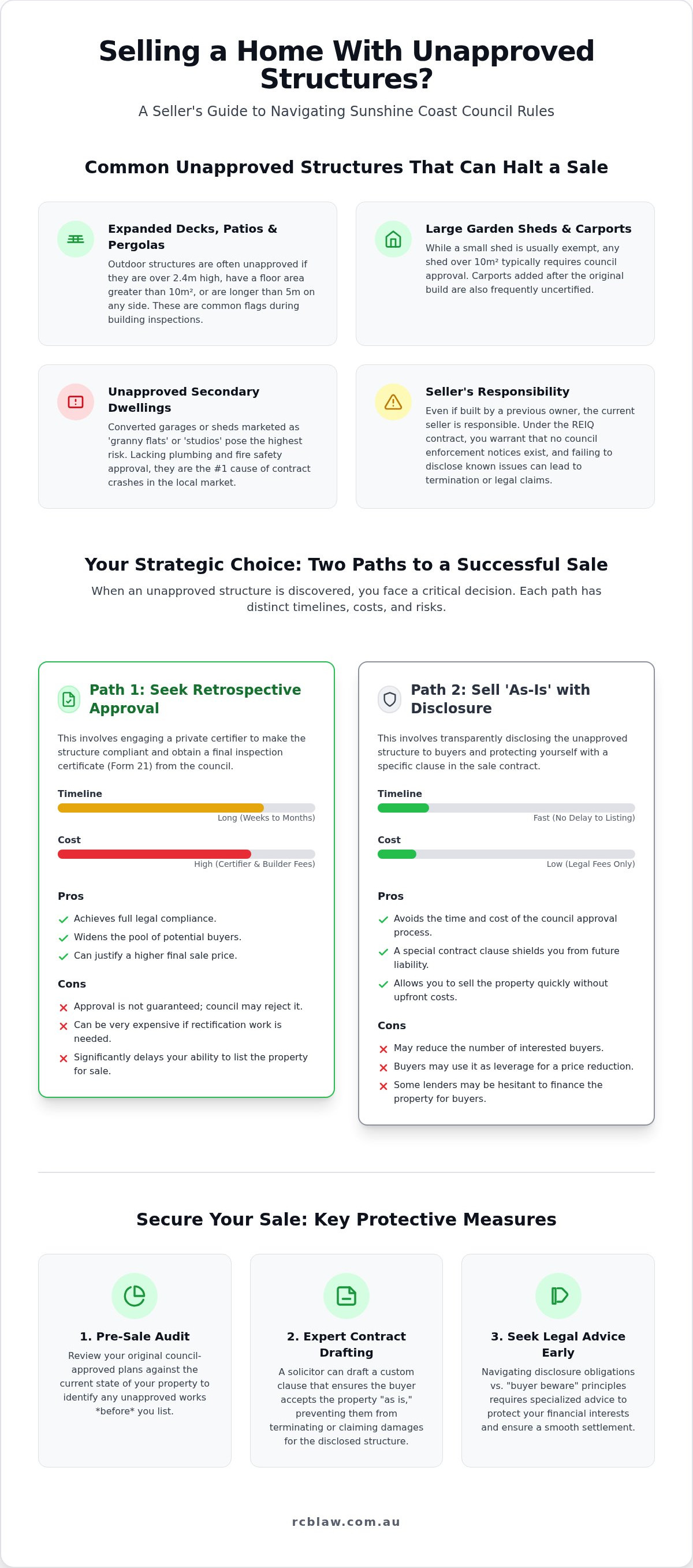
The Sunshine Coast’s beautiful climate encourages outdoor living, but this often leads homeowners into the 'lifestyle trap.' Many residents build decks or patios to enjoy the sun without realizing that structural extensions require professional certification. A pergola or patio requires approval if it changes the structural integrity of the home or exceeds specific size thresholds. Generally, an outdoor structure on the Sunshine Coast is only exempt from a building application if it is no higher than 2.4 metres, has a floor area under 10 square metres, and is no longer than 5 metres along any side.
Secondary Dwellings and Unapproved Studios
Properties marketed with 'dual living' potential are highly sought after, but they carry the highest risk if the secondary unit lacks proper approval. We frequently see 'studios' or 'teenager retreats' that were once garages or sheds. If these spaces were converted without plumbing permits or fire safety assessments, they are considered unapproved habitable spaces. These structures are the #1 cause of contract crashes in the local market because they trigger strict council enforcement and can complicate a buyer's finance approval. Obtaining professional legal advice for selling a house with unapproved structures sunshine coast allows you to address these issues strategically before they jeopardize your sale.
QLD Property Law: Seller Disclosure vs. Buyer Beware in 2026
Selling a property in Queensland has traditionally operated under the principle of caveat emptor, or "buyer beware." This means the responsibility usually falls on the buyer to investigate the property's condition before signing. However, modern QLD law and the standard REIQ contract have introduced significant limitations to this rule. While you aren't always legally required to volunteer every minor defect, you do have a strict obligation to provide a "clear title" at settlement. Unapproved structures complicate this because they represent a potential liability that the local council could order to be demolished or rectified. Seeking early legal advice for selling a house with unapproved structures sunshine coast helps you determine which parts of your property might trigger a breach of these contractual warranties.
The standard REIQ contract includes warranties where the seller confirms that no "show cause" or "enforcement notices" have been issued by the council. If you sign a contract while knowing an unapproved deck or shed is the subject of a council investigation, and you fail to disclose it, the buyer may have the right to terminate the contract or claim damages. These requirements are governed by the Building Regulation 2021, which sets out the compliance framework for all residential structures. If a buyer discovers a lack of certification during their due diligence, they often use it as leverage to demand significant price reductions or walk away entirely.
The Risk of 'Show Cause' Notices
A "show cause" notice from the Sunshine Coast Council is a formal warning that building work appears unlawful. If such a notice surfaces during the contract period, it can paralyze the sale. Under standard contract terms, the seller is typically responsible for any notices issued before the contract date. If the matter isn't resolved, or if the risk was hidden, the legal friction can lead to a collapsed deal. A proactive legal review allows us to identify these risks before you list, ensuring no surprises emerge mid-sale.
Contractual Protection Through Special Conditions
The most effective way to protect your sale is through a "Disclosure Shield." By drafting specific clauses that acknowledge the existence of unapproved structures, you effectively shift the risk back to the buyer. An "as-is, where-is" clause, when tailored correctly, prevents the buyer from using that specific structure as a reason to terminate or seek a price drop. Understanding what is conveyancing in this context is vital; it's about more than just paperwork; it's about strategic risk management. Professional legal advice for selling a house with unapproved structures sunshine coast ensures these special conditions are robust enough to withstand buyer challenges in 2026.
Strategic Options: Retrospective Approval vs. Selling 'As-Is'
Deciding whether to fix an unapproved structure or sell the property as it stands often comes down to a trade-off between time and money. While some owners prefer to rectify issues before listing, others need a faster exit to secure their next move. Obtaining early legal advice for selling a house with unapproved structures sunshine coast allows you to weigh these options based on your specific goals. You must consider the current backlog for building certifiers on the Coast, as waiting for an inspection can delay a settlement by several weeks or even months.
Your choice also dictates the size of your potential buyer pool. Banks are increasingly cautious in 2026; they may refuse to lend against a property if a major unapproved structure is identified during the valuation process. This often limits your market to cash buyers or those with significant equity who aren't reliant on high-leverage finance. Additionally, unapproved works can complicate building insurance for the new owner. If a structure isn't certified, an insurer might refuse to cover damage related to that specific part of the home, giving the buyer significant leverage during price negotiations.
The Path to Retrospective Approval
Obtaining retrospective approval involves engaging a private building certifier to inspect the work and issue the necessary certificates. This usually requires a Form 15 for design compliance and a Form 16 for the physical inspection. While private certifiers often offer a faster path than dealing directly with the Sunshine Coast Council, the process still requires thorough documentation and potential physical upgrades. Please be aware that retrospective approval does not guarantee compliance with current 2026 codes.
Selling 'As-Is' with Full Disclosure
Selling 'as-is' is often the most practical route for a quick, low-friction settlement. This strategy relies on a "Disclosure Shield," where you are upfront about the lack of certification and adjust the listing price to reflect the potential risk. By being transparent, you build immediate trust with serious Sunshine Coast buyers who value honesty over a hidden liability. To make this work, we draft a robust 'Special Condition' for the contract that acknowledges the unapproved work and prevents the buyer from suing or terminating later. This approach provides the legal protection you need to move forward without the stress of a lengthy council approval process.
Steps to Protect Your Sale and Minimize Liability
Taking proactive steps before your property hits the market is the most effective way to ensure a low-friction settlement. We recommend starting with a thorough pre-sale audit by comparing your property's current state to the original council-approved plans. You can request these records from the Sunshine Coast Council to see exactly what has been certified. If you find discrepancies, gather every scrap of documentation you have, including old builder notes, receipts, or even photos of the construction process. Even if these aren't formal certificates, they provide a paper trail that helps your solicitor frame a stronger disclosure. Obtaining professional legal advice for selling a house with unapproved structures sunshine coast at this early stage allows us to review your Form 6 before you even appoint an agent.
Once we identify the gaps, we prepare the contract with specific, protective disclosures tailored to the structure in question. This isn't just about listing the unapproved work; it's about drafting clauses that acknowledge the risk and prevent the buyer from using that risk as a weapon later. Clear, written disclosures are your best defense against the $1,100+ penalty notices the council can issue for unlawful building work. By addressing these issues head-on, you minimize your liability and protect your sale from last-minute surprises.
The Importance of the Pre-Listing Contract Review
Fixing a contract is always cheaper than trying to salvage a collapsed sale. When a buyer's solicitor conducts due diligence, they look for "red flags" like missing Form 21 Final Inspection Certificates or unrecorded structural changes. If these surface mid-sale, the buyer may feel they have the upper hand to demand a price drop. You can read our guide on buying a house with unapproved structures to understand exactly what their legal team will be searching for. Identifying these issues early lets us build a "disclosure shield" that keeps the power in your hands.
Communicating with Your Real Estate Agent
Your real estate agent is a vital partner, but you must manage how they market the property. It's risky to let marketing materials claim an unapproved shed is a "fully lined studio" or a "fifth bedroom" if it lacks habitable room certification. While "puffery" or exaggerated praise is common in real estate, making false claims about unapproved spaces can lead to legal action for misrepresentation. Ensure your agent understands what can and cannot be promised during open home inspections. Correctly categorizing these features in the listing ensures you attract serious buyers who are comfortable with the property's actual legal status. If you're unsure how to phrase your disclosures, contact our property law specialists for a contract review.
How RCB Law Secures Your Sunshine Coast Settlement
Selling a property with non-compliant building work doesn't have to be a source of constant stress. At RCB Law, we've spent over 30 years guiding Sunshine Coast residents through the intricacies of Queensland property law. We understand that your home is your most significant asset, and a discovery of unapproved structures can feel like a threat to your future plans. Our role is to act as your steady guide, providing the expert legal advice for selling a house with unapproved structures sunshine coast necessary to keep your settlement on track.
Our specialized approach to residential conveyancing focuses on proactive risk management. We don't just process paperwork; we actively draft special conditions that shift the legal and financial burden away from you. By identifying potential "contract crashes" before they happen, we create a clear path to a successful sale. This level of mastery comes from decades of local practice, ensuring you're protected by a firm that truly understands the regional market and its specific challenges.
Fixed-Price Peace of Mind
We believe that legal support should be transparent and accessible. When you're dealing with building compliance issues, the last thing you need is the anxiety of mounting legal bills. Our fixed-price conveyancing model ensures you know exactly what your costs are from the very beginning. This transparency allows you to focus on your move while we handle the complex contract negotiations. We pride ourselves on delivering jargon-free advice, ensuring you always feel in control of the process without being overwhelmed by technical terminology.
Local Experts, Regional Results
Every council has its own nuances, and the Sunshine Coast is no exception. Our deep roots in the community mean we understand how the Sunshine Coast Council views specific building issues and enforcement. We maintain strong professional relationships with local certifiers and real estate agents, which helps us facilitate smoother communications when an unapproved deck or studio is on the line. This local insight is often the difference between a deal falling through and a successful settlement. Contact RCB Law for a Pre-Sale Contract Review to ensure your interests are protected before you sign with a buyer.
Secure Your Settlement with Confidence
Selling your property should be a time of excitement, not a period of legal uncertainty. While unapproved decks or sheds can feel like significant obstacles, they don't have to derail your plans. By using strategic disclosure and robust contract clauses, you can move forward with confidence. The key is addressing these issues before they reach a buyer's solicitor, ensuring you remain in control of the negotiation from the first open home.
Navigating the specific requirements of the Sunshine Coast Council requires a steady and experienced hand. At RCB Law, we provide the specialized legal advice for selling a house with unapproved structures sunshine coast that protects your financial interests and minimizes future liability. As local specialists with over 30 years of Queensland property law expertise, we offer fixed-price conveyancing to ensure your transition is as smooth and transparent as possible. We focus on removing the friction from your sale so you can focus on your next chapter.
Protect your sale and get a pre-sale contract review from RCB Law today. You deserve a settlement that is free from last-minute stress and unexpected price drops. We are here to help you turn the page on this chapter with absolute peace of mind and professional support.
Frequently Asked Questions
Do I have to tell the buyer about an unapproved shed or deck?
You aren't legally required to proactively disclose unapproved structures unless the Sunshine Coast Council has already issued an enforcement notice. However, the standard REIQ contract includes warranties that may be breached if you stay silent. Providing clear disclosure through a special condition acts as a shield. It prevents the buyer from claiming they weren't aware of the issue, which is why seeking legal advice for selling a house with unapproved structures sunshine coast is so vital before signing.
Can a buyer pull out of a contract because of an unapproved carport?
A buyer can often terminate a contract if they discover an unapproved carport during their building and pest inspection or due diligence period. Unless the contract contains a specific special condition where the buyer acknowledges and accepts the unapproved work, they may argue the property isn't as described. This discovery frequently leads to intense renegotiations or the deal collapsing entirely. Having a property lawyer draft protective clauses ensures the buyer's right to pull out is strictly limited.
What happens if the Sunshine Coast Council finds out about my unapproved structure after I sell?
In most cases, the responsibility for building compliance passes to the new owner once the sale settles. However, if you've breached specific warranties in the REIQ contract or made false claims during the marketing phase, the buyer might pursue legal action against you for damages. The Sunshine Coast Council typically issues penalty notices to the current registered owner. These fines often start at over A$1,100, which is why clear disclosure during the conveyancing process is your best protection.
Can I get retrospective building approval while my house is on the market?
You can certainly apply for retrospective approval while your property is listed, though the process is often time-consuming. It requires engaging a private certifier and paying an initial inspection fee, which typically costs a flat fee of A$935 for local properties. While this can make your home more attractive to financed buyers, there's no guarantee the structure will meet 2026 building codes. Many sellers find it more efficient to disclose the structure and adjust the price instead.
Will an unapproved structure stop a buyer from getting a mortgage?
An unapproved structure can definitely impact a buyer’s ability to secure a mortgage. Lenders often send out valuers who may flag obvious non-compliant work, such as a converted garage or a large deck. If the bank determines the structure poses a safety risk or lacks a Form 21, they might reduce the loan amount or refuse the application entirely. This is a common reason why contracts crash, especially when buyers rely on high-leverage finance to enter the market.
Is an 'as-is' clause enough to protect me from being sued?
A generic "as-is" clause is rarely enough to provide full legal protection in 2026. To be effective, the contract must include a tailored special condition that specifically identifies the unapproved structure and confirms the buyer has performed their own due diligence. Without this level of detail, a buyer might still claim they were misled about the property's legal status. Expert legal advice for selling a house with unapproved structures sunshine coast ensures your contract is robust enough to withstand future litigation.
How much does it cost to fix unapproved building works before a sale?
The financial cost of rectifying unapproved works varies significantly based on the complexity of the building. In Queensland, retrospective building approvals generally range from A$3,000 to A$15,000. This doesn't include the cost of any physical repairs needed to bring the work up to current safety standards. If you choose not to fix the issue and the council intervenes, you could face penalty notices starting at over A$1,100. Weighing these costs against a potential price reduction is a key strategic decision.
Does building insurance cover unapproved structures?
Building insurance policies typically exclude coverage for any damage caused by or to unapproved structures. If an unapproved deck collapses or a non-compliant studio is damaged in a storm, the insurer will likely reject the claim. This creates a significant risk for the incoming buyer, which they often use as leverage to negotiate a lower sale price. Ensuring the buyer is aware of this insurance gap through proper legal disclosure is essential for a smooth, low-friction settlement.


