
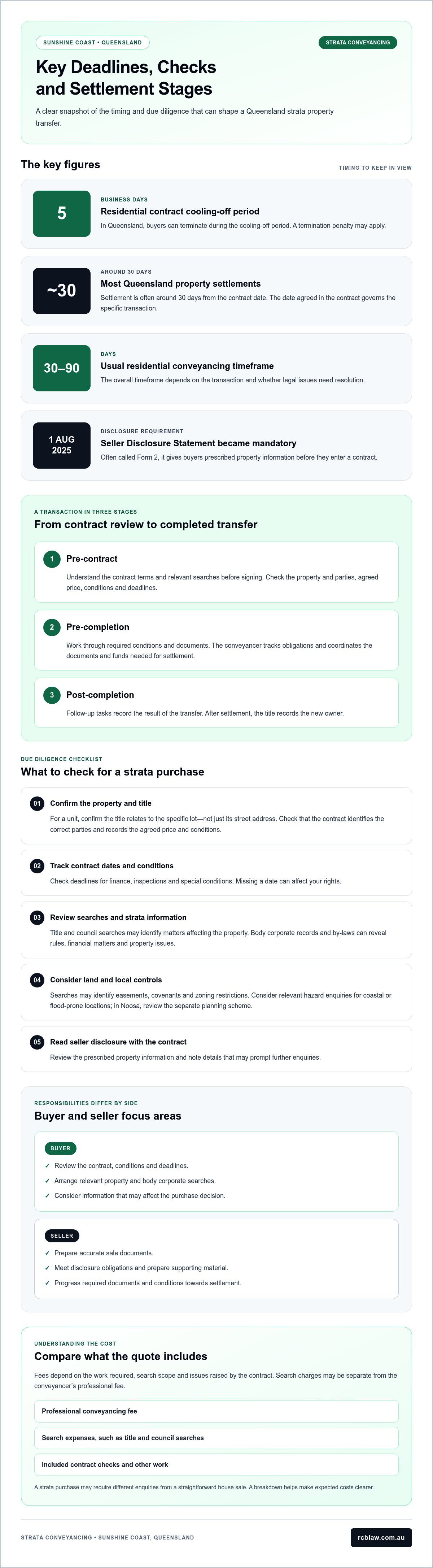
A strata purchase involves more than transferring the title. Strata conveyancing on the Sunshine Coast includes reviewing the contract, arranging relevant property and body corporate searches, tracking contract conditions and coordinating settlement. In Queensland, residential property contracts typically have a 5-business-day cooling-off period, during which a buyer can terminate, although a termination penalty may apply.
If you’re buying or selling a strata property, it’s natural to want clear answers about the conveyancing process and what to check before settlement. Contract deadlines, body corporate records and by-laws can all affect your decisions. Knowing what each step involves helps you move forward with confidence.
This guide explains what a conveyancer does, how buyer and seller services differ, and what fees, contract checks and strata searches may involve. You’ll also learn how a transaction moves from contract review to settlement, and how early legal guidance can clarify your next steps.
Key Takeaways
- A conveyancer helps progress a title transfer by reviewing the contract, tracking conditions and coordinating settlement.
- Buyer and seller responsibilities differ, so understanding the steps on your side can help you prepare the right information at the right time.
- Body corporate records and by-laws can reveal rules, financial matters and property issues that may affect your decision.
- Search charges and professional fees can depend on the work required, including the searches and contract checks involved.
- Gathering identity, finance and contract documents early can make the purchase process easier to manage.
Looking for a Conveyancer for a Sunshine Coast property?
A conveyancer manages the legal steps that move a property transaction from contract to settlement. With strata conveyancing on the Sunshine Coast, buyers should understand how the title, contract conditions and property searches affect the transfer of ownership.
Property Title Transfers
A title transfer changes the registered ownership of a property from seller to buyer. Conveyancing coordinates the documents and settlement steps needed to complete that change. Check that the contract identifies the correct property and parties and records the agreed price and conditions. For a unit, confirm that the title relates to the specific lot, not just its street address.
Contract Review and Property Searches
A Queensland contract of sale sets out the price and conditions that must be met before settlement. Check deadlines for finance, inspections and special conditions, as missing a date can affect your rights. Pre-contract searches may identify easements, covenants and zoning restrictions, including those relevant to planned renovations. A conveyancer tracks contractual obligations and helps arrange settlement.
The work differs for buyers and sellers. A buyer’s review focuses on the property, the contract conditions and information that may affect the purchase decision. A seller’s preparation focuses on accurate contract documents and meeting disclosure obligations. Queensland’s Seller Disclosure Statement became mandatory from 1 August 2025. The statement gives buyers prescribed property information before they enter a contract, making careful preparation important for selling.
Your Sunshine Coast lifestyle or investment plans should guide your due diligence. If you’re considering a coastal unit as a permanent home, focus on access, permitted use and ongoing body corporate obligations. Investors should also consider whether zoning or an easement affects the intended use. Coastal or flood-prone locations may warrant relevant hazard enquiries. In Noosa, consider the separate planning scheme when reviewing local controls.
Commercial property conveyancing also transfers ownership, but the contract terms and obligations may differ. If you’re buying premises for a business, understand what the contract says about permitted use, included fixtures and settlement requirements. The transaction may also involve a lease or business arrangements alongside the land transfer. Reviewing each document helps clarify what you’re acquiring.
Settlement completes the transfer and meets the transaction’s financial obligations. Most Queensland property settlements take around 30 days from the contract date, although the agreed contract date governs the specific transaction. Sunshine Coast settlements are commonly completed electronically. Before settlement, the conveyancer coordinates required documents and funds; afterwards, the title records the new owner. This sequence gives buyers and sellers clear milestones for completing the transfer.
Sunshine Coast conveyancing services for buyers and sellers
Buying or selling property on the Sunshine Coast involves different legal tasks for each party. Conveyancing helps manage those tasks from preparing the contract through to completion and any required follow-up.
For buyers, the work can include reviewing the contract, arranging relevant searches and tracking applicable conditions. Sellers need accurate sale documents and support meeting disclosure obligations. The tasks depend on the transaction: a strata buyer may need body corporate information, while a seller needs to prepare property documents. Clear responsibilities help both parties progress towards settlement.
Seller Disclosure Statements
Queensland’s Seller Disclosure Statement became mandatory from 1 August 2025. Often referred to as Form 2, it gives buyers prescribed property information before they enter a contract. Sellers should prepare the statement and supporting material carefully, so the information is ready at the appropriate stage. Buyers should review the disclosure alongside the contract, noting details that may prompt further enquiries about the property.
Conveyancing has three broad stages: pre-contract, pre-completion and post-completion. Before signing, buyers need to understand the contract terms and relevant searches. Between contract and settlement, each party works through required conditions and documents. After completion, follow-up tasks help record the outcome of the transfer. For a Sunshine Coast purchase, the property type and agreed conditions determine what needs attention.
Buyer and Seller Service Prices
Buyer and seller service fees depend on the transaction and are provided after a quote request. The cost can reflect the professional work required, the scope of title and council searches, and issues raised by the contract. A strata purchase may require different enquiries from a straightforward house sale. Compare what each quote covers, including searches and contract work, rather than looking at the service fee alone.
Search charges may be separate from the conveyancer’s service fee. A buyer’s transaction, for example, may require title and council searches to identify matters affecting the property. Ask for a breakdown showing professional fees, search expenses and included work. This makes the expected costs clearer without relying on a general market estimate.
Timing also affects how the parties organise their work. Queensland residential conveyancing usually takes between 30 and 90 days, depending on the transaction and whether legal issues need resolution. Buyers and sellers can use the contract milestones to plan document preparation, finance arrangements and moving dates. For tailored help with a Sunshine Coast purchase or sale, explore residential conveyancing guidance.
Body corporate records and strata search reports
Buying strata differs from buying a house: you acquire a lot within a scheme, along with shared property and body corporate arrangements. Your review should cover both the lot’s title and the scheme’s records, by-laws and relevant council information.
Body Corporate Records
A body corporate search report can help you understand the scheme’s records and by-laws before committing to a unit. Review rules affecting pets, parking or renovations, and look for recorded matters that could influence how you plan to use the lot. Noosa waterfront properties may also warrant enquiries about tidal boundaries. A solicitor can interpret the search findings alongside the contract.
Local authority searches add a separate layer of due diligence. Noosa separated from Sunshine Coast Council in 2014 and has its own planning scheme, so the property’s location determines which council information is relevant. Searches may identify zoning restrictions, easements or covenants affecting the lot. For a Sunshine Coast property, connect each result to your plans, such as renovating, leasing or using the unit as a home.
Strata Purchase Documents
Start with the contract of sale and Seller Disclosure Statement, then review available body corporate records and by-laws. These documents help you compare the property as advertised with its legal and scheme information. Check that the lot details match across the contract and title search. Note any questions about shared facilities, restrictions or obligations to follow up before settlement.
A title search identifies the registered owner and may show registered interests affecting the property. Compare the title details with the contract, including the lot description and any listed easements or covenants. If someone acts for a buyer or seller under a power of attorney, the conveyancer should review that authority and ensure the transaction documents use consistent party details. These checks clarify who can act and what interests affect the transfer.
Search costs may be additional to the conveyancer’s service fee. Sunshine Coast conveyancing costs can include title and council search charges, while a strata transaction may also involve obtaining and reviewing body corporate records. The work depends on the property and the information being investigated. A clear breakdown separates professional work from third-party search expenses, helping buyers understand what each cost covers.
Searches matter at different points for buyers and sellers. Buyers use them to assess the property before proceeding; sellers may need accurate property details to prepare transaction documents. When selling or buying a unit in Noosa, keep the council location and body corporate information in view. These checks help identify legal issues before settlement.
Fixed-fee conveyancing
A fixed-fee quote sets an agreed professional fee for the conveyancing work described. For a Sunshine Coast residential purchase, it can make the legal service component easier to budget for and reduce the risk of unexpected professional invoices on settlement day. It doesn’t necessarily include every transaction expense. Search charges and other disbursements may be separate, so review the written scope.
Ask for a quote that describes the work covered, rather than relying on the words “fixed fee” alone. It should clarify whether contract review, settlement coordination and communication about conditions are included. For a strata purchase, check whether the scope covers body corporate records or additional enquiries. These details help you understand how the service fits your transaction.
The fee depends on the transaction and is provided after a quote request. Factors include whether you’re buying or selling, the property type, required searches and any complex contract or title issues. A residential unit with body corporate records may require different work from a straightforward house transfer. A commercial property transaction may involve distinct documents and obligations, so the scope should reflect those tasks.
Separate the professional fee from third-party expenses. Sunshine Coast conveyancing costs can include title and council search charges as well as the conveyancer’s service fee. For example, a search to examine an easement is a separate cost item from contract review. A written breakdown shows which amounts relate to legal work and which relate to searches.
Before proceeding, compare the quote with the tasks your transaction needs. Use this simple review:
- Match the property type and transaction, such as buying a strata unit or selling a house.
- Identify the searches and records included, and note separately charged expenses.
- Check how the quote treats extra work if a title issue or contract concern arises.
- Confirm the stated service covers the steps leading to settlement.
These questions help you assess value without relying on an industry-wide price range. They also give the conveyancer a clearer picture of the work involved, helping shape a quote for the transaction. Buyers in Brisbane or on the Sunshine Coast can take the same approach: define the property, explain the transaction and identify known complications before comparing service scopes.
A fixed fee is most useful when its scope is clear. If a body corporate search or unusual contract condition adds work, the quote’s terms explain how it is handled. Reviewing those terms early helps you budget for conveyancing and understand which tasks support the transaction through to settlement.
What documents are needed to buy a strata property in Queensland?
A Queensland strata purchase involves documents about both the individual lot and its body corporate scheme. Start with the contract of sale, Seller Disclosure Statement, title information and available body corporate records. Together, they help you understand the agreed terms, the lot being transferred and scheme rules that may affect your plans.
Organise the documents by what each helps you assess. The contract sets out the price, property details and conditions. The Seller Disclosure Statement provides prescribed property information. Body corporate records and by-laws explain scheme matters and rules. Title and council searches may identify registered interests and planning restrictions. Keeping these materials together makes it easier to compare details and ask focused questions.
- Contract of sale: Check the lot description, purchase price, included items and conditions, such as subject to finance.
- Seller Disclosure Statement: Review the disclosed information against the contract and note any details needing explanation.
- Body corporate records and by-laws: Look for rules about pets, parking or renovations, and records relevant to the scheme.
- Title and council search results: Compare the registered lot details with the contract and note easements, covenants or zoning restrictions.
Queensland’s Seller Disclosure Statement became mandatory from 1 August 2025. Read it before signing, alongside the contract, rather than treating it as a substitute for reviewing the sale terms. If an appliance or fixture matters to your decision, check that the contract records it as an inclusion. That small comparison can prevent uncertainty about what the purchase covers.
When reviewing strata records, focus on how the scheme operates, not just the unit’s interior. A by-law may affect a planned renovation or pet, while body corporate records may raise questions about shared areas or obligations. In Noosa, a waterfront or strata purchase may also warrant enquiries about tidal boundaries. Keep a written list of questions and the documents they relate to.
Search results provide information beyond the seller’s documents. A title search helps confirm the registered owner and interests affecting the lot. Council searches may provide relevant zoning information. Compare the findings with the contract’s lot description and your intended use. If you’re planning alterations, for example, pay close attention to easements and planning restrictions before proceeding.
Use the contract dates to organise document review and follow-up. Residential conveyancing in Queensland usually takes between 30 and 90 days, depending on the transaction and whether legal issues need resolving. Keep signed documents, search results and written clarifications in one file, so key details remain accessible as settlement approaches.
For legal help reviewing strata purchase documents and contract terms, get assistance with your property purchase.
RCB Law: Residential Conveyancing
RCB Law assists with Sunshine Coast unit purchases, sales and property transfers. Its residential conveyancing service covers the legal work involved in buying and selling, including contract review, property searches and settlement steps. Bring the contract, Seller Disclosure Statement and any body corporate records you’ve received so the transaction details can be considered together.
If you’re purchasing commercial premises rather than a home, Commercial Property Law may better fit the transaction. RCB Law also provides Business Law and Will Drafting for clients with separate legal needs. For help with a residential property matter, contact RCB Law.
Take the Next Step with Confidence
A property decision can extend beyond settlement. Plans for the unit, future renovations, leasing or eventual resale may shape the questions worth resolving now. Note any outstanding concerns and connect each to the relevant contract term, title detail or body corporate record. This gives your next discussion a practical focus and helps you consider how the purchase fits your longer-term plans.
For strata conveyancing on the Sunshine Coast, RCB Law assists with residential property transactions and related legal considerations. The firm also offers Commercial Property Law and Business Law, which may be relevant when a property purchase involves business premises or ownership arrangements. Clear legal guidance can help you understand the steps ahead and make informed decisions.
When you’re ready to discuss your conveyancing matter, contact RCB Law about conveyancing. A considered next step can help you move forward with clarity.
Frequently Asked Questions
What does a conveyancer do?
A conveyancer manages the legal and administrative steps needed to transfer property ownership. They can review a sale contract, coordinate relevant searches, monitor conditions and organise settlement documents. This work helps buyers and sellers understand what needs to happen next and when. If a search identifies an easement or another registered interest, a conveyancer can explain how it relates to the contract and the property’s proposed use.
Anything to check when buying a Sunshine Coast holiday unit?
Check whether the unit’s permitted use and body corporate rules fit your holiday plans. Don’t assume short-stay letting is allowed just because the property is advertised as a holiday unit. Review scheme by-laws, council planning information and relevant coastal or flood enquiries. In Noosa, the separate planning scheme is relevant. Also consider how shared facilities, parking and noise rules may affect your intended use and guests’ experience.
Do you offer fixed pricing?
Fixed-fee conveyancing sets an agreed professional fee for a defined scope of work. Total transaction expenses may still include separate search charges, such as title or council searches. A tailored quote depends on the transaction and is provided after a quote request. The property type, contract work, searches and any issues requiring additional legal attention help determine the scope and cost.
What is a strata title search and what does it reveal about a Sunshine Coast property?
A title search checks the land title record for the individual strata lot. It may show the registered owner and registered interests, such as an easement or covenant. Compare the lot description with the contract to confirm they refer to the same property. An easement affecting access or services, for example, may matter if you’re planning changes or assessing how the unit can be used.
How do body corporate records, levies and meeting minutes affect a strata purchase?
Body corporate records help buyers understand the scheme’s rules, finances and recorded decisions. Read levy information alongside meeting minutes, noting proposed work, maintenance discussions or costs that could affect your ownership. Check the by-laws for practical restrictions, such as rules about pets or renovations. If the minutes mention an unresolved issue, consider how it relates to your plans for the unit before deciding how to proceed.
What are the Queensland rules for reviewing body corporate records before settlement?
Arrange to review scheme records early enough for the findings to inform decisions under the contract. Focus on by-laws, meeting records, levy information and matters involving shared property. Contract conditions and deadlines shape when you can make decisions, so allow time to raise questions before settlement. Record each concern and the document it relates to, making follow-up clear and specific.
What risks should buyers check for in Sunshine Coast strata schemes?
Look for risks that could affect your intended use, future costs or enjoyment of the unit. These may include restrictive by-laws, unresolved maintenance matters, proposed body corporate expenditure, easements or planning limits. For coastal properties, relevant due diligence can include coastal hazard enquiries; some mapping models erosion and storm tide through 2100. A low-lying location also deserves attention to flood-related information and the property’s surrounding context.


