
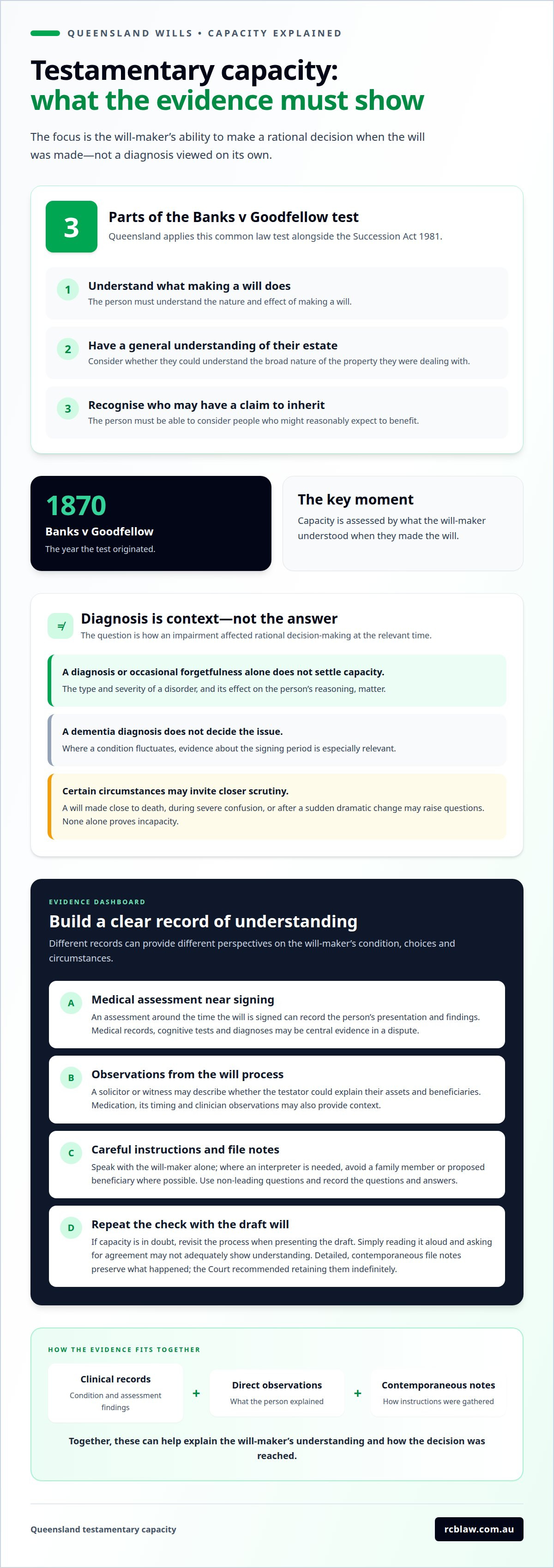
In Queensland, testamentary capacity when making a will is assessed under the Banks v Goodfellow test. The will-maker must understand what making a will does, have a general understanding of their estate, and recognise that certain people may have a claim to inherit. A diagnosis or occasional forgetfulness does not, on its own, settle the question. The focus is whether the person could make a rational decision.
It is understandable to worry that illness, a late change to a will or family disagreement could lead to a challenge. A testator cannot prevent someone from raising concerns, but clear evidence of their understanding when the will was made can help explain how the decision was reached.
This article explains how Queensland’s legal test works, how mental impairment and medical assessments may be considered, and what steps can help create a clearer record of the will-maker’s intentions. It also covers what a capacity challenge involves and why the timing and circumstances of making a will can matter.
Key Takeaways
- A medical assessment made around the time a will is signed, alongside clear records of the discussions, can help document the will-maker’s decision-making.
- When considering mental impairment, the focus is its effect on rational decision-making, not simply the presence of a diagnosis or occasional forgetfulness.
- Understand how Queensland applies the Banks v Goodfellow test and what evidence may help show the will-maker understood their decisions.
- Learn who may challenge a will and why the timing of a probate caveat can matter.
Medical assessment of testamentary capacity
A medical assessment can help show a will-maker’s condition when they sign. In Queensland disputes, medical records, including cognitive tests and diagnoses, are typically central evidence. The key question is how the person understood and made decisions at the relevant time, not simply whether a diagnosis appears in their records.
Timing matters. A physician’s assessment conducted around the time the will is signed can provide evidence if someone later challenges it. The report is most useful when it records the person’s presentation and assessment findings, rather than relying only on an earlier diagnosis.
Medication and the setting in which the will is signed can also provide context. For example, records may show which medicines were prescribed, when they were given, and what clinicians observed during a hospital stay. These details can help explain the circumstances surrounding the signing, but do not, by themselves, establish whether the person had testamentary capacity.
Medical evidence sits alongside observations from people involved in preparing and signing the will. A solicitor or witness may be able to describe whether the testator explained their assets and beneficiaries. Those observations can help a court assess what the person understood, while clinical records provide another perspective.
The interview itself matters too. The Court recommended speaking with the will-maker alone. If an interpreter is needed, it recommended avoiding a family member or proposed beneficiary where possible. Instructions should be gathered using non-leading questions, with the questions and answers carefully recorded.
If capacity is in doubt, the solicitor should repeat the process when presenting the draft will. Simply reading the document aloud and asking for agreement may not adequately show the testator’s understanding. Detailed, contemporaneous file notes can preserve what happened; the Court recommended retaining them indefinitely. Capacity and possible undue influence should both be considered in every will matter, even when concerns are dismissed.
A medical assessment can strengthen the evidence, but it does not replace the will-maker’s own instructions or the record of how they reached their decision.
Mental impairment and rational decision-making
In Queensland, occasional confusion or forgetfulness alone does not establish a lack of testamentary capacity. The focus is on the type and severity of a disorder and its overall effect on rational decision-making. A diagnosis provides context, but does not answer whether the person could make the will at the relevant time.
Consider what the will-maker could understand and explain when making decisions about their estate. Could they discuss who might inherit and why they had chosen particular beneficiaries? Did they understand the broad effect of changing their will? These practical questions help distinguish cognitive difficulty from an impairment that affects the decision itself.
For example, the hypothetical case of Helen involves an 82-year-old with early-stage dementia. She retained enough lucidity to discuss her finances over two years. Those conversations provide context, but they don’t alone establish her capacity when she signed a particular will. The assessment centres on her decision-making at that time.
Mental illness and psychotic episodes must also be considered in terms of their effect on the person’s reasoning. The diagnosis alone does not determine capacity. Relevant questions include whether the person could understand the will’s effect, consider their estate and beneficiaries, and make a rational decision. A psychotic episode may raise concern if it coincides with the will-making process and affects those abilities.
Timing and surrounding circumstances can lead to closer scrutiny. A will made very close to death or during severe confusion may prompt suspicion in a dispute. A sudden, dramatic change in who receives the estate can also raise questions. Neither circumstance alone proves incapacity, but each makes the person’s reasoning and the timing of any impairment especially relevant.
Clear explanations for a change, considered alongside the will-maker’s actual understanding, help put the decision in context. The central issue is the person’s rational decision-making when the will was made, not their age, diagnosis or a single moment of forgetfulness viewed in isolation.
Queensland’s legal standard for testamentary capacity
Queensland applies common law principles alongside the Succession Act 1981. The test originated in Banks v Goodfellow, decided in 1870, and focuses on the will-maker’s understanding when making the will.
The Presumption of Capacity
A will-maker is presumed to have adequate testamentary capacity unless compelling evidence shows otherwise. Age, illness or family disagreement alone does not displace that presumption; evidence must address the person’s understanding and decisions. Testamentary capacity concerns making a will and distributing an estate. Capacity to make an enduring power of attorney concerns authorising someone to make decisions during a person’s life, so the legal questions differ.
Dementia and Fluctuating Capacity
In Queensland, a person with dementia is assessed by their decision-making when they made the will, not by diagnosis alone. A fluctuating condition may affect someone’s clarity at different times, so evidence about the signing period matters. For example, someone may discuss their estate coherently during one meeting but appear confused later. The relevant question is whether they understood their will when it was signed.
The Effect of Lacking Capacity
If a Queensland court finds that the will-maker lacked testamentary capacity, it can invalidate the will. If there is no valid earlier will, the estate is distributed under intestacy law. A person may challenge for lack of capacity only if they are named in the deceased’s current or previous will, or would be entitled to inherit if the deceased died intestate.
The challenger must file a probate caveat before the Supreme Court grants probate to the executor. This raises the challenge before probate is granted, but does not itself prove incapacity. The court considers the evidence about the will-maker’s capacity. If an earlier valid will exists, it may become relevant after the later will is invalidated.
Meaning of testamentary capacity
In Queensland, testamentary capacity means having the mental ability to make a will. The Banks v Goodfellow test examines three connected areas of understanding: the will’s effect, the general contents of the estate, and people who may have a right to inherit. Together, these help show whether the decision reflects the will-maker’s own reasoning.
First, the person must understand the effect of making a will. In practical terms, they should grasp that the document sets out how their estate is to be dealt with after death. For example, someone who thinks they are signing a routine banking form may not understand the nature of the document. The issue is understanding what the will does, not simply being able to sign it.
Second, the test requires a general understanding of the assets in the estate. The will-maker does not need to recite every account balance or possession. They might identify a home, savings and valuable belongings without recalling exact figures. The focus is whether they can appreciate, in broad terms, what property the will concerns.
Third, the will-maker must understand that certain people may have a right to inherit from the estate. They should have a general awareness of the people connected to that decision. For instance, a parent changing a will should understand which close family members may expect consideration. The test examines awareness, not whether the will-maker chooses a particular distribution.
These questions work together. Someone may remember their home but fail to understand that a new will changes who receives it. Another person may explain their chosen beneficiaries but not grasp the broad extent of their estate. In each case, the assessment centres on the person’s understanding when making the will.
If you’re preparing a will in Queensland, discuss your will-making circumstances with a lawyer to clarify how these principles apply to your decisions.
RCB Law: Residential Conveyancing
RCB Law drafts wills for people preparing a will or reviewing how it reflects their intentions. If questions about testamentary capacity arise, discussing the circumstances before finalising instructions can help clarify what the will-maker wants and how the document should express those wishes.
This service can be relevant when health changes, a proposed distribution differs from an earlier will, or the will-maker wants to understand the drafting process. Clear instructions matter, especially when decisions involve family members, property or business interests. RCB Law can help prepare a will that sets out the will-maker’s intentions.
For guidance on preparing or updating a will, contact RCB Law.
Take the next step with confidence
Thinking about testamentary capacity when making a will in Queensland can prompt you to clarify your intentions before circumstances become more complex. Consider what you want your will to achieve, who needs to understand your wishes, and whether changes in your health or financial affairs make a review timely.
RCB Law drafts wills. For people whose estate planning connects with property or business matters, the firm also offers residential conveyancing, commercial property law and business law. A clear discussion of your circumstances and the document you want to prepare or update is a practical starting point.
For practical guidance on your will, contact RCB Law to discuss your will. Taking that step can help you move forward with greater clarity.
Frequently Asked Questions
Can A Testator Forestall A Challenge?
A testator cannot prevent someone from challenging a will, but careful preparation can create a clearer record. Keeping earlier wills and noting the reasons for significant changes can help explain the decision. A medical assessment near signing and contemporaneous solicitor notes may also provide useful evidence. These steps document the circumstances; they do not bar a challenge or determine its outcome.
What is the legal test for testamentary capacity in Queensland?
Queensland applies the common law test from Banks v Goodfellow, alongside the Succession Act 1981. The legal test for testamentary capacity when making a will in Queensland focuses on the person’s understanding at the time of making it. The test considers whether they understand the will’s effect, their estate generally, and people with potential inheritance claims.
What four requirements did Banks v Goodfellow establish for testamentary capacity?
The four requirements are that the will-maker understands the nature and effect of making a will; has a general understanding of the property being distributed; can consider the claims of people who may expect to benefit; and is not affected by a disorder of the mind that distorts their judgment or influences their choices. The final requirement concerns the disorder’s effect, not simply its diagnosis.
Who assesses and proves testamentary capacity when making a will in Queensland?
A physician can assess capacity and provide medical evidence, while the solicitor records instructions and observations. If a dispute reaches court, the Supreme Court considers the evidence and decides whether the will-maker had capacity. A will-maker is presumed to have adequate capacity unless compelling evidence shows otherwise. Medical opinion informs the question; it does not replace the court’s legal decision.
What evidence should a Queensland solicitor gather to assess capacity before a will is signed?
A useful record may include the will-maker’s own answers about their wishes, broad assets, intended beneficiaries and reasons for any substantial change. Relevant medical records can add context, including cognitive assessments, diagnoses and observations around signing. The solicitor can record questions and answers, note who attended, and document how the will-maker responded when reviewing the draft.
When should a doctor assess testamentary capacity in Queensland, and what does an assessment cost?
A physician’s assessment is most relevant close to the time the will is signed, particularly if health changes or confusion raise concerns. A contemporaneous written assessment can provide evidence about the testator’s condition at that time. The cost depends on the clinician, the scope of the assessment, and whether reviewing records or preparing a written report is involved; there is no single fee for every assessment.


