
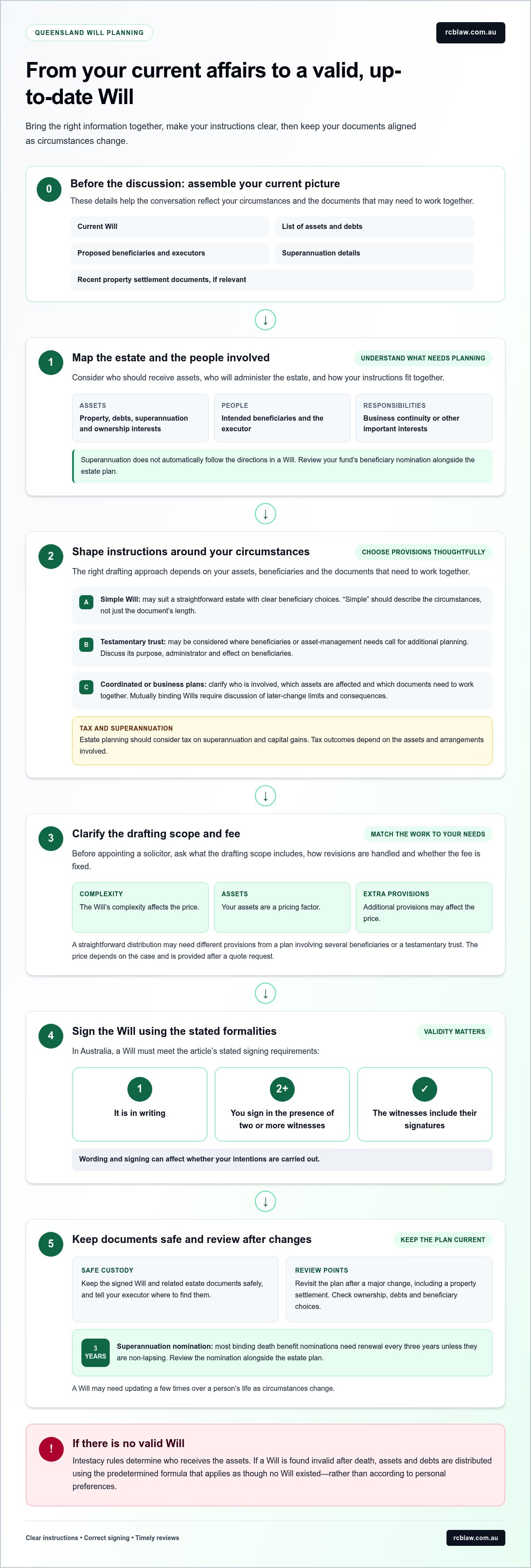
A Will only guides your estate if it is valid and clearly expresses your wishes. In Australia, it must be in writing, signed by you in the presence of two or more witnesses, and include their signatures. A will drafting lawyer on the Sunshine Coast can help you prepare clear instructions and reduce the risk of errors that may leave your estate subject to intestacy rules.
It’s understandable to want the process to feel straightforward, especially when making decisions about family, property and other assets. But a Will needs to do more than name beneficiaries: its wording and signing can affect whether your intentions are carried out.
This article explains how a wills lawyer can help you document your wishes, what may happen to assets if someone dies without a valid Will, and the risks of preparing one without legal advice. You’ll also learn what to consider when arranging Will drafting in Queensland and how to take a practical next step.
Key Takeaways
- Consider how changes in your circumstances, assets and plans for beneficiaries may affect your estate planning.
- Legal guidance can help make your Will clearer and address details that a generic template may overlook.
- Without a valid Will, intestacy rules determine how your estate is distributed, rather than your personal preferences.
- Before preparing a Will yourself, consider how unclear wording or signing mistakes could create complications for those managing your estate.
BENEFITS OF USING AN EXPERIENCED WILLS & ESTATES LAWYER?
An estate plan brings together your Will, assets and beneficiary choices. Reviewing them together can reveal gaps before they complicate future decisions.
When choosing a will drafting lawyer on the Sunshine Coast, look for experience with Queensland Wills and estate planning, and a clear explanation of the drafting process. Ask how they will take your circumstances into account, explain your options and record your instructions.
For your first appointment, bring your current Will, a list of assets and debts, and the names of your proposed beneficiaries and executors. Include superannuation details and any recent property settlement documents so the discussion reflects your current position.
Estate Planning
Estate planning considers who should receive your assets, who will administer your estate, and how your instructions fit together. Discuss property, debts, superannuation and intended beneficiaries as separate parts of the plan. Circumstances can change, so a Will may need updating a few times over a person’s life. Reviewing the plan after a major change helps keep its instructions aligned with your current wishes.
Superannuation doesn’t automatically follow the directions in a Will. Review your fund’s beneficiary nomination alongside your estate plan. Most binding death benefit nominations need renewal every three years unless they are non-lapsing. Estate planning should also consider financial implications after death, including tax on superannuation and capital gains.
After a property settlement, revisit your Will and asset list. Check whether ownership, debts or beneficiary choices have changed. Keep the signed Will and related estate documents in safe custody, and tell your executor where to find them. A clear record can help prevent uncertainty when the documents are needed.
Estate and Succession Planning
Estate planning sets out how your assets should be dealt with; succession planning considers who will take over important responsibilities or interests. For example, a business owner can review intended beneficiaries alongside plans for business continuity. Identify the people involved, the assets affected and any documents that need to work together. This gives your lawyer a practical basis for drafting consistent instructions and can bring peace of mind.
Wills and estate planning lawyers serve Sunshine Coast communities, including Maroochydore, Caloundra and Noosa. Look for a Queensland practitioner whose work includes Will drafting and estate planning.
Benefits of using an experienced wills lawyer
An experienced solicitor can match Will wording to your intentions and circumstances. The right approach depends on your assets, beneficiaries and the documents that need to work together.
Solicitor-Drafted Wills and Fixed-Fee Pricing
A solicitor-drafted Will gives you the opportunity to explain your wishes and have the document prepared around them. Ask what the drafting scope includes, how revisions are handled and whether the fee is fixed. The price depends on the case and is given after a quote request; factors include the Will’s complexity, your assets and any additional provisions.
Before appointing a will drafting lawyer on the Sunshine Coast, compare the proposed scope with your needs. For example, a straightforward distribution may need different provisions from one involving several beneficiaries or a testamentary trust. Clear documents can help an executor understand your instructions during estate administration and reduce uncertainty that may contribute to disputes.
Simple and Tax-Effective Wills
A simple Will may suit someone with a straightforward estate and clear beneficiary choices. “Simple” should describe the circumstances, not just the document’s length. Ask how the solicitor will account for your assets and superannuation, since estate planning in Australia should consider tax on superannuation and capital gains. Tax outcomes depend on the assets and arrangements involved.
A testamentary trust is established through a Will and may be considered when beneficiaries or asset management needs call for additional planning. Ask what the trust would do, who would administer it and how its terms affect your intended beneficiaries. A solicitor can explain the documents and responsibilities involved, rather than treating a trust as suitable for every estate.
Mutually binding Wills also need careful discussion. If two people want to coordinate their estate plans, ask how their instructions would be documented and what limits may apply to later changes. A solicitor can explain the consequences before either person signs, helping both understand how the arrangement relates to their wishes and executor responsibilities.
Dying intestate and distribution of assets
If someone dies without a valid Will, intestacy rules determine who receives their assets. Those rules don’t account for the deceased person’s wishes or individual circumstances. For example, a preferred beneficiary may not receive an asset simply because the deceased intended it. If a Will is found invalid after death, assets and debts are distributed using the predetermined formula that applies as though no Will existed.
For Queensland families, the practical effect depends on the estate and the applicable intestacy formula. Clear written instructions can help reduce uncertainty about how assets are distributed. Make an up-to-date list of assets, debts and ownership interests, then record your intended beneficiaries in a valid Will. An estate lawyer can explain how intestacy may affect a particular family structure and identify which instructions need clear wording.
Managing assets into the future also involves decisions made during your lifetime. A power of attorney can appoint a trusted person to make financial and medical decisions if you’re unable to do so. This is separate from instructions for distributing an estate after death. Consider whom you trust, what decisions they may need to make, and whether your documents reflect your current circumstances.
Asset protection planning starts with understanding what you own, how it’s held and who depends on it. For example, a home, business interest and personal savings may each raise different planning considerations. List those assets and any debts before discussing options with an estate lawyer. This helps clarify your priorities without assuming one strategy suits every family or protects every asset.
Intestacy can also leave an executor or administrator handling an estate without your preferred directions. Keep relevant documents together and tell the person likely to manage your affairs where they are. If a dispute arises, someone may seek to contest a Will, adding uncertainty to estate administration. Clear instructions and organised records give those managing the estate a more reliable starting point.
Risks of preparing a Will without legal advice
A Will kit can help someone prepare a valid Will, but generic wording may not reflect individual wishes. Execution errors can also create uncertainty when a deceased estate is being administered. For example, unclear instructions about a particular asset may leave an executor unsure how to distribute it. In Australia, 45% of people do not have a valid Will, making careful preparation an important step.
Queensland’s formal requirements matter. A Will must be in writing, signed by the person making it in the presence of two or more witnesses, and include the witnesses’ signatures. A mistake in signing or witnessing can put the document’s validity in question. Before signing, confirm that each witness observes the required process and that all signatures appear on the document.
Personalised legal advice helps connect the wording to your circumstances. A solicitor can discuss who should receive specific assets, who should act as executor, and whether your instructions are clear. For instance, naming a beneficiary without identifying which asset or share they should receive may leave room for different interpretations. Clear documents help the executor understand your wishes during estate administration.
Consider related documents as well. An enduring power of attorney can appoint a trusted person to make financial and medical decisions if you’re unable to do so. It deals with decision-making during your lifetime, while a Will sets out instructions for your estate after death. Reviewing both documents together helps ensure they reflect your current choices.
If family circumstances, assets or intended beneficiaries have changed, have your Will reviewed before relying on an old template. A lawyer can assist with drafting and explain how particular wording affects your wishes. For tailored Will drafting assistance, take your current documents and beneficiary instructions to a legal appointment.
RCB Law: Residential Conveyancing
RCB Law can help with Will drafting when you want your estate instructions to reflect your circumstances and property interests. Buying or selling a home can change what you own, making it a practical time to review your Will and beneficiary instructions.
For property matters, Residential Conveyancing covers the legal work involved in buying or selling residential property. Will drafting can help set out how your estate should be dealt with. Considering both matters together can help keep your property decisions and estate documents aligned.
If you’re preparing a Will or have had a change in property ownership, contact RCB Law to discuss your next step.
Make your next estate-planning step count
Choose a practical point to revisit your arrangements, such as a change in property ownership, business interests or the people you want to benefit. Keeping that trigger in mind can help you review your documents as life changes, rather than relying on instructions that no longer reflect your intentions.
A will drafting lawyer on the Sunshine Coast can help put your current wishes into clear legal documents. If your planning also involves a home purchase, commercial property or business interests, RCB Law offers Residential Conveyancing, Commercial Property Law and Business Law. These matters can be considered alongside Will drafting when they form part of your circumstances.
Take the next step at a pace that feels manageable. Contact RCB Law about your Will to discuss putting your intentions into writing. A clear plan can help you feel more prepared for the future.
Frequently Asked Questions
How often should I update my Will?
Review your Will whenever a major life change could affect your wishes, and revisit it periodically even when circumstances seem stable. Marriage, separation, a new child, changed property ownership or a beneficiary’s death may prompt a review. A Will may need updating a few times as circumstances change. Check that your executor, beneficiaries and asset instructions still reflect your intentions.
Who can contest a Will?
A person may seek to contest a Will if they have grounds involving unfair provision, undue influence or concerns about the deceased’s capacity. In Australia, notice of an intention to contest generally needs to be given within six months of the deceased’s passing, while a formal claim generally must be made within nine months. These are separate steps, so timing matters.
Can I prepare my own Will?
Yes. A Will kit can be used to prepare a valid Will, but following its prompts doesn’t guarantee that the wording suits your circumstances. A template may not deal clearly with a particular asset, beneficiary or executor arrangement. Before relying on a kit, check that each instruction says what you intend and that the signing process is completed correctly.
Can I write my own Will without a lawyer?
Yes, you can write a Will without a lawyer, but unclear wording or signing mistakes can cause difficulties later. For example, a vague gift may leave an executor uncertain about which asset you meant. Consider whether your estate includes several types of assets, specific gifts or complicated beneficiary arrangements. Legal advice can help clarify instructions before the document is signed.
How much do lawyers charge to do your Will?
The fee depends on your circumstances and is provided after a quote request. Cost factors include the complexity of your instructions, the assets involved and any additional provisions, such as testamentary trust arrangements. A straightforward Will and one requiring tailored provisions involve different drafting work. Ask what the quoted fee covers, including revisions or related documents, before proceeding.
How much does a solicitor charge for a Will?
A solicitor’s fee depends on the case and is given after a quote request. The main factors include the complexity of your estate and instructions, whether trust provisions are needed, and what other documents form part of the work. When comparing quotes, look at the included drafting and advice, not just the headline fee, so you can understand the scope.


