
A valid will records who should receive your estate, but drafting one yourself can leave room for errors with serious consequences. A will drafting solicitor in Brisbane can help put your wishes into a clear, legally effective document; in Queensland, the Succession Act 1981 governs how an estate is distributed when someone dies without a valid will, according to the Queensland Government. Adults over 18 who have sound mind can make a will, and professional legal assistance can help reduce the risk of mistakes.
It’s understandable to wonder whether your circumstances are simple enough to handle without a lawyer. The right support depends on what your will needs to cover, from straightforward gifts to guardianship arrangements, trusts, or changes in your family or finances.
This guide explains when to seek a wills and estates lawyer, how to appoint a guardian for children, and what to consider when updating a will. It also compares simple and complex wills to help you work out what drafting support may suit your needs.
Key Takeaways
- Consider legal help if your wishes, assets or family circumstances make your will more than a straightforward set of instructions.
- Choose a trusted person as guardian for your children and clearly record your appointment and wishes in your will.
- Review your will after major life changes, and use a new will or formal codicil to reflect updated wishes.
- Think through whether your plans involve trusts, digital assets or other complexities, as these can shape the drafting support you need.
Do I need a Wills and Estates lawyer?
Legal guidance is especially useful when your estate includes several assets, children, or wishes that need careful explanation. A solicitor can turn your decisions into clear instructions and help reduce avoidable uncertainty during estate administration.
When choosing a wills and estates solicitor in Brisbane, look for experience with Queensland will drafting and estate matters. Ask how they’ll address your assets, intended beneficiaries, choice of executor, and family circumstances that could lead to disputes.
Will Requirements and Risks
A person over 18 years with sound mind can make a will. ASIC says a will must be witnessed by 2 or more adults who are not beneficiaries. A will may be challenged if it was incorrectly executed or its maker lacked the relevant capacity. Unclear wording can also make it harder for an executor to understand and carry out your wishes.
Will Contents and Asset Distribution
A will can set out how your assets should pass to beneficiaries, appoint an executor, and name a guardian for minor children. In Queensland, the Succession Act 1981 (Qld) governs distribution of an estate when a person dies without a will, according to the Queensland Government. A will should reflect your intended arrangements clearly, including who receives particular assets.
Choose an executor who can organise records, communicate with beneficiaries, and manage practical responsibilities. The executor collects assets, pays debts, and distributes the estate according to the will. Legal support can help an executor understand administration steps and address questions that arise. Solicitors may provide executor support, but appointing a solicitor as executor is a separate decision from seeking advice on your will.
Appointing a guardian for children in a will
A parent can appoint a testamentary guardian for minor children in a will. Choose someone who understands your children’s routines, values, health needs, and schooling. Discuss the responsibility with them before naming them, and consider an alternative in case circumstances change. Clear instructions can help the executor understand your intentions alongside the will’s other directions.
To find a fixed-fee will drafting solicitor in Brisbane, compare written quotes that explain what the drafting covers and what may affect the fee. The fee depends on the work involved. Factors can include the number of children, guardian arrangements, how assets are distributed, and any trust provisions.
Before meeting a solicitor, gather your children’s full names, your preferred guardian and an alternative, and notes about their care. Also prepare a current asset list, beneficiary details, and any existing will. This helps the solicitor understand how your guardianship appointment fits into your wider estate plan.
Brisbane families may be able to meet virtually or in person, depending on the solicitor’s arrangements. A virtual meeting can suit parents who are comfortable discussing documents online, while an in-person meeting may help when family instructions are complex. If travel is difficult, ask about meeting at an agreed location.
Explain why you chose each guardian, how you want siblings to be cared for, and which routines matter. For example, note school arrangements or medical needs the guardian should understand. Ask the solicitor to draft the appointment clearly, then check names, spelling, and consistency with your wishes before signing.
For support putting these instructions into a will, explore will drafting assistance and discuss the guardian appointment alongside your estate plans.
Updating a will after changes in circumstances
A will drafting solicitor in Brisbane prepares or revises your will to reflect your wishes and circumstances. They can help clarify gifts to beneficiaries, executor appointments, and how your estate plan connects with other testamentary arrangements.
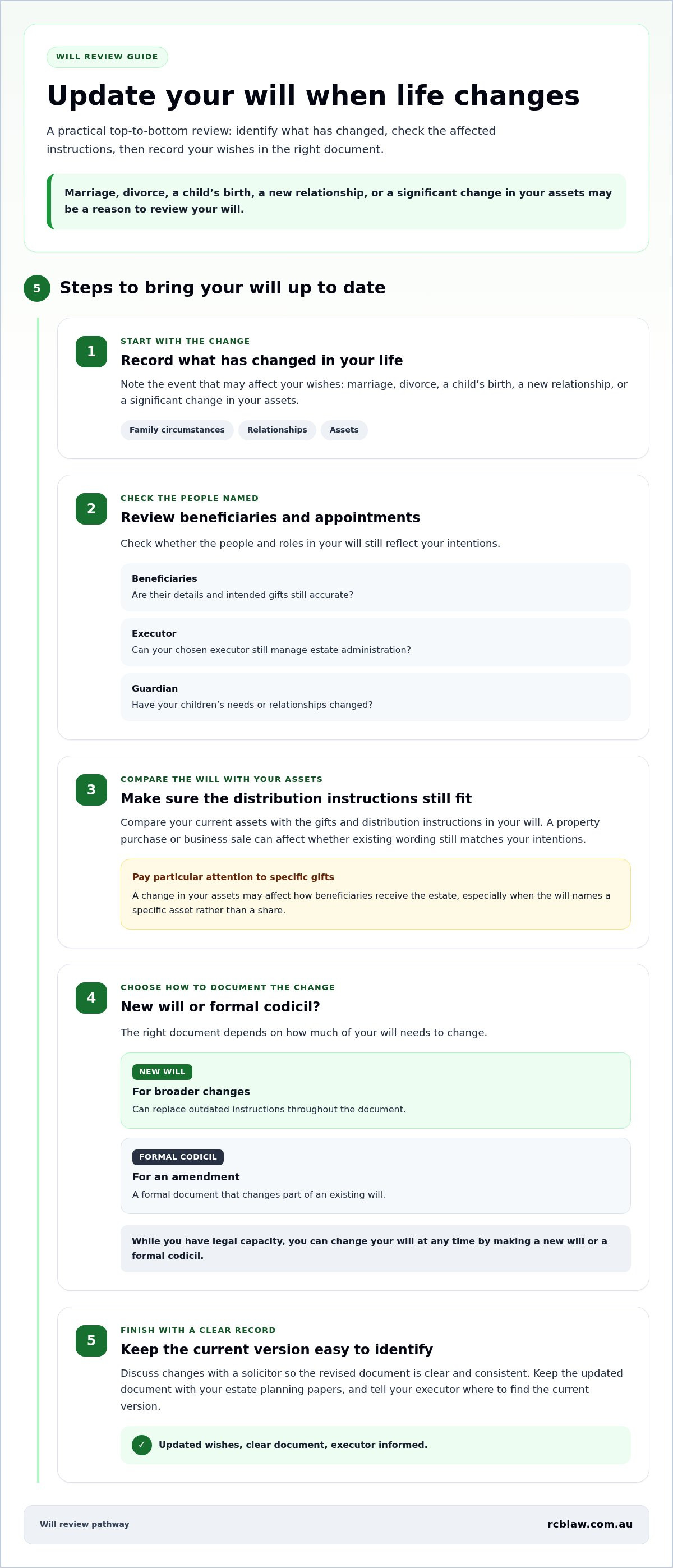
Review your will after a major life event. Marriage, divorce, a child’s birth, a new relationship, or a significant change in your assets can affect who you want to benefit. Changes in family relationships may also prompt you to reconsider your choice of executor or guardian.
Marriage is an important life event that may prompt you to review your will. While you have legal capacity, you can change your will at any time by making a new will or a formal codicil. A codicil is a formal document that changes part of an existing will.
Use a practical review to identify what needs attention:
- Check that each beneficiary’s details and intended gift remain accurate.
- Confirm your chosen executor can still manage estate administration.
- Review guardian appointments if your children’s needs or relationships have changed.
- Compare your current assets with the gifts and distribution instructions in your will.
If you acquire a property or sell a business, for example, check whether the wording of any existing gifts still reflects your intentions. A change in your assets can affect how beneficiaries receive the estate, particularly when the will names a specific asset rather than a share.
Choose between a new will and a codicil according to the extent of the changes. A new will can replace outdated instructions throughout the document; a codicil can record a formal amendment. Keep the updated document with your estate planning papers, and tell your executor where to find the current version.
Regular reviews help keep your wills and estates arrangements aligned with your wishes. Record the life event, identify affected beneficiaries and appointments, then discuss the changes with a solicitor so the revised document is clear and consistent.
Drafting simple and complex wills
A simple will may suit someone with clear wishes, few beneficiaries, and straightforward assets. It can name an executor, explain how assets should be distributed, and appoint a guardian for children. The key is to make sure each instruction fits your circumstances rather than relying on a template that may not reflect your intentions.
More involved estate planning may be needed if you have several beneficiaries, a business, a blended family, or assets that require tailored instructions. A will can establish a testamentary trust that takes effect when the will-maker dies. It can also give directions about digital assets, such as social media accounts, and explain how you want them handled.
Before drafting, list your assets, intended beneficiaries, and any specific gifts. Consider whether your wishes involve a guardian, trusts, or digital accounts. A solicitor can use your instructions to prepare a draft, explain its clauses, and help ensure the document clearly and legally expresses your wishes.
The time a Brisbane solicitor takes to draft and finalise a will depends on your instructions and the document’s complexity. Clear information about assets and beneficiaries helps the drafting progress. Trust provisions, several specific gifts, or questions that need clarification add work before finalisation. Reviewing the draft promptly can also help keep things moving.
A practical test is whether someone unfamiliar with your plans could understand what you want. Identify each beneficiary clearly and describe each gift precisely. For complex arrangements, seek advice on how the will’s provisions fit together, including any testamentary trust and guardian appointment.
For help preparing a will that reflects your estate planning wishes, discuss will drafting support and the instructions you want the document to cover.
RCB Law: Residential Conveyancing
RCB Law provides will drafting for people who want their wishes recorded in a clear legal document. Turn to the firm when you’re ready to prepare a will, appoint an executor or guardian, or revise your instructions after a change in circumstances. Bringing details about your assets, beneficiary choices, and questions can help focus the drafting process.
Estate planning can also connect with property or business decisions. RCB Law’s residential conveyancing, commercial property law, and business law services address related legal needs, while will drafting records your instructions for the future. Set out what you want your will to cover, then discuss the drafting with a solicitor.
To discuss your will, contact RCB Law or visit rcblaw.com.au.
Put your next estate-planning step in motion
Choosing a will drafting solicitor in Brisbane is a practical step when you’re ready to turn your intentions into clear instructions. Note the decisions you want addressed and any questions you still have. This gives your discussion a focused starting point, even if you haven’t settled every detail.
Your next step can also account for how estate planning connects with property or business decisions. RCB Law offers residential conveyancing, commercial property law, and business law alongside will drafting, so you can discuss related legal needs in one place. Consider which decisions may affect your plans, then bring those points to your conversation.
A clear brief can make it easier to explain what matters most to you. Write down your priorities, any concerns about how your wishes will be understood, and the help you’re seeking. Then contact RCB Law about your will to discuss a suitable next step.
Taking that first step can make future planning feel more manageable.
Frequently Asked Questions
What happens if I die without a will in Queensland?
In Queensland, if you die without a will, your estate is distributed under succession rules rather than personal instructions. The Succession Act 1981 (Qld) governs this distribution, according to the Queensland Government. An application for Letters of Administration is needed to administer the estate. This process can affect who manages accounts, settles debts and arranges asset transfers when you haven’t named an executor.
What is estate planning?
Estate planning involves arranging how your financial and personal decisions will be managed during your life and after your death. It may include a will, an enduring power of attorney, an advance health directive, superannuation nominations, and guardianship arrangements for minor children. For example, a will sets out instructions after death, while an enduring power of attorney concerns decisions if you lose capacity.
When should I update my Will?
Review your will after a major change, such as marriage, divorce, a child’s birth, or a substantial shift in your assets. Marriage revokes an existing will in Queensland, so include a review in your marriage planning. Revisit your instructions if a beneficiary’s or executor’s circumstances change, or a named gift no longer reflects what you own.
Can I change my will?
Yes. In Queensland, you can change your will at any time while you have legal capacity, either by making a new will or a formal codicil. A codicil changes part of an existing will. If you need to replace a beneficiary or executor, for example, seek advice on whether a codicil is suitable or a new document would express all your instructions more clearly.
Can I exclude someone from my will?
You can write a will that leaves someone out, but that may not prevent an estate claim. Queensland estate disputes can include applications for further provision, and an eligible dependant can include a person under 18 years. If you’re considering excluding someone, get legal advice about your circumstances and make your intentions clear, so the document addresses the decision directly.
Do I need a lawyer to write my will in Queensland?
No, you can write your own will in Queensland, but professional legal assistance can help prevent errors with serious consequences. ASIC says a will must be witnessed by 2 or more adults who are not beneficiaries. A will-drafting solicitor in Brisbane can help clarify instructions, address complex assets or family arrangements, and prepare a document that reflects your wishes.


