
Finding a property that perfectly aligns with your goals in 2026 often requires looking beyond the standard residential market. A deceased estate can be a tactical and rewarding purchase, but it also brings a unique set of legal layers that most buyers never encounter. It's understandable if you feel some hesitation about the potential for long settlement periods or the uncertainty of dealing with an estate executor. Many buyers worry about the contract falling through due to probate delays or simply don't know who has the actual authority to sign the paperwork.
We're here to act as your steady guide through the buying a deceased estate property qld process so you can secure your new home or investment with absolute peace of mind. You deserve a clear path that removes the friction often associated with these complex transitions. In this guide, we'll outline a realistic purchase timeline and explain the 2026 mandatory disclosure requirements you need to know. You will gain a full understanding of how to verify title security and ensure the executor's right to sell is legally sound before you commit.
Key Takeaways
- Identify the legal role of the Executor and why their authority is critical for a valid property transfer in Queensland.
- Master the "Subject to Probate" clause to protect your deposit and timeline throughout the buying a deceased estate property qld process.
- Understand your rights regarding mandatory seller disclosures in 2026 to navigate "as is, where is" sales with confidence.
- Learn why a specialized contract review is the most effective way to prevent delays during the title transmission phase.
- Follow a structured step-by-step roadmap to ensure your purchase moves smoothly from the initial offer to a secure settlement.
What is a Deceased Estate and the QLD Process?
A deceased estate in Queensland encompasses all the assets, including land and dwellings, left behind by a person after their death. These properties often generate significant interest because they might not have been on the market for decades, offering unique opportunities in established Brisbane or Sunshine Coast neighborhoods. However, the buying a deceased estate property qld process isn't a standard "offer and settle" scenario. You're stepping into a situation where the legal clock is governed by court timelines and the emotional needs of beneficiaries. It's a high-pressure transition for the sellers, and having a steady guide helps keep the transaction focused and respectful.
The Vendor is Not the Owner (Yet)
The person you'll see listed as the vendor on the contract is the Executor, not the individual who lived in the home. They act as the legal personal representative of the estate. This distinction is vital because the legal title doesn't automatically move to the heirs; it must first pass through the Executor. We recommend that buyers never sign a contract without first confirming that the person acting as the vendor has the legal authority to do so. Understanding this hierarchy is a fundamental part of the buying a deceased estate property qld process. Without this verification, you risk your deposit and your time on a contract that might not be enforceable.
Key Terminology for QLD Buyers
Understanding the technical language of the Queensland legal system will help you manage your expectations regarding settlement dates. These terms represent the milestones we monitor to ensure your purchase stays on track:
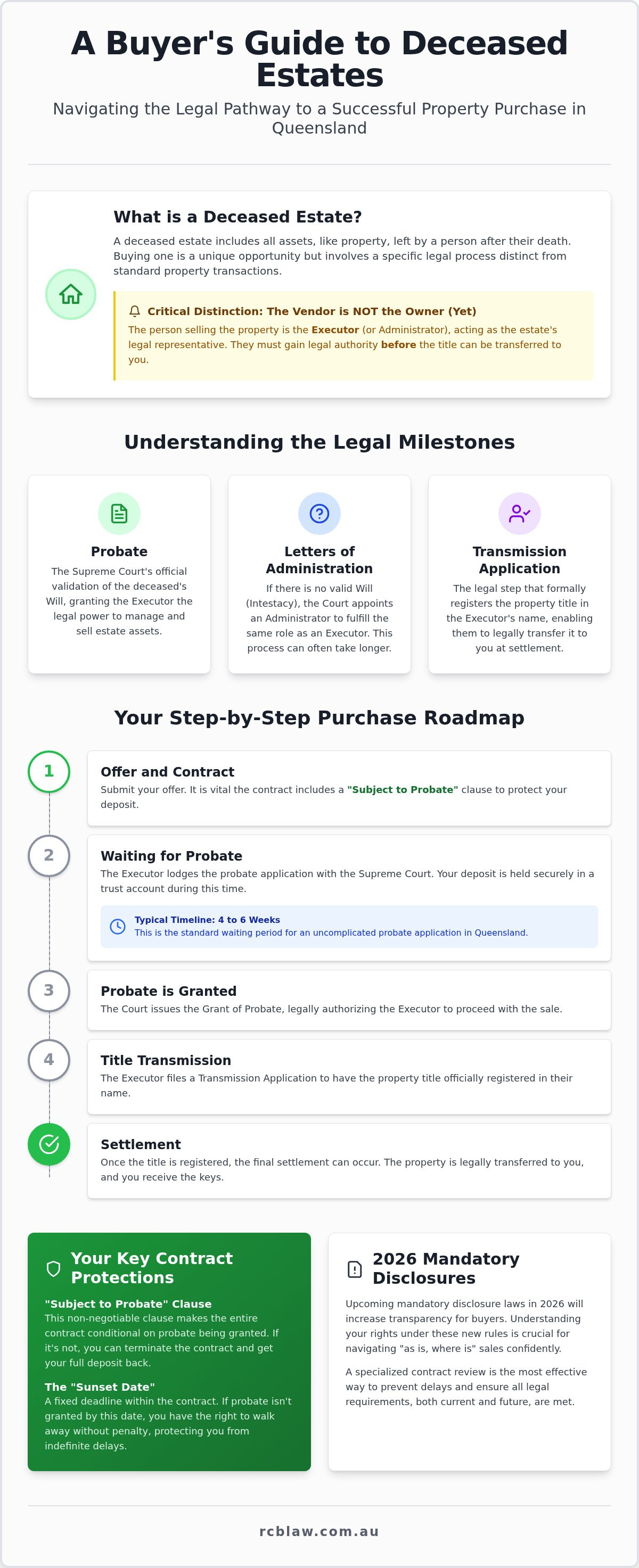
- Probate: This refers to the Supreme Court's validation of the deceased's Will. Securing a grant of probate is the essential step that empowers the Executor to deal with the property.
- Letters of Administration: When someone passes away without a valid Will, the court issues these letters to appoint an administrator. This person fulfills the same role as an Executor.
- Transmission Application: Once probate or administration is granted, this application is lodged with the Titles Office. It's the formal mechanism that updates the property title into the name of the representative so they can legally transfer it to you at settlement.
The Legal Prerequisites: Probate and Title Transmission
Entering into a contract for a deceased estate often feels like a leap of faith because the legal title isn't yet in the seller's name. In the buying a deceased estate property qld process, it's actually quite common to sign a contract before the Supreme Court has granted probate. This allows the marketing and sale process to move forward while the legal paperwork catches up. However, this only works safely if the contract includes specific, protective conditions that account for the court's timeline. Without these, you could find yourself legally committed to a purchase that the seller isn't yet authorized to complete.
The "Subject to Probate" clause is the most vital tool in your arsenal. This special condition makes the entire contract dependent on the Executor receiving the formal grant of probate by a specific date. If the court denies the application or if significant delays occur, this clause allows you to terminate the contract and receive your full deposit back. It's also important to consider the risk of Intestacy. If the owner died without a valid Will, the process shifts to "Letters of Administration." This is often a slower path, as the court must first appoint an administrator before any property can be legally sold.
Waiting for the Grant of Probate
Once an application is lodged, the Supreme Court of Queensland typically takes between 4 to 6 weeks to issue a grant of probate, provided there are no complications. During this period, your deposit is held securely in a real estate agent's or solicitor's trust account. It doesn't go to the beneficiaries or the Executor until settlement. To prevent being stuck in legal limbo, we always recommend including a "sunset date." This is a fixed deadline in the contract; if probate isn't granted by this time, you have the right to walk away without penalty. Having this exit strategy is essential for maintaining your financial flexibility.
The Transmission Application Process
Even after probate is granted, one final hurdle remains: the Transmission Application. This is a formal filing with the Titles Queensland registry that moves the property title from the deceased person's name into the name of the Executor. Settlement cannot legally occur until this application is registered. We ensure your conveyancer performs a fresh Title Search at multiple stages of the buying a deceased estate property qld process to confirm this transition is happening correctly. If you're feeling overwhelmed by these technical requirements, reaching out for a professional contract review can provide the clarity you need to proceed with confidence.
Navigating Risks: Rewards and Mandatory Disclosures in 2026
Purchasing a deceased estate often feels like a strategic move for savvy buyers. Many of these homes are older properties in prime locations, offering the potential for a lower entry price if you're willing to handle renovations. However, the buying a deceased estate property qld process requires a shift in how you evaluate risk. You aren't dealing with a typical homeowner who knows the property's history intimately. Instead, you're interacting with an estate representative who likely hasn't lived there in years, if ever. This gap in knowledge creates the "As Is, Where Is" environment common in estate sales, where the burden of discovery sits firmly with you.
2026 Mandatory Disclosure Rules
Recent updates to the Property Law Act have introduced stricter mandatory disclosure requirements for sellers in Queensland. By 2026, sellers must provide a comprehensive disclosure statement before a buyer signs the contract. This document covers title encumbrances, zoning, and historical building approvals. However, executors often benefit from specific exemptions. Since they don't have personal knowledge of the home's daily maintenance or past issues, they might not be required to disclose internal defects they aren't aware of. If an executor fails to provide the mandatory statement or provides inaccurate information where they should have known better, you may have the right to terminate. We help you scrutinize these statements to ensure you aren't walking into an avoidable legal dispute.
The 'As Is' Condition Trap
It's a standard practice for executors to sell property in its current state without providing any warranties. This means they won't fix a leaking roof or replace a broken air conditioner before settlement. You might also encounter unapproved structures like backyard sheds or decks that weren't built to code. Another common hurdle involves old caveats that might still be registered against the property. Because the executor's priority is to finalize the estate quickly, they're often less inclined to negotiate on repairs. This makes your building and pest inspection non-negotiable. It's your primary chance to uncover hidden costs before your cooling-off period ends. Conducting thorough due diligence is the only way to ensure that a perceived bargain doesn't evaporate into a mountain of debt.
The Step-by-Step Purchase Process for Deceased Estates
Transforming your interest in a property into a successful purchase involves a structured series of legal milestones. The buying a deceased estate property qld process follows the standard residential path but adds specific estate-focused requirements. By following a clear roadmap, you can manage the unique timelines of these sales without feeling overwhelmed. Our role is to act as your steady guide, ensuring every document is sound and every deadline is met with precision.
- Step 1: Pre-contractual Review. Before you sign anything, have a solicitor review the contract. This is the moment to verify the executor's identity and ensure the terms protect your interests.
- Step 2: Signing the REIQ Contract. Once the specialized conditions are inserted, the contract is signed by you and the executor.
- Step 3: The Probate Period. If probate hasn't been granted, the contract enters a waiting phase governed by your "Subject to Probate" clause.
- Step 4: Standard Searches. We conduct standard Queensland searches, including title, rates, and land tax, to ensure no hidden debts follow the property.
- Step 5: Electronic Settlement. The final transfer occurs digitally via PEXA, providing a secure and instantaneous change of ownership.
Drafting the Right Contract Conditions
The foundation of a secure purchase is a correctly drafted contract. One common error is misidentifying the vendor. The "Seller" section must explicitly state "The Executor of the Estate of [Deceased Name]" to ensure the legal personal representative is properly bound. We also recommend including a "Subject to Probate" clause with a specific end date to prevent an indefinite wait. It's often wise to adjust the settlement date to "14 days after the buyer receives notice that the Transmission Application has been registered." This flexibility accounts for potential administrative delays at the Titles Office. If you're ready to make an offer, request a contract review to ensure your protection is built-in from day one.
From Approval to Settlement
As we move toward settlement, we handle complex adjustments that are unique to estates. This includes checking for land tax clearances. Deceased owners may have had different tax thresholds, and any outstanding debt must be cleared by the estate before you take possession. We also verify that all beneficiaries have consented to the sale. While this is the executor's responsibility, confirming this status reduces the risk of litigation pausing your purchase at the last minute. Finally, after a successful final inspection, we facilitate the settlement through the PEXA digital platform. This ensures the title transfer and funds movement happen simultaneously, giving you immediate certainty as the new owner.
How RCB Law Simplifies Complex Estate Conveyancing
Securing a property from an estate is a significant milestone that shouldn't be overshadowed by legal stress. With over 30 years of experience in Queensland property law, we've built our reputation on being a steady guide through high-pressure transitions. We understand that behind every contract is a family story and a complex set of legal requirements. Our approach combines technical mastery with an empathetic touch, ensuring that the buying a deceased estate property qld process remains transparent and low-friction for you.
Our deep background in both Wills and residential conveyancing gives us a holistic perspective that most firms lack. We don't just look at the transfer of title; we understand the underlying estate law that governs the executor's actions. This dual expertise allows us to anticipate potential hurdles before they cause delays. To provide further peace of mind, we offer fixed-price residential conveyancing options. You'll know exactly where you stand financially from the start, with no hidden surprises at settlement.
Why Local Expertise Matters
Local knowledge is a powerful tool when dealing with regional property nuances. Our team has a long-standing presence in Brisbane and the Sunshine Coast, giving us direct insight into regional council requirements and local market behaviors. We maintain established relationships with local real estate agents and executors, which helps facilitate smoother communication throughout the transaction. Because we regularly interact with the Supreme Court of Queensland, we have a realistic understanding of current probate timelines. This allows us to set accurate expectations for your purchase, reducing the anxiety of the unknown.
Start Your Journey with Confidence
The most effective way to protect yourself in the buying a deceased estate property qld process is to involve a solicitor before you sign the contract. We offer proactive contract reviews to ensure that specialized conditions, like the "Subject to Probate" clause discussed earlier, are drafted correctly for your specific situation. Our commitment is to provide brief, direct assistance that removes the emotional burden of the legal process. We're here to ensure your transition into your new home is as smooth as possible. Contact us today to get a quote and move forward with the confidence of a seasoned professional by your side.
Secure Your Purchase with Professional Clarity
Purchasing a deceased estate offers a unique path to property ownership in Queensland, provided you approach the legal hurdles with the right strategy. By mastering the buying a deceased estate property qld process, you ensure that technicalities like probate grants and transmission applications don't become roadblocks. Remember that protective contract conditions and thorough building inspections are your best defenses against the "As Is" nature of estate sales. These steps allow you to move forward with the assurance that your investment and your future home are legally secure.
At RCB Law, we bring over 30 years of experience as Sunshine Coast and Brisbane specialists to every transaction. We provide the steady guidance you need to navigate these high-pressure transitions with ease. Whether you need a detailed contract review or are looking for the certainty of fixed-price conveyancing, our team is ready to support you. Contact RCB Law today for an expert contract review and stress-free conveyancing. You can step into this new chapter with confidence, knowing every legal detail is handled with care and precision.
Frequently Asked Questions
Can I buy a deceased estate property before probate is granted in QLD?
Yes, you can enter into a contract before probate is granted, but the sale cannot settle until the court issues the formal grant. In the buying a deceased estate property qld process, this is a common occurrence. You must include a specific condition making the contract subject to the grant of probate being received by a certain date. This protects your deposit and gives you an exit strategy if court delays become excessive.
How long does it take to settle on a deceased estate in Queensland?
Settlement timeframes for deceased estates are typically longer than the standard 30-day period. Because the transfer depends on probate and the subsequent transmission application at the Titles Office, a flexible timeline is necessary. Most contracts are drafted to settle 14 days after the executor notifies the buyer that the title has been registered in their name. This methodical approach ensures all legal prerequisites are met before the final electronic settlement occurs.
Are deceased estates cheaper than normal property sales?
Deceased estates aren't automatically cheaper, but they are often viewed as high-reward opportunities. These properties are frequently sold in their original condition, which may deter some buyers and lead to a more competitive price. However, executors have a legal duty to the beneficiaries to obtain a fair market value. You should base your offer on the property's condition and the local Brisbane or Sunshine Coast market rather than assuming a deep discount.
What happens if the Executor dies or changes during the purchase process?
If an executor passes away or is replaced, the administration of the estate continues through a successor executor or a court-appointed administrator. While this transition can cause administrative delays, the contract remains legally binding on the estate itself. We monitor these situations closely to ensure the new representative has the proper authority to complete the settlement. It's a complex scenario where having an experienced solicitor is vital for maintaining your security.
Do I still get a cooling-off period when buying a deceased estate?
You generally receive the standard five-business-day cooling-off period when buying a deceased estate in Queensland. This period begins the day you receive a copy of the contract signed by both parties. The only common exception is if you purchase the property at a public auction, where the cooling-off period does not apply. It's important to use this time to finalize your due diligence, including building and pest inspections, before the contract becomes unconditional.
What is a 'Subject to Probate' clause and do I need one?
A 'Subject to Probate' clause is a special condition that makes your purchase dependent on the Supreme Court validating the deceased person's Will. You absolutely need this clause if the grant hasn't been issued yet. It ensures that if probate is denied or significantly delayed past a "sunset date," you can terminate the contract and recover your deposit. This clause is a foundational safety net in the buying a deceased estate property qld process.
Who pays the land tax on a deceased estate property at settlement?
Land tax is typically adjusted at settlement between the buyer and the seller, similar to council rates. However, deceased estates can have unique tax liabilities depending on how long the property has been held since the owner's passing. The estate is responsible for clearing any outstanding land tax debts before the title is transferred to you. We perform specific searches to ensure no hidden tax burdens follow the property after the settlement is finalized.
Can beneficiaries block the sale of a deceased estate after I've signed the contract?
Beneficiaries generally cannot block a sale once a valid contract is signed, as the Executor holds the legal power to sell estate assets. However, internal family disputes or "family provision" claims can sometimes result in court orders that pause the sale. While these instances are rare, they emphasize why we verify that all beneficiaries are in agreement. Our proactive communication helps identify these risks early, protecting you from being caught in the middle of estate litigation.


