
What if the dream home you've been waiting two years for could be taken away just as the paint is finally drying? It's a valid concern for anyone looking at the Brisbane or Sunshine Coast markets, where the gap between signing a contract and moving in can feel like a lifetime. Navigating off the plan conveyancing qld requires more than just a standard contract review; it demands a deep understanding of how to protect your future equity from developer cancellations and shifting market conditions.
We understand that the uncertainty of unbuilt property can be overwhelming, particularly when you're facing complex non-standard terms or worrying about a potential valuation drop at settlement. You deserve a clear, low-friction path to homeownership that prioritizes your peace of mind. In this 2026 guide, we'll provide expert legal insights into your specific protections, including the strict rules governing sunset clauses and the essential steps to keeping your deposit safe in a trust account. You'll gain a steady, professional perspective on how to secure your rights and ensure your property journey remains a rewarding transition rather than a legal burden.
Key Takeaways
- Identify the unique risks of buying unbuilt lots in the 2026 Queensland market and why local developer research is your first line of defense.
- Gain clarity on how modern sunset clause regulations prevent developers from cancelling your contract without your consent or a court order.
- Understand the critical differences between standard REIQ contracts and complex developer agreements to avoid hidden traps in the fine print.
- Learn how a specialist in off the plan conveyancing qld ensures your deposit remains secure in a trust account until the day of settlement.
- Discover the essential steps for a 2026 due diligence process that accounts for long construction lead times and shifting property valuations.
Understanding Off the Plan Purchases in Queensland
Buying property off the plan involves entering into a contract for a lot that doesn't yet have its own separate title. In 2026, we're seeing a significant surge in these developments across Brisbane and the Sunshine Coast. This growth is partly driven by the Queensland government's $61 million housing affordability package, which has expanded duty concessions for new builds. While the prospect of a brand-new home is exciting, the legal reality is quite different from a standard house-and-land purchase. You aren't just buying bricks and mortar; you're buying a legal promise that a developer will deliver a specific lot on a registered plan of subdivision.
When you begin Understanding Off-the-Plan Purchases, you realize that the physical structure often exists only as a set of artistic renders and architectural drawings. This gap between the promise and the final product is why specialist off the plan conveyancing qld is so vital. Unlike established residential transfers, these contracts are developer-heavy and can span hundreds of pages. They contain unique clauses that govern everything from minor design changes to the exact date you must settle once the building is finished. Having a steady guide to interpret these complexities ensures you aren't left vulnerable to the fine print.
The Legal Lifecycle of an Off the Plan Property
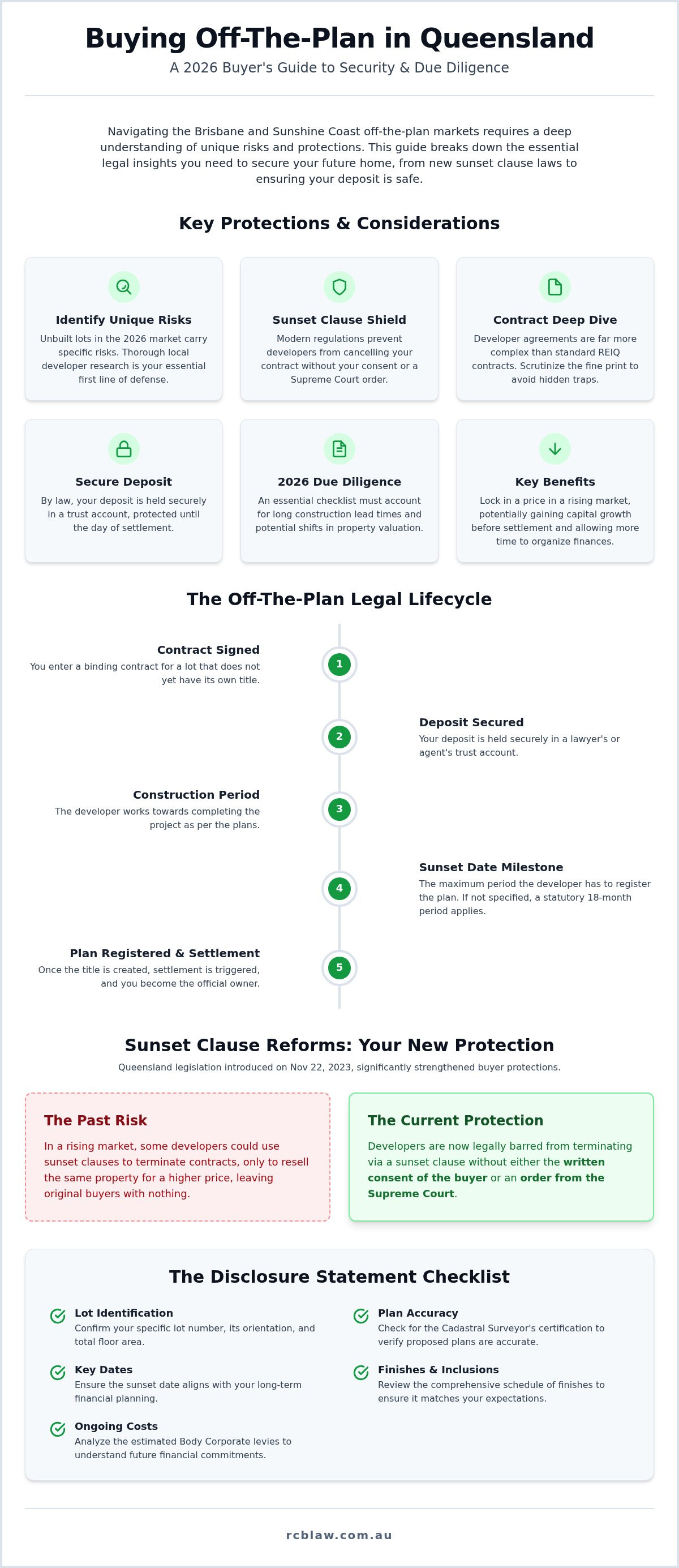
The journey starts the moment you sign the contract, but the legal work continues for months or even years. Your deposit is held securely in a trust account while the developer begins construction. A critical milestone in this lifecycle is the Sunset Date. This is the maximum window the developer has to register the plan of subdivision and settle the contract. It's a common area of anxiety for buyers, but Queensland law provides a safety net. Under the Land Sales Act 1984, if your contract doesn't specify a date, a statutory period of 18 months applies. We focus on these timelines to ensure your path to homeownership remains predictable and secure.
Benefits vs. Risks: A Reassuring Reality Check
There are clear advantages to buying early. You lock in a price in a rising market, potentially seeing capital growth before you even pick up the keys. It also gives you more time to organize your finances. However, we always provide a transparent view of the risks involved. Construction delays, market fluctuations, or developer insolvency can create high-pressure situations. This is where professional conveyancing acts as a protective shield. By conducting thorough due diligence and monitoring the developer's progress, we help mitigate these anxieties. Our goal is to transform a complex legal transition into a low-friction experience, giving you the confidence that your future home is in safe hands.
Navigating Disclosure Statements and Sunset Clauses
Your Disclosure Statement is the most critical document you'll receive before signing a contract. It serves as your legal blueprint, detailing exactly what the developer is promising to build. In the context of off the plan conveyancing qld, this statement bridges the gap between a marketing brochure and a binding legal reality. It includes the proposed plan of subdivision, a comprehensive schedule of finishes, and estimated Body Corporate levies. Reviewing these details with a professional ensures that the apartment or townhouse you move into matches the one you envisioned.
Sunset clauses were once a significant source of anxiety for Queensland buyers. In a rising market, some developers used these clauses to terminate contracts simply to resell the property at a higher price. However, Navigating Disclosure Statements and Sunset Clauses is now much safer thanks to legislative reforms introduced on November 22, 2023. These changes strengthened the Land Sales Act 1984, making it significantly harder for developers to walk away from their obligations. If you're feeling uncertain about the terms in your document, seeking a professional contract review can provide the clarity you need to proceed with confidence.
The Disclosure Statement Checklist
A thorough review of the disclosure statement should focus on precision. You need to identify your specific lot number, its orientation, and the total floor area. It's vital to check for the Cadastral Surveyor's certification, which verifies that the proposed plans are accurate. You should also examine the sunset date to ensure it aligns with your long-term finance pre-approval. If a developer makes a change that causes "material prejudice", which is a legal term for a significant disadvantage to you, this statement is your primary tool for seeking a resolution or terminating the contract.
Sunset Clause Protections: The 2026 Landscape
The 2026 landscape for buyers is defined by these robust protections. Sellers can now only use a sunset clause to terminate a contract if they have your written consent or a Supreme Court order. This effectively ends the practice of "gazumping" in high-demand areas like Brisbane and the Sunshine Coast. The court will only grant an order if the termination is just and equitable, considering factors like the developer's conduct and the current market value. A sunset clause is a protective boundary that sets a final deadline for the developer to complete the project, ensuring you aren't left waiting indefinitely for a home that may never be built.
Developer Contracts vs. Standard REIQ Contracts
Standard residential sales in Queensland usually rely on the balanced REIQ contract. It's a familiar document that most buyers and sellers find easy to understand. Off the plan conveyancing qld is a different experience entirely. These contracts are drafted by the developer's legal team and often exceed 100 pages. They are designed to give the developer maximum flexibility during the long construction process. You might find that some commercial-style builds don't even include the standard five-day cooling-off period you'd expect in a residential sale. This is why having a steady guide is essential to navigate these dense and often one-sided documents.
One of the most complex areas involves managing variations. What happens if the developer changes your floor plan or swaps out the high-end tiles you were promised? Small shifts are usually permitted under the contract. You can only legally walk away if the change causes "material prejudice". This is a legal threshold meaning the change significantly disadvantages you. We help you define these boundaries clearly. Our goal is to ensure you aren't forced into a property that no longer meets the specifications you originally signed for.
Key Clauses That Differ from Standard Sales
Developer contracts often include conditions that allow them to alter the plan of subdivision without your immediate consent. This could potentially change the size or orientation of your lot. You'll also encounter Force Majeure clauses. These can extend the sunset date due to unforeseen events like extreme weather or labor shortages, which directly impacts your move-in timeline. We focus on ensuring your deposit is handled with the highest standards. We verify that all funds are held securely in a solicitor's trust account, protecting them from being accessed by the developer before the final settlement occurs.
Negotiating the Non-Negotiable
While these contracts can seem set in stone, there are often areas where we can seek amendments to protect your interests. A critical area is the "subject to finance" clause. Since construction can take years, your initial pre-approval will likely expire. We work to ensure you have a safety net if your financial situation or the bank's valuation changes when the building is finally complete. For high-density developments, our commercial conveyancing expertise is invaluable. These projects often involve complex body corporate structures and commercial-grade agreements that require a more sophisticated level of legal scrutiny to ensure your future home is secure.
Your Due Diligence Checklist for 2026
Securing a property that hasn't been built yet is a journey that requires a structured approach to risk. By following a clear due diligence checklist, you can move from a state of uncertainty to one of complete confidence. The first step involves researching the developer and builder's track record specifically within South East Queensland. It's not enough to simply check a license; you should look at their completed projects in Brisbane or the Sunshine Coast to assess their quality and reliability. Next, you must secure a pre-approval that accounts for long construction lead times. Most bank approvals expire after 90 days, so having a long-term financial strategy is essential to avoid stress as the settlement date nears.
Before you pay an initial holding deposit, a thorough contract review is non-negotiable. This is the moment where specialist off the plan conveyancing qld services provide the most value by identifying restrictive clauses before you're legally committed. Once the build starts, monitor construction milestones and stay informed about the Body Corporate setup. Finally, prepare for a digital settlement via PEXA, which ensures the final transfer of title is handled with transparency and speed. If you're ready to start this process, our team can provide a comprehensive contract review to protect your interests from day one.
Managing Financing and Valuation Risk
One of the most significant anxieties for 2026 buyers is the "Valuation Gap". This occurs if the bank's valuation of the finished property is lower than the contract price you agreed to years prior. If this happens, you'll need to cover the shortfall in cash to secure your loan. We recommend maintaining a financial buffer to account for potential interest rate changes or valuation shifts during the construction phase. For those looking at eligible new builds, it's also worth checking your eligibility for the First Home Buyer Grant QLD, which can provide a vital boost to your settlement funds.
The Final Countdown: PEXA and Settlement
As the building nears completion, the developer will provide a 14-day notice period once the plan of subdivision is registered. You need to be ready to move quickly during this window. We use PEXA to facilitate your settlement, which allows for the simultaneous exchange of funds and title in a secure online environment. This technology makes the transfer of title seamless and transparent for all parties involved. PEXA serves as the digital bridge to your new home, ensuring that the final step of your property journey is as low-friction as possible.
How RCB Law Secures Your Future Home
RCB Law has spent over 30 years navigating the specific quirks of Queensland property law. We've seen the Brisbane and Sunshine Coast development landscapes transform, and we've helped thousands of buyers move into their new homes with confidence. Our approach to off the plan conveyancing qld is built on the understanding that this is one of the most significant transitions in your life. We recognize the emotional weight of waiting for a home that is still under construction. We don't just process files; we act as a steady guide through a process that can often feel high-pressure and opaque. Our team specializes in distilling complex, 100-page developer contracts into clear, actionable advice that prioritizes your security.
By focusing on the essential details, like deposit safety and sunset clause restrictions, we remove the friction from your property journey. Our local expertise means we understand the specific developers and builders shaping South East Queensland, allowing us to offer insights that go beyond the standard legal review. We are committed to turning a dense legal burden into a clear, low-friction path to homeownership. Your peace of mind is our primary goal, and we achieve this through proactive communication and a deep mastery of the Queensland property market.
Why a Steady Guide Matters
Buying off the plan can sometimes feel like "buying blind" because you're committing to a vision rather than a finished product. A steady guide matters because we translate that vision into concrete legal protections. Our meticulous contract review process identifies potential points of friction before they become settlement disputes. Because we scrutinize every clause, you can avoid the anxiety of unexpected variations or timeline shifts. This personalized service ensures your future is protected by a team that understands the local context. We believe that clear, direct legal advice is the best way to alleviate the stress of a long-term build. It's your future, and we treat every file with the individual care it deserves.
Contact Our Conveyancing Specialists
Whether you're purchasing a high-rise apartment in the heart of Brisbane or a coastal townhouse on the Sunshine Coast, our specialists are here to assist. We invite you to a complimentary initial contract discussion to help you understand your rights before you sign on the dotted line. Our local presence in both major South East Queensland hubs ensures we are always accessible when you need clarity. We combine the confidence of seasoned professionals with the warmth of a trusted advisor to support you at every stage. Secure your peace of mind with RCB Law’s expert conveyancing and take the first step toward your new home with a partner you can depend on.
Securing Your Future Home in Queensland
Buying a property that is still on the drawing board is an act of trust, but it shouldn't be a leap of faith. The 2026 landscape offers stronger protections than ever, from robust sunset clause regulations to the transparency of digital PEXA settlements. By understanding the fine print in your disclosure statement and preparing for valuation shifts, you can turn a complex transition into a rewarding milestone. Specialist off the plan conveyancing qld ensures your legal rights are defended throughout the long construction window.
With over 30 years of Queensland legal expertise, our Sunshine Coast and Brisbane local specialists provide the steady guidance you need. We offer fixed-price conveyancing options to keep your move-in costs predictable and transparent. Contact RCB Law for a reassuring off the plan contract review and let us handle the legal burden while you focus on your new beginning. You've worked hard for this future; we're here to make sure it's secure and low-friction from the moment you sign to the day you pick up your keys.
Frequently Asked Questions
Can a developer cancel my off the plan contract if property prices go up?
No, developers in Queensland cannot simply cancel your contract to chase higher market prices. Under the 2023 legislative reforms, a seller can only terminate using a sunset clause if they have your written consent or a Supreme Court order. The court will only grant this if the termination is just and equitable. This protection is a cornerstone of off the plan conveyancing qld, ensuring your future equity remains secure despite market shifts.
What is a sunset clause and how does it affect me in QLD?
A sunset clause is a provision that sets a maximum deadline for the developer to complete the project and register the plan. If the property isn't finished by this date, the contract may be terminated. For buyers, it provides an exit strategy if construction stalls indefinitely. Recent QLD laws ensure developers don't abuse these dates for financial gain, providing you with a safer, more predictable path to homeownership in Brisbane or the Sunshine Coast.
Do I have to pay the full price upfront for an off the plan property?
You don't pay the full purchase price until the property is completed and the plan of subdivision is registered. Typically, you'll pay an initial holding deposit followed by a balance to reach 10% of the purchase price. These funds are held securely in a solicitor's or real estate agent's trust account. You only pay the remaining 90% at settlement, which is when the legal transfer of the property title actually occurs via PEXA.
What happens if the finished property is different from the display unit?
It's common for the final build to have minor variations from the initial display unit or artistic renders. Most developer contracts include clauses that allow for small changes in finishes or dimensions. However, if the developer makes a significant change that negatively impacts the value or utility of your lot, you may have rights under the material prejudice test. We review these specifications carefully during the contract phase to ensure your expectations are legally protected.
Can I get my deposit back if the developer fails to finish the building?
Yes, your deposit is protected by law and must be held in a trust account until settlement. If the developer fails to complete the building by the sunset date or becomes insolvent, you are generally entitled to a full refund of your deposit. Because these funds aren't accessible to the developer for construction costs, they remain safe. We verify these trust account details as part of our specialized off the plan conveyancing qld services to provide total peace of mind.
Is there a cooling-off period for off the plan contracts in Queensland?
Most residential off the plan contracts in Queensland include a standard five-business-day cooling-off period. This begins the day you or your solicitor receive a copy of the contract signed by both parties. If you decide to withdraw during this window, the developer may retain a penalty of 0.25% of the purchase price. It's important to note that some commercial-style builds or properties purchased at auction may not offer this same protection, so always check your specific terms.
What is "material prejudice" in a property contract?
Material prejudice occurs when a developer makes a change to the property that significantly disadvantages the buyer. This could include a substantial reduction in floor area, a change in the number of bedrooms, or the removal of a promised balcony. If a change meets this legal threshold, you may have the right to terminate the contract and claim your deposit back. We help you assess these changes against your original disclosure statement to determine your legal standing.
Do I need a different type of insurance for an unbuilt property?
You generally don't need building insurance for an unbuilt property because the developer is responsible for the site until settlement. However, you should consider title insurance or specific life and income protection to cover your financial obligations over the long construction period. Once the plan registers and you're within the 14-day settlement window, you'll need to arrange standard building or contents insurance as required by your lender to ensure your new asset is fully protected.


